
The complete guide
How To Choose An Alpaca Blend Throw That You Will Actually Use
The cold chair problem
Almost every home has a spot that runs cold. Near a window, at the end of a hallway, in the corner of a room the heating never quite reaches. You notice it most in the evening, when you sit still for an hour and your feet start to go numb. Turning up the heating for the whole house to fix one chair is an expensive way to solve a small problem.
A throw solves it for the cost of nothing per hour. You put it over your lap, your body heat gets trapped instead of leaking into the room, and the chair becomes usable again. That is the whole function. The only real question is which throw does that job well without feeling like you are sitting under a tarpaulin.
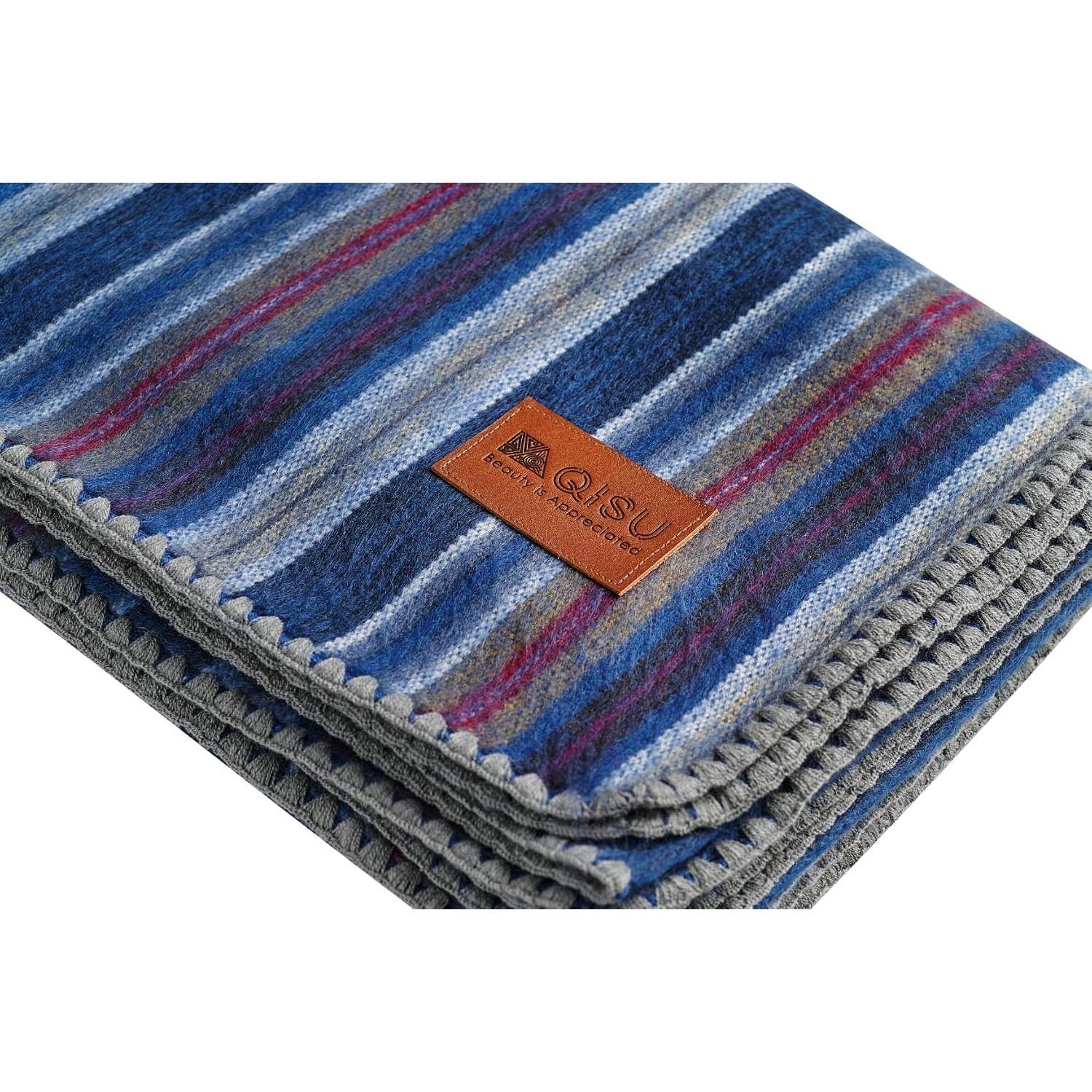
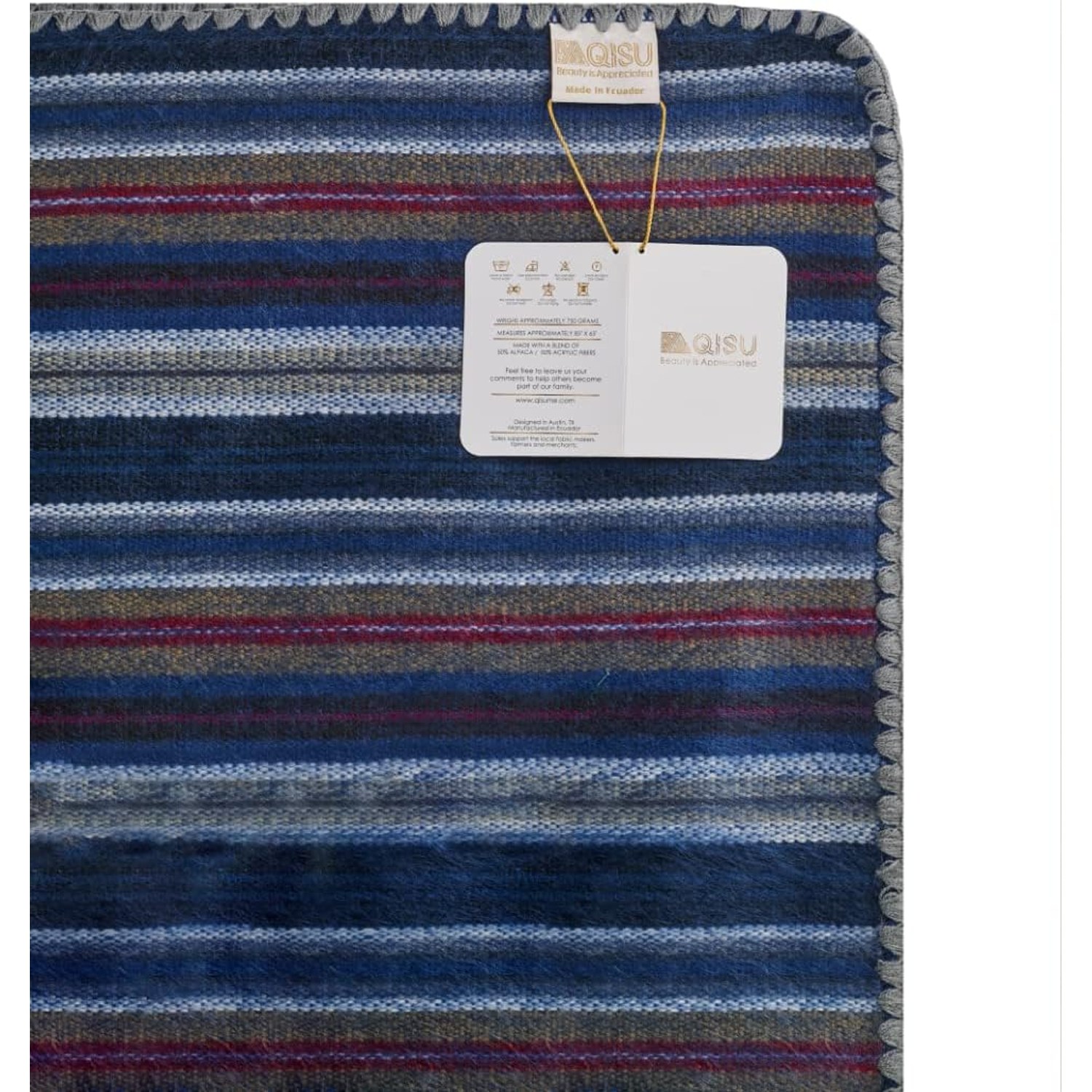
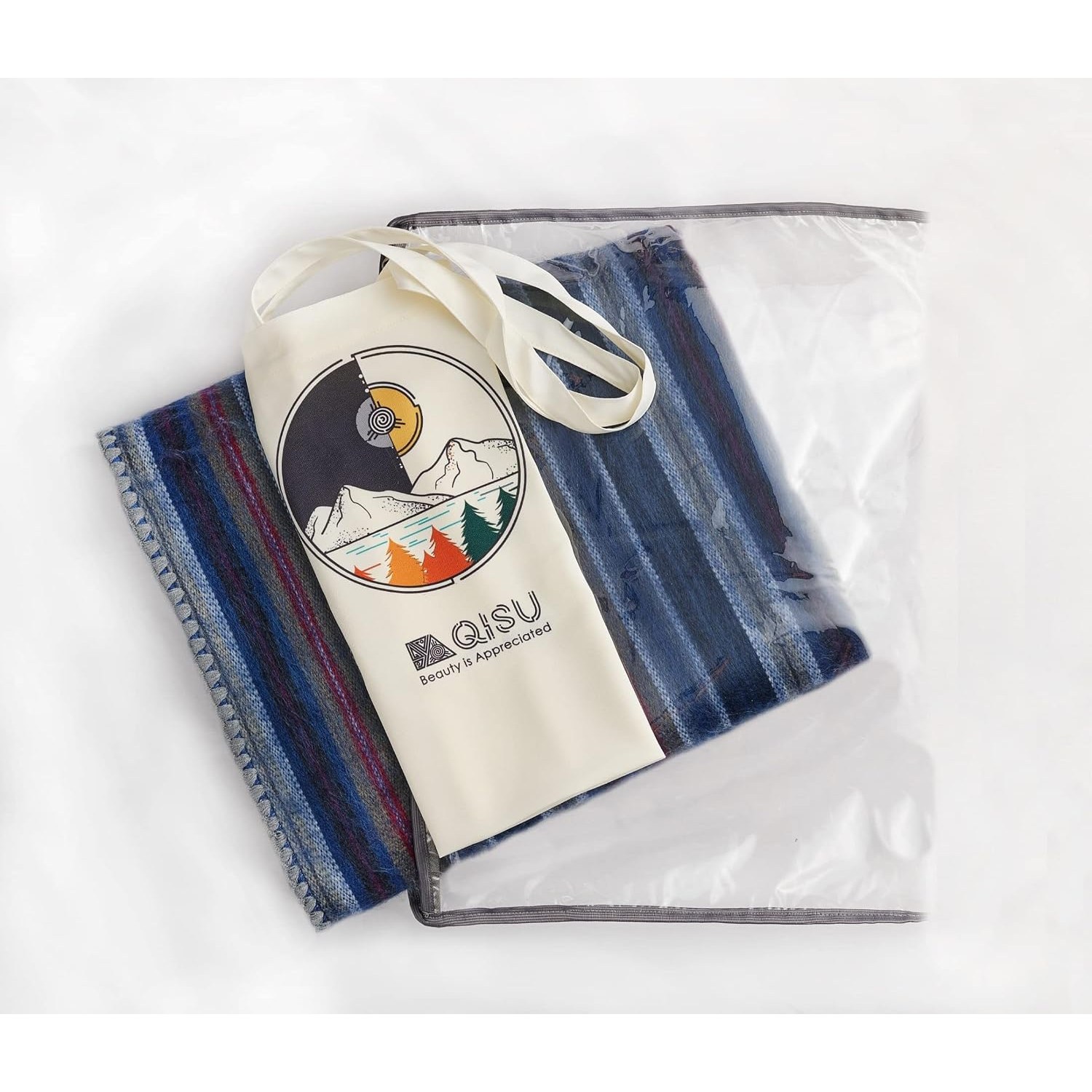
This one is a knitted throw made from 50% alpaca wool and 50% acrylic. It is a blend, and we would rather say so at the top than let you find out later. The blend is not a compromise so much as a design choice, and it is worth understanding why before you decide.
Why alpaca gets mentioned so often
Alpaca fibre has a structure that holds air. Air is what insulates, not the fibre itself, which is why a light, lofty material can beat a heavy, dense one for warmth. That is the reason alpaca knits feel warmer than their weight suggests, and why people who have owned one tend to buy another.
The second thing people notice is the hand feel. Alpaca fibre tends to be smoother along its length than coarse sheep wool, so it is less likely to prickle. It also does not contain lanolin, the greasy substance in sheep wool that some people react to. We are not going to call it hypoallergenic, because that is a strong word and individual skin varies, but it is a common reason people pick alpaca over wool.
The third thing is moisture. Alpaca moves damp air away from your skin rather than holding it against you. In practice that means you are less likely to get that clammy feeling you can get under a synthetic blanket after half an hour.
What the acrylic half is doing
Acrylic has a bad reputation among people who prize natural fibres, and in a cheap fleece that reputation is deserved. In a knitted blend it earns its place.
Knitted fabric stretches. A blanket made entirely of a fibre with little elasticity will slowly lose its shape as it gets dragged off the sofa, bunched up, and sat on. Acrylic has spring, so it pulls the knit back. It also handles washing better than pure animal fibre, which matters for something that lives in a high-traffic part of the house.
Then there is cost. Pure alpaca throws sit at a price point that a lot of people simply will not pay for a sofa accessory. The blend brings it down while keeping most of what makes alpaca pleasant.
The honest trade is that a half-and-half blend will not feel quite as fine as a pure alpaca piece, and it will not breathe quite as well. If you want the absolute best alpaca throw blanket with no synthetic content, this is not it. If you want something warm, soft, and practical for daily life, the blend makes sense.
The case for a thin knit
There is a strong instinct to equate thickness with warmth. It is wrong often enough to be worth challenging.
A heavy blanket is heavy to lift, heavy to shake out, heavy to wash, and slow to dry. It tends to end up folded in a cupboard because using it is a small chore. A light knit gets used, which means it is warming you on far more evenings than the thick one is.
This throw is a thin, light build. You can carry it from room to room without thinking about it. It goes in the car for a cold match on a Saturday. It goes to the caravan. It sits over the back of a reading chair and gets pulled across a lap twenty times a week. If you have been looking for the best lightweight wool throw for everyday use rather than a once-a-winter blanket, that is the type you want.
Variegated colour and why it matters
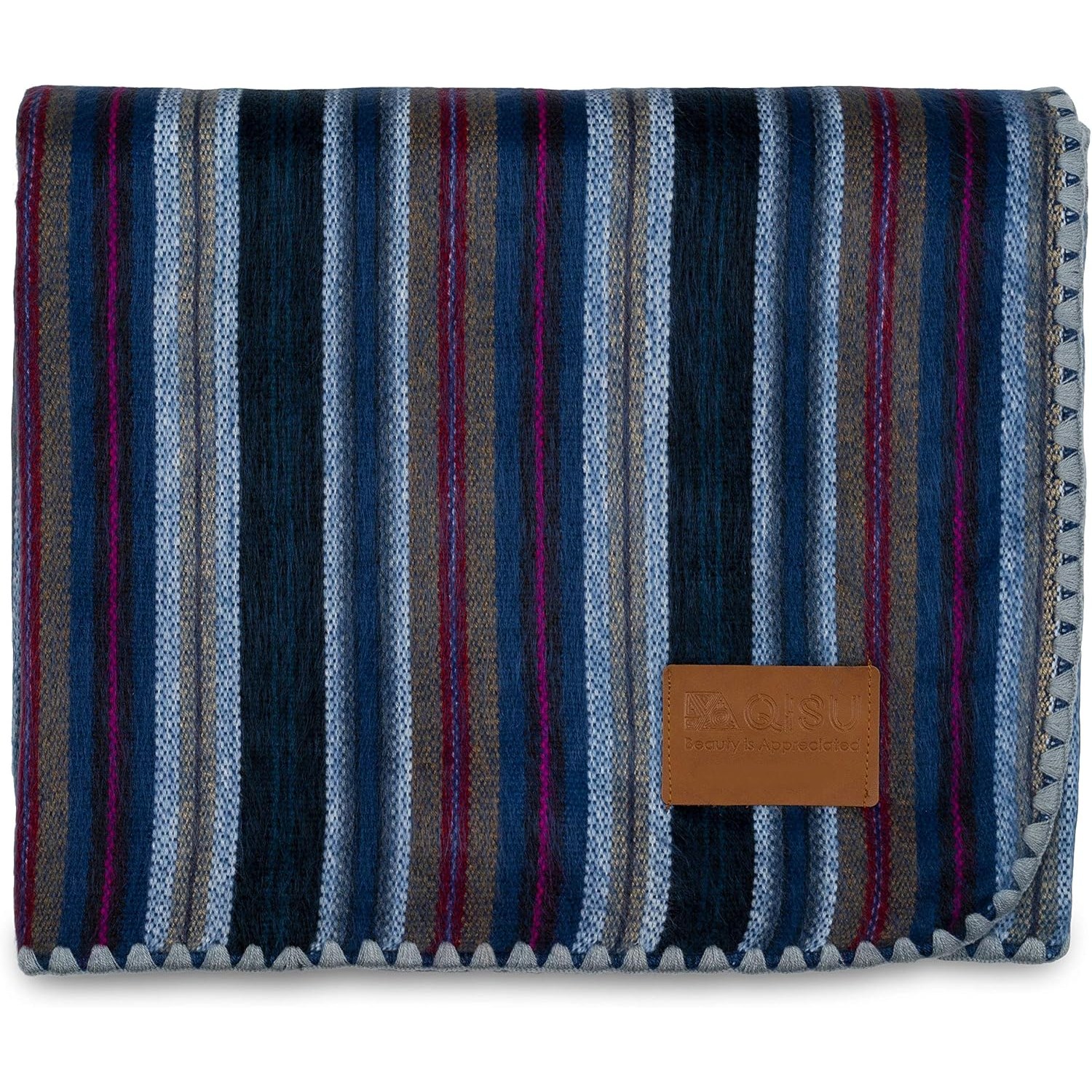
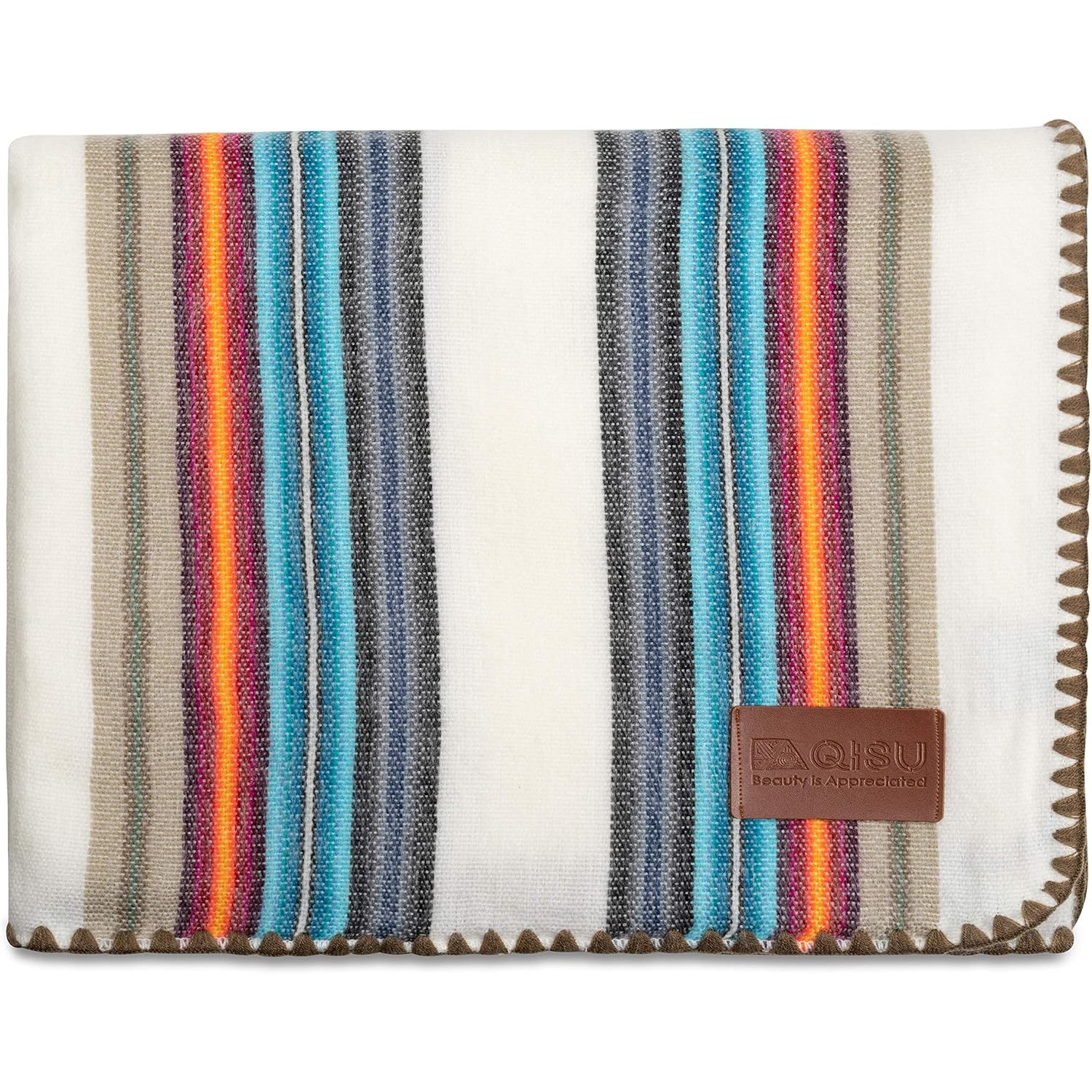
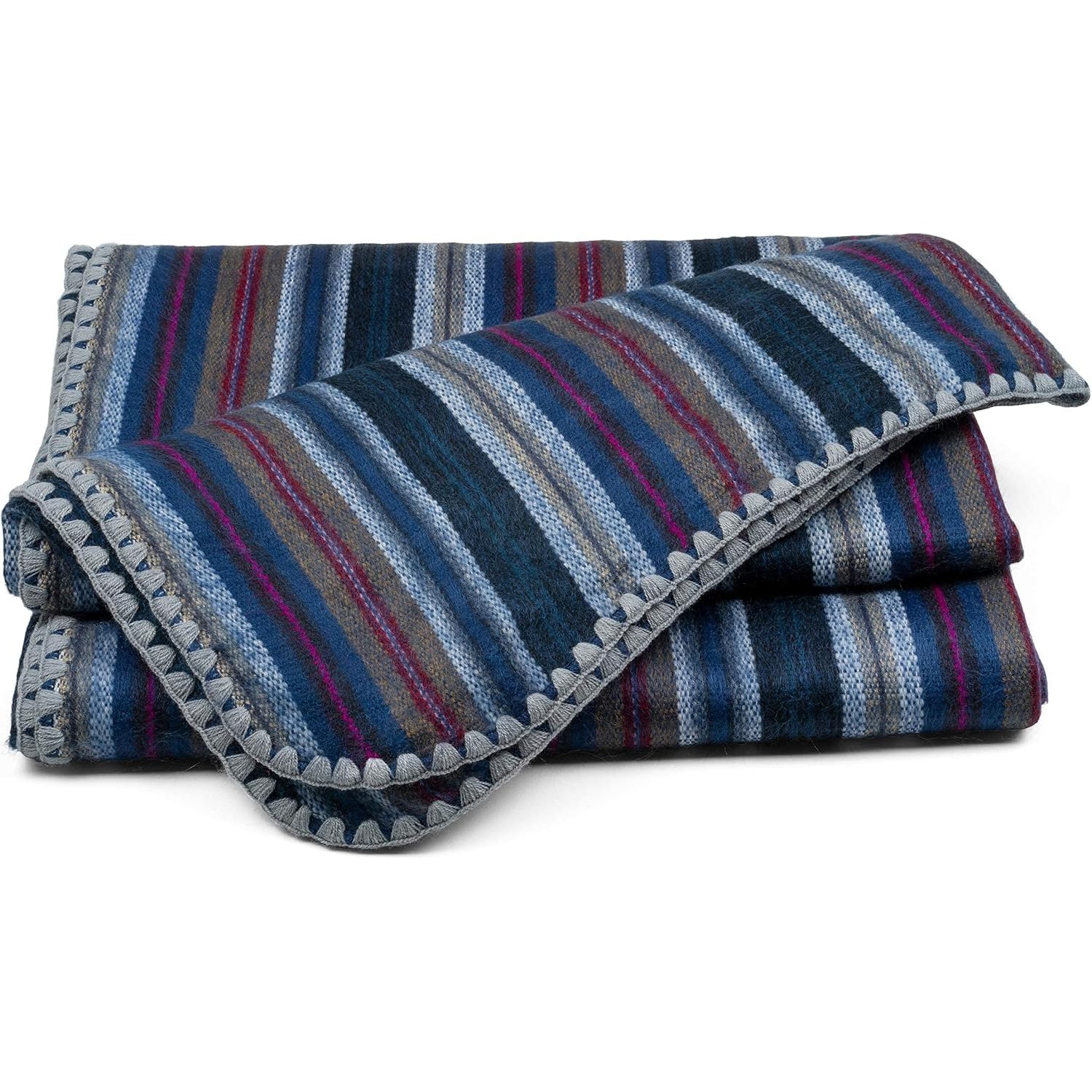
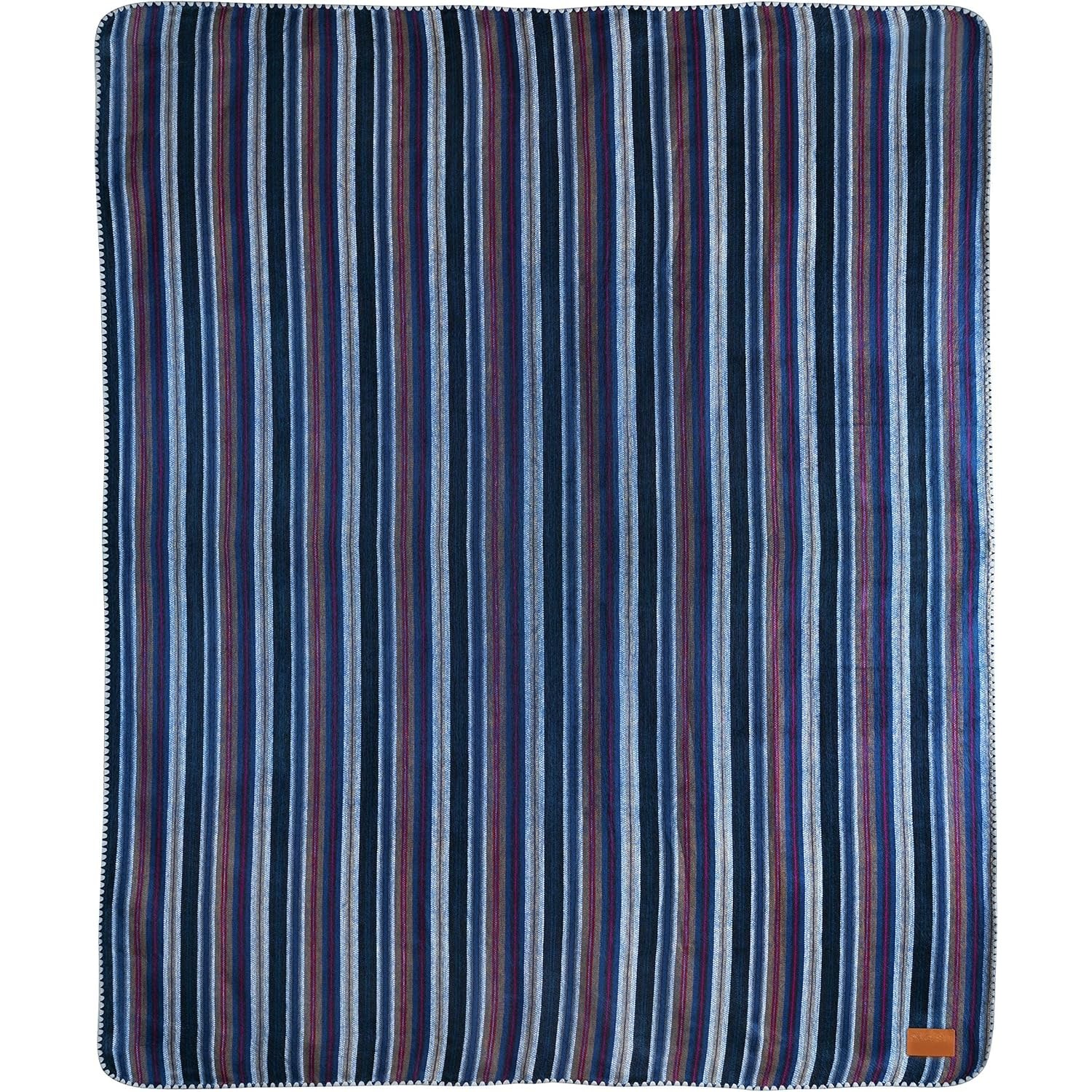
Variegated yarn shifts tone as it runs, so the finished knit carries several shades rather than one flat colour. There are two practical benefits.
First, it adds visual texture. A plain grey sofa with a plain grey throw is a very quiet arrangement. The same sofa with a multi-tone throw suddenly has a focal point, and you did not have to buy new furniture to get it. For anyone hunting the best multi colour throw to lift a neutral room, this is the easy win.
Second, it is forgiving. Marks, pet hair, and the general evidence of a blanket being used show up far more on a solid pale colour. A variegated surface absorbs all of that visually.
Worth knowing: variegated pieces vary slightly from one to the next. That is inherent to the yarn and the knitting process, not a fault. If you need two throws that match perfectly, order them together and tell us.
Where this throw works best
Sofa use is the obvious one and the most common. Draped over an arm, folded over the back, or just left where it landed, it does its job.
Bed-end layering is the second. A throw across the foot of the bed adds warmth where your feet are, which is where most people get cold first, and it adds colour to a bedroom without committing to new bedding.
Then there is everything outside the house. Camping chairs, outdoor dining on a cool evening, long car trips, a cold office. A light alpaca blend handles all of these because it packs small and warms fast.
Where it is less suitable: as a primary bed cover in a genuinely cold room, as a picnic rug straight onto wet grass, or anywhere with sparks and open flame. Knitted fibre and campfires do not get along.
Looking after it
The care routine is short. Wash it on a gentle or delicate cycle in cool water, or do it by hand in the sink. Use a mild detergent made for wool. Skip bleach entirely and skip fabric softener, which coats fibres and dulls the hand feel over time.
Do not wring it out. Press the water out, reshape the throw while it is damp, and lay it flat to dry somewhere with air movement but out of direct sun and off a radiator. Heat is the main enemy of an alpaca blend, which is also why the dryer is off the list.
Expect shedding at first. Every new knitted blend does it. One wash makes a big difference and it tails off quickly after that. Between washes, airing the throw outdoors on a dry day freshens it with none of the wear a wash cycle puts on the fibre.
If the knit snags, resist cutting the loop. Push the pulled thread back through to the reverse with a blunt needle, then even out the surrounding stitches with your fingers. Edges on this throw are protected and reinforced, which helps the perimeter stay tidy through repeated washing.
The short version
This is a knitted throw in 50% alpaca wool and 50% acrylic. The alpaca gives you warmth for very little weight and a soft feel against skin. The acrylic gives you shape retention, easier washing, and a lower price than pure alpaca. The variegated colouring means it earns its place visually as well as practically.
Buy it if you want a light, warm, good-looking throw that gets used all the time. Look elsewhere if you specifically need 100% alpaca, or if you want a heavy, dense blanket as your main bed cover. Dimensions, weight, and exact colourway are not specified in this record, so if any of those are a deciding factor, ask us before you order and we will check.