
The complete guide
How to Choose an Oval Linen Tablecloth That Actually Fits
The table problem nobody talks about
Dining tables take a beating. Hot plates, dropped forks, sticky hands, homework, laptops, the occasional glass of red that goes sideways. Most of us respond by half covering the thing. A runner down the middle. Placemats that have seen better days. A coaster here and there. It works, sort of, but the table never looks like it was set on purpose.
A tablecloth fixes the whole surface in one move. It covers the marks you have already got, it catches the ones you are about to make, and it makes a plain table look intentional. The catch is that most tablecloths are cut for rectangles. If your table is oval or round, a rectangular cloth leaves stiff points hanging off the sides and bunches where the edge curves. That is why a cloth cut as an oval matters. It follows the table instead of fighting it.
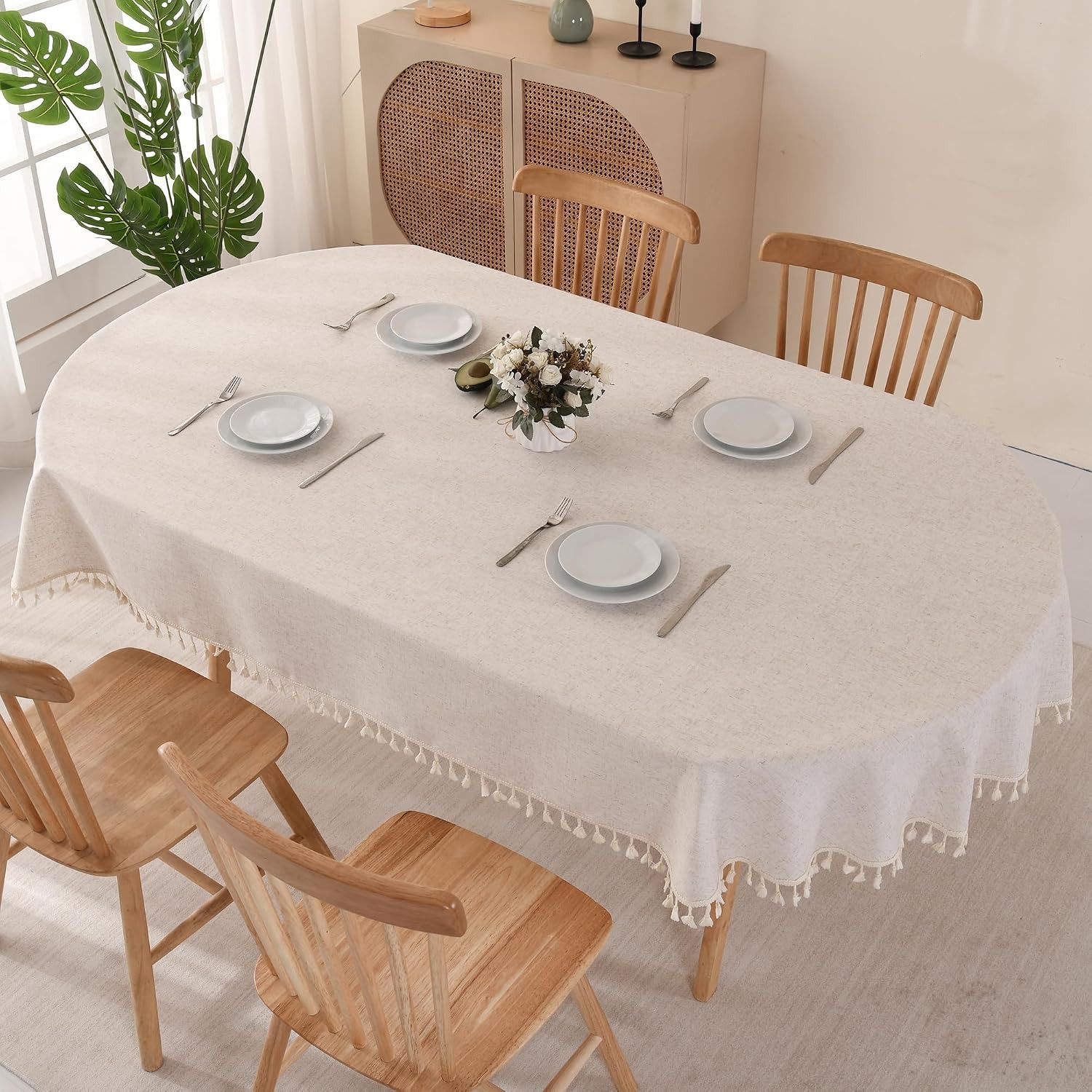
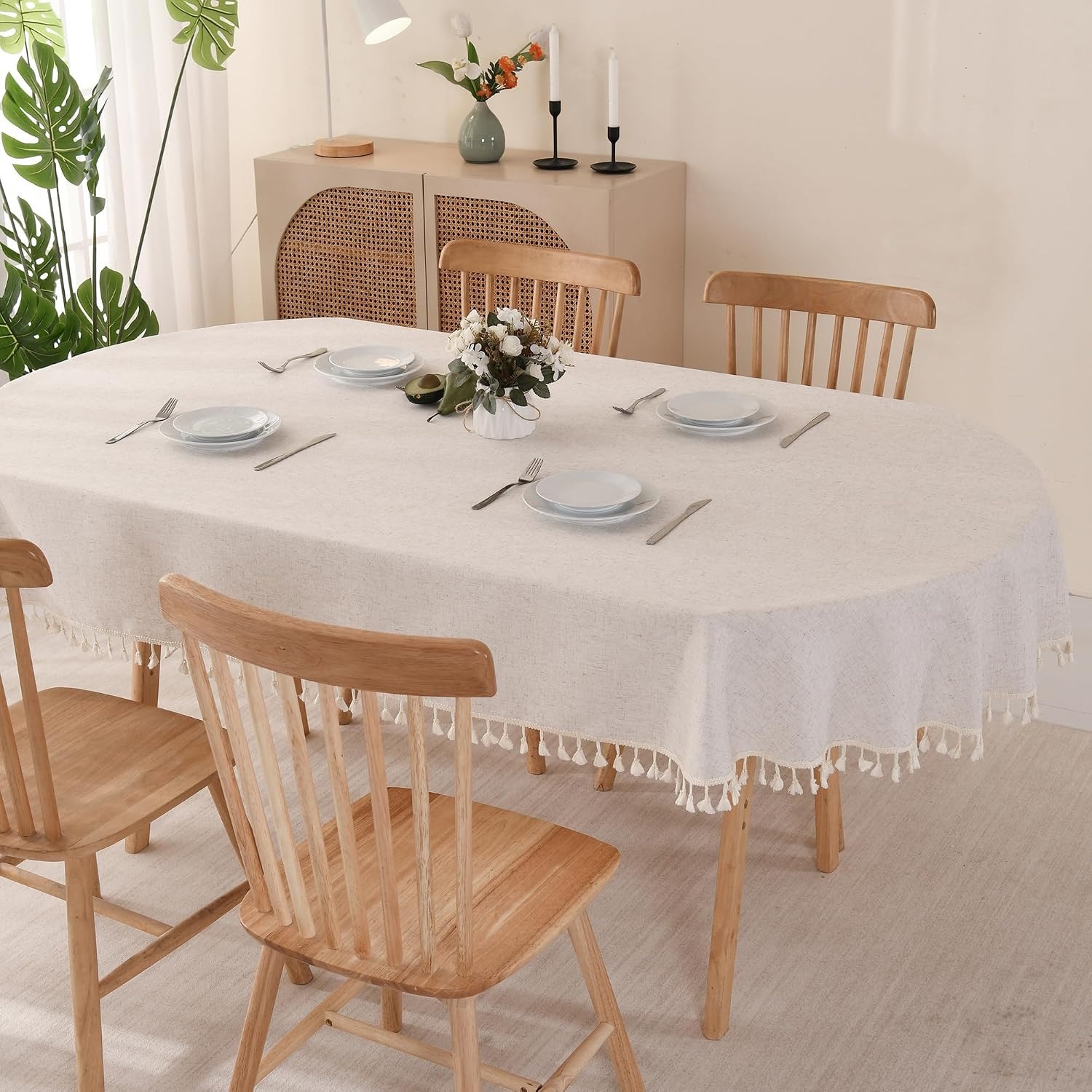
This one is a cotton and linen blend in beige, with tassels running around the hem. Below is how to think about fabric, fit, colour and care so you end up with something you actually use.
Why cotton and linen blends work for table linen
Pure linen is lovely to look at. It has a loose, slightly uneven weave that catches the light and never looks mass produced. It is also expensive, it creases if you so much as look at it, and it can feel stiff until it has been washed a dozen times.
Pure cotton is the opposite. Strong, familiar, easy to wash, but a little flat. It does not have that textured surface people want from table linen.
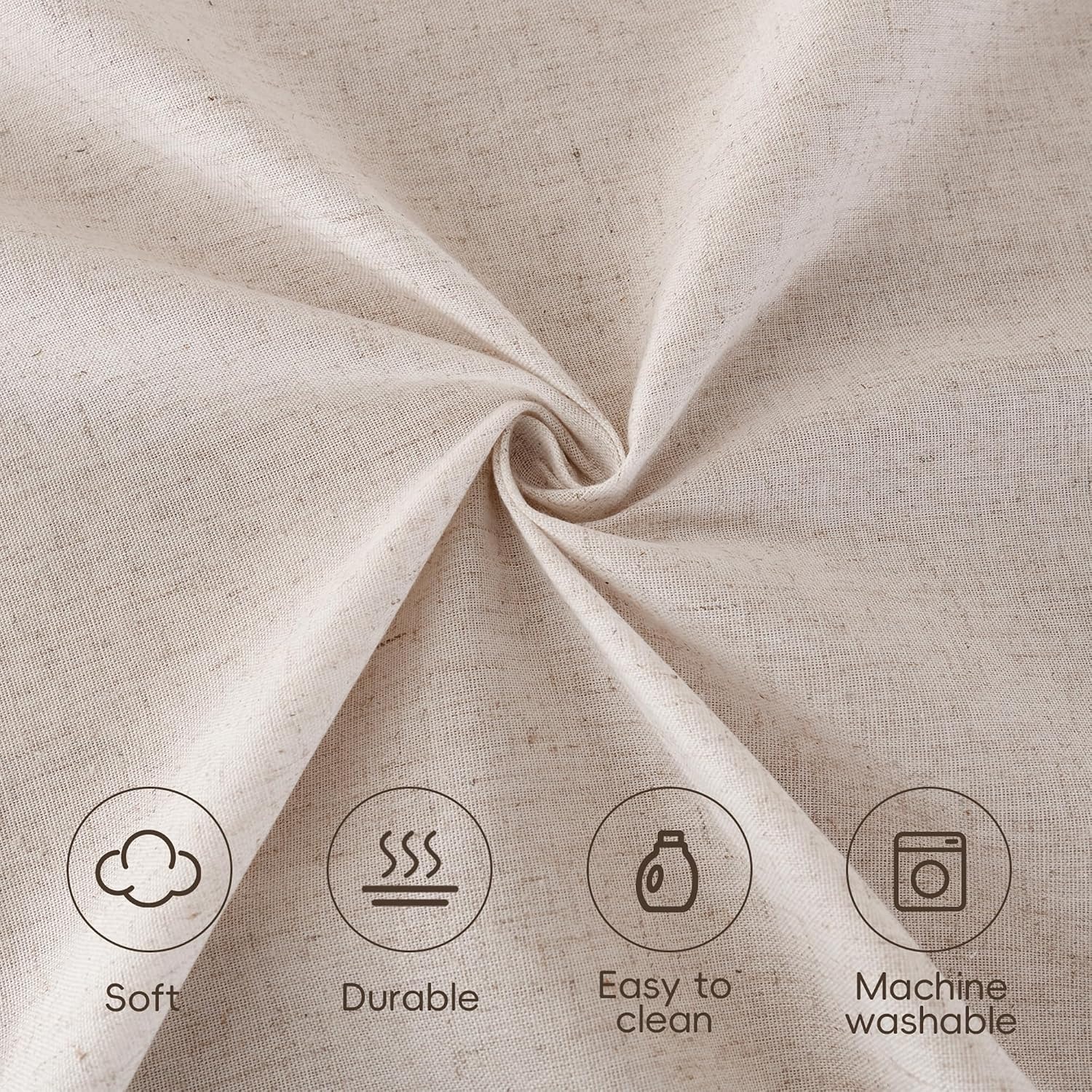
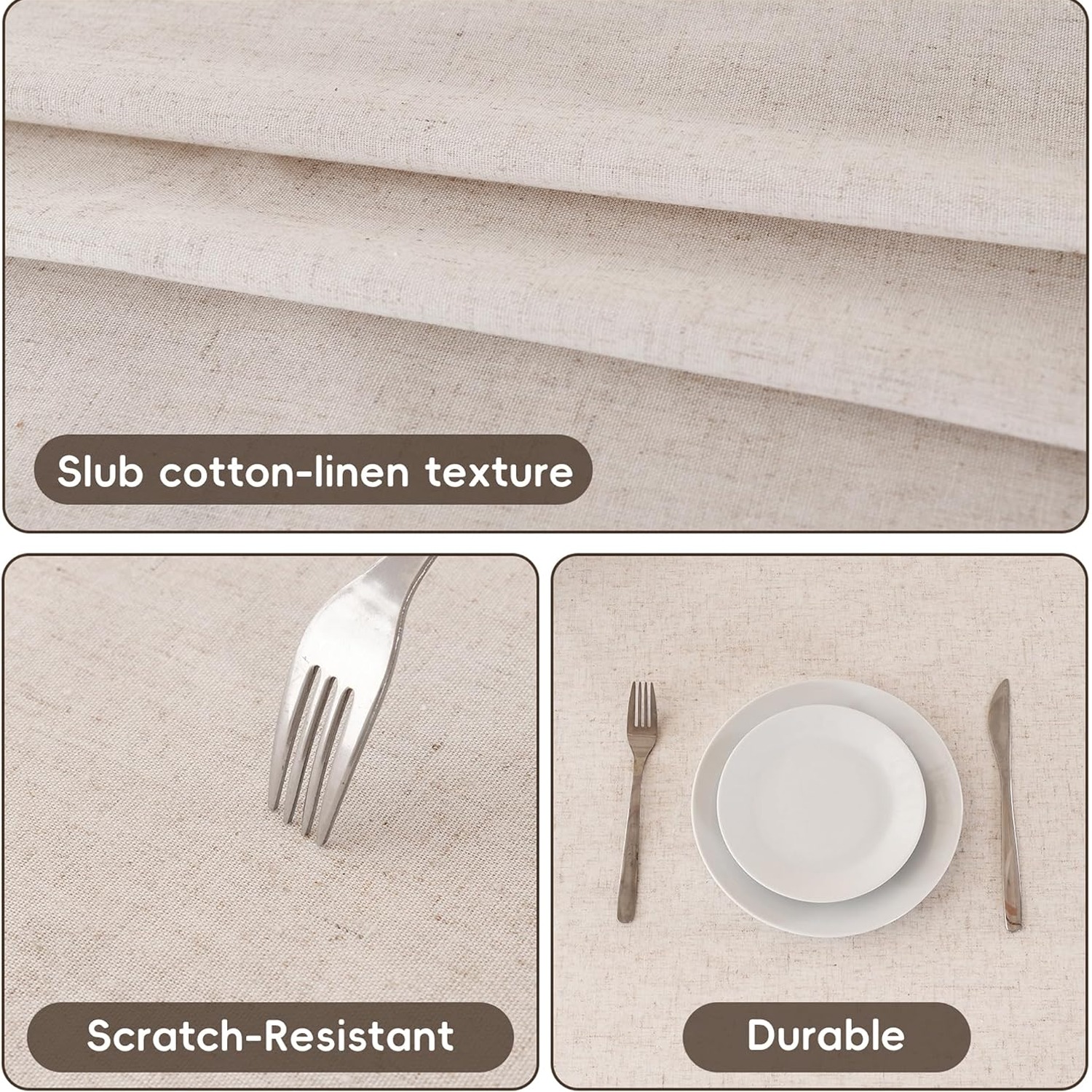
Blending the two gives you a middle ground. You keep the relaxed texture and breathability of linen, and you pick up the durability and easier laundering of cotton. In practice that means a cloth that drapes softly, feels good under your forearms while you eat, and does not fall apart after a season of Sunday lunches. It will still crease, because natural fibres do, but that soft creasing is part of the look rather than a flaw.
If you are comparing options, the best cotton linen tablecloth for a working household is usually the one you are not frightened to use. Fabric you treat as precious ends up in a cupboard.
Getting the size right
This is where most tablecloth purchases go wrong, so it is worth slowing down.
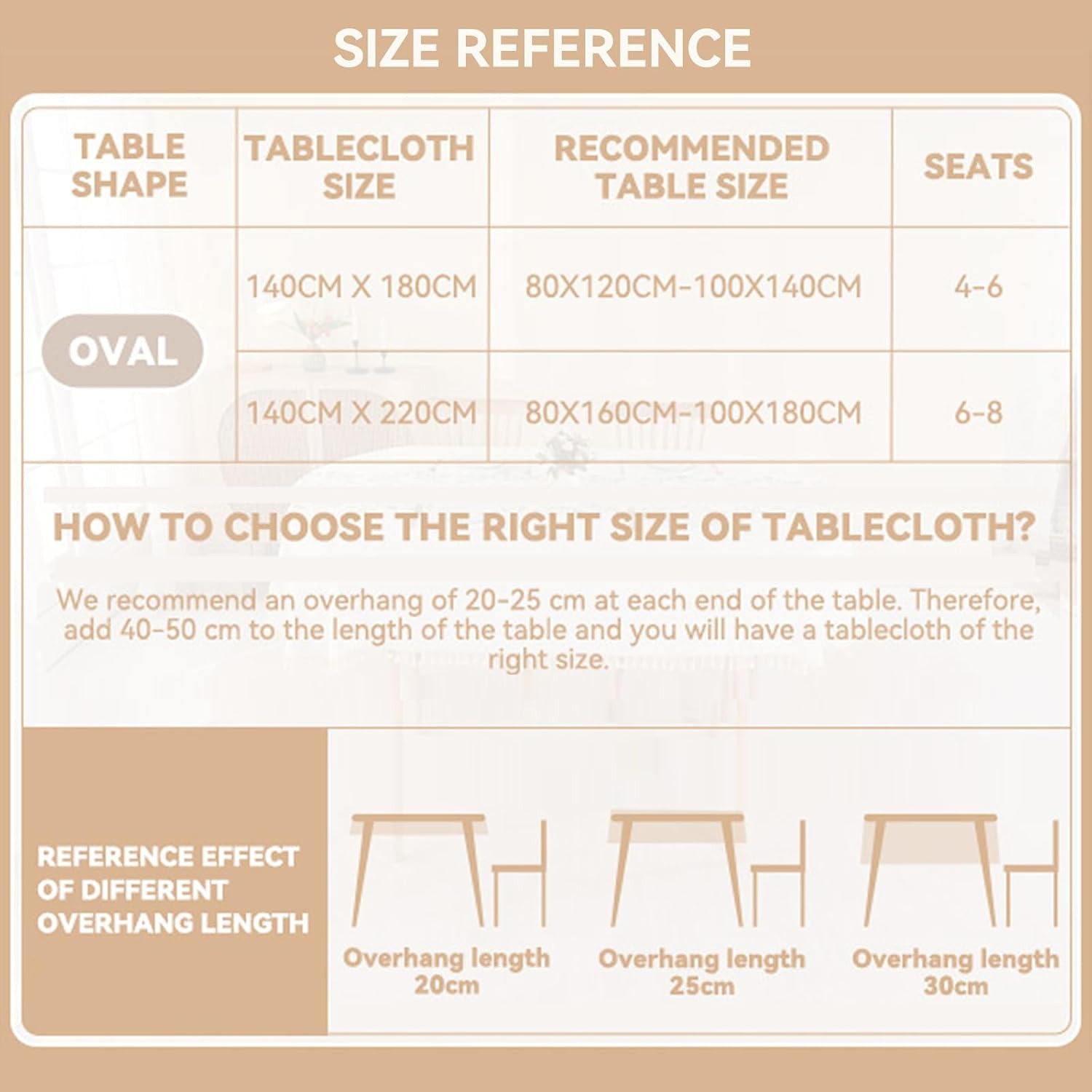
Start by measuring your table at its widest point in both directions. For an oval table that means the longest length and the widest width. Write both numbers down.
Next, decide your drop. The drop is how far the cloth hangs below the table edge. Around 20 to 30 cm on each side is the usual sweet spot. It looks finished, it covers the table edge, and it still sits clear of most people's laps. Shorter drops of 15 to 20 cm feel casual and practical, which suits a kitchen table with kids. Longer drops of 35 cm or more read formal, and they suit dinner parties more than weeknights.
Now do the maths. Take your table length and add double your chosen drop. Do the same with the width. Those two numbers are your target cloth size.
One more thing: if you have chairs with arms that tuck under the table, check that a longer drop will not get caught every time someone pushes their seat in. A small practical detail, but it is the kind of thing that turns a nice cloth into an annoying one.
Why beige is the smart neutral
Colour choice in table linen usually comes down to how often you want to change things.
White looks crisp and formal, but it shows every drop of olive oil and every tea stain. Dark colours hide marks but can make a small room feel heavier, and they show lint and crumbs. Patterns are fun until you want to use a patterned plate or a bold centrepiece, at which point the table starts arguing with itself.
Beige sits in the useful middle. It is warm enough to feel welcoming rather than clinical, neutral enough to disappear behind your crockery, and forgiving enough that a light mark does not ruin the evening. It works with oak, walnut, pine, painted timber and glass, which covers most dining tables people actually own.
It also gives you room to play. Rust napkins in autumn. Greenery and candles in winter. Blue glassware in summer. A neutral base is the quiet piece that lets everything else change. If you are hunting for the best neutral table linen to build a collection around, starting beige is rarely a mistake.
The tassel edge, and what it does
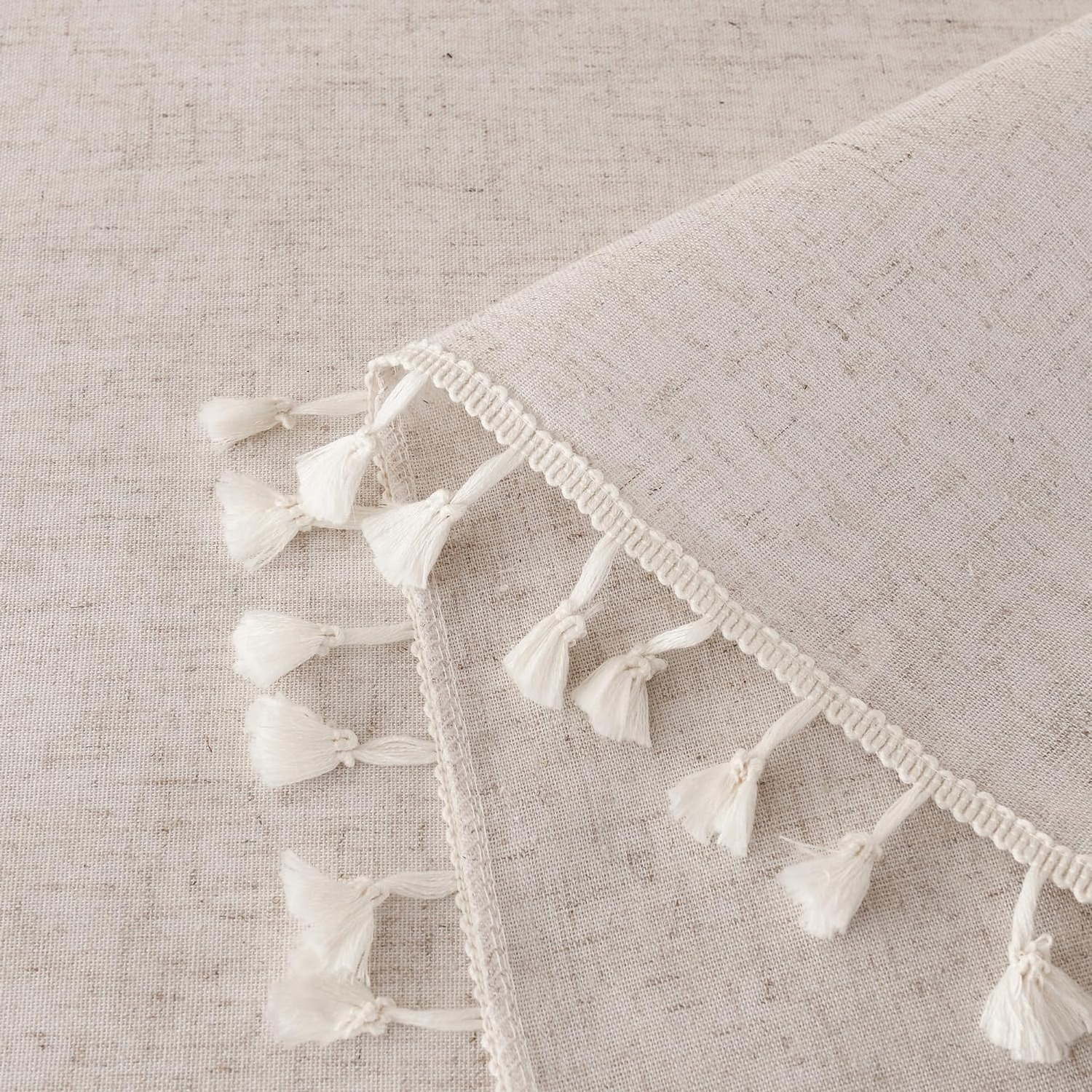
Tassels are mostly a decorative choice, and they are the detail that lifts this from plain fabric to something that looks styled. They run around the full oval hem, giving the edge a soft fringe rather than a hard stitched line.
There is a practical side too. The trim adds a touch of weight along the hem, which encourages the cloth to hang rather than ride up at the sides. On a round table where the drape changes as it goes around, that extra weight helps the whole thing settle evenly.
A few care notes. Keep the iron plate off the tassels. If a thread works loose, trim it with scissors rather than tugging it. And if you have a cat with opinions about dangling objects, be realistic about where you leave the cloth when nobody is home.
Indoors, outdoors, and everything between
This cloth is fine for both indoor and outdoor use, which widens its life a lot. Garden tables, patio dinners, a long lunch under a tree in summer.
Outdoors brings two extra considerations. Wind is the obvious one, so use clips or weights at the edges if there is any breeze. Damp is the second. Bring the cloth in once the meal is over rather than leaving it out through the night, because natural fibres hold moisture and can mark or develop a musty smell if they sit wet.
Indoors, the only real rule is heat. Always put a trivet under hot dishes, and keep candles in holders rather than sitting on the fabric.
Keeping it looking good
The care routine is simple and that is the point.
Machine wash on a low temperature with a gentle cycle, with similar colours. Skip the bleach and skip aggressive stain removers, both of which can dull the fibres and weaken the trim. Air drying is the recommended route, because heat is what causes most shrinkage and stiffening in cotton linen blends.
For spills, speed beats product. Blot, do not rub. Rinse with cold water from the back of the fabric so you push the stain out rather than through. Then wash cool as soon as you can. Hot water sets wine, tomato and protein stains, so leave the kettle out of it.
For storage, make sure the cloth is bone dry, fold it loosely and keep it flat in a drawer or cupboard. Rolling it around a cardboard tube avoids hard fold lines if you have the space.
Two cloths is the quiet upgrade in a busy house. One on the table, one in the wash. It is a small thing that removes a whole category of mild stress.
Who it suits
This suits anyone with an oval or round dining table who wants the table to look finished without a lot of fuss. It suits households that eat together most nights and want linen they can wash rather than baby. It suits people who host a few times a year and would rather own one good cloth than hire something.
It is less suited to square tables, where the oval hem will not follow the corners, and to very long rectangular banquet tables, where a rectangular cloth or multiple cloths make more sense.
The short version
Measure your table at the widest points. Add 20 to 30 cm of drop on each side. Choose an oval cloth for an oval or round table, because the shape does half the styling work for you. Cotton linen blends give you linen texture with cotton practicality, beige hides more than white and argues with less than pattern, and the tassel hem adds weight and finish at the edge.
Then wash it cool, hang it to dry, and use it on a Tuesday rather than saving it for a day that never quite arrives.