
The complete guide
How To Choose Linen Cushion Covers That Actually Last
The problem with most cushion covers
Cushions are the thing people buy last and replace first. A sofa gets chosen carefully, a rug gets measured twice, and then cushions get picked up in a rush because the room looks unfinished. Six months later the zip has split, the fabric has pilled, and the colour has gone flat in the sun.
The fix is not spending more on a trend. It is picking a fabric that ages in a way you like, in a size that fits the inserts you can actually buy, with a closure that does not have a weak point built into it. Linen covers that size, in a neutral like light grey, do that job without much fuss.
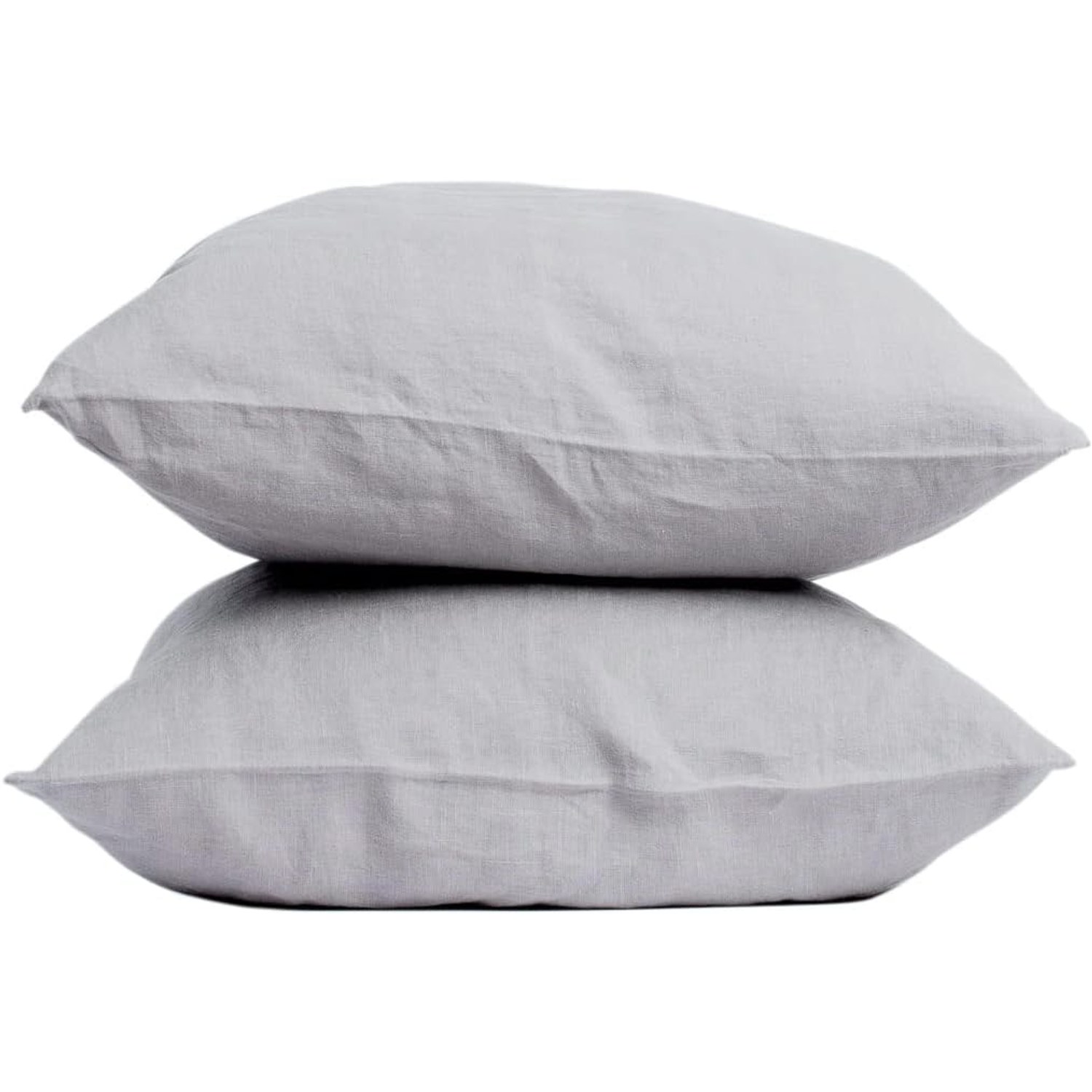
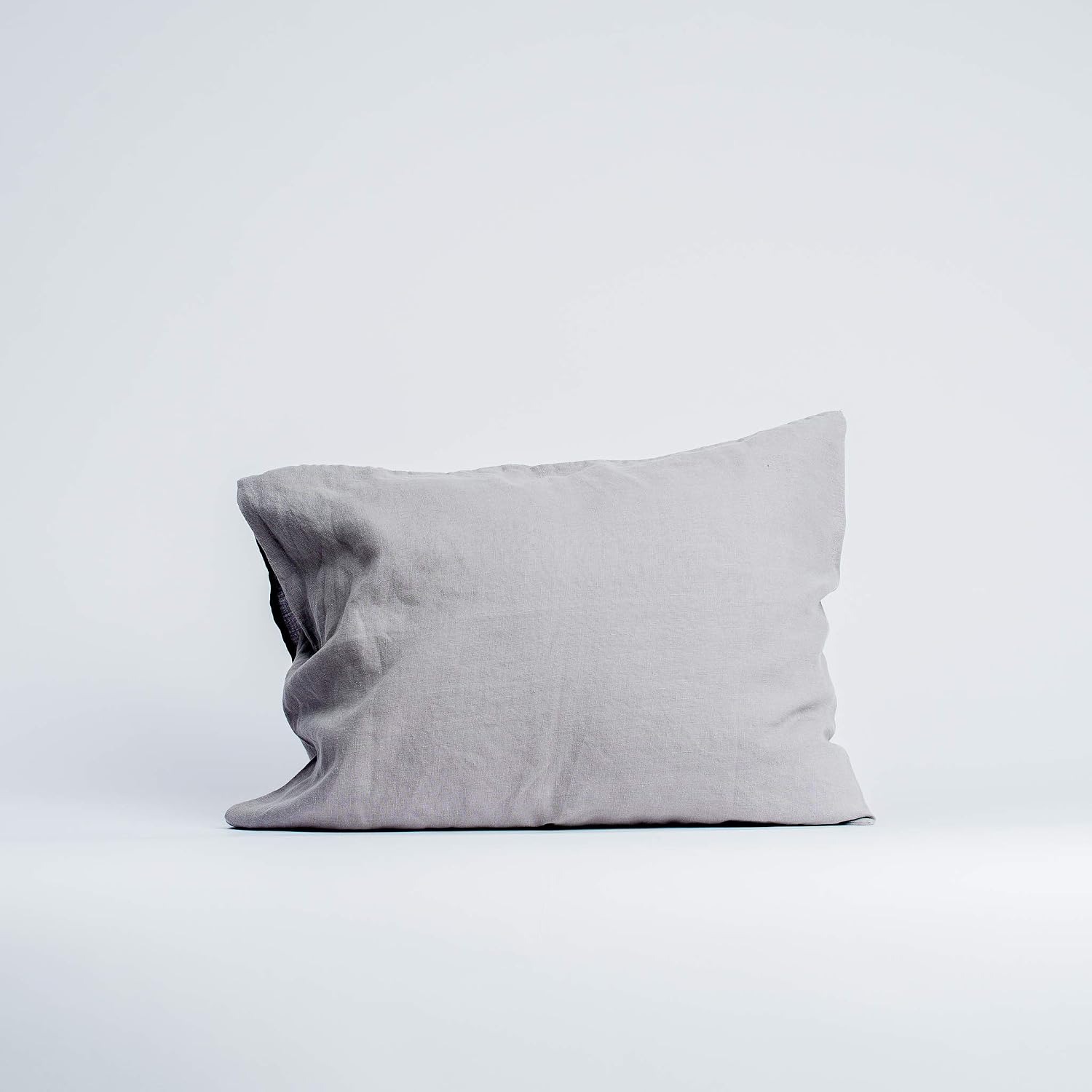
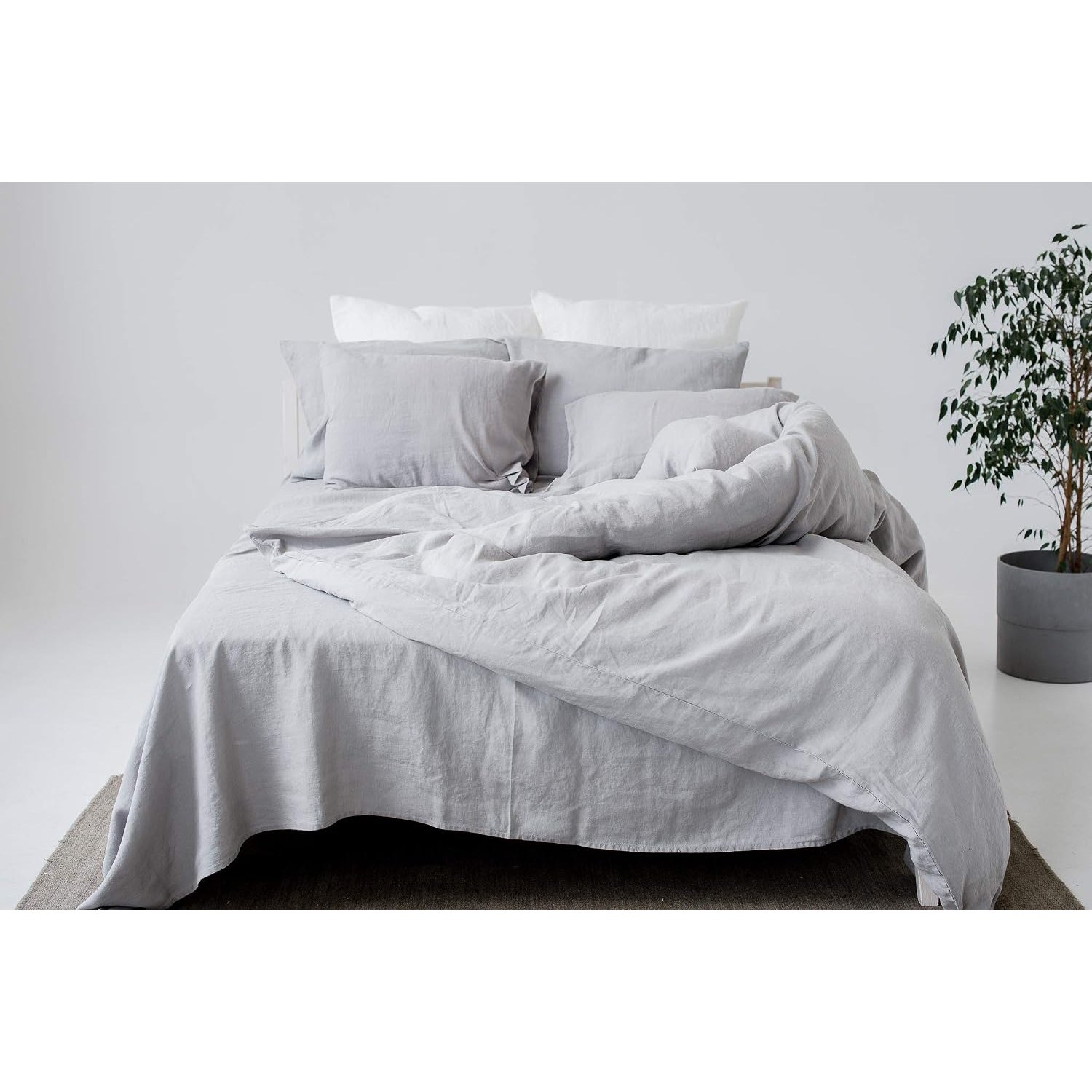
That is the thinking behind these stonewashed linen cushion covers. A pair, 40 cm square, light grey, envelope back. Nothing clever, just the right choices.
Why linen behaves differently
Linen comes from the flax plant and the fibres are long. That length is the whole story. Long fibres twist into a yarn with fewer loose ends poking out, which means less pilling and less fuzz as the fabric is handled. Short fibre fabrics shed and go bobbly in the spots that get the most contact, usually right where your elbow lands.
Linen also moves air. The weave sits a little open and the fibre does not cling, so a cushion you lean on during a warm evening does not get sticky. In colder weather the same cushion feels settled rather than chilly, because linen is not a cold-to-touch fabric the way a tightly woven synthetic can be.
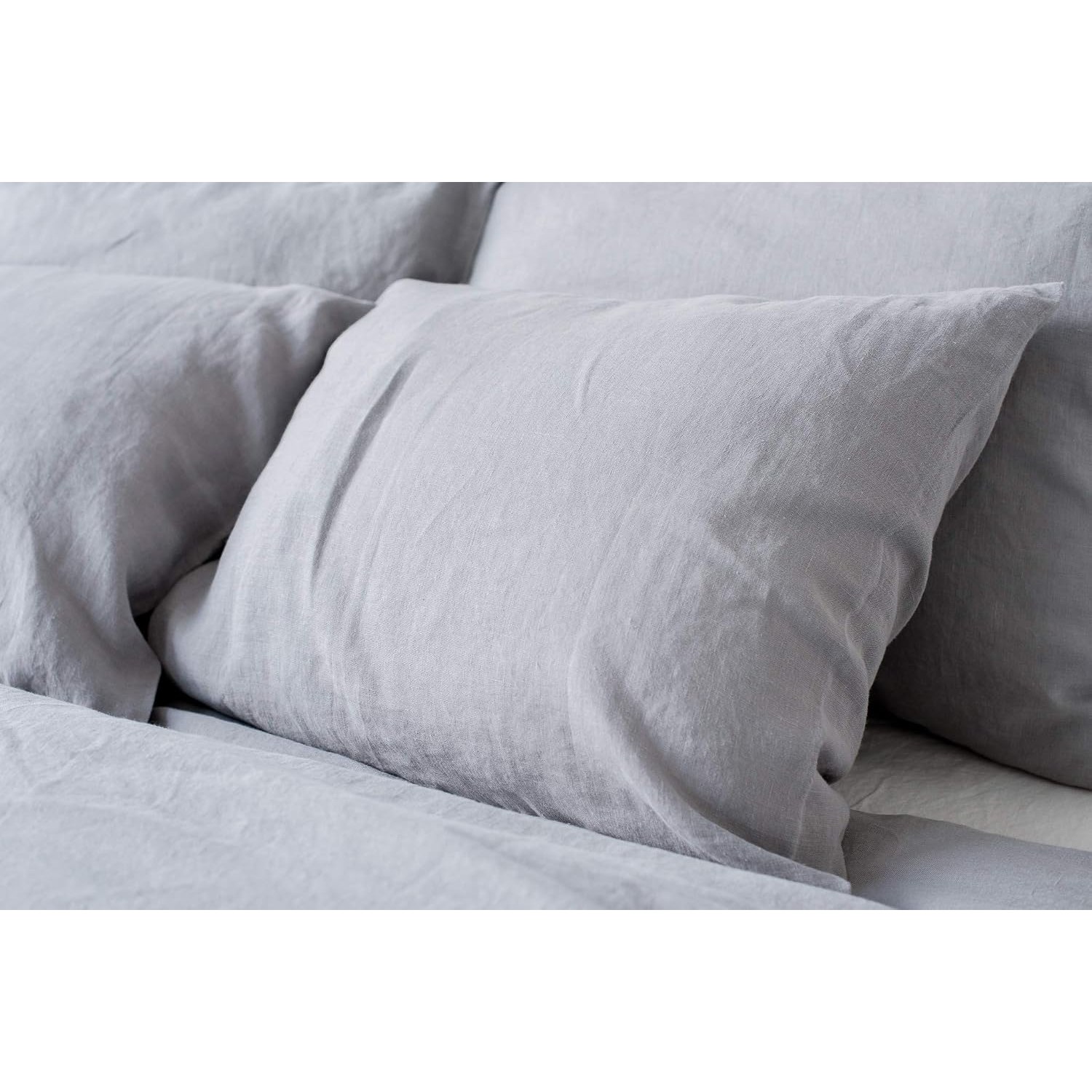
The trade-off is creasing. Linen wrinkles, and it always will. If crisp and flat is your preference, linen will frustrate you. If a slightly rumpled, lived-in look is what you are after, this is the fabric that does it honestly rather than imitating it with a print.
What stonewashing actually changes
Raw linen out of the loom is stiff. It has body, it holds a shape, and it can feel scratchy on the first few uses. A lot of people have tried linen once, found it hard, and written it off.
Stonewashing solves that before the fabric ever reaches you. The cloth is washed and agitated so the fibres relax and the surface softens. What you get is linen that already feels broken in, with the gentle crumple and uneven texture that people associate with good quality rather than cheapness.
There is a practical bonus too. Because the fabric has already been through a wash, most of the shrinkage has happened. Your first home wash will not dramatically change the size, as long as you keep the temperature sensible.
Getting the size right
These covers are 40 cm square, which is the most common cushion size sold. That matters more than it sounds, because insert availability is the thing that trips people up. A strange size means hunting for a matching fill later.
You have two sensible options. A 40 cm insert gives a true fit, flat and tidy, with the cover sitting as designed. A 45 cm insert in the same cover gives a fuller, rounder cushion with firm corners and no droop in the middle. Interior stylists tend to size up for this reason, because a slightly overstuffed cushion photographs and karate-chops better and never looks tired.
If you want the softest, most casual result, feather or feather-blend inserts collapse and drape with the linen. If you want structure and you would rather not fluff cushions daily, a good polyester fill holds its shape longer. Neither is wrong, they just give different rooms.
Who these suit
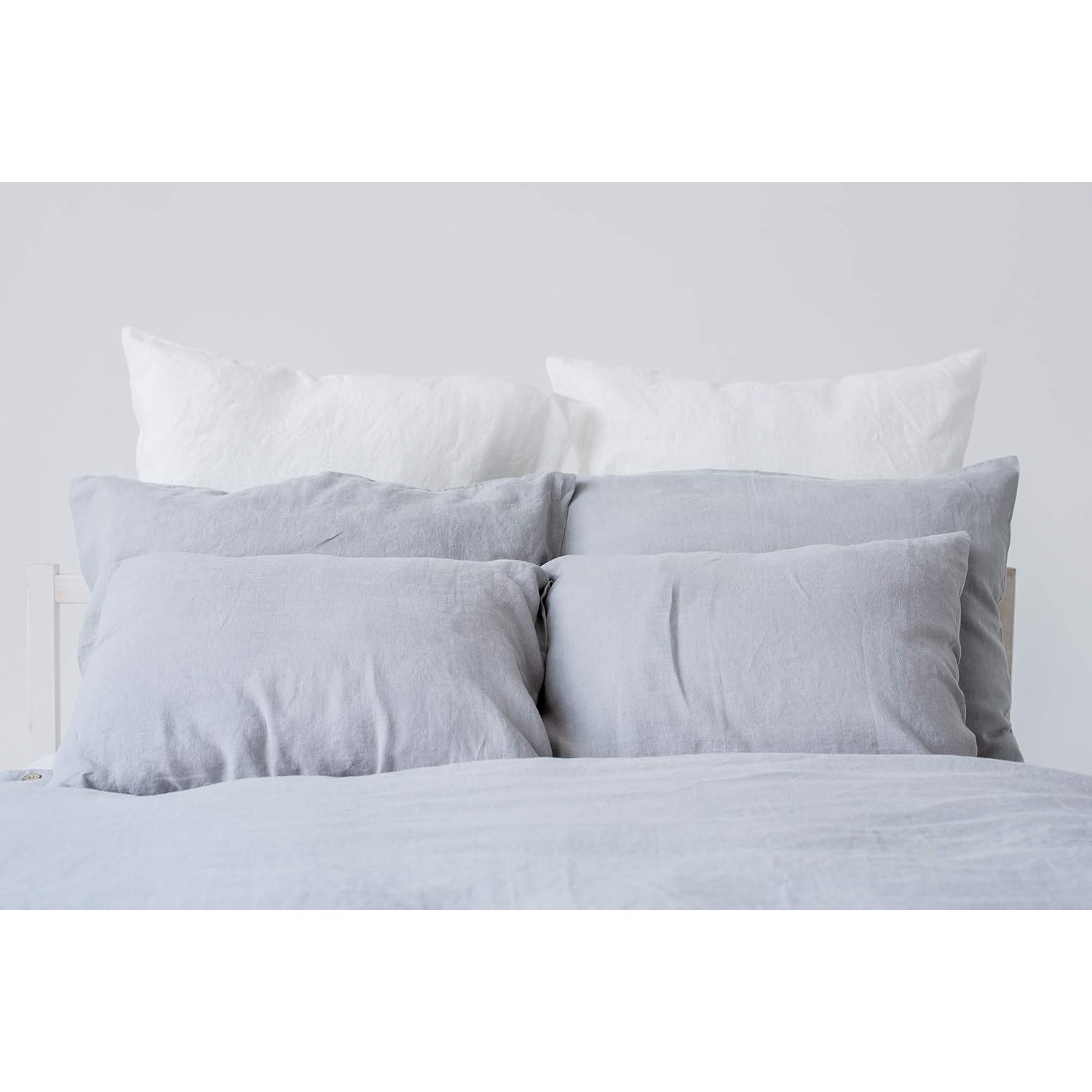
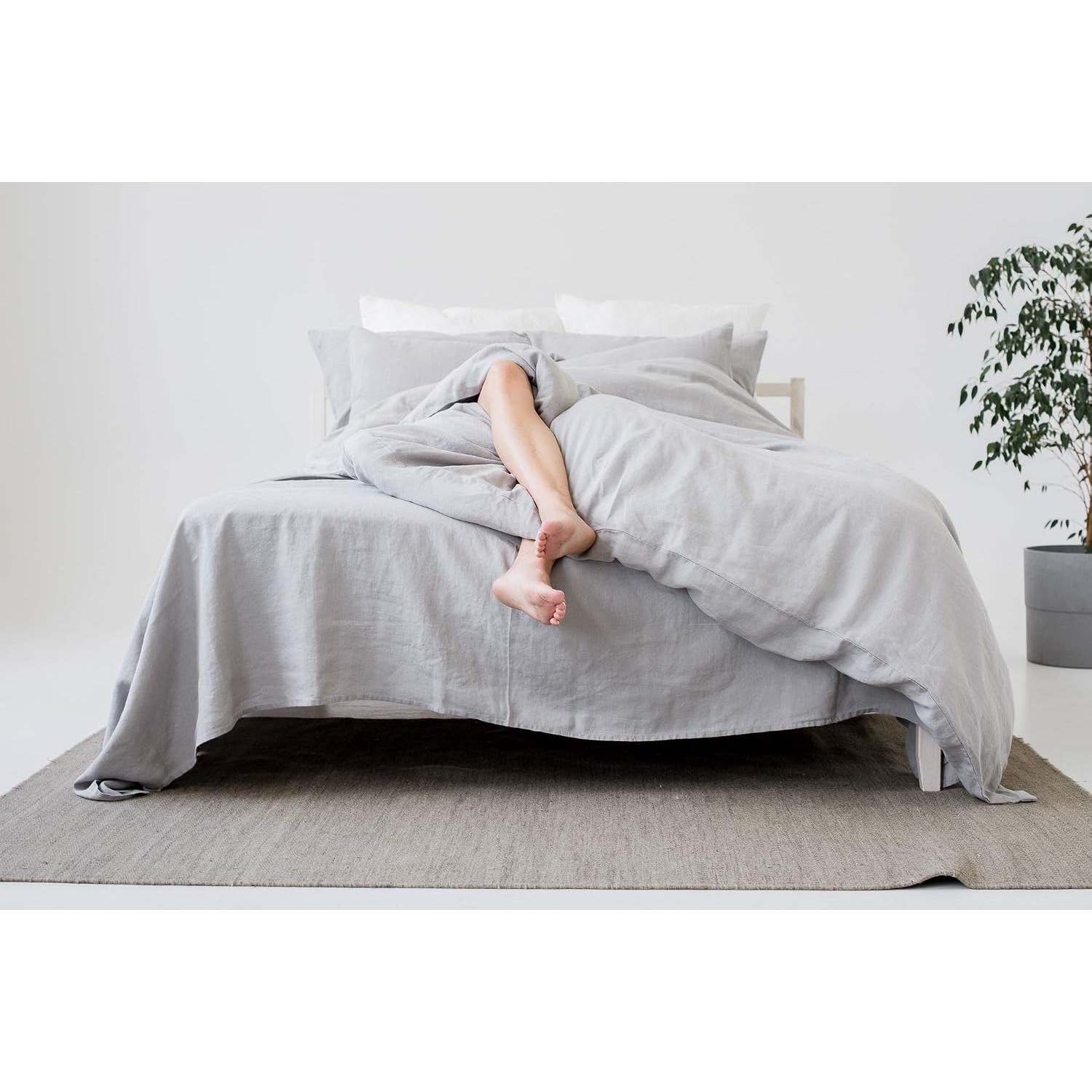
A two seat sofa takes one set of two comfortably. A three seater usually wants four cushions, so two sets, either both in light grey or one set paired with a contrast texture. On a bed, a pair of 40 cm squares in front of your standard pillows adds a layer without turning the bed into a pile you have to clear every night.
They also work well in the quieter spots. A reading chair, a window seat, a bench in a hallway. Because the shade is a soft neutral, you are not committing the room to a colour scheme you might be bored of next year.
If your home already has a lot of pattern, linen in a plain grey calms things down. If your home is very plain, the texture of washed linen stops a neutral scheme from looking flat. It is one of the few things that works in both directions.
Building a mix that does not look random
The easiest approach is to vary size and texture but keep colour tight. Put a 40 cm linen square next to a larger 50 cm cushion and a small lumbar, all within a couple of shades of each other. Your eye reads depth, not clutter.
If you want contrast, do it with material rather than colour. Linen against a chunky knit, or linen against a smooth cotton, gives the same tonal palette more interest. Adding a strong colour usually means committing to it elsewhere in the room, which is a bigger decision than buying cushions.
Odd numbers are often recommended, but do not get precious about it. A symmetrical pair at each end of a sofa looks deliberate and tidy, and that is a perfectly good result.
Looking after them
Wash cool to warm on a gentle cycle with similar colours. Use a mild detergent and skip the fabric softener, which coats natural fibres and dulls them over time. Bleach is out, as it weakens the fibre and will lift the colour unevenly.
Low heat tumble drying is fine and keeps the hand soft. If you want to iron, take them out slightly damp and press with a warm iron. If you do not want to iron, pull them into shape and let them dry, and the texture will look intentional.
Rotate your cushions every few weeks so the same two do not absorb all the leaning and all the sunlight. Direct afternoon sun is the main cause of fading in any soft furnishing, linen included.
Spot clean spills quickly with cold water and a clean cloth before they set. Rubbing hard pushes the stain into the weave, so blot instead.
What we cannot tell you
We only publish what the supplier record states. For this item, the exact fibre composition, finished dimensions in millimetres, product weight and country of origin are not specified. We would rather say that plainly than invent a figure.
What we can say is the format: two covers, 40 cm square, light grey, stonewashed linen, envelope back, inserts not included, supplied under the MLH MY LINEN HOME brand. If you need a specific detail confirmed before ordering, ask and we will check with the supplier rather than guess.
The short version
Linen cushion covers earn their place because they get better with use instead of worse. Stonewashing means you skip the stiff phase entirely. A 40 cm square fits the inserts you can find anywhere, and an envelope back removes the part most likely to break.
Buy a 40 cm insert for a neat fit or a 45 cm one for a plump look. Wash cool, dry low, keep them out of hard sun, and a pair of light grey linen cushions will quietly do their job for years.