
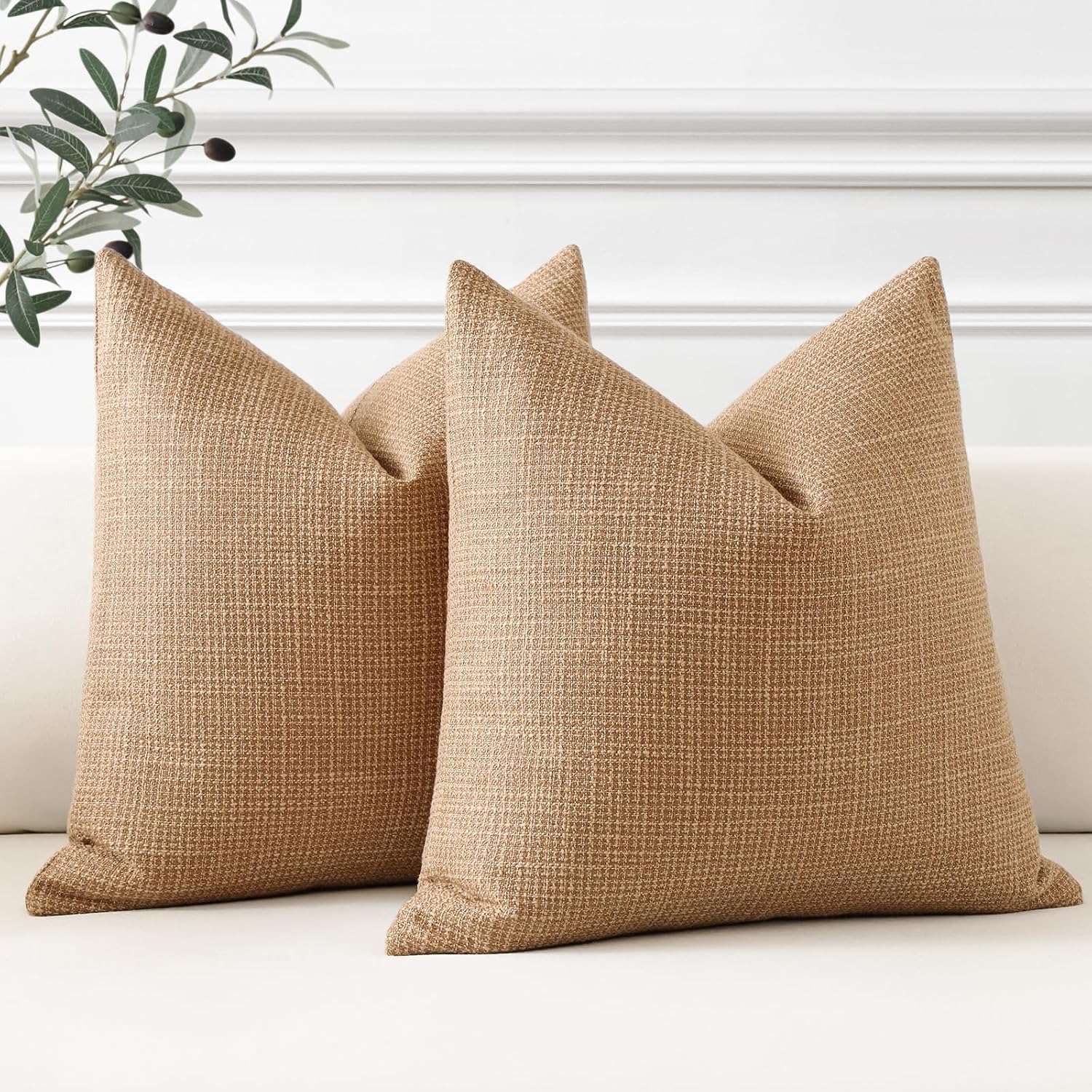
The complete guide
How to Choose Light Brown Linen Look Cushion Covers
The problem with a room that looks fine but feels flat
Most living rooms do not fail dramatically. They just go quiet. The sofa is still good, the rug still works, but the whole thing has stopped being interesting. Nine times out of ten the issue is texture, not furniture. Everything in the room is smooth, matte and the same temperature of colour, so your eye slides across it and does not stop anywhere.
Cushion covers fix this faster and cheaper than almost anything else. You are not buying new cushions, you are buying the outer layer. The inserts you already own go straight back in, the old covers go in a drawer or the bin, and the change happens in a couple of minutes.
Light brown is a particularly useful colour to do this with. It is warm without being orange, neutral without being grey, and it sits against almost every common sofa colour without an argument. If you have ever bought a bold cushion and quietly retired it after six weeks, you already know why neutral cushion covers for sofa settings last longer.
What "linen look" actually means here
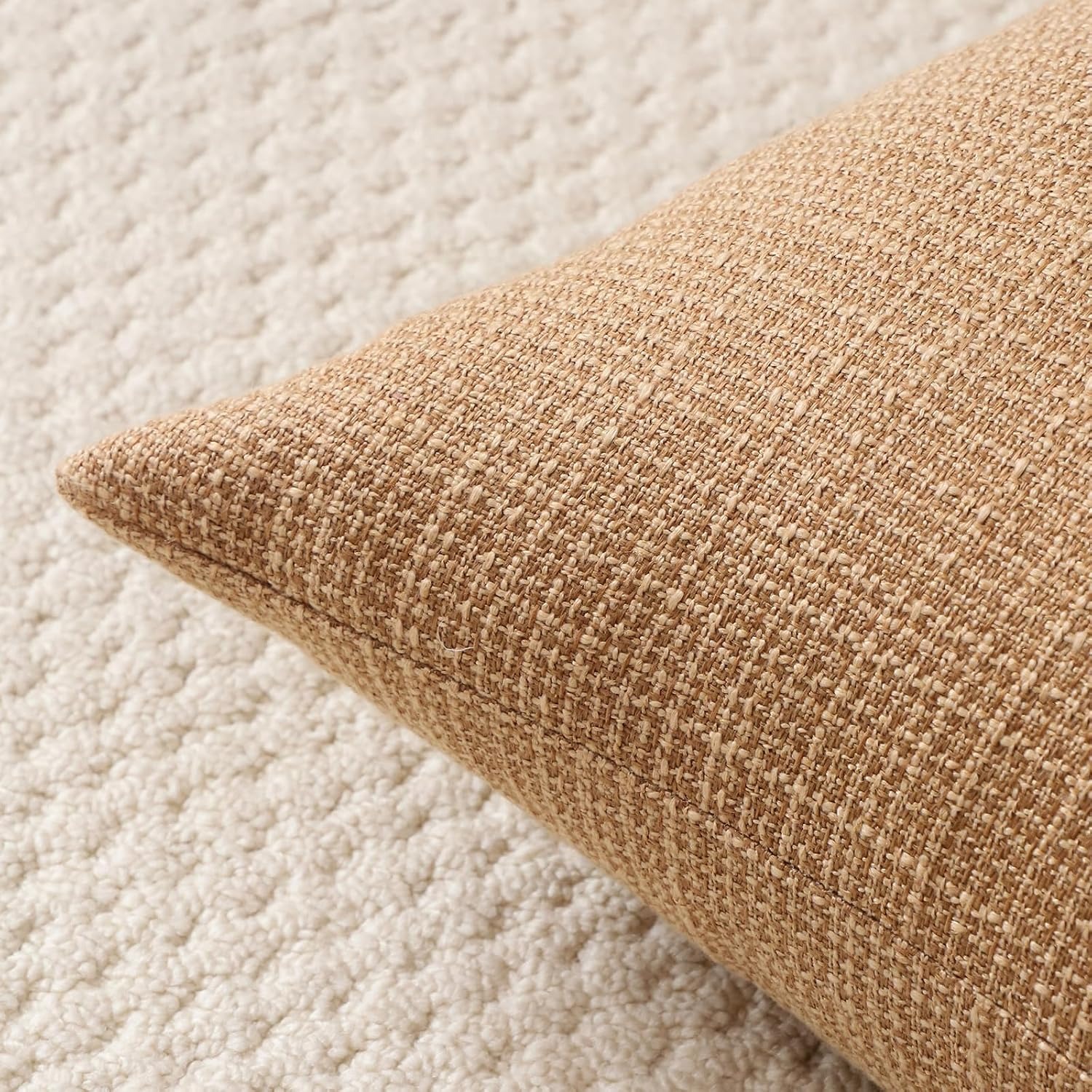
Be clear about the fabric before you buy. These covers are polyester woven to look like linen. The maker calls the material polyester linen. There is no stated linen percentage anywhere in the product data, so the honest description is that this is a linen look rather than a linen fibre.
That matters for two reasons. The first is expectation. Real linen has a particular dry, cool hand feel and it creases the moment you look at it. Polyester does not do either of those things. It stays smoother, it feels a little softer, and it does not develop that lived-in crumple that linen fans actually want.
The second reason is practical, and it works in your favour. Polyester holds dye well, so the colour stays consistent through repeated washing. It dries fast. It does not shrink at low temperatures. For a cushion that lives on a couch where people eat, nap and park a dog, that is a sensible set of properties. The best linen look cushion covers give you the visual texture of linen with the maintenance profile of a synthetic.
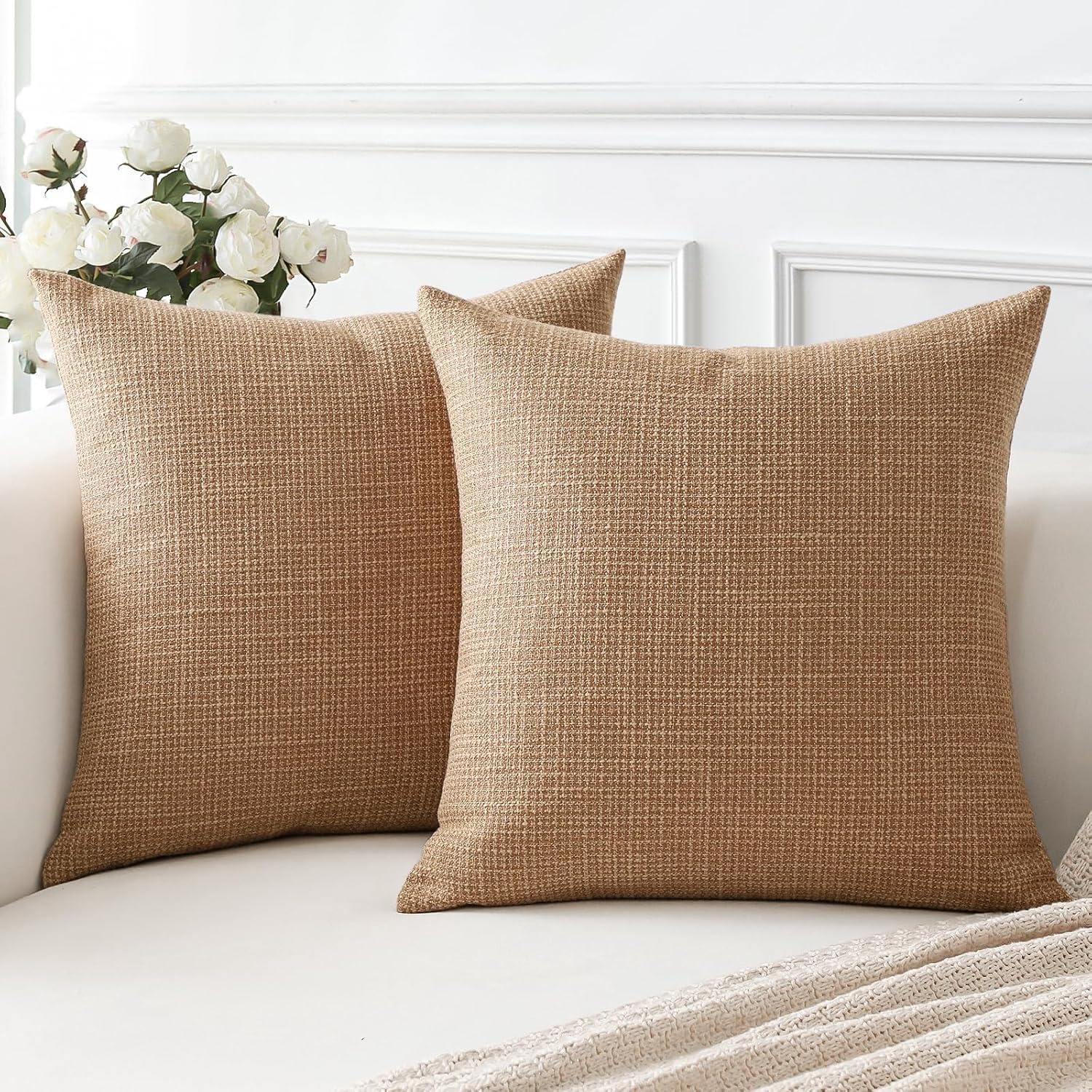
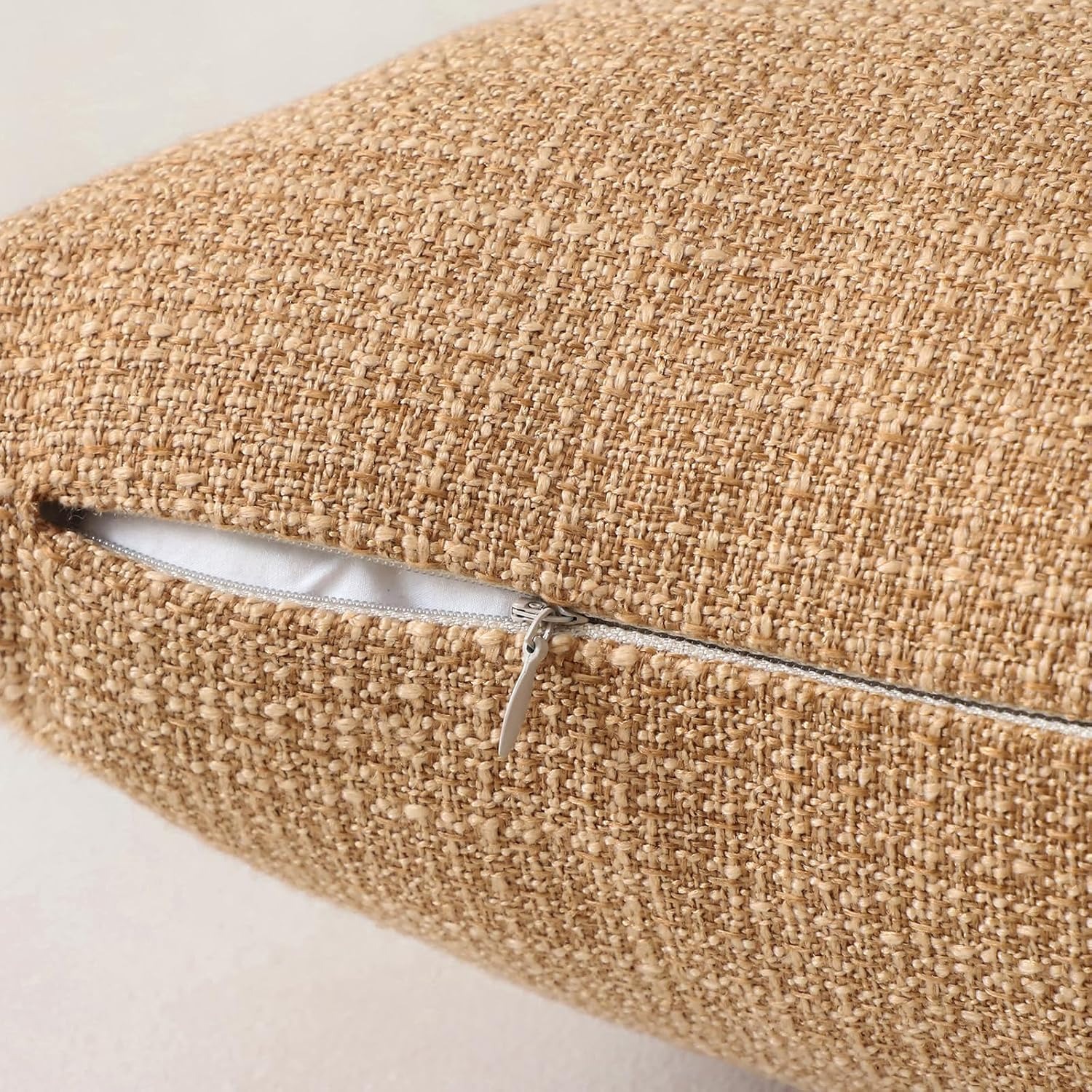
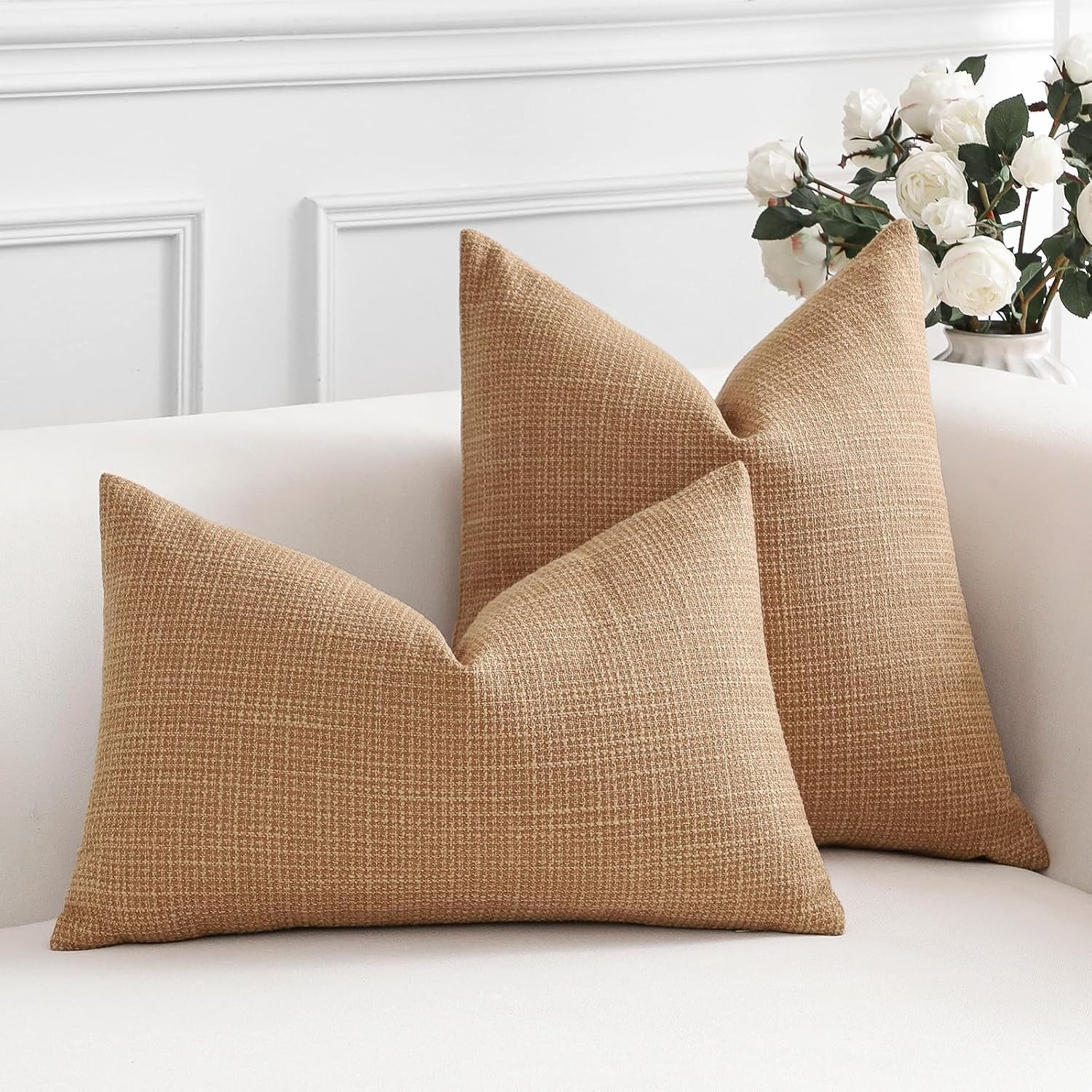
The weave itself carries a visible slub, the slight irregular thickness that makes linen read as linen from across the room. That texture is what breaks up a flat sofa. It catches light differently from a smooth cotton cover, and that small difference is the whole point.
Size, and why 50 cm is the sweet spot
Each cover in this pack is 50 x 50 cm. The maker notes a 1 to 2 cm variance because panels are cut and sewn by hand, which is standard for textiles at this price and invisible once a cushion is inside.
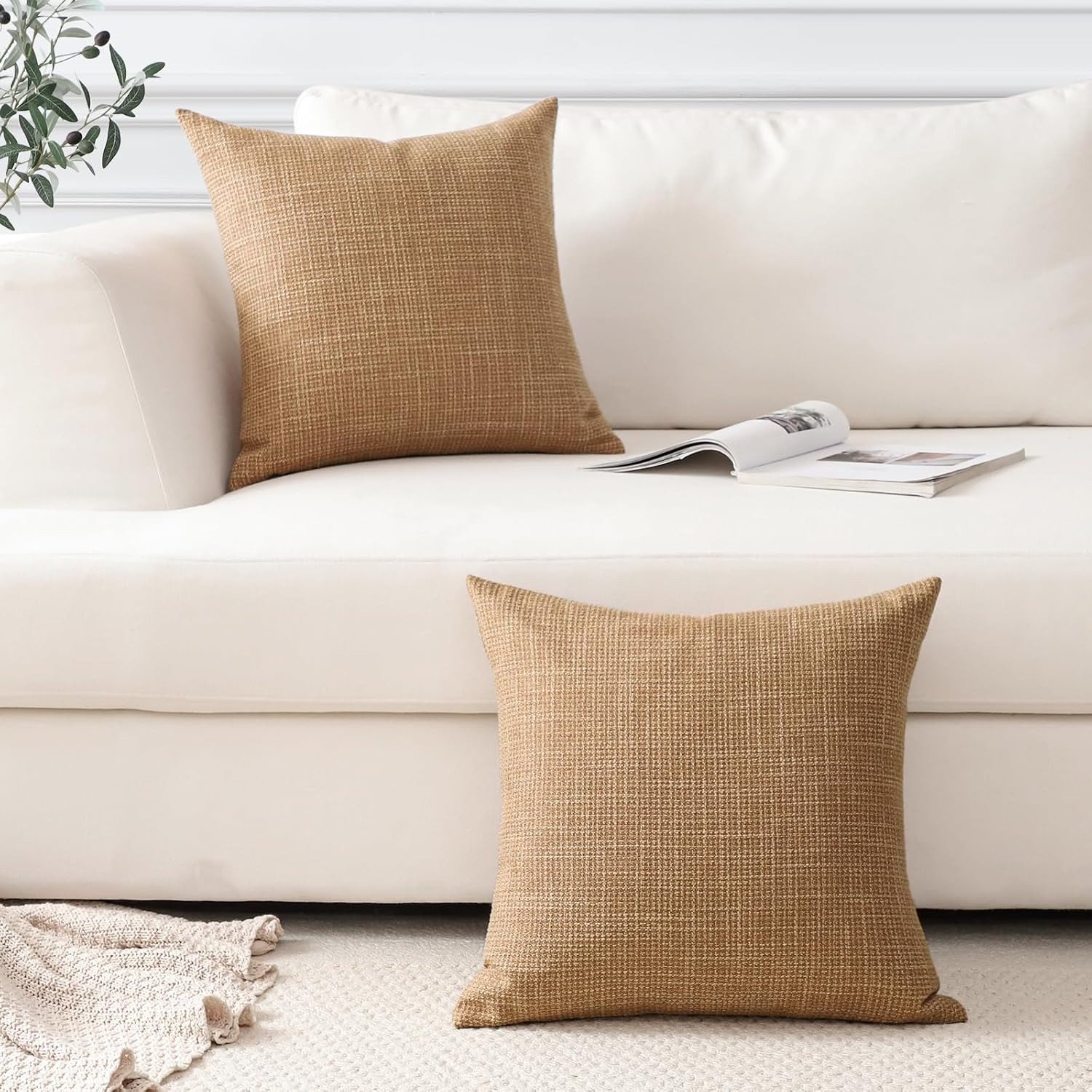
Fifty centimetres is a generous square. It is big enough to lean on properly, which a 40 cm cushion never quite is, but not so large that it swallows a two-seater. On most standard sofas, two 50 cm squares at the outer ends plus one or two smaller cushions in between looks balanced.
Pairing the insert is the part people get wrong. Match size for size and you get a neat cushion. Go up one size, so a 55 x 55 cm insert in a 50 cm cover, and you get a full, slightly overstuffed look with square corners and no sag. That second option is what makes cushions in magazine photos look the way they do. Go smaller and the cover wrinkles, the corners droop, and the whole thing looks tired before you have even sat down.
Who these suit
Renters, for a start. You cannot repaint, you probably cannot change the sofa, and textiles are the only lever you have. Two covers and a throw will shift a room more than most people expect.
Anyone with a grey sofa. Grey furniture is everywhere and it goes cold very quickly. Warm light brown against grey is one of the most reliable pairings in interiors, and it costs almost nothing to test.
People with kids or pets. Covers come off, covers get washed, covers go back on. A non-removable cushion with a stain on it is just a stain. Machine washable cushion covers turn a disaster into a wash cycle.
Anyone building a layered, earthy palette. Light brown sits comfortably with cream, sage, rust, clay and unfinished timber. If your board has any of those on it, earthy tone cushion covers in this family will slot straight in.
How to choose, practically
Start with how many you need. A three-seat sofa generally wants four cushions, so two packs. A two-seater wants two, so one pack. A bed is happier with a pair sitting in front of the sleeping pillows. A single armchair wants exactly one, and the second cover goes somewhere else in the house.
Then think about contrast. If your sofa is already a warm beige, light brown cushions will disappear into it. You want either a clear step in tone or a clear step in texture. Against grey, charcoal, navy or white, this shade has plenty of contrast on its own.
Check the closure style too. These use a hidden zip dyed to match the fabric, which is the tidiest option. An exposed zip reads as cheap from the front. An envelope flap works fine but gapes a little as the insert settles. Hidden zip cushion covers keep the front panel as one clean surface, and that is a surprisingly big part of whether a cushion looks expensive.
Finally, be realistic about the colour on your screen. Every monitor renders warm neutrals differently. Light brown can look sandy on one phone and almost greige on another. If the exact tone is critical to a scheme, order one pack first and see it in your own light before committing to a second.
Looking after them
The routine is short. Zip them closed, wash cold on a gentle cycle with similar colours, skip the bleach, and tumble dry low. That is the whole care list.
Two small habits make covers last much longer. Close the zip before washing, because an open slider catches on everything in the drum and chews the fabric. And take them out of the dryer while still slightly damp, then pull them back into shape and let them finish in the air. You will almost never need to iron them that way, which is good, since a hot iron and polyester do not get along.
Spot treat rather than full wash when you can. A damp cloth on a fresh spill handles most accidents. Test any stain remover on an inside seam first.
Rotate your cushions every month or so, swapping the ones that get sat on with the ones that just sit there. Wear spreads out and the whole set ages evenly.
The short version
You get two covers at 50 x 50 cm, a light brown linen look in polyester, a hidden zip that matches the fabric, and no inserts. Use the cushion fillings you already own, wash the covers cold whenever they need it, and accept a centimetre or two of variation from the hand sewing.
If you want the texture of linen without the creasing and the price, and you want a colour that will still look right in two years, this is an easy, low-risk change to a room. Buy one pack if you are testing the shade, two if you are dressing a full sofa.