

The complete guide
How To Choose A Cashmere Beanie That Lasts More Than One Winter
The hat problem most people have
Winter headwear usually fails in one of two ways. Either the hat is warm but itchy and bulky, so it comes off indoors and gets left on a train seat, or it is soft and good-looking but thin, so the wind goes straight through it. Most people end up with a drawer full of hats and still reach for a hood.
A cashmere beanie solves that, but only if it is built properly. The fibre alone is not the whole story. How many plies of yarn are twisted together, how tightly it is knitted, and where it was made all change how the hat performs once you walk out the front door into a cold wind.
What cashmere actually does
Cashmere comes from the soft undercoat of goats raised in cold regions. The fibres are much finer than standard sheep wool, which is why the knit feels smooth instead of prickly. Fineness also means more fibres per gram, and more fibres mean more tiny air pockets. Those air pockets are the insulation.
That is the practical takeaway. A pure cashmere hat can be light in your hand and still hold heat better than a thicker, heavier acrylic one. It also breathes, so your scalp is not sweating under the knit and then chilling the moment you take the hat off indoors.
The trade-off is strength. Fine fibres are softer, and softer fibres can wear faster at friction points if the yarn is thin. Which brings us to the part that matters most on a label.
Why ply count is the number to look at
Ply is simply how many strands are twisted into the finished yarn. A one-ply cashmere hat feels lovely in a shop and disappoints in February. Two-ply is a reasonable middle ground. Three-ply, which is what this beanie uses, gives you a denser fabric with real body.
Three practical gains come from that extra ply. The fabric blocks wind better, because there is less open space between stitches. The band holds its stretch longer, because thicker yarn resists going slack. And the knit is more resistant to snagging and thinning at the crown, where hats usually give out first.
If you are comparing two cashmere hats and one is noticeably cheaper, ply count is often the reason. A thin hat is not a bargain if it is see-through after a season.
Made in Scotland, and why that is relevant
Scotland has been spinning and knitting fine yarn for a very long time, and the mills there built their reputation on wool and cashmere specifically. Knitting cashmere well takes careful tension control. Pull too tight and the fabric goes hard. Leave it too loose and the hat sags.
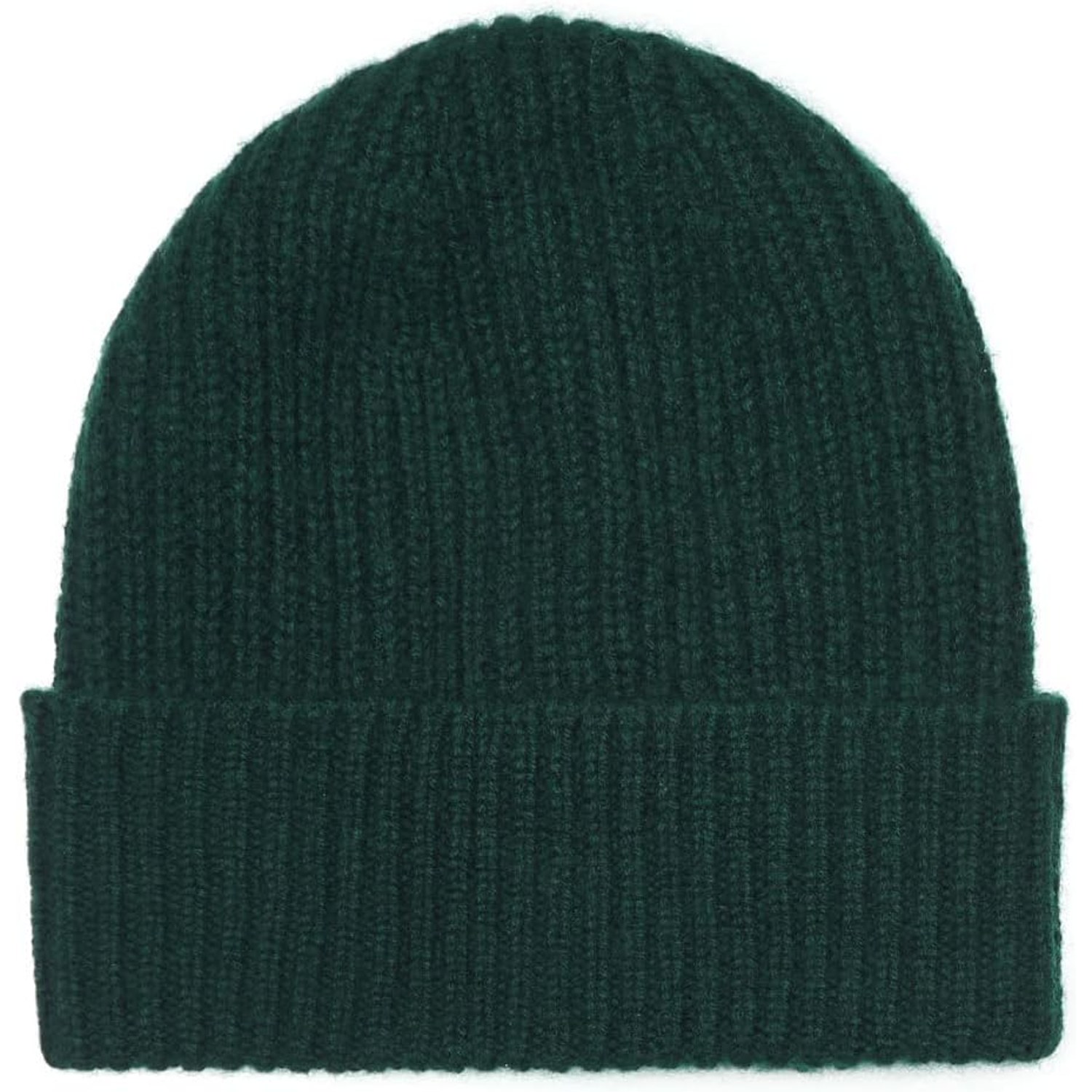
This beanie is made in Scotland, which means it comes out of that tradition rather than a generic fast-fashion supply chain. For a buyer, the useful signal is consistency. The rib should be even, the edge should sit flat, and the hat should recover its shape after you stretch it on.
Who this suits
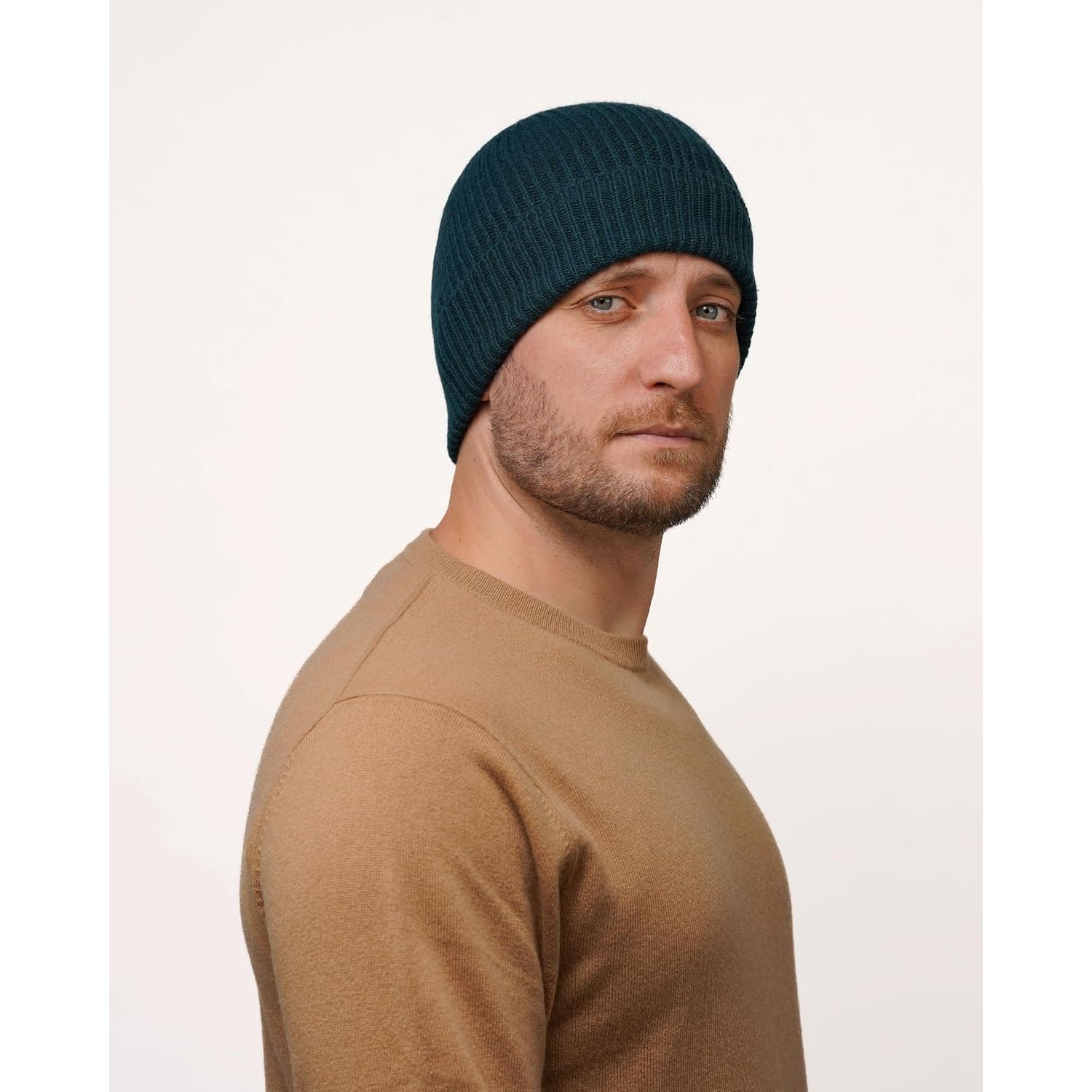
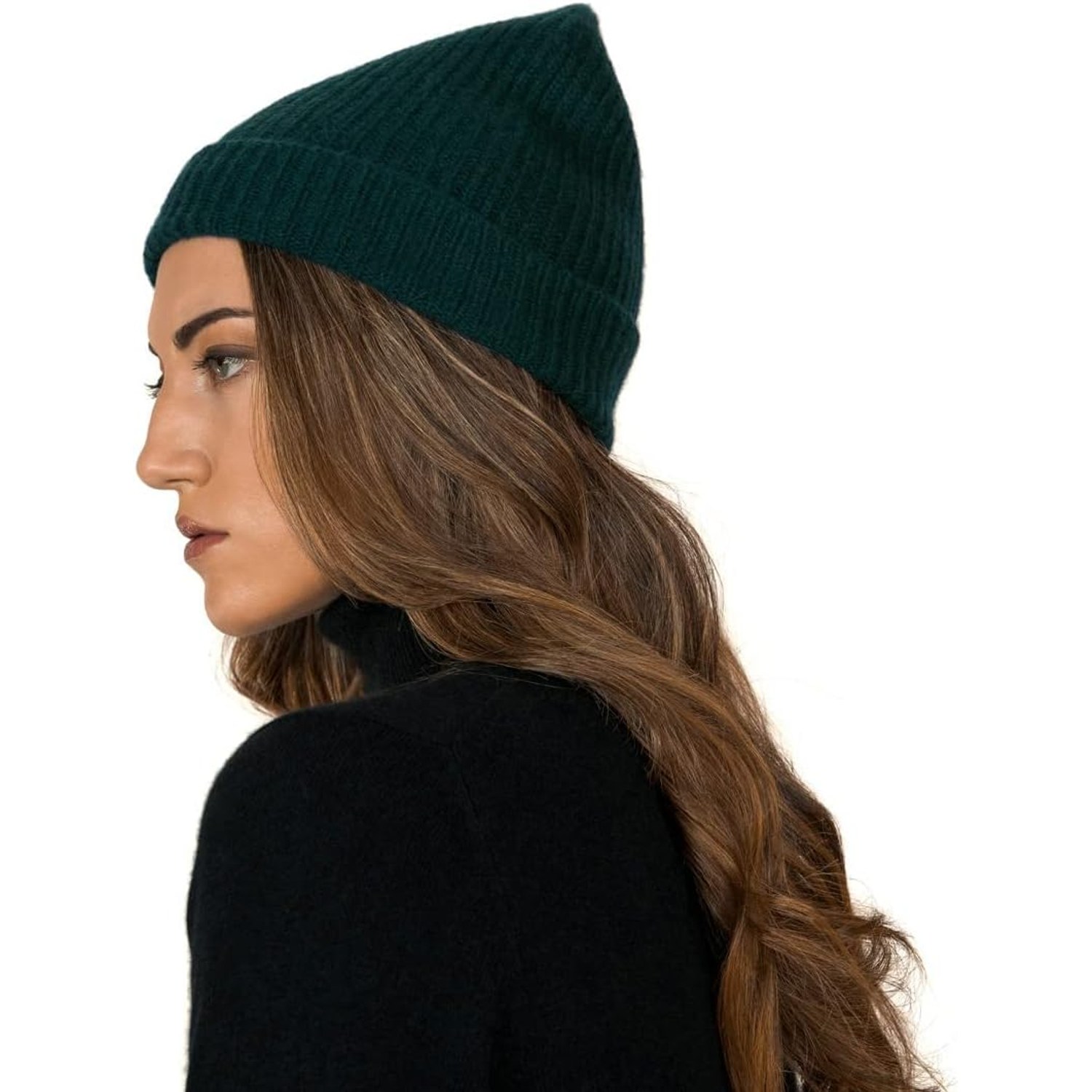
It is a good fit for anyone who wants one hat that works in several settings. The plain rib goes with a wool overcoat, a suit, a denim jacket, or a technical shell. There is no logo and no loud pattern, so nothing clashes.
It suits commuters who walk ten or fifteen minutes in the cold at each end of the day. It suits people who find wool itchy on the forehead. It suits anyone who has hair they do not want flattened or snagged, since cashmere is smooth against the strands. And it works as a unisex cashmere beanie, so it is a safe gift when you are not sure about someone's taste.
It is less suited to mountaineering or a sub-zero expedition. For that you want a technical insulated system with a windproof outer. This is an everyday winter hat, and it is very good at that job.
Fit and how to wear it
It comes in one size. Rib knit has a lot of natural give, so the band stretches wide to go on and then pulls in to sit snugly. Most adult heads are covered by that range.
You have two ways to wear it. Pulled down so the edge covers the ears is warmest and is how you want it on a windy day. Cuffed higher, sitting at the top of the ears, gives a shorter, neater line that looks more deliberate with a coat and scarf. Try both in front of a mirror before deciding which is your default. People often find one position suits their face shape far better than the other.
If you wear glasses, the cuffed position usually works better, since the thicker folded edge can otherwise push the arms of your frames against your head.
Looking after it
Cashmere is not fragile, it is just not machine-friendly. The care instruction here is hand wash or dry clean only, and both are easy.
For hand washing, fill a basin with cool water and a capful of wool-safe detergent. Submerge the hat, squeeze the water through the knit gently a few times, then leave it to sit for a few minutes. Rinse in clean cool water. Never wring it. Instead, press it between two towels to take out the bulk of the water, then reshape it with your hands and lay it flat to dry somewhere with air moving. Keep it off radiators, out of a tumble dryer, and away from direct sun.
Wash it rarely. Cashmere handles odour far better than synthetics, so airing it overnight between wears usually does the job. Once or twice a season is plenty for most people.
Pilling will happen anywhere the hat rubs against a scarf or collar. That is normal in natural fibres and it is not damage. A fine comb or a small fabric shaver takes the surface pills off in a minute, and the hat underneath is unaffected. It usually settles down after the first few washes.
Store it folded flat in a drawer, not hanging on a hook, because weight on a knit stretches it. Before summer storage, wash it. Moths are attracted to the traces of skin oils and food on worn knitwear, not to clean fibre. Cedar blocks or lavender sachets in the drawer are a sensible extra.
Cashmere against the alternatives
Against acrylic, cashmere wins on comfort and moisture handling. Acrylic traps sweat, which is why heads get clammy and then cold. The price gap is real, but so is the difference in how the hat feels after twenty minutes of walking.
Against merino, it is closer. Merino is fine wool, it is durable, and it is cheaper. Cashmere is softer and warmer for its weight. If you want a hat for daily hard wear and rough handling, merino is sensible. If you want the one that feels best and looks sharpest, cashmere is the answer.
Against a thick chunky wool hat, cashmere gives you similar warmth with much less bulk and no scratch. The chunky hat may look more rugged. The cashmere one goes under a hood and into a coat pocket.
The short version
Look for ply count before anything else, because that is what separates a hat that lasts from one that thins out. Three-ply cashmere, knitted in Scotland, in a plain rib with no logo, covers nearly every winter situation that is not an actual mountain.
Wear it over the ears when it is windy and cuffed when it is not. Wash it by hand in cool water a couple of times a season, dry it flat, store it folded. Do that and a good cashmere beanie will still be in your coat pocket in ten years.