
The complete guide
Merino Wool Socks for Men, A Practical Buyer's Guide
The problem with cold feet
Cold feet are rarely about the temperature outside. They are usually about moisture. Your feet sweat all day, even in winter, and a cotton sock holds that sweat right up against the skin. Damp fabric pulls heat away from you about twenty-five times faster than dry fabric does. So you end up with feet that feel clammy at lunchtime and genuinely cold by four in the afternoon, while the rest of you feels fine.
Most people respond by buying thicker socks. That helps for an hour and then makes the problem worse, because a thick sock in an ordinary shoe squashes the air out of the knit and traps even more moisture. You get sweatier feet in a tighter shoe.
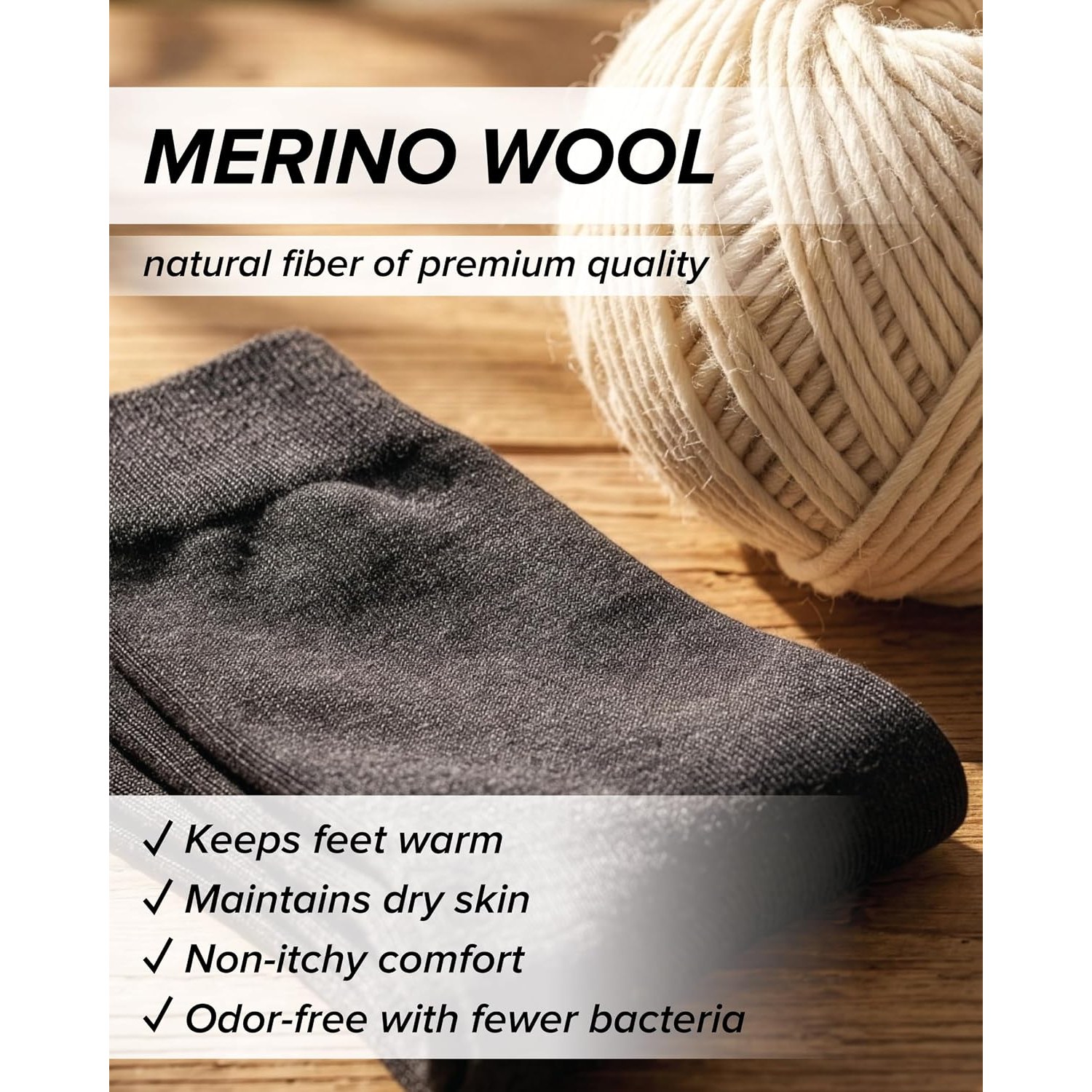
Merino wool takes a different route. It absorbs moisture into the fibre itself, away from your skin, and keeps insulating while it does so. That is why a relatively thin merino sock can feel warmer through a working day than a bulky cotton or acrylic one.
What merino actually is
All wool comes from sheep, but the fibre diameter varies hugely between breeds. The coarse wool used in old-fashioned work socks has thick fibres that are too stiff to bend when they touch your skin, so they push back. That is the prickle people remember and dislike.
Merino sheep grow a much finer fleece. The individual fibres are thin enough to flex on contact, so the yarn feels soft rather than spiky. Same material, completely different experience against the foot.
The fibre is also naturally crimped, meaning it has a wave in it rather than lying flat. Those waves create small air pockets through the knit, and trapped still air is what insulation really is. You are not warmed by the wool so much as by the air it is holding.
The blend, and why it is not pure wool
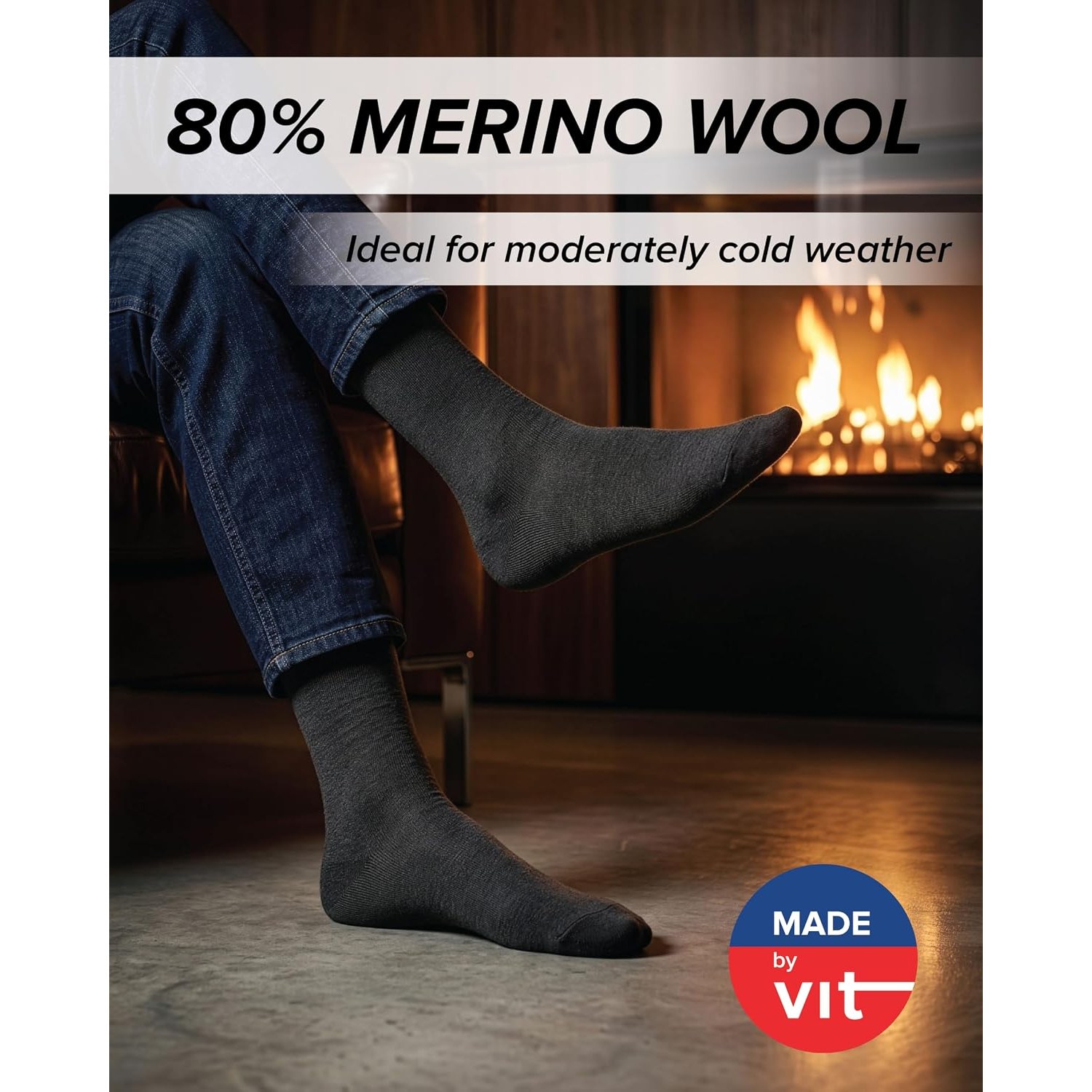
These socks are 80% wool, 17% polyamide and 3% elastane. Some buyers see that and assume pure wool would be better. In a sock, it generally is not.
Pure wool socks wear through at the heel and toe quickly. Those are high-friction zones, and wool on its own does not cope well with that kind of repeated abrasion. The polyamide content is there to take the punishment. It is a strong synthetic that adds tensile strength exactly where socks fail.
The elastane does a different job. Three percent is a small amount, but it is enough to give the leg of the sock a gentle grip so it holds position instead of concertinaing into your shoe. Without it, a wool sock stretches out over the course of a day and never fully recovers.
So the blend is a working compromise. You keep the warmth, breathability and odour resistance of wool, and you borrow durability and shape retention from the synthetics.
Who these suit
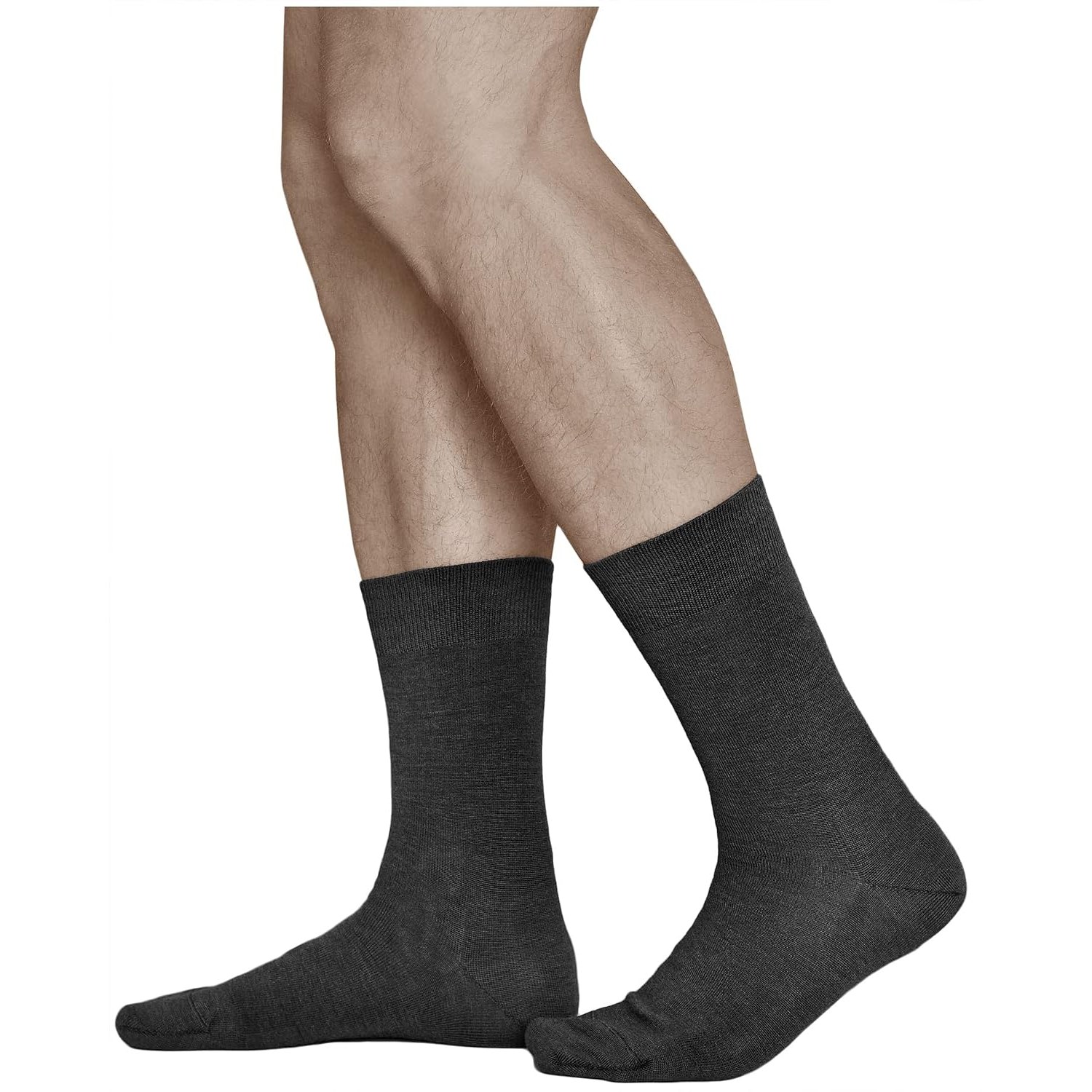
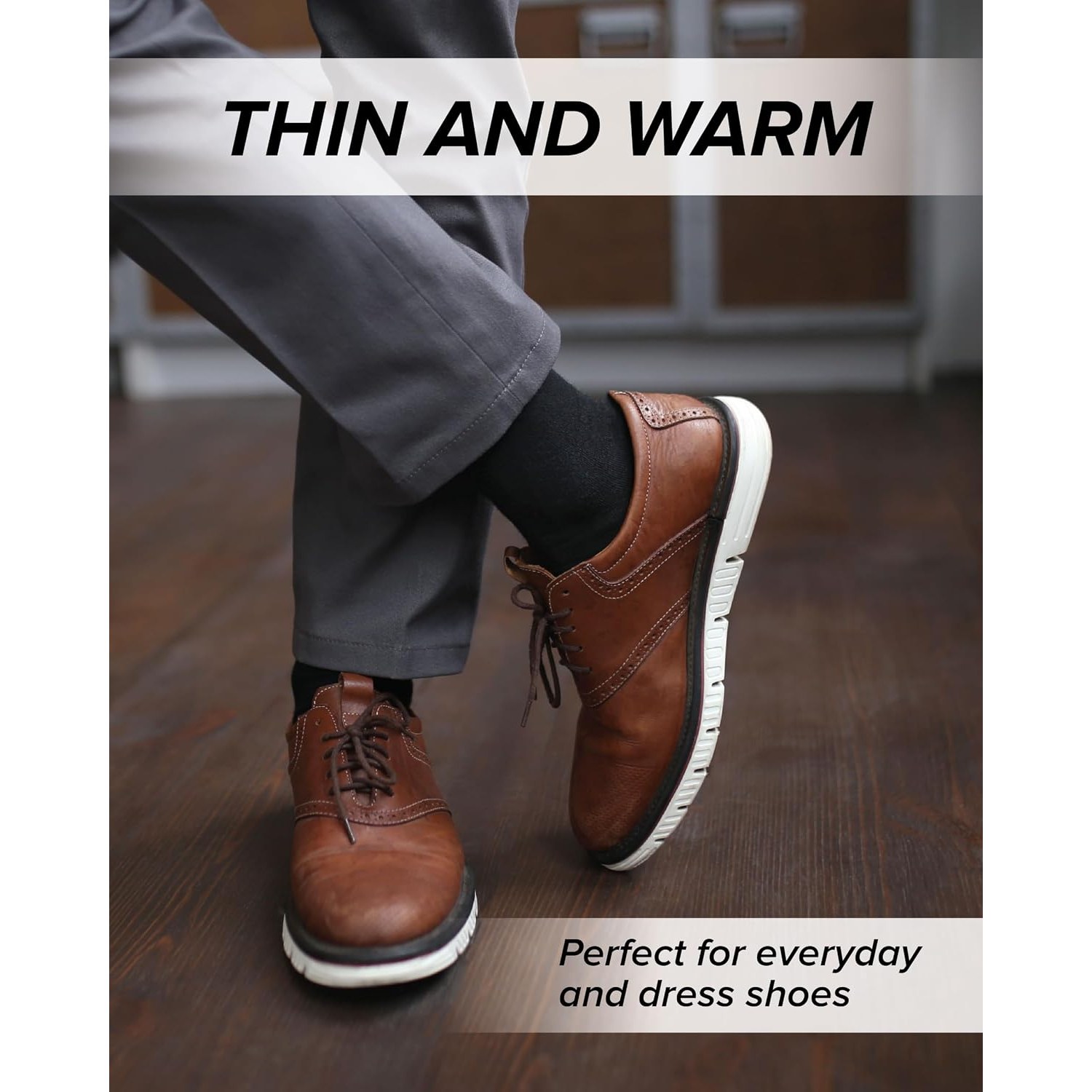
These are everyday socks. They suit someone who commutes, works indoors, walks to the station, and wants feet that stay comfortable from morning to evening without changing socks. The knit is fine enough to disappear under suit trousers, which makes them a sensible option if you want merino dress socks rather than something obviously woolly.
They also suit people whose feet sweat in enclosed shoes. The combination of moisture management and odour resistance is the most noticeable change in the first week. A lot of people who go looking for breathable wool socks are really solving a smell problem, and wool does that better than anything synthetic.
Who they do not suit is worth saying plainly. The maker states they are not designed for hiking, for stiff leather boots, or for very cold and frosty weather. Hiking socks need thick terry cushioning under the heel and ball. Boot socks need extra height and padding at the shin. Deep-cold socks need more wool and more loft. These are built for moderate cold and normal footwear, and they do that job well.
How to choose your size
Sock sizing is less forgiving than people expect. A sock that is too big bunches under the arch and slides down the leg. A sock that is too small pulls the heel pocket out of position, so the heel of the sock sits up your ankle and the toe seam presses into your toes.
Check the size option shown on the product page against your usual shoe size. If you fall between two sizes, going up is usually the safer call with wool, partly because the elastane will take up the slack and partly because wool can tighten very slightly after washing.
If you have a high instep or a wide foot, pay attention to how the cuff feels rather than just the length. A cuff that leaves a deep mark on your calf is too tight, and over time that pressure wears out the elastic faster.
Living with wool socks
The care routine is short. Machine wash at a maximum of 40C with the socks turned inside out. Skip the tumble dryer entirely. Do not iron them and do not use bleach.
The dryer rule is the one that matters most. Heat plus tumbling is what causes wool to felt, where the fibre scales lock together and the sock shrinks into a dense little version of itself. It is not reversible. Drying flat or on an airer takes a few hours longer and costs you nothing.
Washing inside out is a habit worth building. The inside of a sock is where the sweat and skin oils are, so turning it out puts that surface in direct contact with the water. It also protects the outer face of the knit from rubbing against zips and buttons in the drum.
Pairing socks before they go in the machine saves the usual odd-sock archaeology afterwards. A small mesh laundry bag works well and adds a layer of protection at the same time.
One more thing about wool. It does not need washing as often as cotton. In cool weather most people get two wears from a pair, because the fibre resists odour rather than holding it. Air them overnight between wears, somewhere with a bit of airflow, and they will be ready to go again.
Why two pairs is the right number to start with
A single pair of good socks is a frustrating thing to own. You wear them, you like them, and then they are in the wash and you are back in your old ones. Two pairs lets you actually rotate, and rotation is what makes any sock last longer. Fibres need time to recover their shape between wears, and giving them a day off does that.
Two pairs is also enough to judge whether merino suits you before committing to a full drawer of it. Most people who try warm wool socks for a fortnight end up replacing their cotton ones gradually, one pack at a time.
The short version
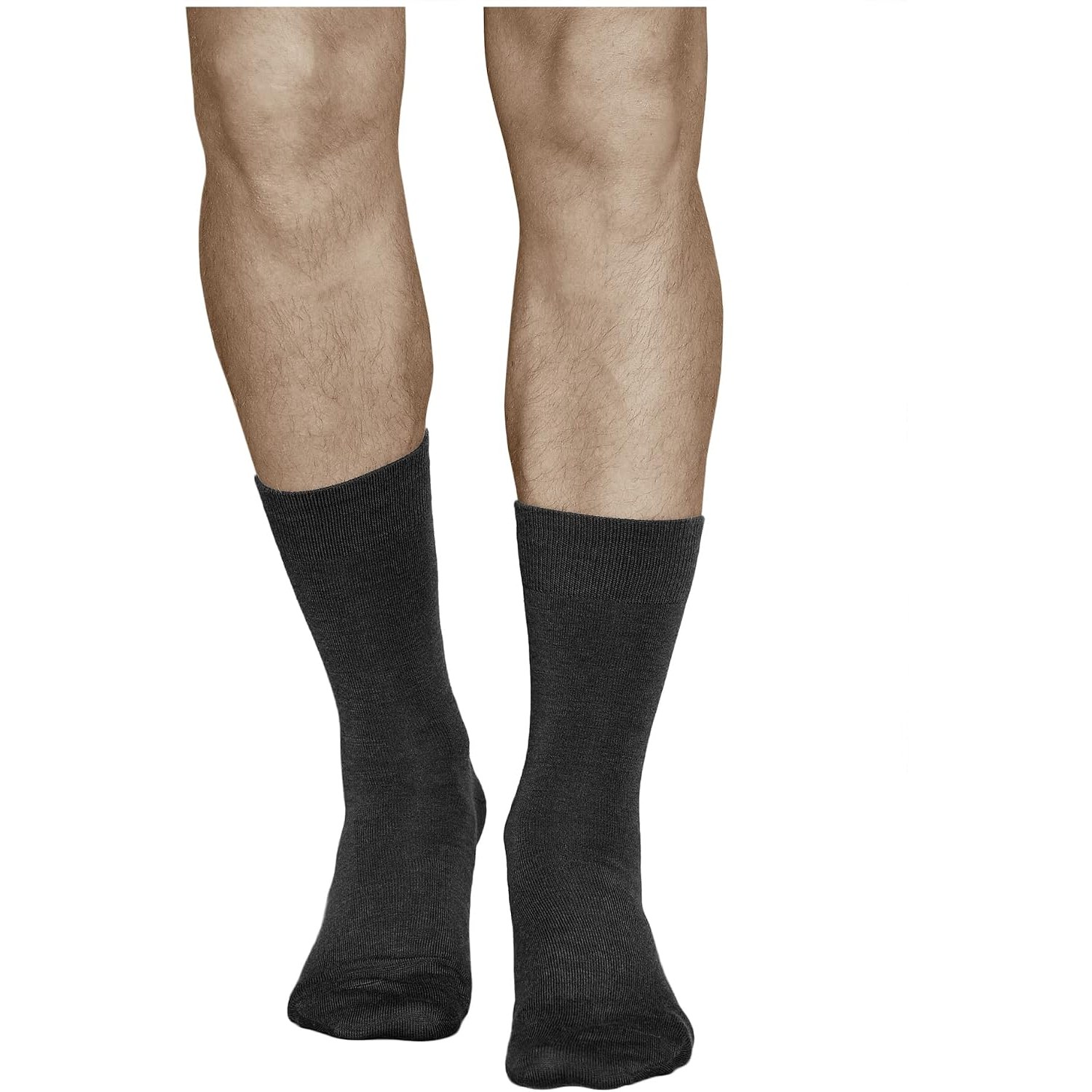
These are 80% merino wool socks for men, sold in a two-pair pack, with polyamide for durability and a touch of elastane for shape. They are mid-weight rather than thick, so they fit in ordinary shoes and under suit trousers. They handle moisture and odour far better than cotton, which is what actually keeps feet warm through a long day.
They are not hiking socks and not deep-winter socks. Within their range, moderate cold and everyday footwear, they do a lot of quiet work.
Wash them at 40C or cooler, keep them out of the dryer, and rotate between the two pairs. Done that way, they will see you through several winters.