

The complete guide
Marble Vanity Tray Buyer's Guide, How To Choose And Live With Natural Stone
The small mess nobody talks about
Bathroom counters do not get messy all at once. They get messy one object at a time. A soap pump arrives first, then a hand cream, then a small bottle of something nobody can remember buying. A ring comes off before the dishes and stays there. A hair tie appears. Within a fortnight the bench looks busy even though you have cleaned it twice.
The problem is not the number of items. It is that none of them have a place. Everything is just sitting on the counter, equally spread out, so your eye has nowhere to rest. This is why a tray works so well and why it feels like a bigger change than a flat piece of stone has any right to be. A tray draws a line. Inside the line is a group. Outside it is a stray. Suddenly the same five objects read as a deliberate arrangement rather than leftovers.
A marble vanity tray does that job and then does a second one, because real stone is nice to look at. You are not adding a plastic organiser. You are adding a material that already belongs in a bathroom.
What this tray actually is
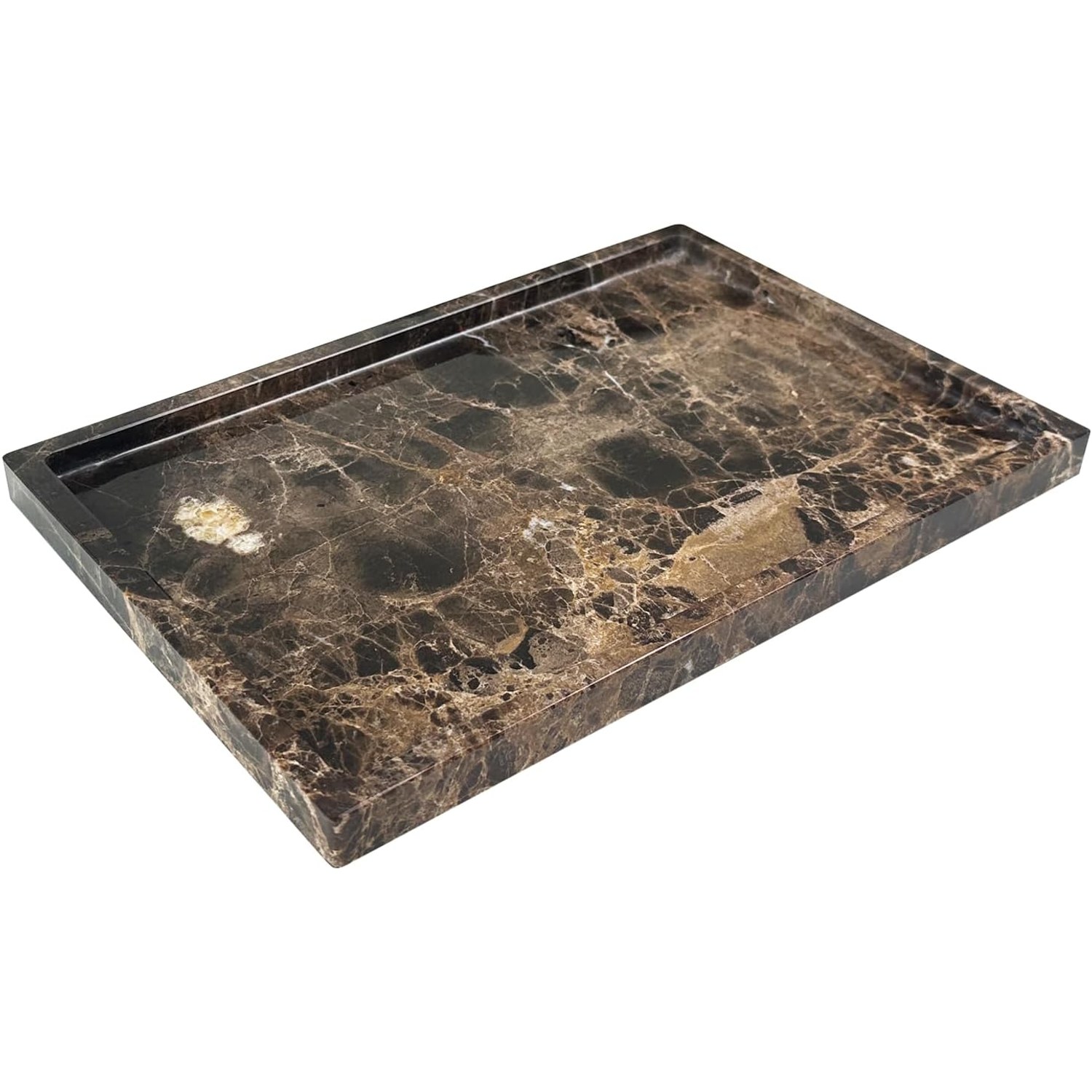
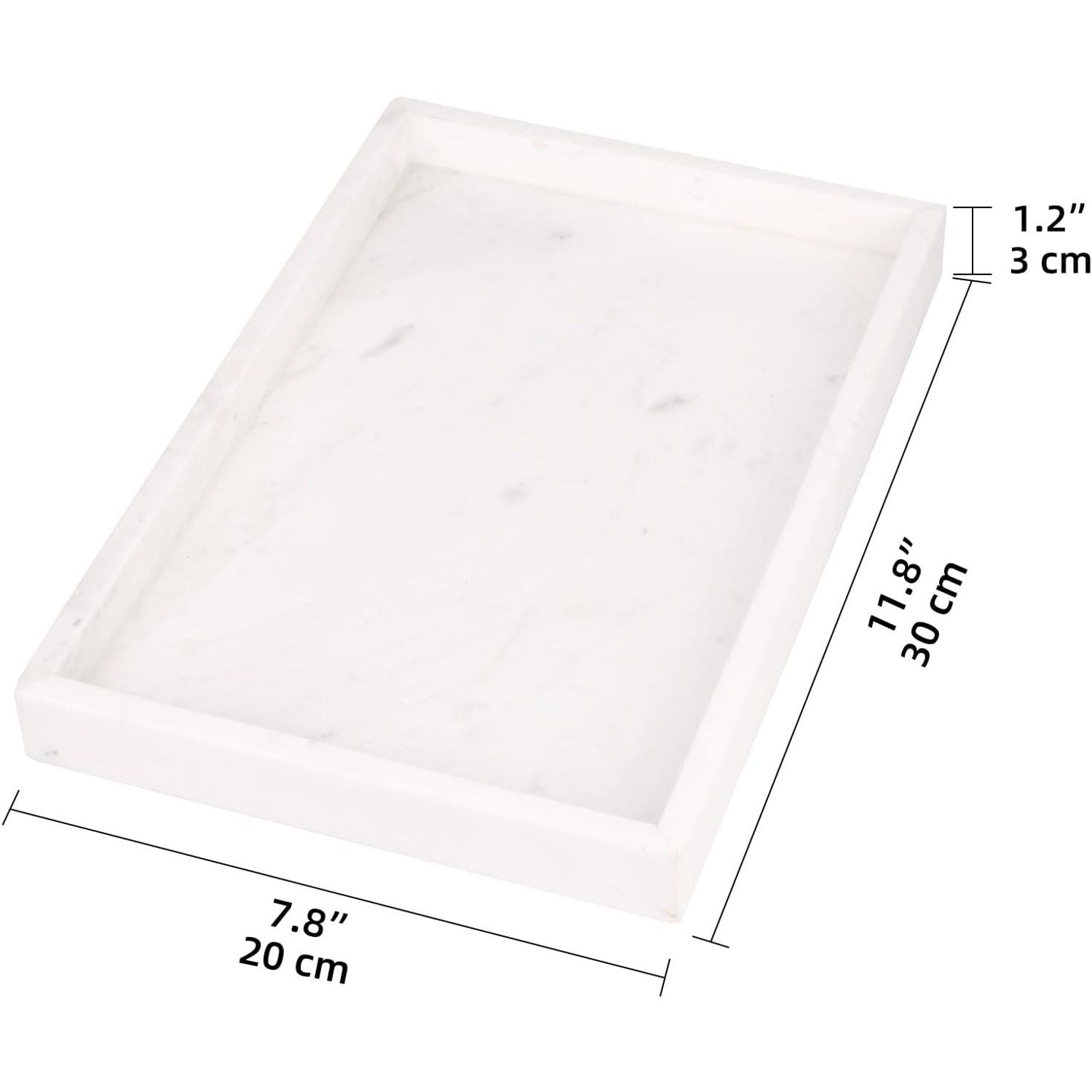
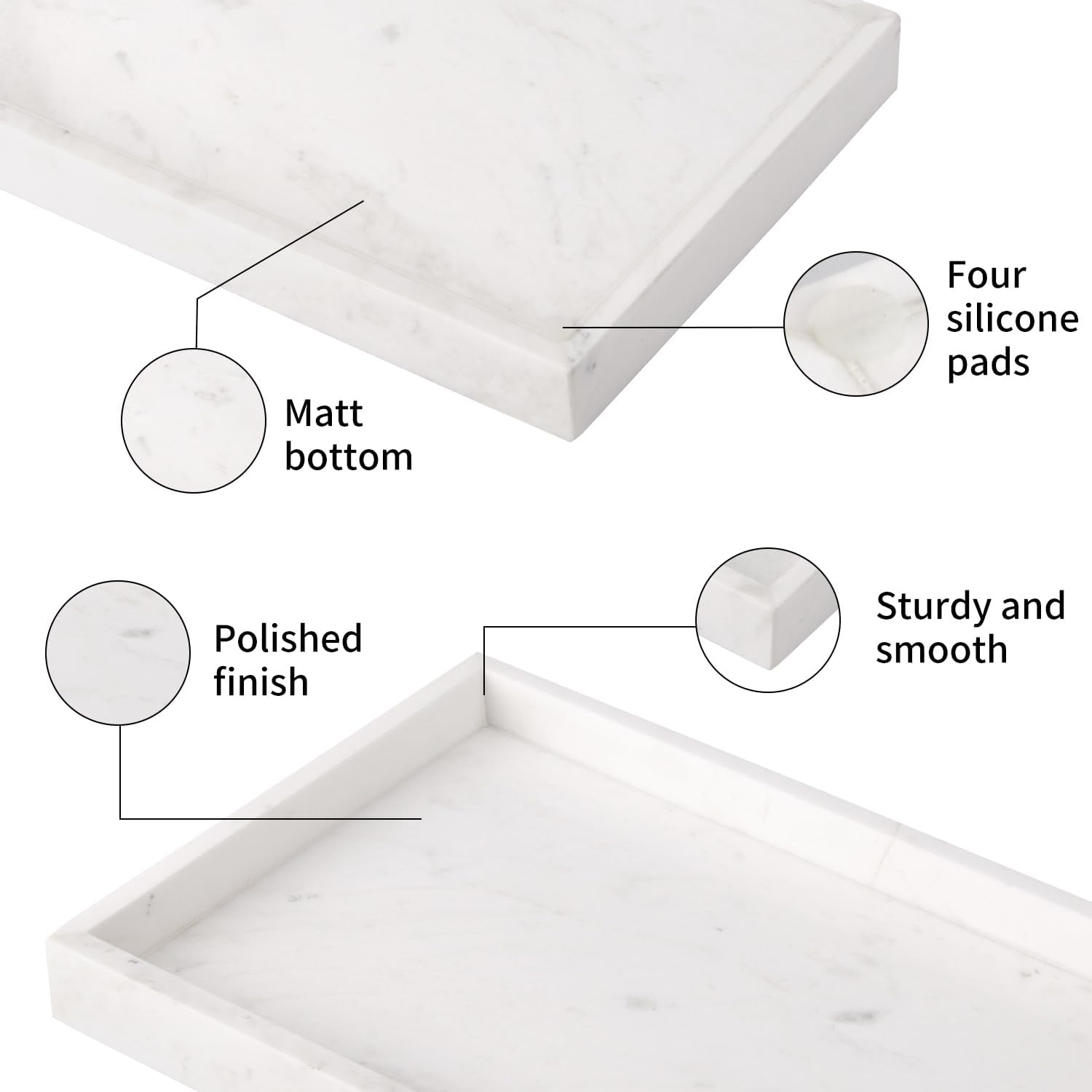
This is a rectangular tray cut from natural marble, measuring 30 cm long by 20 cm wide by 3 cm tall. The surface is polished smooth. There is no lining, no coating, no printed pattern. What you see is the stone itself.
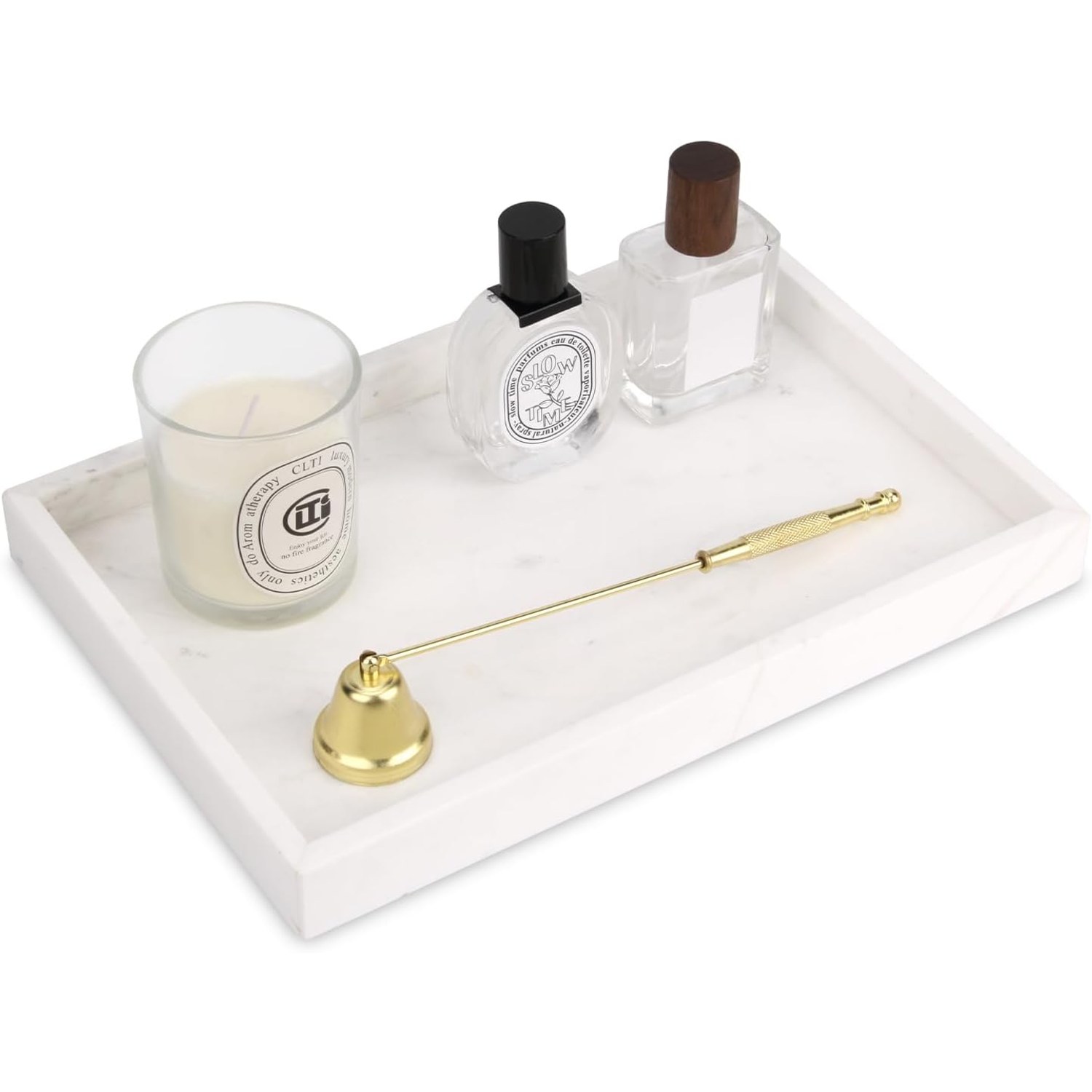
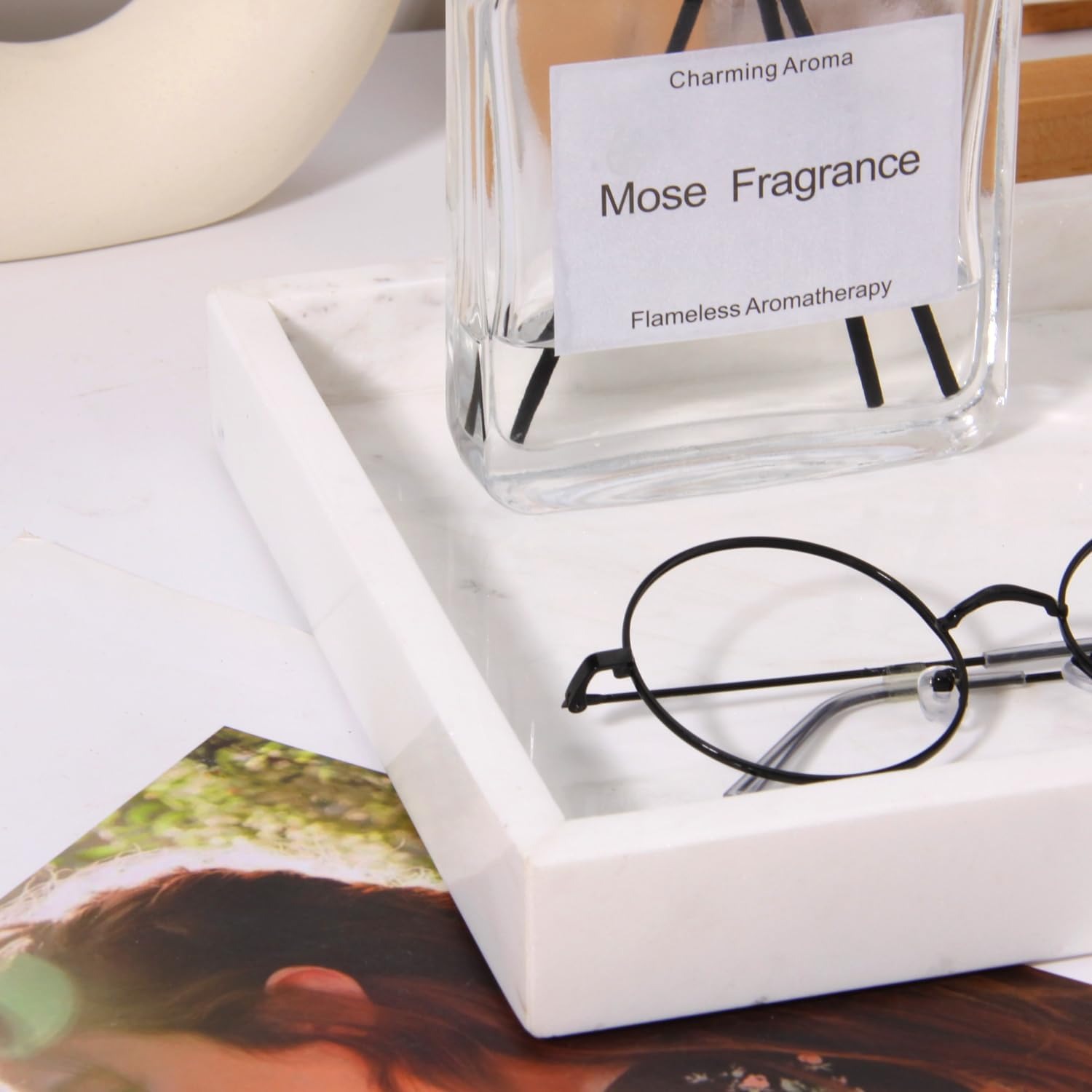
The 30 x 20 cm footprint is the detail worth paying attention to. It is the size that fits most vanities without taking over. You can set a tall soap dispenser at one end and still have room alongside for a hand cream, a perfume bottle and a small dish. If you fold a hand towel in thirds it sits on there neatly too. Anything much larger starts crowding the basin, and anything much smaller stops being useful the moment you own more than two bottles.
The 3 cm height gives the tray presence. It looks like an object rather than a coaster, and it has enough edge definition that small things like rings and earrings tend to stay put rather than rolling off.
Why every one is different
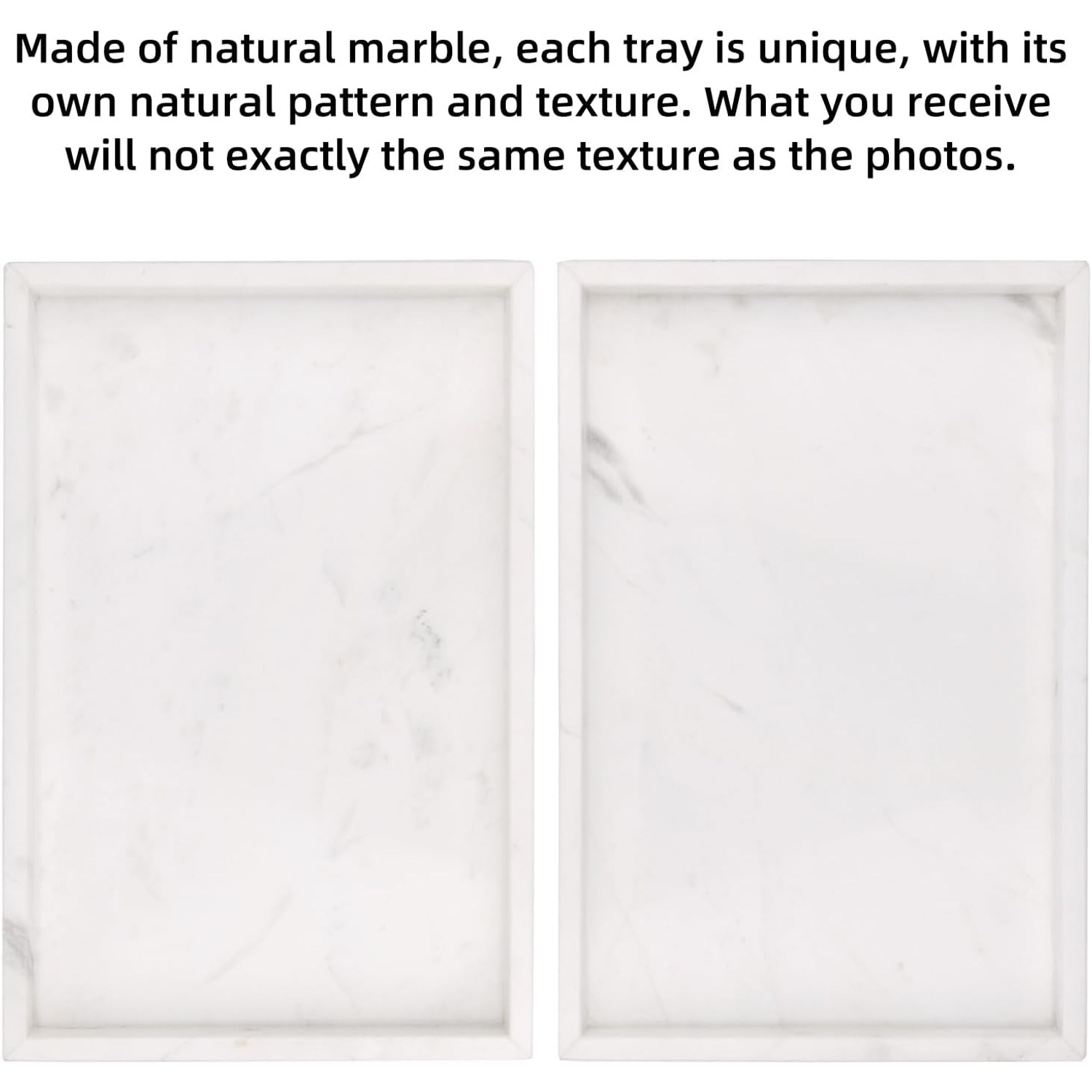
This matters enough to say clearly. Natural marble is cut from quarried stone, and the pattern inside that stone was formed over a very long time without any concern for catalogue photography. Some pieces come out with dramatic grey veins running diagonally across the face. Others are soft and cloudy. A few are almost plain, with barely any visible pattern at all.
None of these are defects. They are the same product. If you want a guaranteed identical match to a photo, you want a manufactured surface, not stone. The upside of accepting the variation is that your tray is genuinely unique, and it will never look like the kind of thing stamped out ten thousand at a time.
Worth knowing if you are buying two for a matched pair, the two will not be twins. Most people find that fine, and some prefer it.
Who it suits
If your bathroom bench is open shelving or a floating vanity where everything is on display, a tray is close to essential. It is the difference between a styled surface and a storage surface.
It also suits renters. You cannot rebuild a rented bathroom, but you can change how it reads, and a stone tray with a decent soap pump on it does more visual work than most things you are allowed to do to a leased property.
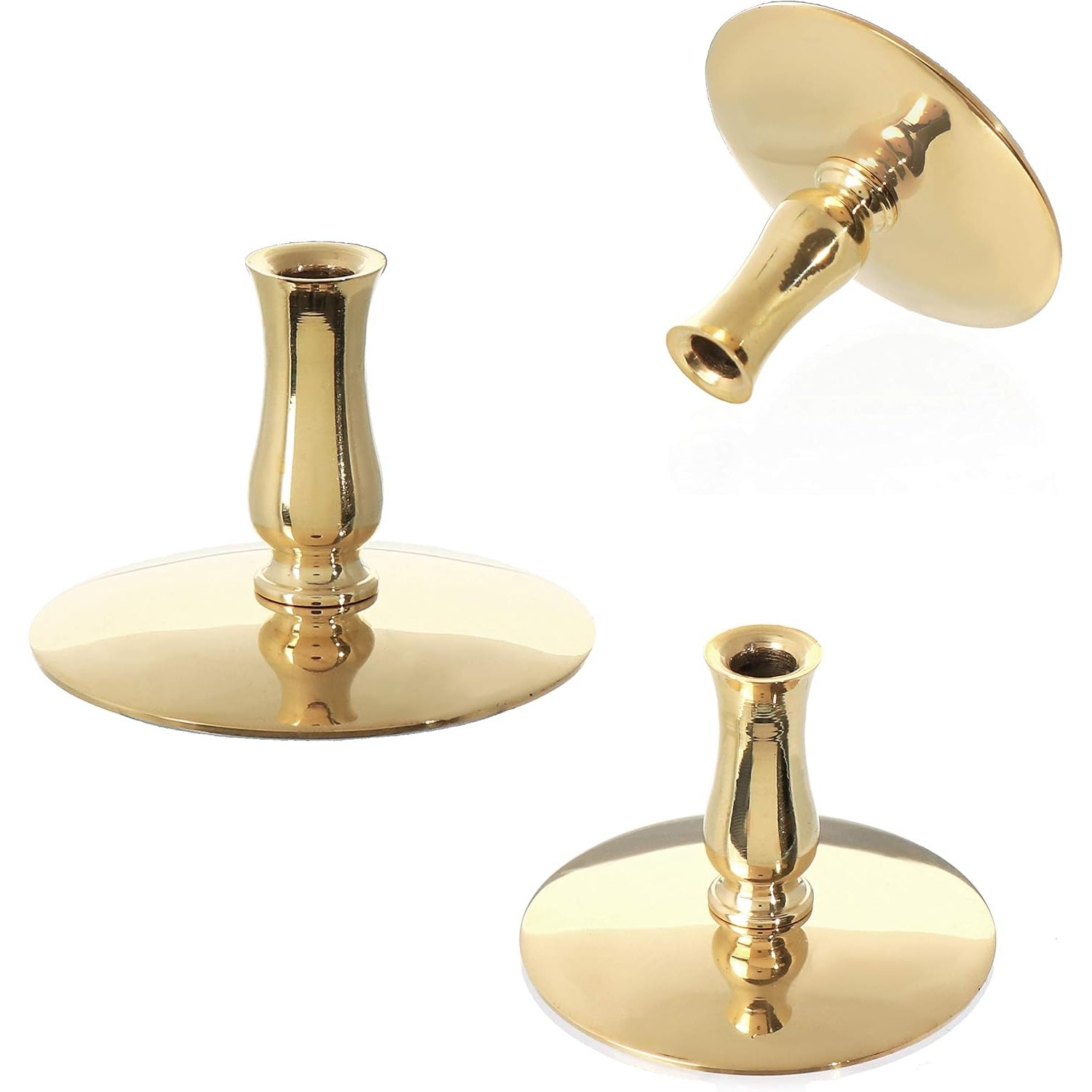
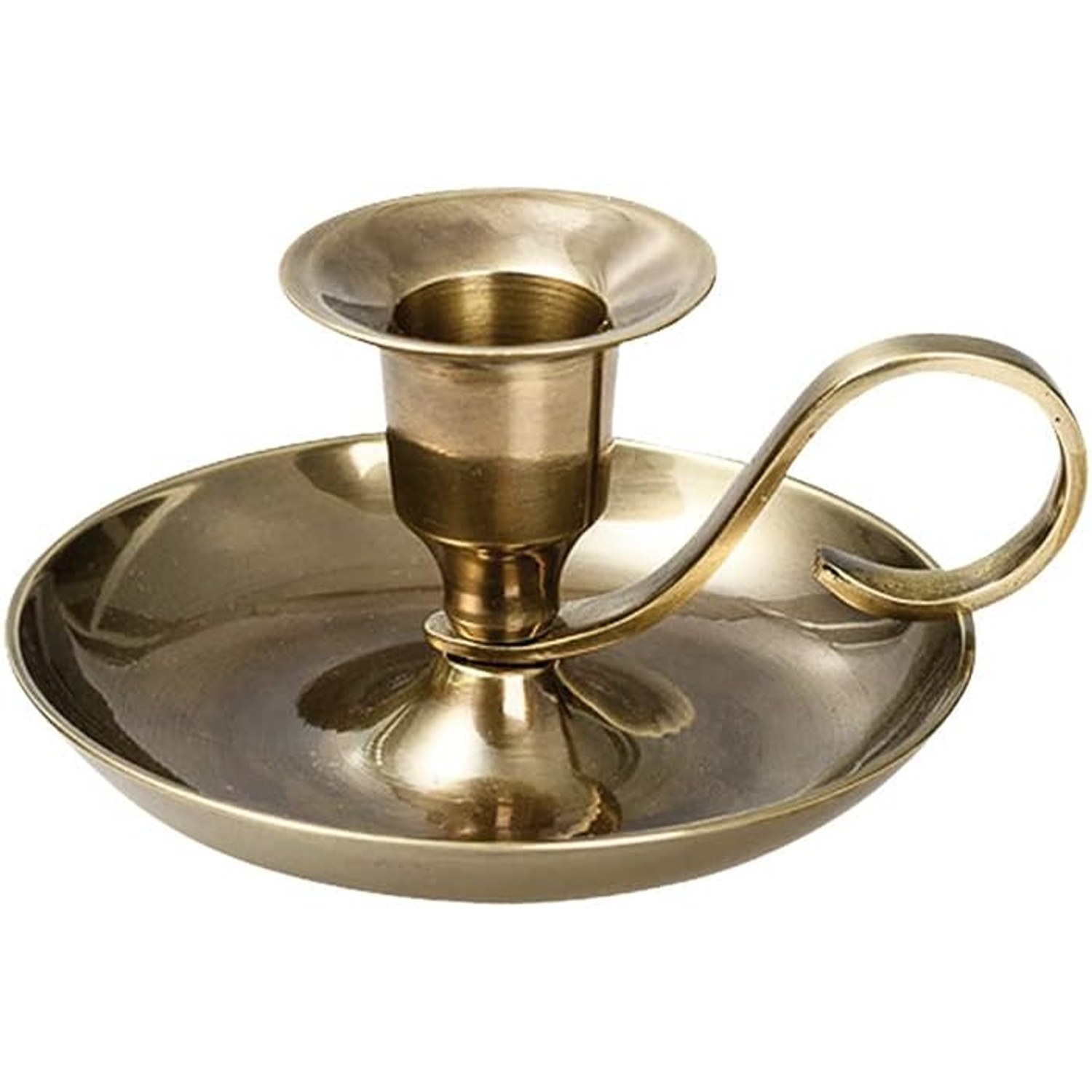
People who already own brass or gold fittings will find the pairing easy. Pale stone and warm metal is an old combination for a reason. A brass candlestick or a brass-topped soap dispenser sitting on marble looks considered without anyone having to try.
It is less suited to households with very young children who treat bathroom benches as a climbing surface, simply because solid stone is heavy and a dropped tray is not forgiving to tiles or toes.
Choosing the right spot
Start with the bathroom, since that is what it is designed for. Put the tray to one side of the basin rather than directly behind the tap, where splashing is worst. Group your tallest item at the back and work forward, so nothing hides behind anything else.
Then consider the other rooms, because this is one of those pieces that rarely stays where it started. On a bedside table it holds a water glass, a book and a watch, and catches condensation rings along the way. On a kitchen bench it corrals oil, salt and pepper into a cluster you can lift in one hand when you wipe down. On a desk it takes pens, a phone and a set of keys. In a living room it works as a coffee table tray for a candle and a small plant.
Many people also use it as a serving plate for cheese, chocolate or small baked things. Stone keeps food cool, and the polished surface looks good on a table. Just avoid cutting directly on it.
Living with marble day to day
Marble is tougher than its reputation suggests and fussier than granite. Here is the honest summary.
For cleaning, a soft damp cloth is almost always enough. Dry it afterwards rather than letting water sit, especially if your water is hard, because minerals left to evaporate leave cloudy marks. If you want a cleaning product, pick a mild pH-neutral one labelled safe for natural stone.
What to avoid is more important than what to use. Acids are the enemy of polished marble. That means vinegar, lemon juice, descaler, toilet cleaner and most bathroom sprays with a citrus base. Acid reacts with the stone and leaves a dull patch called an etch, which is not a stain you can scrub out. Abrasive pads and powders cause a similar dulling through scratching.
Spills to deal with promptly are perfume, nail polish remover, hair oil, makeup with strong pigment and anything oily. Marble is slightly porous, so given enough time those can darken the stone. Blot rather than wipe, then clean with a damp cloth.
If you want extra insurance, a consumer stone sealer applied once a year adds a protective layer. It is optional for a decorative tray but sensible if yours will sit under a perfume collection.
Handling is the last piece. Lift, do not drag. Stone against a timber or painted surface will mark if you slide it, and small self-adhesive felt dots on the underside solve that permanently for a couple of dollars.
Styling it without overthinking
Three to five objects is usually the limit before a tray starts looking crowded again. Vary the heights so there is something tall, something medium and something low. Keep the colour story simple, since the veining in the stone is already doing visual work.
A good default set for a bathroom is a soap dispenser, a small folded hand towel and one object with no function at all, like a candle or a tiny ceramic dish. The useless object is what makes it look styled rather than organised.
If you own brass pieces, this is where to use them. A brass tray would compete with the stone. Brass accessories sitting on the stone complement it.
The short version
This is a 30 x 20 x 3 cm tray cut from natural marble with a polished top. It is sized for a bathroom vanity but travels well to bedside tables, kitchen benches and desks. Every piece has different veining, and yours will not match the photo, which is how real stone works.
Cleaning is a damp cloth and a dry wipe. Keep acids and abrasives away from it, deal with oily spills reasonably quickly, and lift rather than drag it. Do that and it will look the same in ten years as it does on day one.
It solves a small, constant, slightly annoying problem in about four seconds of effort. That is a fair trade.