
The complete guide
How to Choose a Cashmere Shawl That You Will Actually Wear
The problem with most wraps
Most people own a wrap they never wear. It is either too heavy, too scratchy, too fussy in pattern, or it slides off a shoulder every two minutes. It lives in a drawer and comes out twice a year.
A cashmere shawl solves this quietly. It is light enough that you forget you have it on, warm enough that you stop reaching for a coat indoors, and plain enough that it goes with whatever you pulled on that morning. The reason people who own one keep wearing it is not luxury for its own sake. It is that the thing is genuinely useful.
This guide covers what 2 ply means, why hand weaving changes how cloth behaves, how to pick a colour you will not regret, and how to look after cashmere so it lasts a decade rather than a season.
What 2 ply actually means
Ply counts the strands twisted together to make yarn. One strand is 1 ply. Two strands twisted together is 2 ply, and so on. More ply means more yarn in the cloth, which means more warmth and more body.
A 2 ply cashmere shawl sits in a useful spot. Single ply cashmere can be beautiful but it is thin, and it tends to go out of shape faster. Four ply is lovely in winter and too much the rest of the year. Two ply gives you a wrap you can carry from March to September without feeling silly.
The numbers here back that up. This shawl is listed at 181 grams across more than two metres of cloth. That is very light for the coverage you get, and it only works because cashmere fibre is so fine. Cashmere comes from the undercoat of a goat, and the best grades measure under 19 microns across. For comparison, human hair is usually three or four times that. Fineness is what makes cashmere soft rather than prickly, and it is what lets a thin cloth hold heat.
Why hand weaving matters
Machine weaving is fast and consistent. Hand weaving is slower and gives slightly different cloth. On a hand loom, the weaver controls the tension, and the result tends to have a looser, softer drape. It falls over a shoulder instead of standing away from it.
Nepal has built its shawl trade on this for generations, and the work is skilled. The fringe at both ends of this shawl is twisted by hand too, which is a small detail that takes real time. Twisted fringe holds together where a cut edge frays.
You can feel the difference when you hold a handwoven pashmina from Nepal next to a machine-made blend. The handwoven one moves more. It settles into the shape of your shoulders rather than sitting on top of them.
Who it suits
A few people get the most out of a shawl like this.
People who are cold in offices. Air conditioning does not care what season it is, and a plain cashmere wrap over the back of a chair solves the problem for the whole year.
Frequent travellers. At under 200 grams it costs you almost nothing in luggage, and on a cold plane it works as a scarf, a shoulder cover and a lap blanket in turn. A lot of people who buy one for a trip end up carrying it on every trip after.
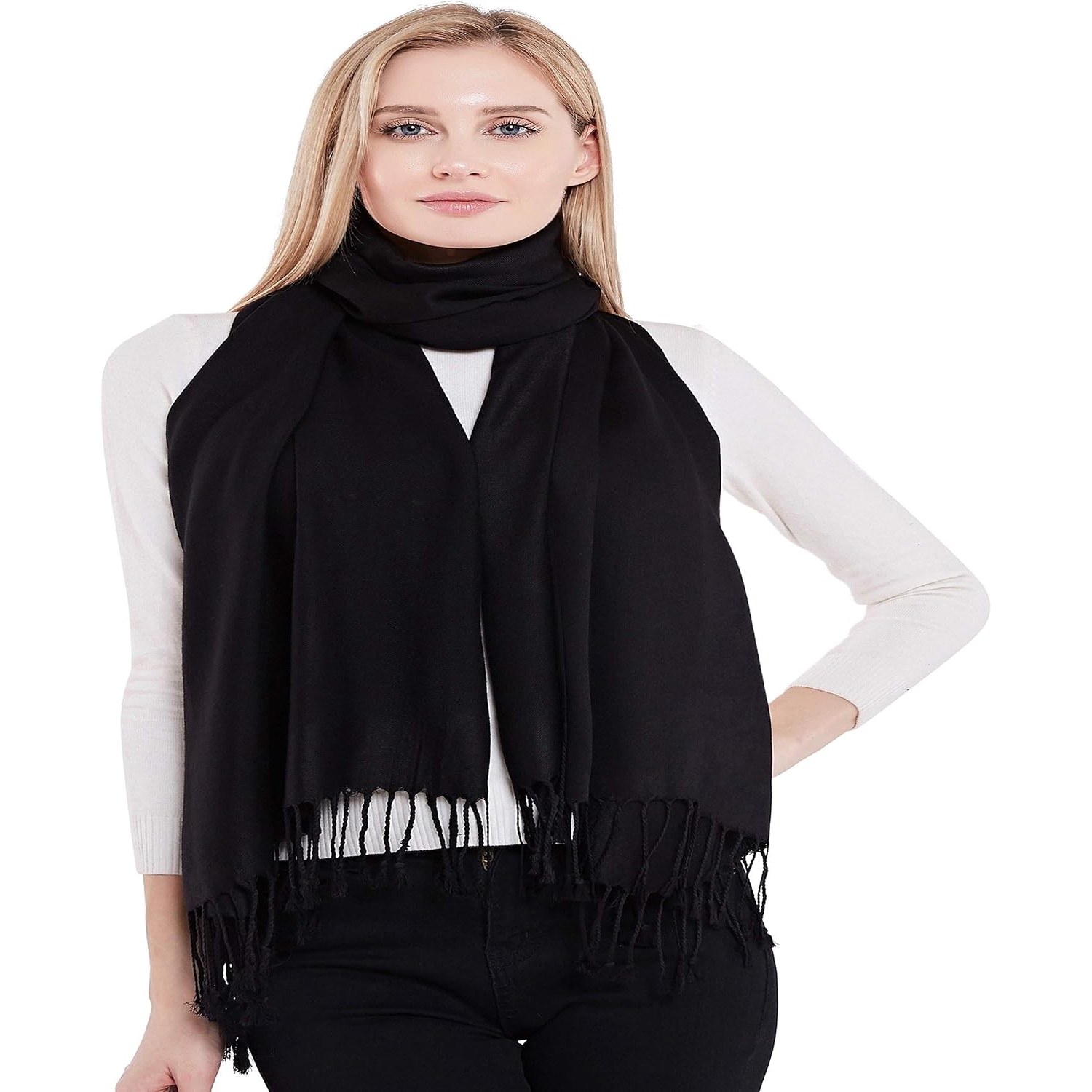
Anyone with an event coming up. Bare shoulders in a cold church or an outdoor evening reception are not fun. A cashmere evening wrap covers them without competing with the outfit.
People who dislike shopping. One good neutral accessory does more work than five cheap ones. Buy it once and the decision is finished.
It suits less well if you want something you can throw in a washing machine weekly, or if you need a heavy outer layer for genuinely harsh outdoor cold. Cashmere is a layering fibre, not a parka.
Choosing a colour
Colour is the one real decision here, since the size and fibre are fixed.
Neutrals win on flexibility. Charcoal, camel, stone, navy and black go over almost everything and read as deliberate rather than accidental. If the shawl is for someone else and you are guessing, a neutral is the safer bet.
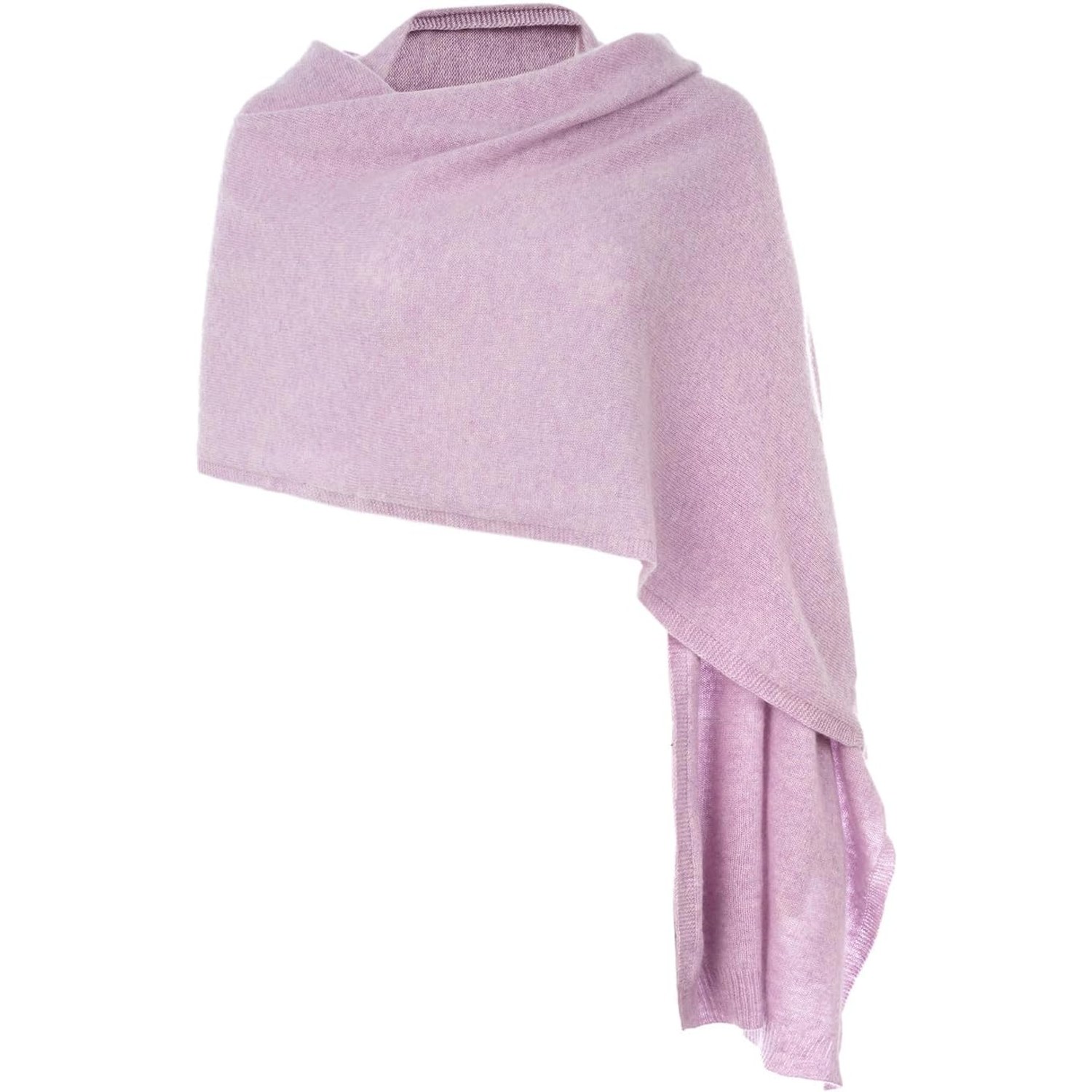
A single strong colour works when you already know the wardrobe. Deep red, forest green or a soft blue adds something to plain black or grey clothing, and plain colour cashmere wraps age better than printed ones because there is no pattern to date.
One practical note on pale shades. Cream and light grey look wonderful and show makeup marks around the neckline faster. If you wear foundation, keep that in mind or plan for slightly more frequent cleaning.
Living with cashmere
Cashmere has a reputation for being delicate. It is more accurate to say it is specific. Treat it right and it lasts for years.
Wash it rarely. A shawl worn over clothing does not touch much skin, so it only needs cleaning a few times a season. Airing it overnight handles ordinary wear.
When you do wash it, use cool water and a wool-safe detergent, and be gentle. No wringing, no twisting. Press the water out between your hands or a towel, reshape it flat and let it dry away from heaters and windows. Dry cleaning is also fine if you prefer. Care instructions come with every order.
Expect a little pilling where fabric rubs, usually under the arm or where a bag strap sits. This is normal in all cashmere and is not a sign of poor quality. A cashmere comb takes it off in a minute.
Store it folded, not hung, because hanging pulls the weave out of shape over months. Keep it clean before it goes away for summer, since moths are drawn to body oils more than to the fibre itself. A breathable bag and a cedar block are enough.
Cashmere or merino
Both sit in the same part of a wardrobe, and the choice comes down to what you want from it.
Merino is fine sheep wool. It is springy, hard-wearing, often machine washable, and it costs less. If you want a wrap for rough daily use that you do not have to think about, merino is sensible.
Cashmere is finer and softer, and it gives more warmth for its weight. It feels better against the skin and drapes more elegantly. It also asks for more care and costs more. If the shawl is for evenings, travel, work and occasions rather than muddy weekends, cashmere earns its keep.
Plenty of people own both and reach for each at different times. There is no wrong answer, only a wrong match to how you live.
What you are getting
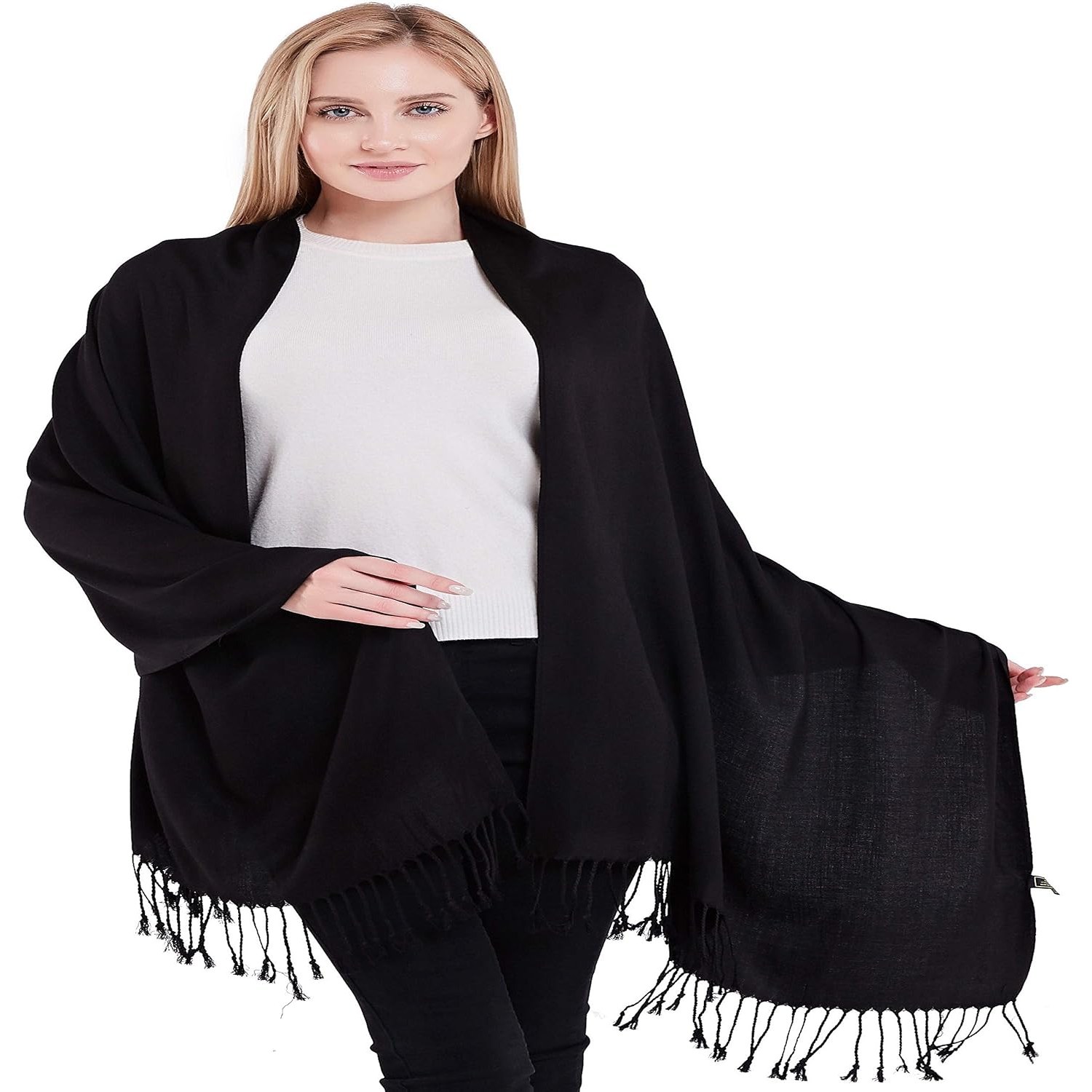
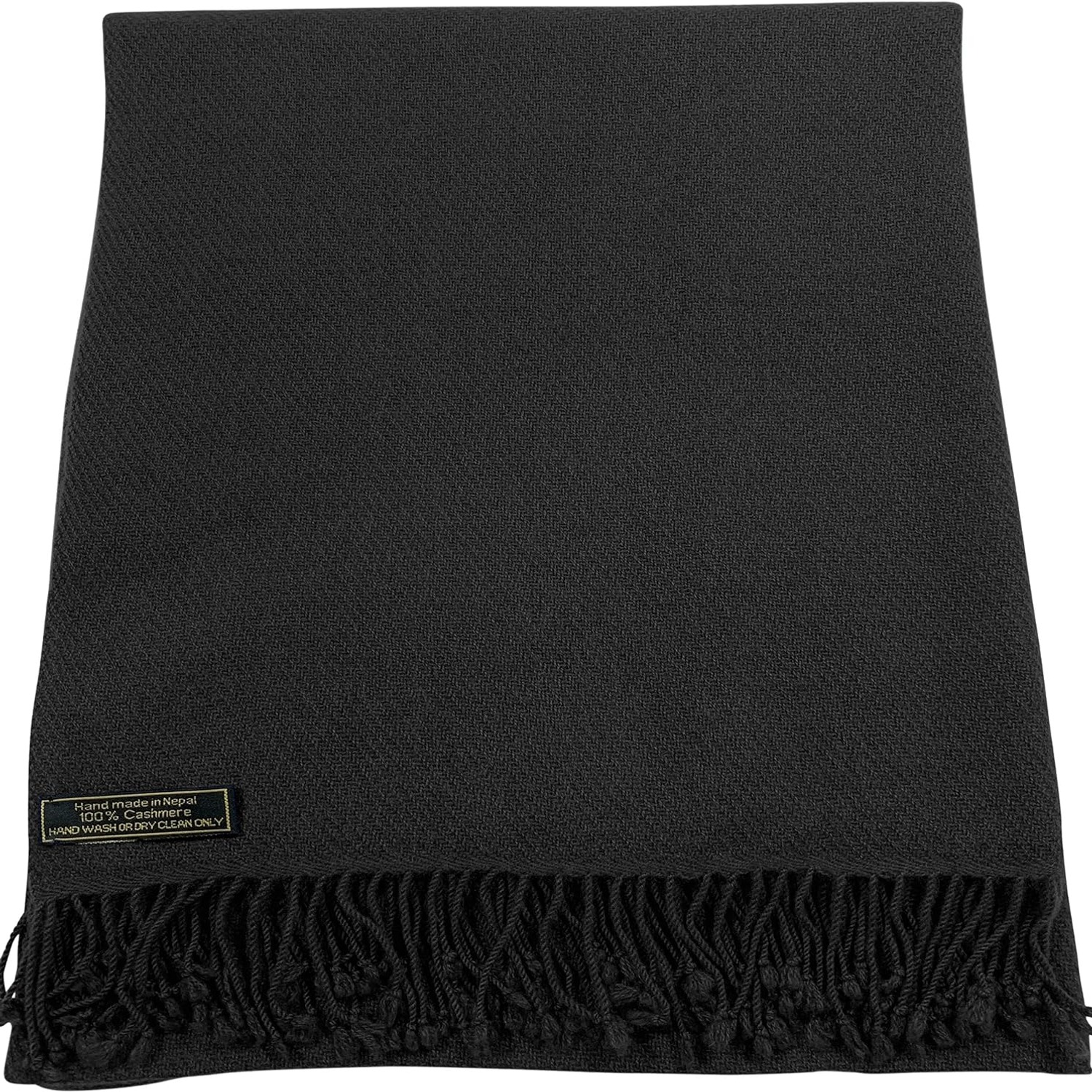
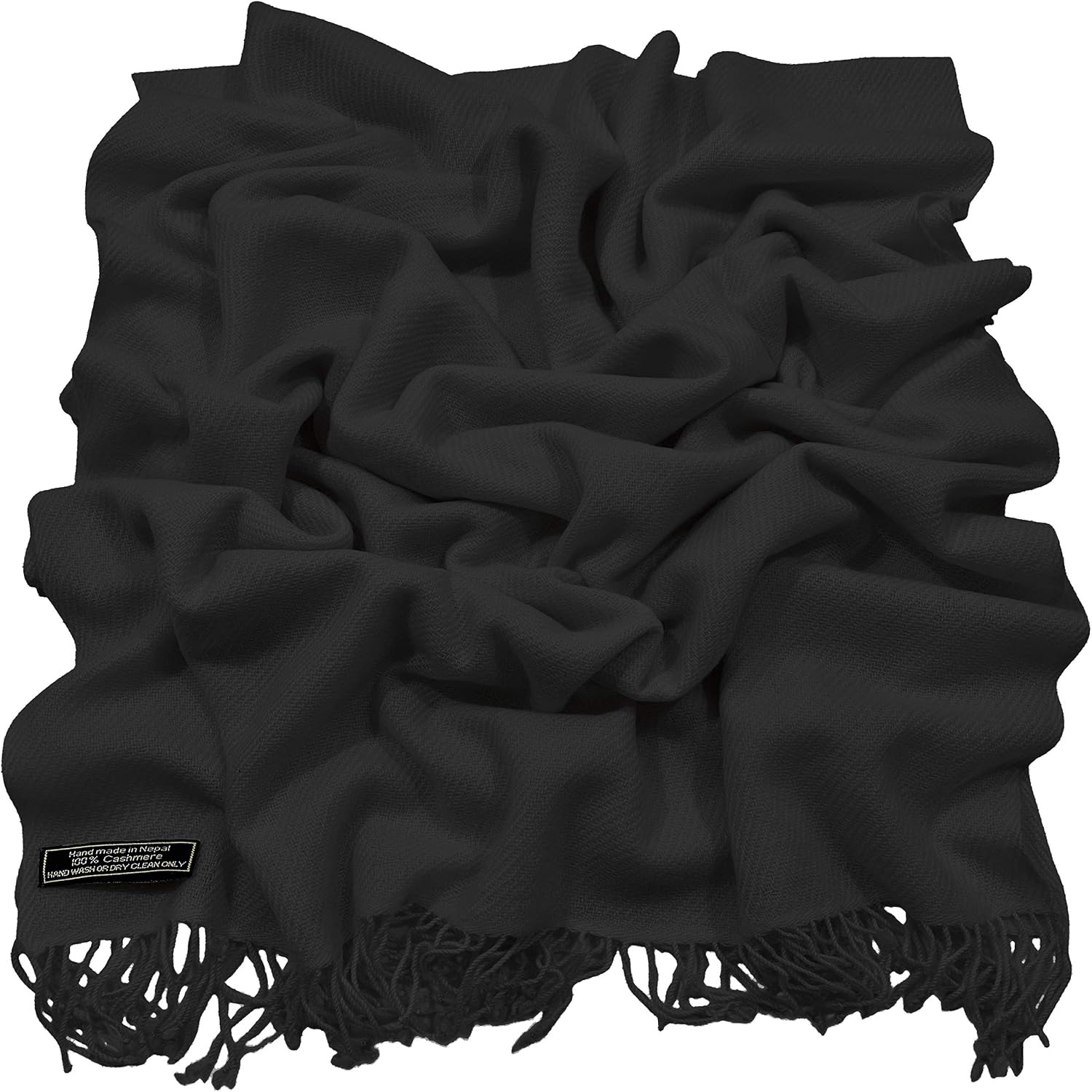
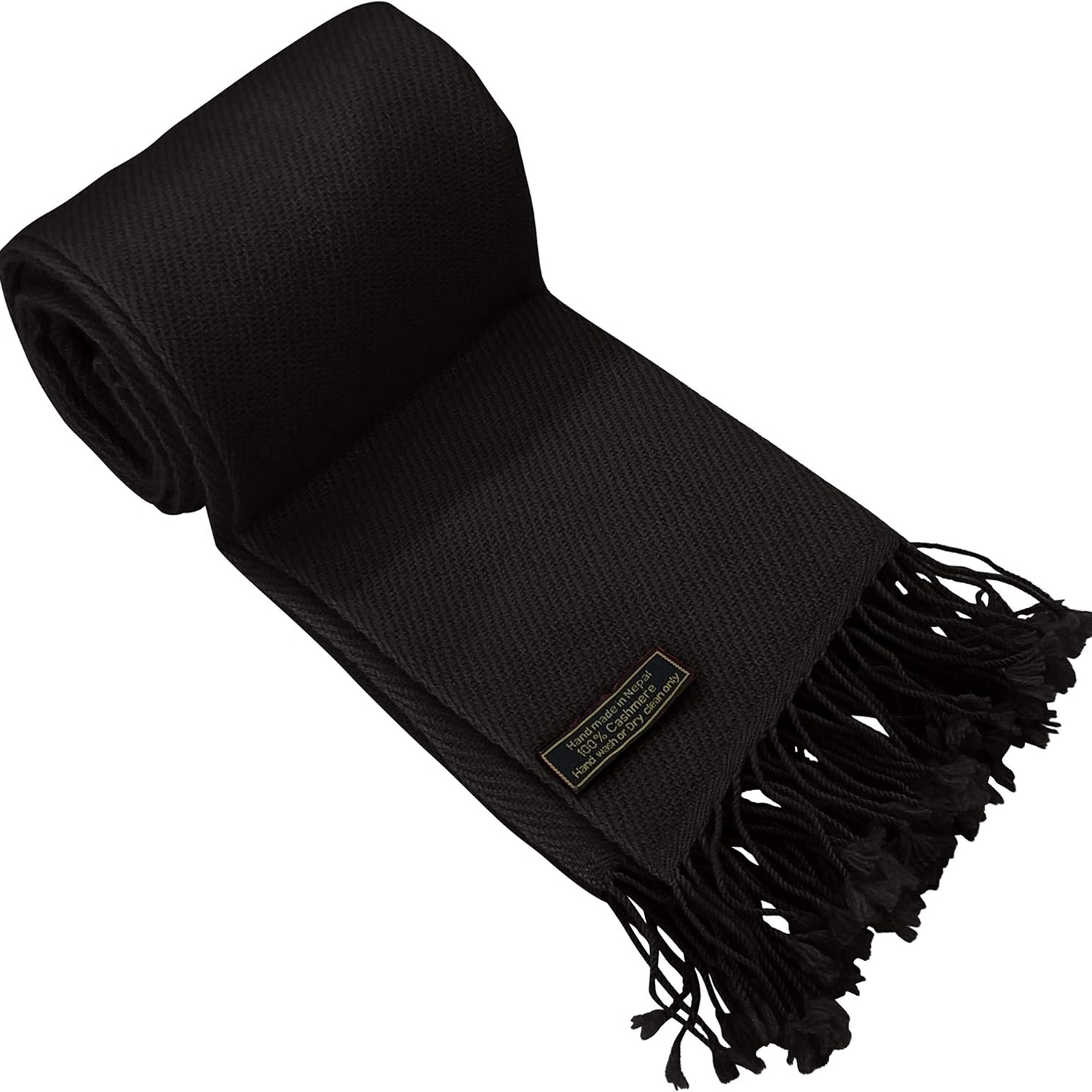
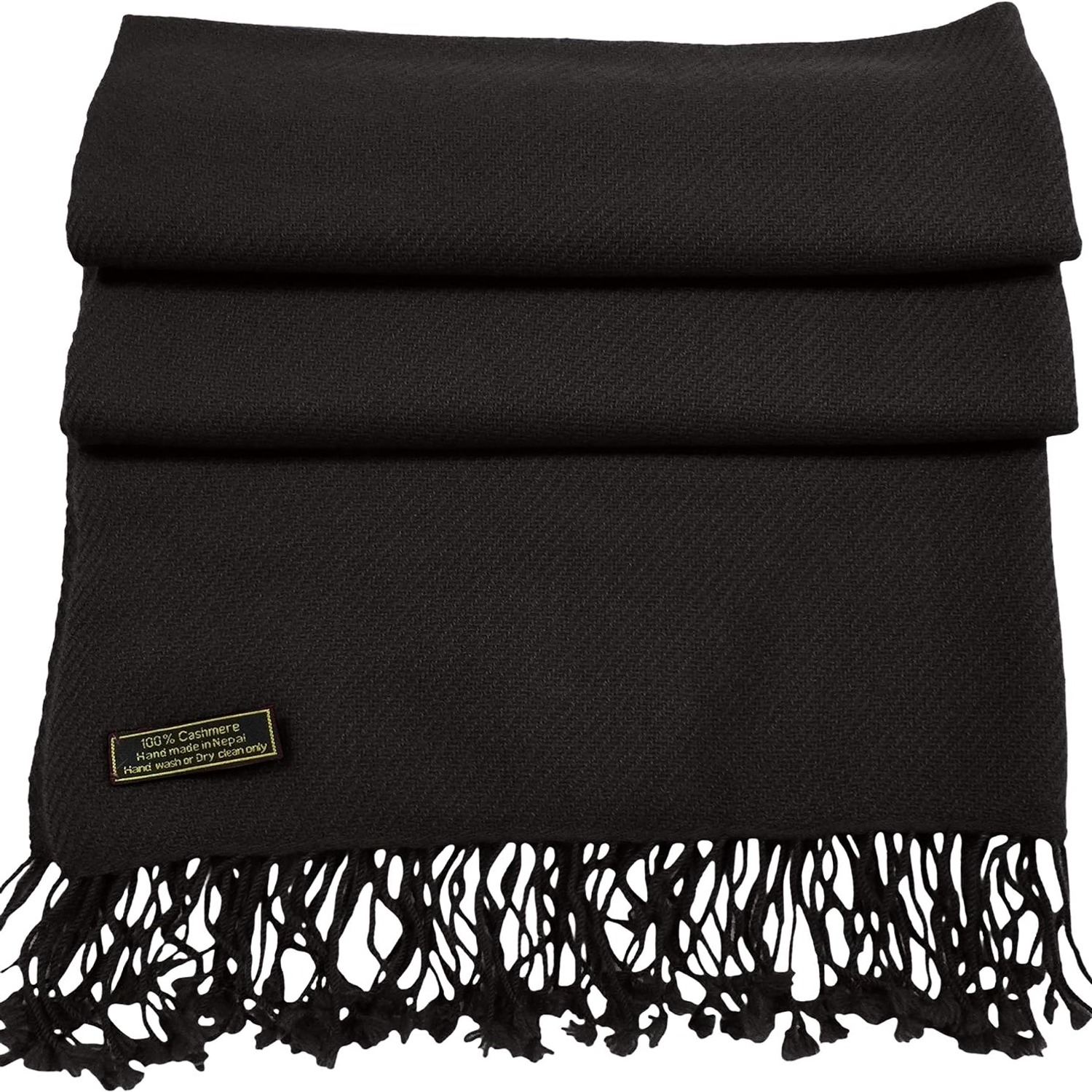
This piece is 100% cashmere, woven by hand in Nepal at 2 ply, measuring roughly 208 cm by 71 cm with hand-twisted fringe at both ends. It has no clasp or closure, so you wear it loose, looped or pinned as you like. It weighs 181 grams. It comes brand new in a presentation gift box with labels and care instructions, which makes it easy to give as a present without extra effort.
The brand states the cashmere is independently tested for authenticity. Colour and finished country of origin are not listed in this product record, so check the storefront listing if either matters to you.
The short version
A 2 ply cashmere shawl is a light, warm, plain piece that covers a lot of situations with one purchase. Handwoven cloth drapes better than machine-made. Neutral colours get worn more. Wash it rarely and gently, store it folded, comb off any pilling, and it will still look right in ten years.
If you want something you can treat carelessly, buy merino. If you want something you will reach for without thinking, this is it.