
The complete guide
The Honest Buyer's Guide to Linen Napkins
The problem with the napkin drawer
Most households run one of two systems. Either there is a pack of paper serviettes that gets torn through at an alarming rate, or there is a set of "good" napkins that live in a drawer and come out twice a year because nobody wants to wash them.
Neither works especially well. Paper costs money forever and looks like what it is. The good set gathers creases and a faint smell of cupboard while the everyday table stays bare.
Linen sits in the middle, and that is the whole argument for it. It is nice enough for a dinner party and tough enough for a Tuesday. A set of four pure linen napkins, 42cm square, machine washable at 40 degrees, is not a precious object. It is a tool you use, wash and use again.
What linen actually does
Linen comes from the flax plant, and the fibre has a few properties that happen to be ideal for a dining table.
It absorbs fast. Linen can take up a fair amount of moisture before it feels wet, which is why it has been used for towels and napkins for centuries. Wipe a mouth or a spill and the fabric deals with it instead of smearing it around.
It sheds very little lint. That is the reason bartenders and sommeliers polish glassware with linen rather than cotton. If you have ever dried a wine glass and found tiny fibres clinging to the rim, you know the difference.
It gets better with washing. Fresh linen has some body to it. After ten or twenty washes it drapes differently, softer and more fluid, without losing strength. Flax fibres are actually stronger wet than dry, which is part of why linen survives decades of laundering.
It breathes and dries quickly. A damp linen napkin left folded does not go sour the way a heavy cotton one can.
The one trade-off is creasing. Linen wrinkles, and no amount of care changes that. The rustic style leans into it rather than fighting it, which is why this kind of napkin suits people who want a relaxed table more than a hotel-crisp one.
Why 42cm is the size that matters
Napkin sizing sounds fussy until you use the wrong one. Cocktail napkins run around 25cm and are only good for holding a glass. Banquet napkins stretch to 50cm or more and can look theatrical on a small table.
At 42cm square, or 16.8 inches, you land on the standard dinner size. Opened flat it covers an adult lap and stays there. Folded in half it sits beside a plate without hanging off the table edge. Folded again it slides into a tumbler or under cutlery. You can fan it, roll it or just drop it in a loose knot, and it works at any of those.
Four napkins is a sensible set. It covers a table for four, or a dinner for two with a clean pair waiting in the drawer. If you regularly host six or eight, buy two sets and rotate them so no single napkin wears faster than the rest.
Who this suits
People who eat at a table most nights. The best everyday cloth napkins are the ones you stop thinking about, and linen qualifies because it goes in the normal wash with the normal towels.
People who entertain at home but not professionally. If you cook for friends every few weeks, a set of natural linen napkins does more for the look of a table than almost anything else at the price.
People who are trying to cut single-use paper. Four napkins replaces a surprising quantity of serviettes over a year, and unlike many swaps this one is genuinely nicer than what it replaces.
People buying a gift. A set of four pure linen napkins is a complete present rather than a half-measure. It suits a housewarming, a wedding list or a thank-you, and it does not require the recipient to have a particular taste in colour schemes.
It is less ideal for anyone who needs everything perfectly pressed at all times, or for a very large event where you would need dozens of matching pieces. For those, plan on multiple sets and factor in the ironing.
How to choose, honestly
Check the composition. This is the big one. "Linen" on a listing often means linen-look, which is usually polyester or a cotton blend woven to mimic the texture. Blends do not absorb the same way and they do not soften with age. This set is listed as 100% linen, which is the thing you are actually paying for.
Check the size in centimetres, not words. Terms like "dinner" and "luncheon" vary between sellers. A number is a number. 42cm is a real dinner napkin.
Check the care instructions before you buy, not after. A napkin that needs dry cleaning will live in a drawer. Machine wash at 40 degrees means it joins the normal laundry cycle, which is the difference between a set you use and a set you own.
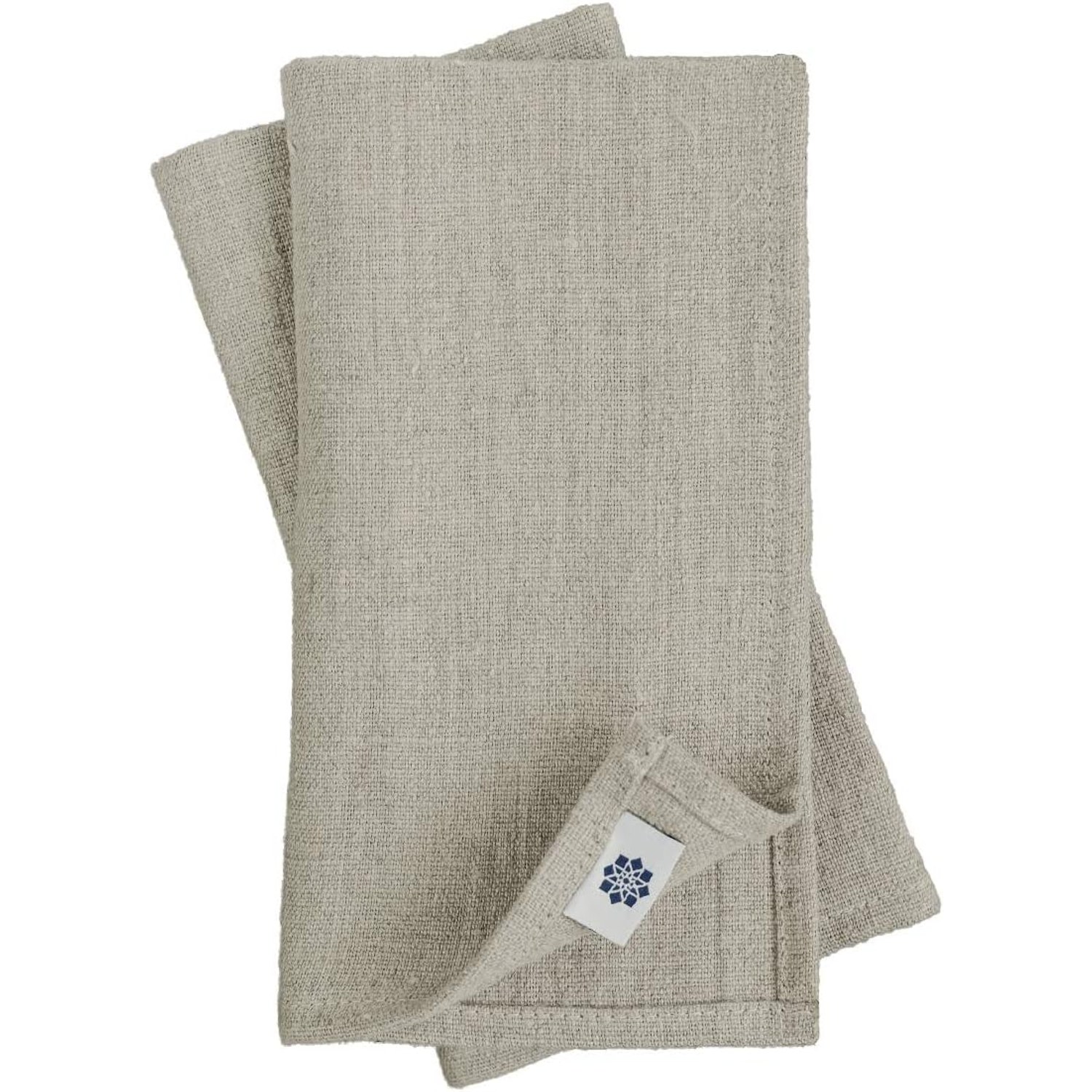
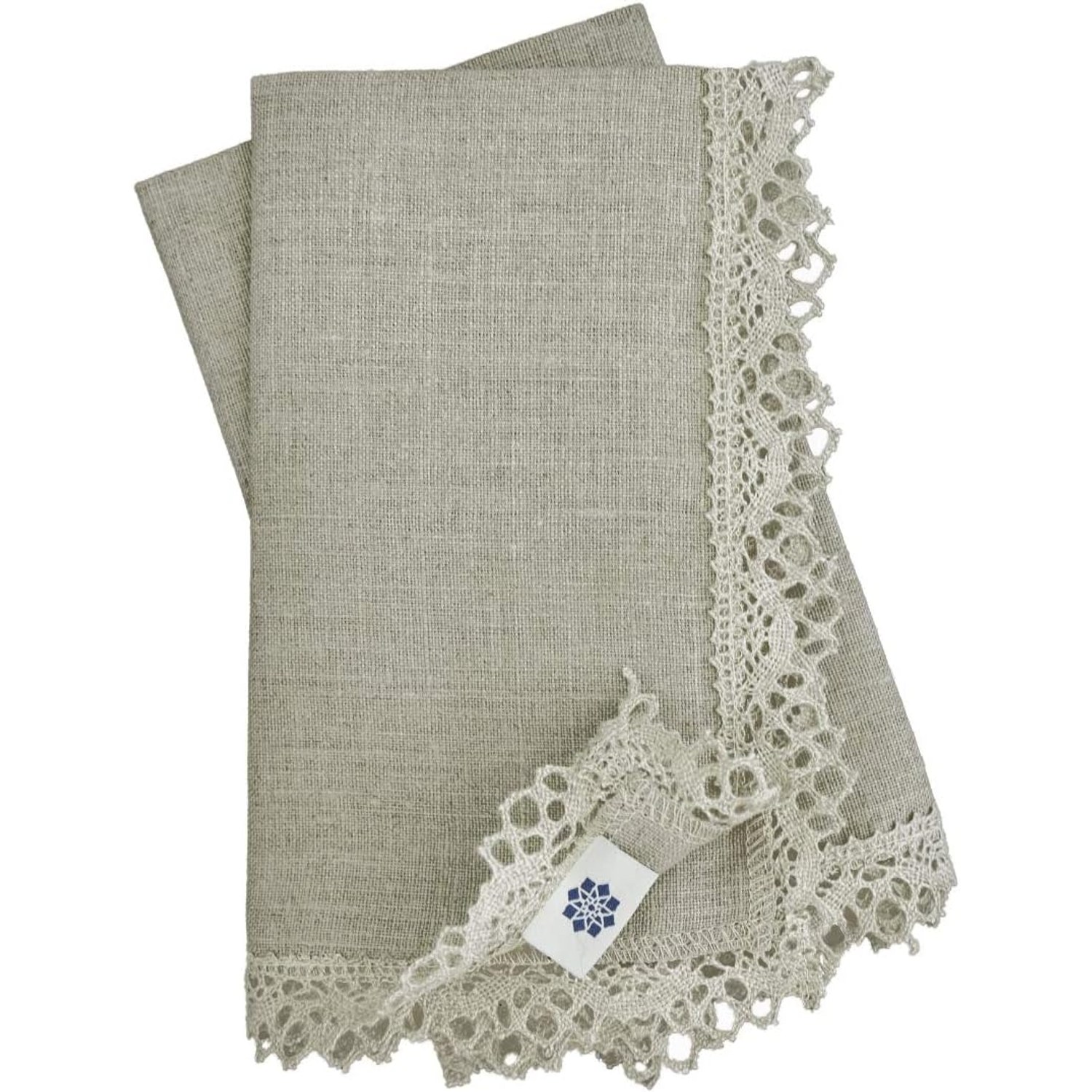
Think about the finish you want. A smooth, tightly woven linen presses to a formal crispness. A rustic weave has visible texture and an informal character. Neither is better, but they set a very different table, so pick deliberately.
Count what you need. Work out your usual guest number, add two, and round up to the nearest set. Running one napkin short at dinner is a small, annoying problem that is easily avoided.
Living with them
The first thing to do is wash them before use. It settles the fibres, takes off any manufacturing finish and gives you a sense of how the fabric behaves.
After that, the routine is simple. Wash at 40 degrees with similar colours. Skip the bleach, which weakens natural fibres, and go easy on fabric softener, which coats the fabric and makes it less absorbent. If you want softness, washing is what delivers it.
Dry on a line or on a low tumble setting. If you plan to iron, pull them out while they are still a little damp and press with a warm iron. The fabric flattens quickly at that stage. If you skip ironing entirely, give each napkin a firm shake and fold it while damp, and it will settle into something perfectly presentable.
Deal with spills early. Rinse in cold water, not hot, because heat sets most stains. Red wine, coffee and sauce all come out far more easily from linen than from synthetics, but the clock matters more than the technique.
Store them folded in a dry drawer, out of direct sun. Avoid sealed plastic boxes for long storage. Natural fibres prefer a bit of air.
Expect the set to look slightly different in a year. Softer, a little more relaxed, maybe with a shade of character where a plate was set a hundred times. That is linen doing what it does, not the set wearing out.
The short version
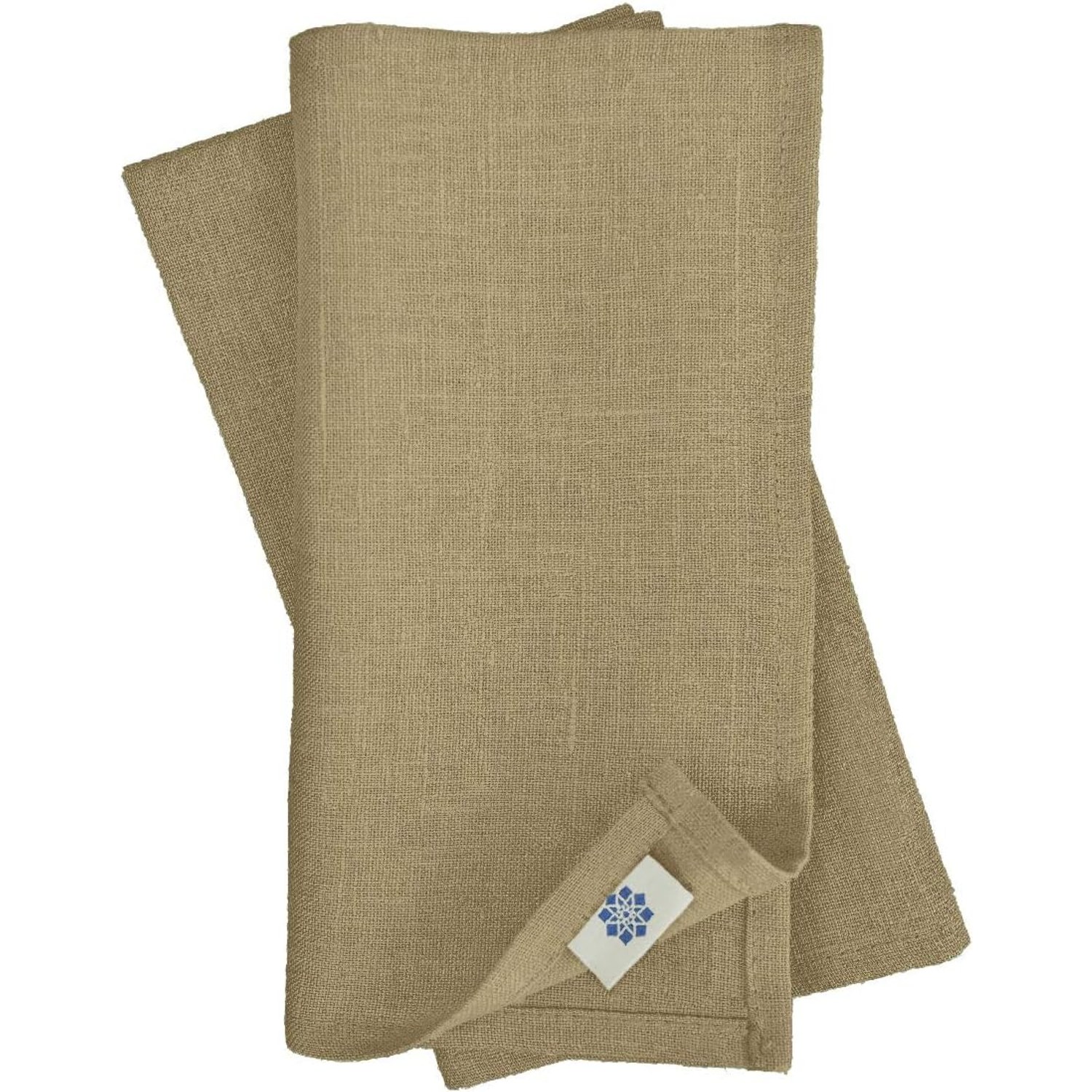
This is a set of four napkins made from 100% linen, each 42cm square, machine washable at 40 degrees, made in the EU by Linen & Cotton. Colour, fabric weight and country within the EU are not specified in this record, so ask if those details are decisive for you.
What you get for the money is a real natural fibre instead of a blend, a practical dinner size instead of a decorative one, and a care routine that does not punish you for using them. That combination is what turns a set of napkins from something in a cupboard into something on the table.