
The complete guide
How to Choose a Linen Cushion Cover That Actually Gets Used
The cushion problem nobody talks about
Most people buy cushion covers twice. The first time they buy something that looks good in a photo. It arrives, it feels like cardboard, it gets shoved behind the sofa within a month, and eventually it goes to a charity bin. The second time they buy something they can actually touch without flinching.
That gap between how a cushion looks and how it feels is the whole reason washed linen became popular. A plain woven cover in a flat colour can look fine online and still feel wrong in the hand. The fabric matters more than the photograph.
This guide covers what to look for in a linen cushion cover 50 x 70 cm, why pre-washing changes everything, how to pick an insert, and how to wash it so it keeps improving instead of going stiff.
Why pre-washed linen is different
Linen comes from flax, a tall plant with long, strong fibres. Those fibres make a fabric that is tough, breathable, and very long-lived. They also make a fabric that starts out quite stiff. Raw linen straight off the loom has a papery crispness. Some people like it. Most people, in a cushion they are going to lean on, do not.
Stonewashing fixes that at the factory. The fabric goes through an industrial wash that physically relaxes the fibres before the cover is cut and sewn. Two useful things happen. The cover arrives soft rather than needing twenty washes to get there. And most of the shrinkage has already happened, so the size you buy is close to the size you keep.
The Alicia cover is made this way. It is 100% linen, industrially pre-washed, in a plain weave. There is no blend hiding in the fabric and no synthetic coating to make it feel smoother than it is. What you feel is the fibre itself.
That matters for the texture too. Washed linen has a slightly uneven, lived-in surface. It is not glossy. If you want something that looks mirror-smooth, linen will never be it. If you want something that looks relaxed and a bit imperfect, this is exactly the look.
Getting the colour right
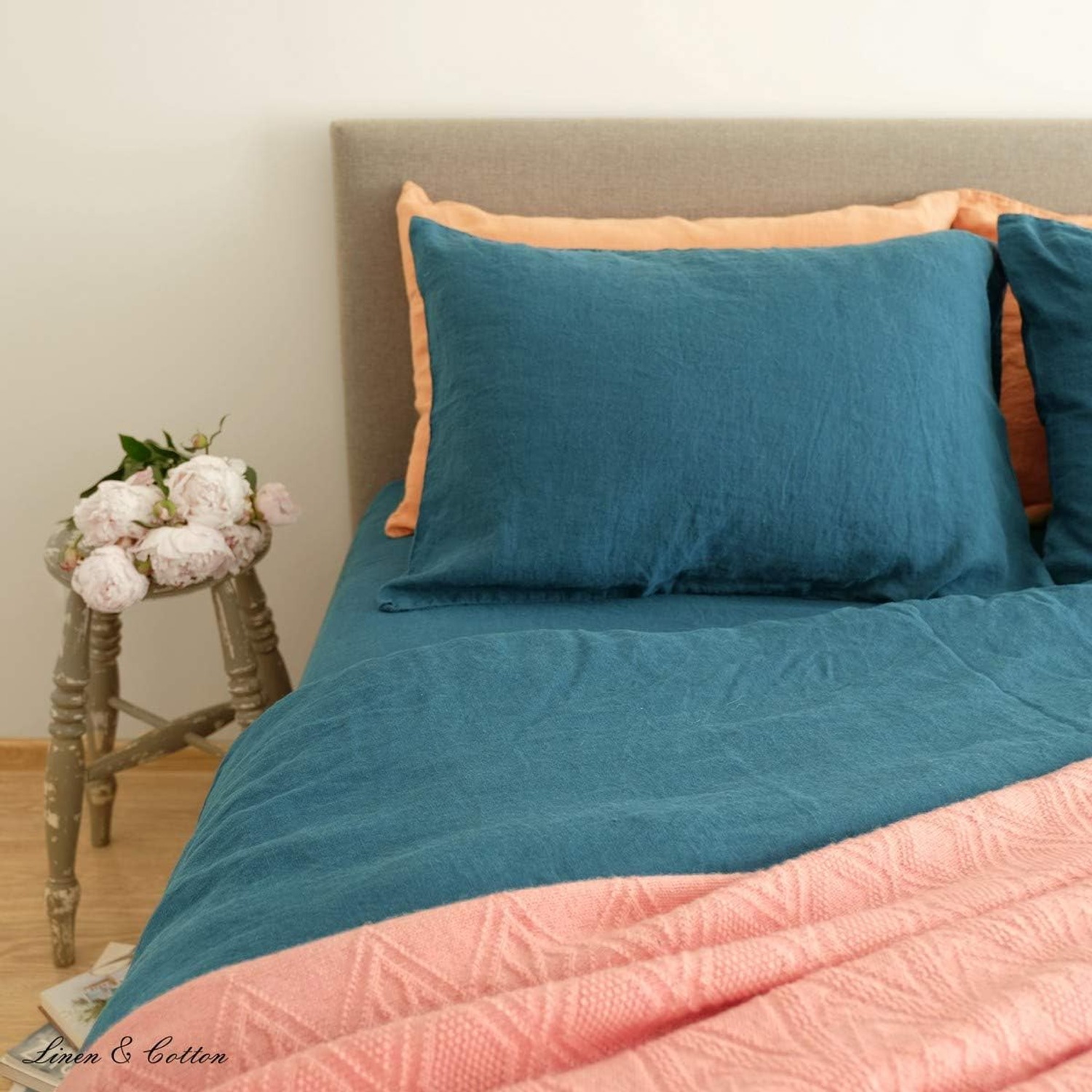
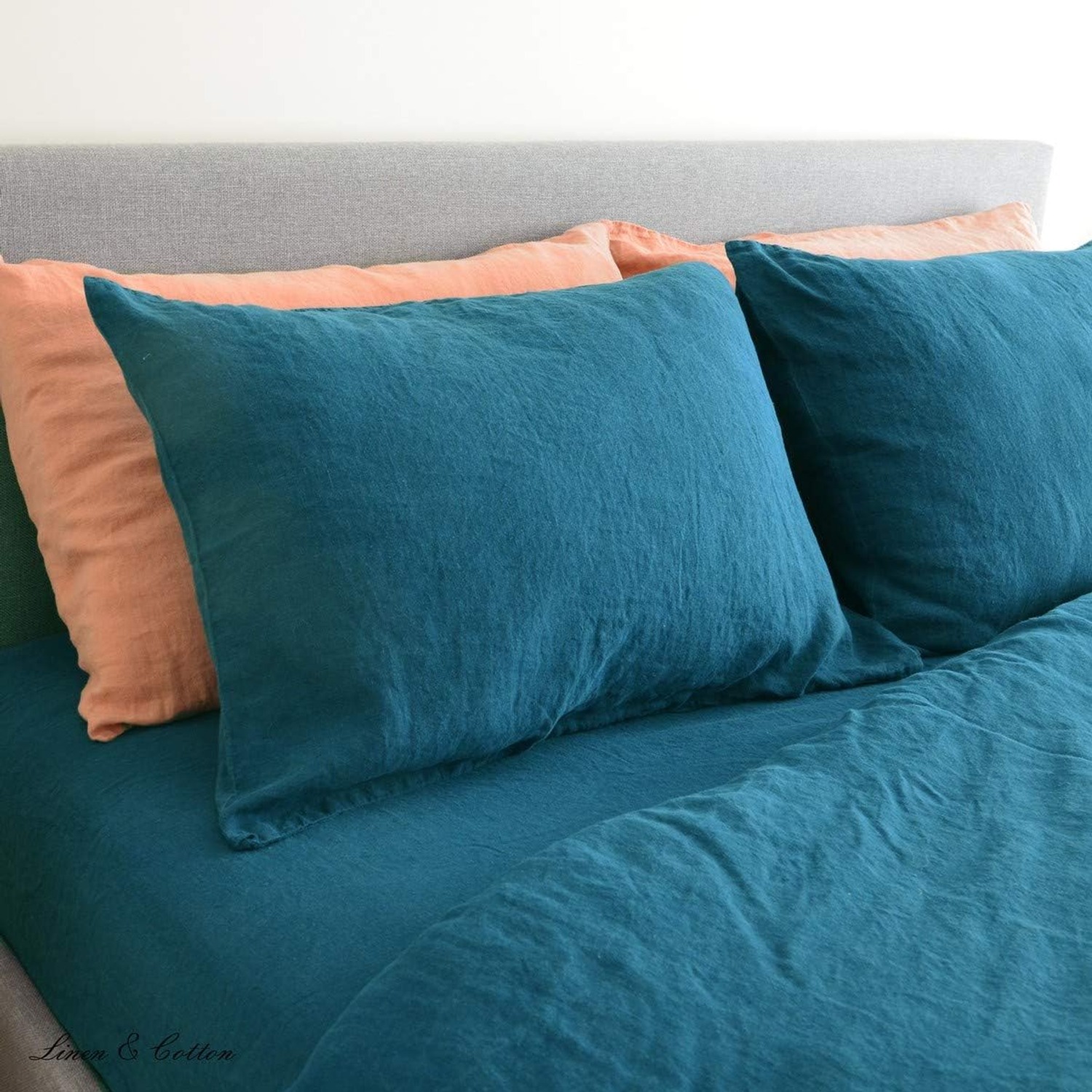
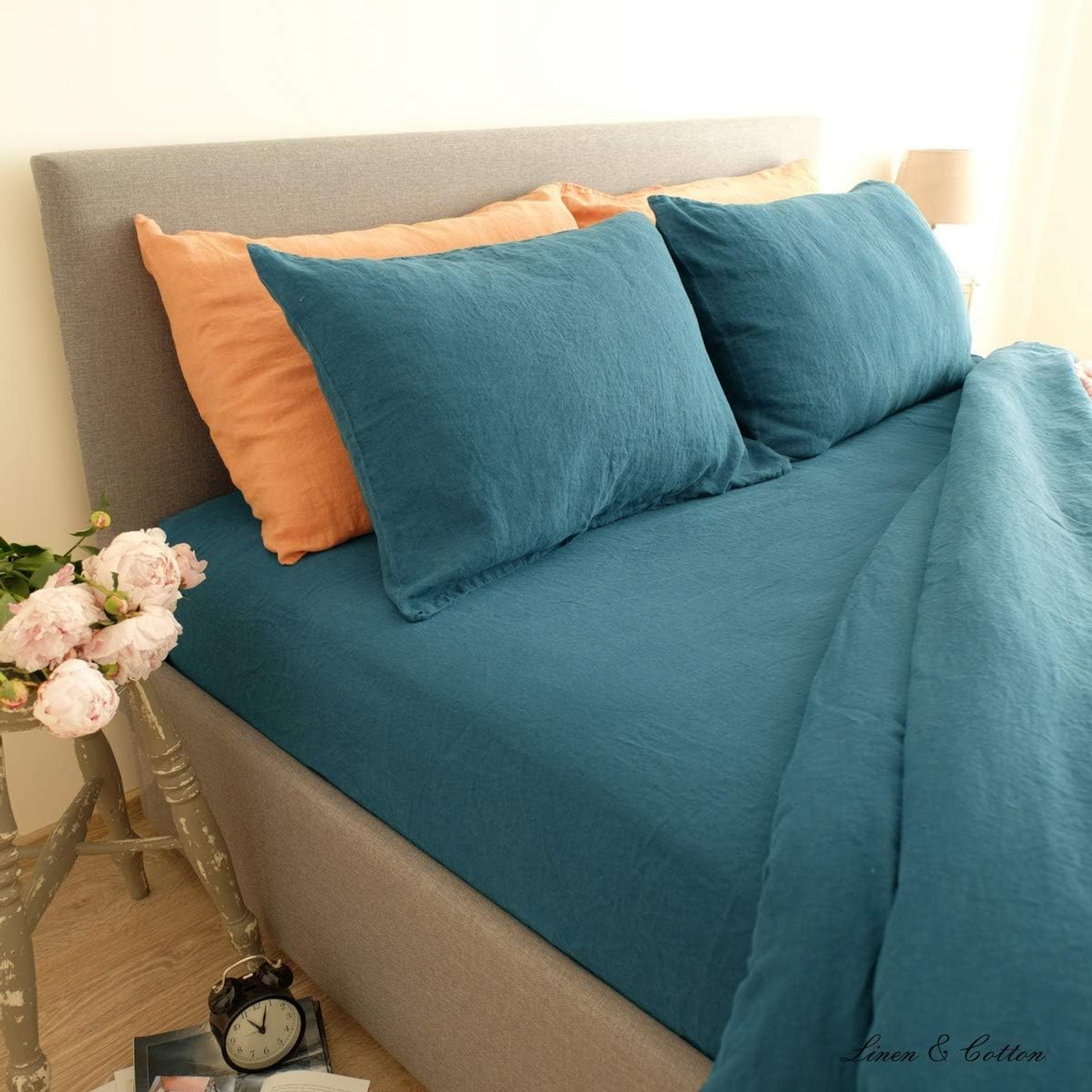
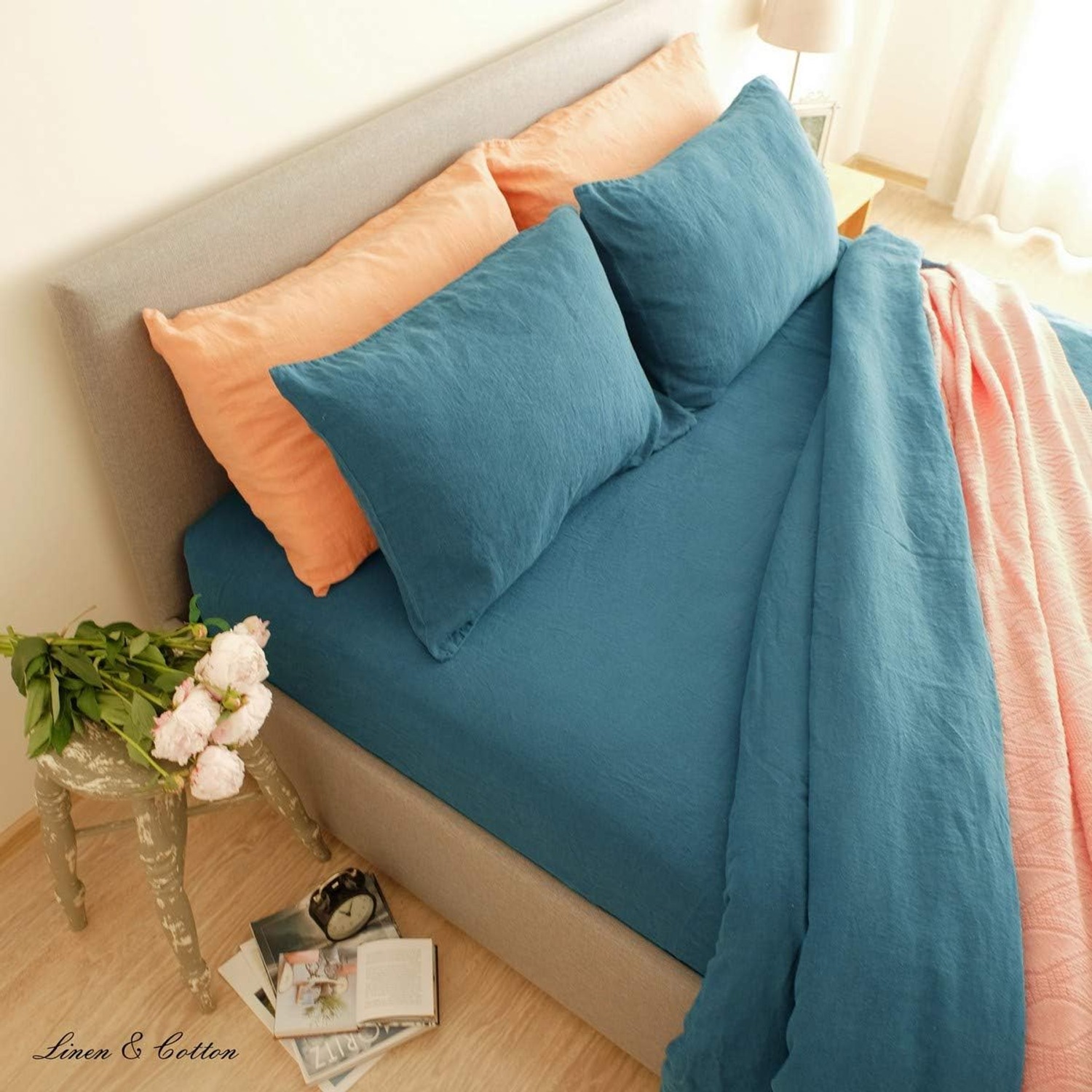
Petrol blue is a deep blue with a green cast. It is darker than a mid-blue, moodier than a navy, and calmer than a bright teal. In a room with a lot of white, it provides contrast without looking severe. Against grey, it adds warmth. Against natural timber or rattan, it reads almost like a deep sea colour.
One thing to know about linen and colour: the fibre takes dye slightly unevenly across the weave. That is a feature, not a flaw. It gives the fabric a subtle depth that solid-dyed synthetics never have. Up close you will see faint variation in tone. From across the room it reads as one rich colour.
Screens exaggerate. Blue is one of the hardest colours to render accurately on a phone, and a petrol blue can look more green on one display and more navy on another. If your room has a very specific palette, it is worth accepting a small margin of difference from what you see online.
Why 50 x 70 cm is a useful size
Fifty by seventy centimetres is the standard European pillow size. That one fact makes this cover a lot more flexible than it first appears.
On a bed, it works as a straightforward pillowcase. You can sleep on it, or you can use it as a front layer in front of your sleeping pillows for a more finished look. If you already own 50 x 70 pillows, you do not need to buy anything else.
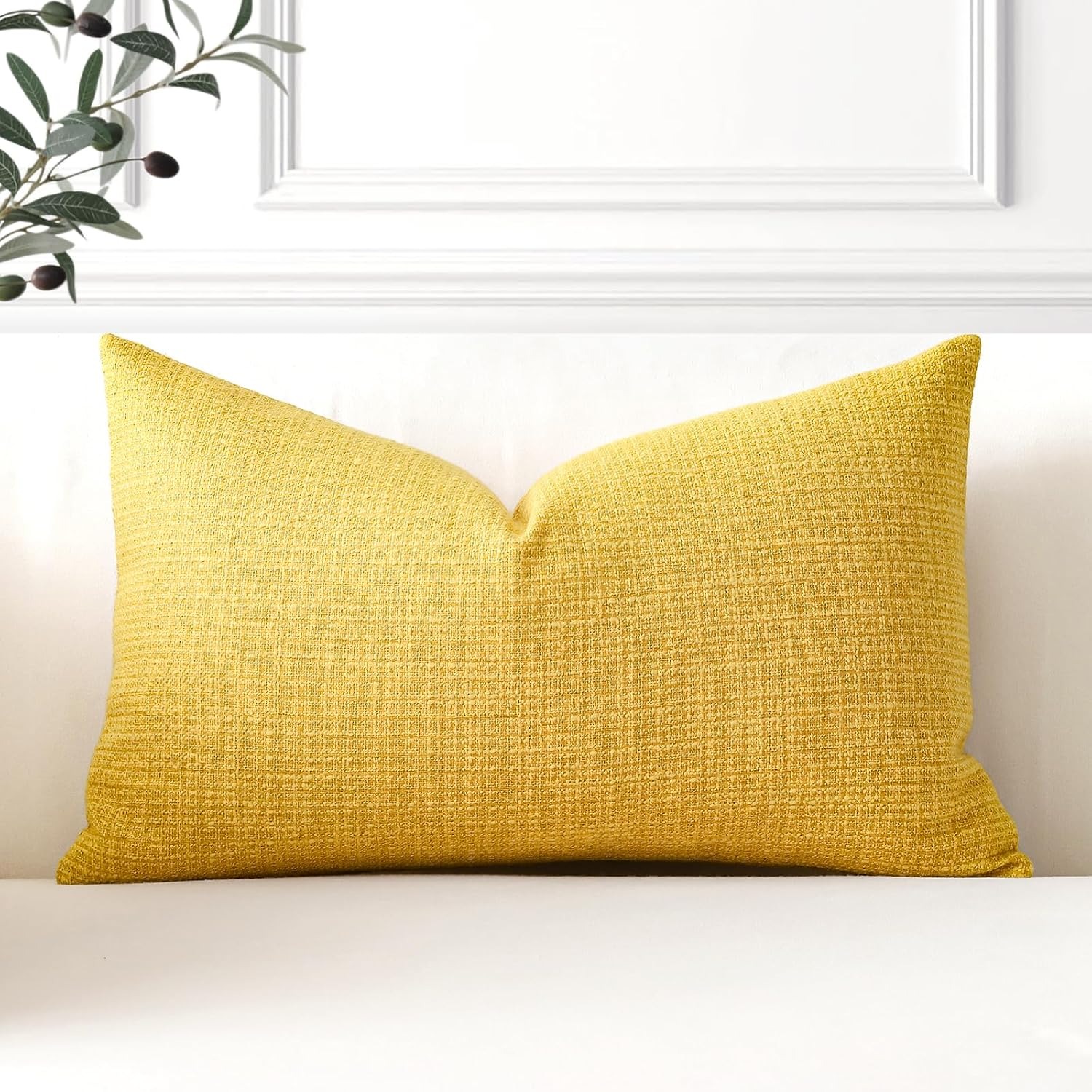
On a sofa, the same rectangle becomes a lumbar cushion. That long, low shape is the one you actually use, because it sits behind your lower back when you are reading or watching something. Square cushions look good. Rectangular ones get used.
The same size also works on a window seat, a bench, a daybed, or the head of a bunk. The trick is to think of it as a shape rather than a bedroom item.
Before you order, measure what you have. Lay the pillow or insert flat and measure corner to corner, not around the bulge. If your pillow is 48 x 74 cm, or 65 x 65 cm, this cover is not the right match.
Choosing an insert
This is a cover only, which is normal for quality linen bedding and a good thing for your wallet over time. You can replace a flattened insert without throwing out perfectly good fabric.
Feather or feather-and-down inserts give that soft, collapsed look where the cushion creases when you lean on it. They need a shake every few days to keep their shape. They are the right choice if you want the cushion to look casually lived in.
Polyester fill holds a firmer, more upright shape and bounces back on its own. It is easier to wash, cheaper, and better if anyone in the house reacts to feathers.
A small trick: buy an insert that is two to three centimetres larger than the cover in each direction. A 52 x 72 insert inside a 50 x 70 cover fills the corners properly and stops the flat, half-empty look that ruins otherwise nice cushions.
Washing it without wrecking it
The care recommendation is a machine wash at 40C on a gentle or linen cycle. That is the main rule. Everything else is detail that helps.
Use a mild detergent and not too much of it. Linen does not need aggressive cleaning, and detergent residue builds up and dulls the fabric. Skip fabric softener entirely. It coats fibres with a waxy film that reduces the very breathability you bought linen for. Linen softens on its own with water and movement, so softener is not just unnecessary, it works against you.
Wash with similar colours, especially for the first couple of washes. Keep it away from towels and anything with zips or hooks.
For drying, tumble on low and pull it out while it is still a bit damp. That leaves the fibres relaxed instead of brittle. Line drying in shade also works well. Direct hot sun will fade the petrol blue faster than anything else you do.
Ironing is optional. Washed linen is supposed to look slightly creased. If you want it crisper, iron while damp with a warm iron on the reverse of the fabric.
Who this suits
It suits people who run hot at night and want a cushion surface that does not trap heat. It suits anyone redecorating a neutral room who wants one colour to carry the scheme. It suits people who are tired of replacing cheap covers every year and would rather buy one thing that keeps getting better.
It is less suited to someone who wants a tightly pressed, formal, hotel-smooth look. Linen will not do that. It is also not the right pick if you need a specific non-standard pillow size, or if you want a cover with a guaranteed zip closure, since that detail is not listed in this product record.
The short version
Buy pre-washed linen if you want softness on day one. Check your pillow measurements before you order, because 50 x 70 cm is a specific standard and close is not the same as correct. Choose an insert slightly larger than the cover so the corners fill out. Wash gently, dry low, skip the softener, and keep it out of hard sun.
Do that, and a linen cushion cover does something unusual for a soft furnishing. It looks better in year three than it did in week one.