
The complete guide
How to Choose and Style Heart Shaped Ceramic Vases
The empty vase problem
Here is something most people discover after buying their first decorative vase. Flowers are a sometimes purchase. You buy a bunch, they look wonderful for a week, then they droop and go in the bin, and the vase sits empty on the sideboard for the next month looking slightly sad about it.
A plain cylinder with nothing in it reads as unfinished. Your eye registers a container waiting for contents. That is why so many vases end up in a cupboard instead of on display, brought out only when someone brings flowers.
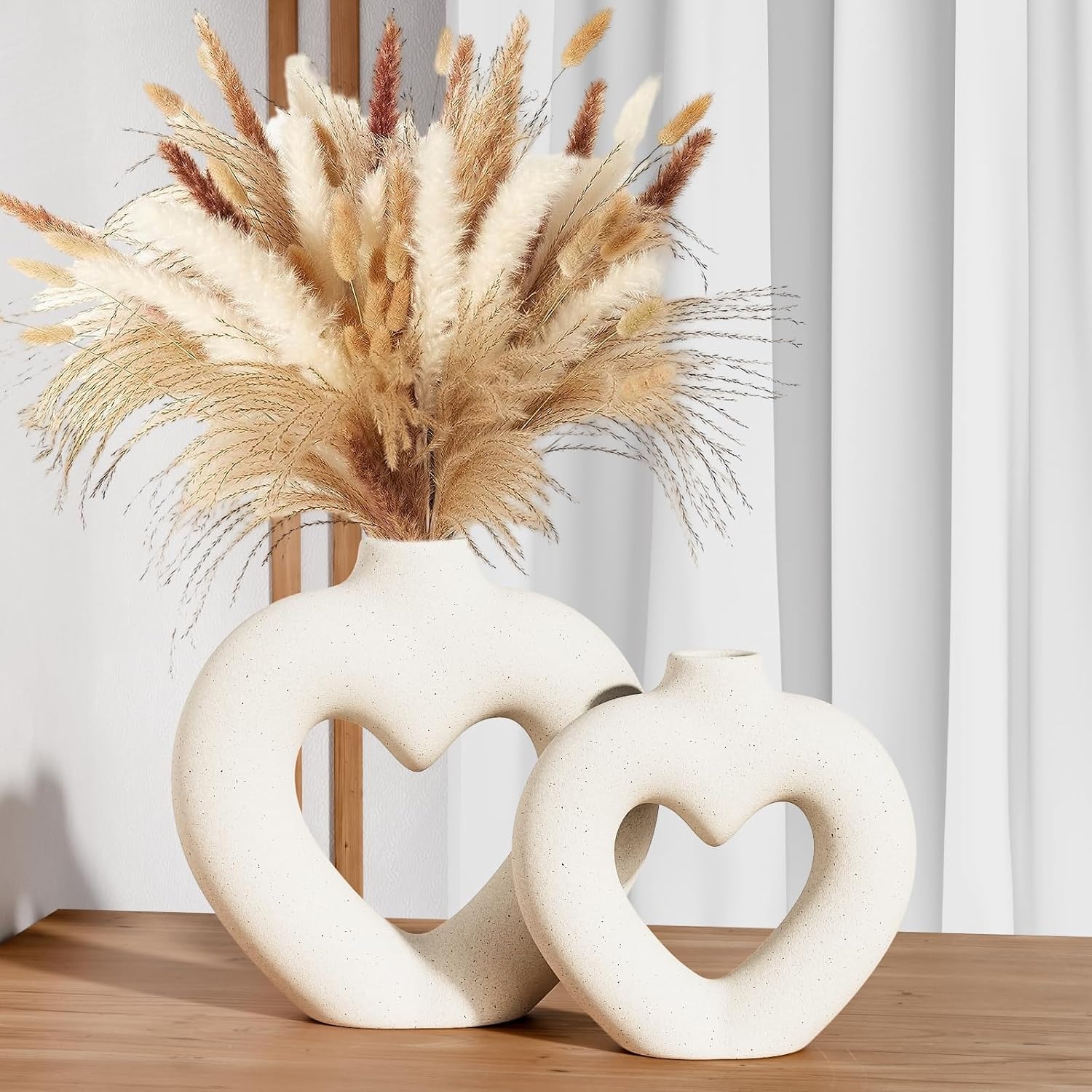
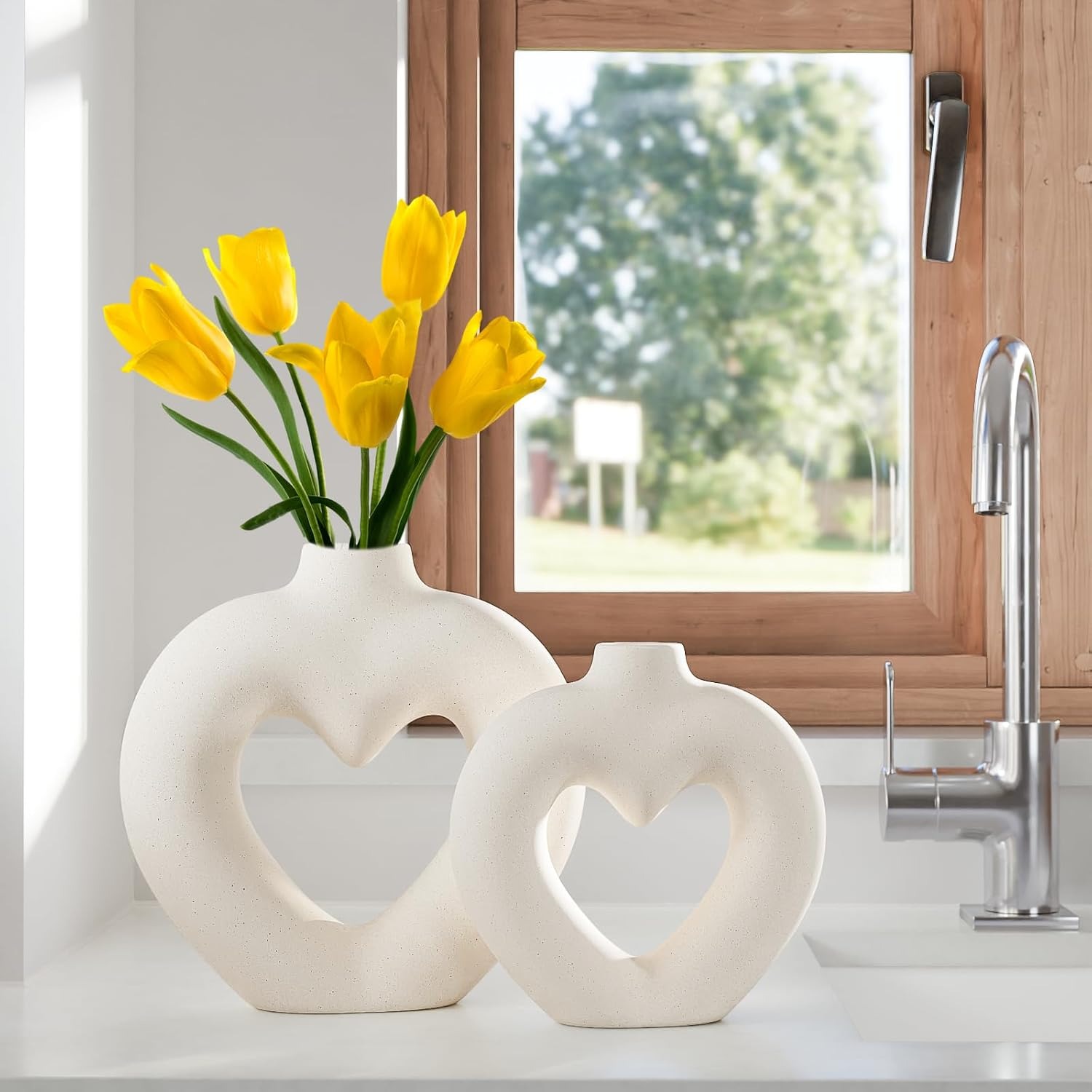
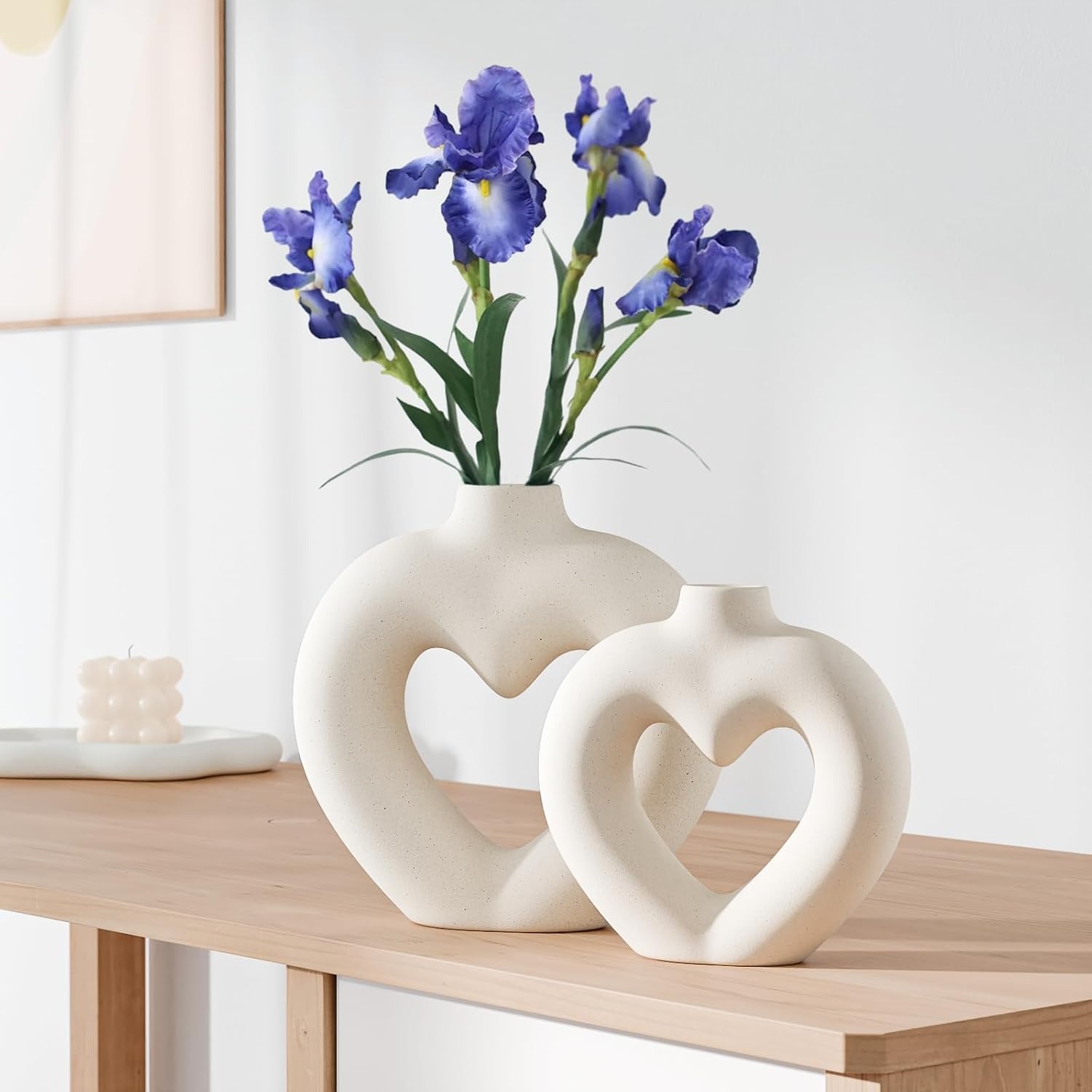
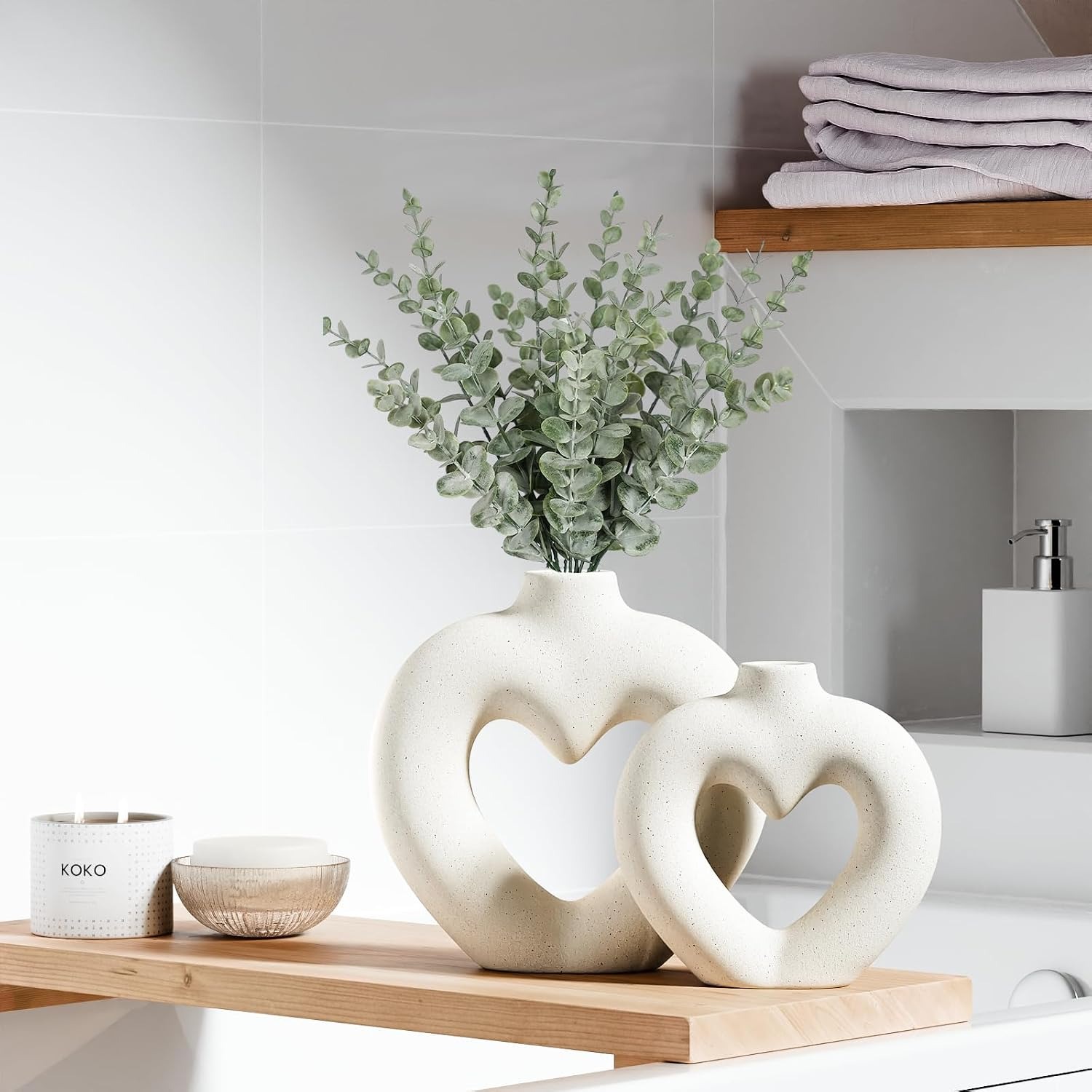
A cut-out shape solves this. When the vase itself has a clear silhouette, in this case an open heart outline, the object is doing the decorating. Stems become optional. You can fill one and leave the other bare and the pair still looks deliberate, because the shape was always the point.
Why two heights beat two matching pieces
This set gives you a taller vase and a shorter one rather than two identical ones, and that choice does more work than it sounds like it should.
Two identical objects side by side read as symmetry, which is formal and a bit static. Think of candlesticks on a mantel. Two related objects at different heights read as a grouping, which feels more relaxed and more like someone arranged it on purpose. Interior stylists call this the rule of varied height and they use it constantly, because the eye travels up and down across the arrangement instead of stopping flat.
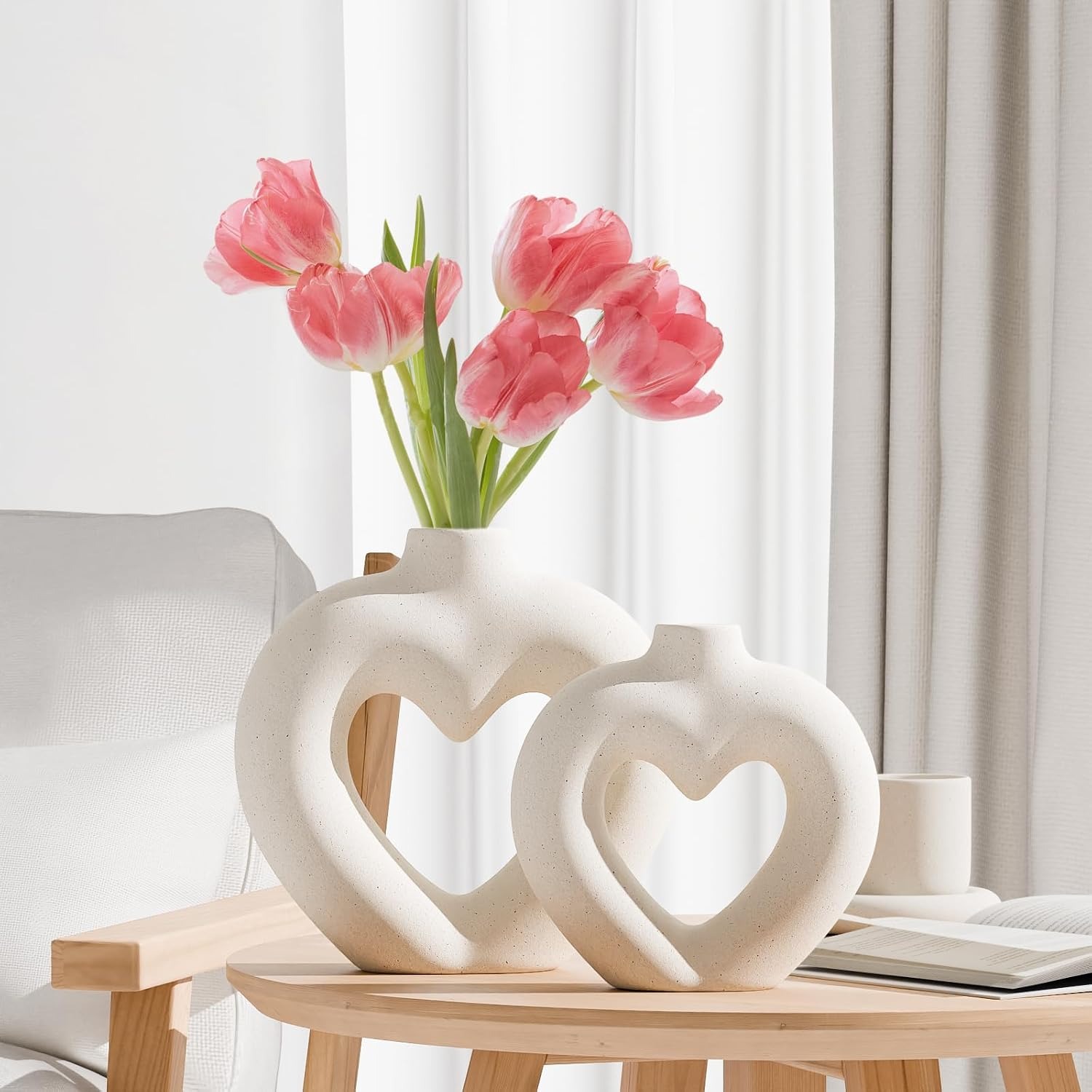
With a heart shape there is a second effect. Place the two close together and the outlines seem to lean toward each other, which is obviously part of the appeal for anyone buying this as a couple's gift. Pull them apart and each heart works as a standalone piece in a different part of the room.
You are not locked into one look. That flexibility is worth noting if you move furniture around or change rooms seasonally.
Matt white and why it is the easy choice
The finish here is matt white, and if you are weighing this against a glossy or coloured vase, a few things are worth knowing.
Gloss bounces light. In a bright room that can look sharp and clean, but it also shows fingerprints, dust and every smudge from handling. Matt absorbs light instead, which softens the edges of a shape and makes the form easier to read. On a cut-out silhouette like a heart, that is an advantage, because you want to see the outline rather than a highlight running down the side.
White is also the lowest risk colour in home decor. It sits against warm oak, against black metal frames, against grey walls, against green plants and against a brightly painted feature wall. If you repaint next year, the vases still work. A terracotta or navy piece does not give you that.
For a best matt white vase in a room that already has a lot going on, the neutral tone gives the eye somewhere to settle. Busy rooms need quiet objects, not more competition.
Who this suits
A few people will get the most out of this pair.
First, anyone furnishing a new place who needs decor that does not demand a scheme. White ceramic in a simple shape fits whatever you choose later.
Second, gift buyers. A heart shape carries an obvious meaning without being saccharine, which is why these move for engagements, weddings and anniversaries. The best wedding gift vase is usually one that suits a home you have never visited, and plain white meets that test.
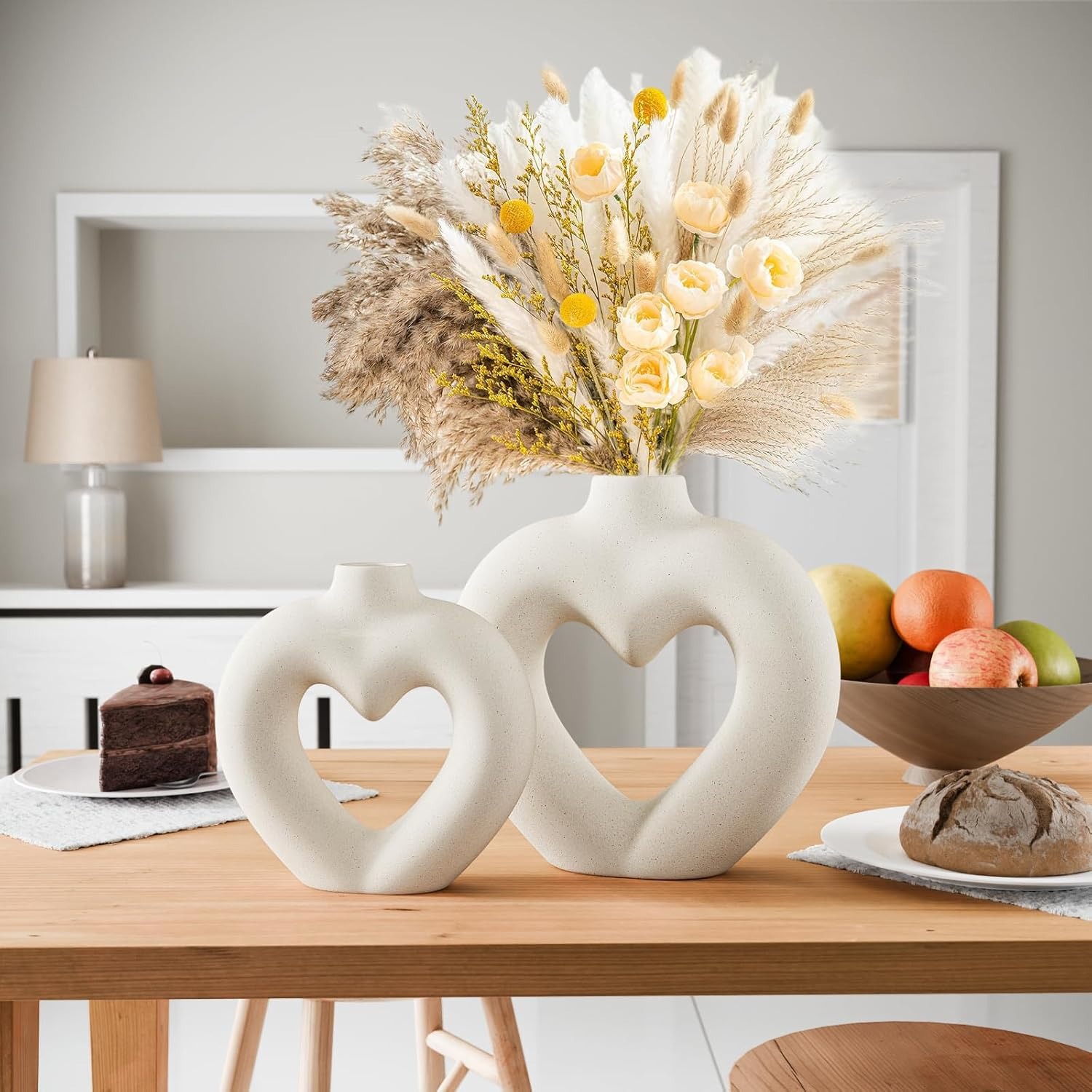
Third, people who like the look of styled shelves but do not want the upkeep. Dried stems last months. Put pampas grass in one vase, leave the other empty, and the shelf looks finished with no watering, no trimming and no weekly flower run.
Fourth, renters. These do not need wall fixings, they move between homes easily and they take up almost no storage space.
Who might want something else? If you regularly receive large bouquets, narrow necks will frustrate you. You need a wide-mouthed vessel for that, and this pair is better thought of as decor that holds a few stems than as a working flower vase for big arrangements.
How to place them
Start with the surface. Measure the width of the shelf, table or console you have in mind. As a rough guide, a grouping should take up somewhere between a third and half the length of the surface, leaving breathing room at each end. Two small vases spread across a two metre sideboard will look lost, while the same pair on a one metre console looks right.
Next, think about what is behind them. White on white can disappear. If your wall is pale, try the vases on a dark wood surface, in front of a mirror or alongside a book stack and a small piece of art. Contrast is what makes a light object visible.
Then group with odd numbers. If you are adding other pieces, three objects of different heights tends to look better than four. The pair of vases counts as two, so one more item, a small bowl, a candle, a stack of two books, usually completes the scene.
On a dining table, put the shorter vase toward the side people sit at and the taller one behind, and keep the whole arrangement below eye level so conversation flows across the table. Nothing kills a dinner like having to lean around a centrepiece.
Choosing what goes in them
Narrow necks mean a few stems, not a bouquet, and that is a feature rather than a limitation. Three to five stems per vase is usually the sweet spot.
Dried and preserved stems are the lowest effort option. Pampas grass, bunny tails, preserved eucalyptus, dried lavender and wheat all hold their shape for months and need no water at all. For a best pampas grass vase setup, cut stems so the fluffy heads sit roughly one and a half times the height of the vase above the rim. Any taller and it topples visually.
Fresh flowers work too. Single-stem types suit a narrow neck best, so think tulips, ranunculus, roses or a few sprigs of something from the garden. Change the water every two or three days and trim the stem ends at an angle each time.
Greenery alone is underrated. A few eucalyptus or olive branches in a white vase looks considered and costs very little.
And then there is nothing. An empty heart vase on a shelf is a legitimate choice, which is the whole advantage of buying a shape rather than a container.
Looking after ceramic
Care is simple. Wipe the outside with a soft dry cloth or one that is barely damp. For the inside, warm water and a drop of mild dish soap, swirled and rinsed, handles most residue. If a narrow neck is hard to reach, a bottle brush or a small amount of uncooked rice shaken with water will loosen anything stubborn.
Keep abrasive scourers and harsh chemical cleaners away from a matt surface. Matt can be scuffed to a shine in patches, which looks worse than a mark would have. Skip the dishwasher for the same reason.
Physically, handle with two hands when the vase holds water, since weight shifts as liquid moves. Keep both pieces back from table edges and away from the swing of a cupboard door. Ceramic is durable in ordinary use and fragile in exactly one scenario, a hard knock. Avoid that and you will have them for years.
If you are storing them between seasons, wrap each one separately in bubble wrap or a tea towel rather than letting them touch in a box.
The short version
Two ceramic hearts in matt white, one taller and one shorter, sold as a pair. The cut-out shape means they look finished whether or not you put anything in them, which solves the usual problem of a vase sitting empty for weeks.
Narrow necks suit a handful of dried or single stems rather than a full bouquet, so treat them as decorative objects that happen to hold flowers. White works with almost any interior, which makes them a safe gift for weddings, anniversaries and new homes.
Measure your surface before you order, group them close together for the strongest effect, give them a wipe now and then, and keep them away from table edges. That is really all there is to it.