
The complete guide
Choosing a Soy Candle That Actually Lasts, A Practical Buyer's Guide
The problem with most candles
You buy a candle, light it a few times, and then one evening you look down and realise there is a deep hole burned through the middle with a thick wall of unused wax around the edge. Half the candle is still there. You just cannot reach it. Or the scent was strong for the first hour and then vanished, and you end up with a jar of warm wax that smells like nothing.
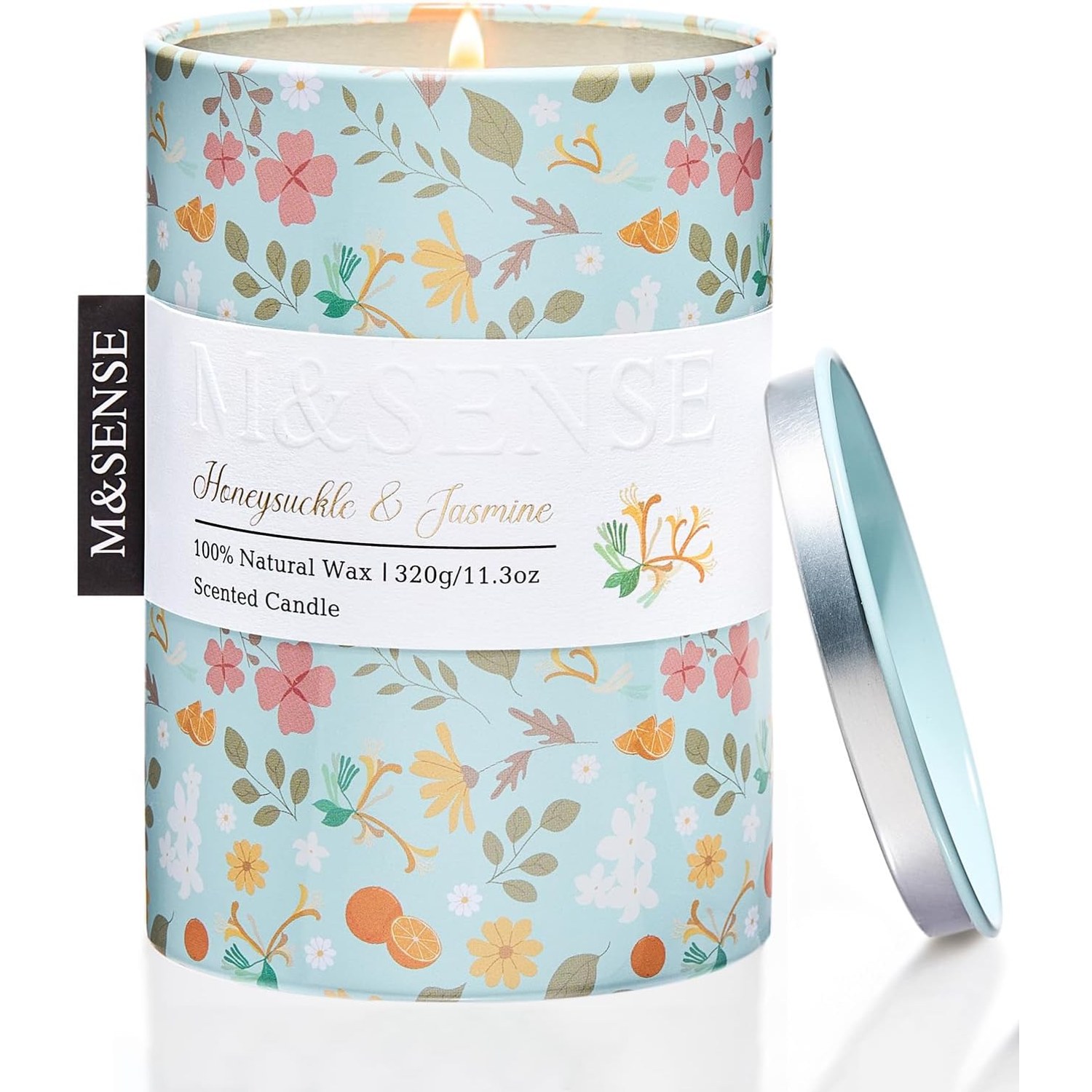
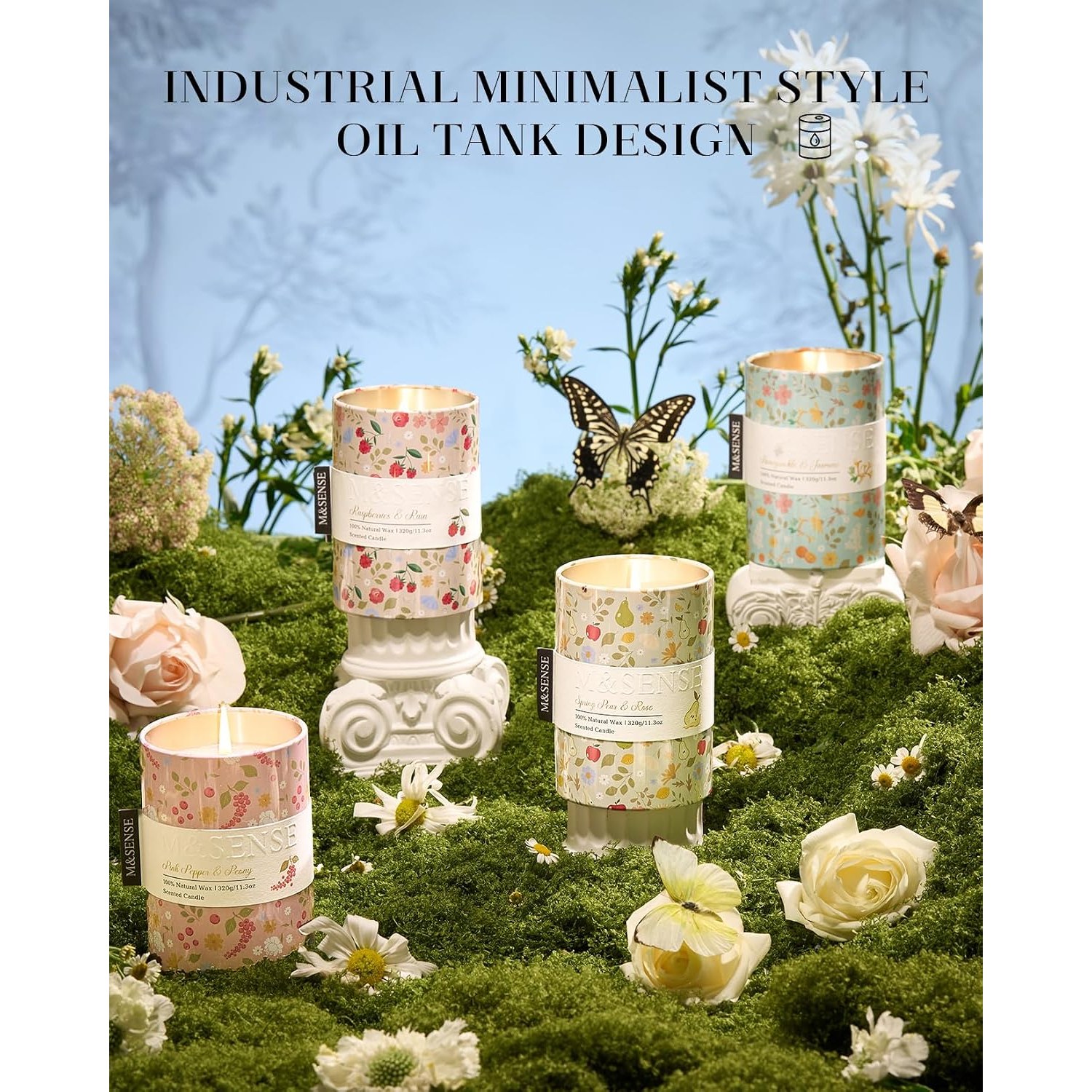
Both of those problems come down to a mismatch between wax, wick, fill size, and how the candle is actually used. A 320 g honeysuckle jasmine soy candle sits in a sweet spot that avoids most of it. It is big enough to be worth the money, small enough that the wick can handle the full width of the tin, and made from a wax that burns slowly instead of racing through itself.
How a soy candle works
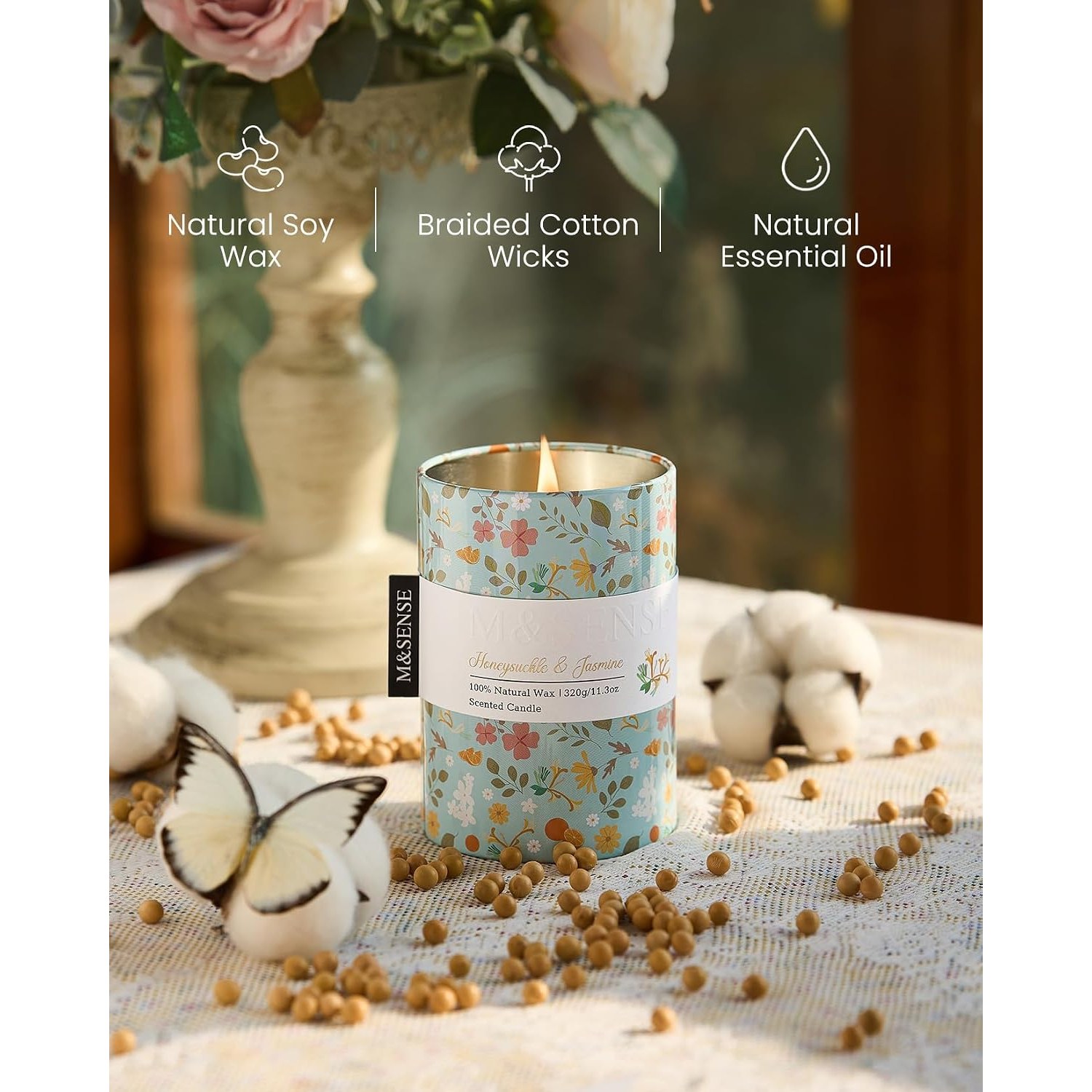
Soy wax is made from soybean oil. It has a lower melting point than paraffin and many blended waxes, which changes how the candle behaves once it is lit. The flame heats the wax directly around the wick until it turns liquid, and that liquid wax travels up the wick and feeds the flame. The fragrance oil in the wax lifts off the surface of that melted pool and drifts into the room.
Because soy melts at a lower temperature, the pool forms more gradually. You get a slower burn, and the fragrance releases at a steadier rate rather than blasting out in the first twenty minutes and then fading. That is why a 320 g soy fill can reach up to 60 hours while a similar-sized harder-wax candle might burn through faster.
The trade-off is that soy is a soft wax and it has a memory. Whatever pool width you reach on the first burn becomes the width it wants to repeat. Get that first burn right and the candle looks after itself for the rest of its life.
What this particular scent does
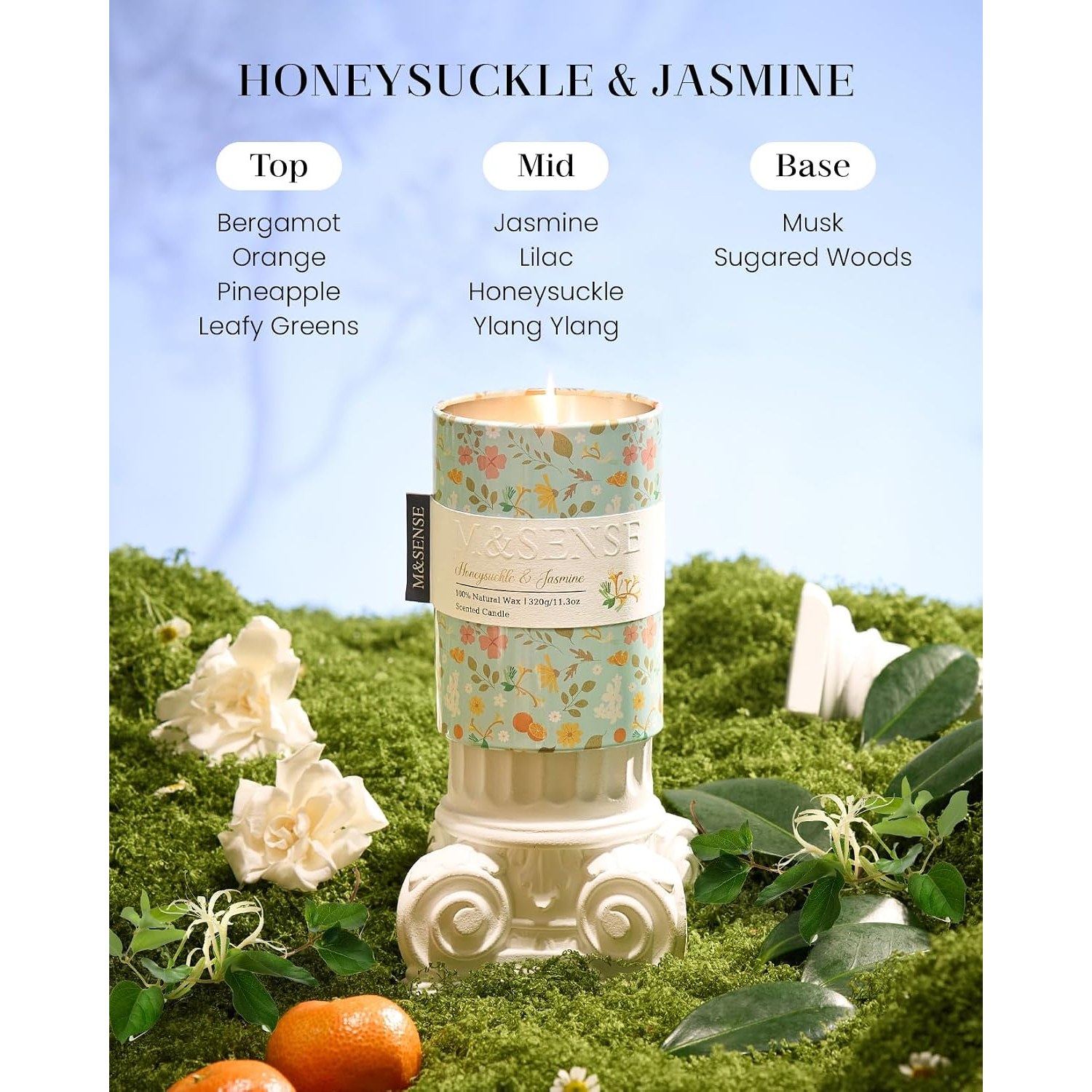
The blend here is a white floral, but it does not start the way most florals do. Bergamot and pineapple give it a bright, almost fruity opening that keeps it from feeling too perfumed. Then green leaves come through, which is the note that makes it feel like an actual garden rather than a bottle. Jasmine carries the back end and holds the room.
The practical effect is a fragrance that works in more places than a heavy floral would. A dense rose or tuberose can fight with cooking smells and feel suffocating in a small bathroom. This one stays fresher. It suits a bedroom in the evening, a bathroom while you run a bath, a home office when you need the air to feel less stale, and a living room when people are coming over.
If you are hunting for the best jasmine scented candle for a bedroom, the thing to check is whether the jasmine is sitting on top of something green and citrus or something sweet and vanilla-heavy. Green and citrus reads lighter, which is usually what you want in a room you sleep in.
Who this suits
People who burn candles regularly rather than occasionally will get the most out of a 320 g fill. If you light something most evenings, a small 100 g travel tin disappears in a fortnight. This one keeps going.
It also suits anyone who buys gifts in bulk around the holidays. A printed tin does not need wrapping, it does not break in a tote bag, and floral is a safe read for people whose taste you do not know well. Teachers, neighbours, hosts, colleagues. It covers a lot of ground.
It is less ideal if you want something smoky, woody, or deeply sweet. This is a fresh floral and it stays in that lane. If your preference runs to tobacco, leather, or warm amber, this will feel too light for you.
How to choose between candles
Start with fill weight. This is the number that tells you how long you will actually have the candle. Something around 320 g is a solid mid-size. Under 150 g is a travel or sampler size. Over 500 g usually means multiple wicks and a much larger room.
Then look at the burn time claim. A rough guide is about five to seven hours of burn per 50 g of soy wax, give or take. A 320 g candle claiming 60 hours is consistent with that. If a candle claims an unusually high number for its weight, be a little sceptical.
Check the container. Glass looks nice but it breaks, it can get very hot, and it is heavier to post. A tin is lighter, tougher, and easier to clean out and reuse afterwards. If you want the best tin candle for travel or for a rental, the lid matters as much as the tin, because it protects the wax surface in a bag.
Think about the room. A small, enclosed space like a bathroom or an ensuite holds fragrance easily and needs less candle. A big open-plan kitchen and living area needs either a bigger multi-wick candle or two candles placed apart from each other. One medium candle in a huge room is mostly just a nice light.
Consider who it is for. For yourself, buy the scent you actually love, even if it is unusual. For a gift, lean toward a crowd-pleaser. Fresh florals, citrus, and clean linen scents are safer bets than anything strongly gourmand or heavily spiced.
Getting the most out of it
The first burn is the one that matters. Light it when you have at least two or three hours free, and leave it until the melted wax reaches the edge of the tin all the way around. If you blow it out before then, soy remembers that smaller pool and you have started a tunnel.
After that, trim the wick to about 5 mm before every single light. This is the habit that separates a candle that lasts 60 hours from one that gives up at 35. A long wick makes a big, unstable flame that burns wax faster, throws soot onto the tin, and can even blacken the wall behind it.
Keep sessions to roughly four hours. Beyond that the tin gets hot, the wax can overheat, and the scent starts to fade because you have burned off the top of the fragrance pool. Snuff it out, let it cool completely, and come back to it tomorrow.
Watch for drafts. An open window, a ceiling fan, or an air conditioning vent will pull the flame sideways, burn one side of the candle faster than the other, and leave you with an uneven surface. Move the candle, not the furniture.
Put the lid back on when the candle is cool. Dust on a wax surface is both ugly and a small fire risk once it melts in. The lid also slows the loss of fragrance between burns.
Safety, briefly
Burn on a level, heat-safe surface. Keep it at least 30 cm from curtains, books, paper, and anything else that catches easily. Never leave a lit candle alone in a room, and never leave one burning overnight. Keep it where children and pets cannot reach it, including tails that swing past a coffee table.
Stop burning when about 10 mm of wax is left. At that point the flame is very close to the base of the tin and the metal gets much hotter than it does earlier in the candle's life.
Life after the wax
Scrape out the last soft wax with a spoon, then wash the tin in warm soapy water. If there is stubborn residue, fill the tin with hot water, let the wax float up and set, then lift the disc off and wash what is underneath.
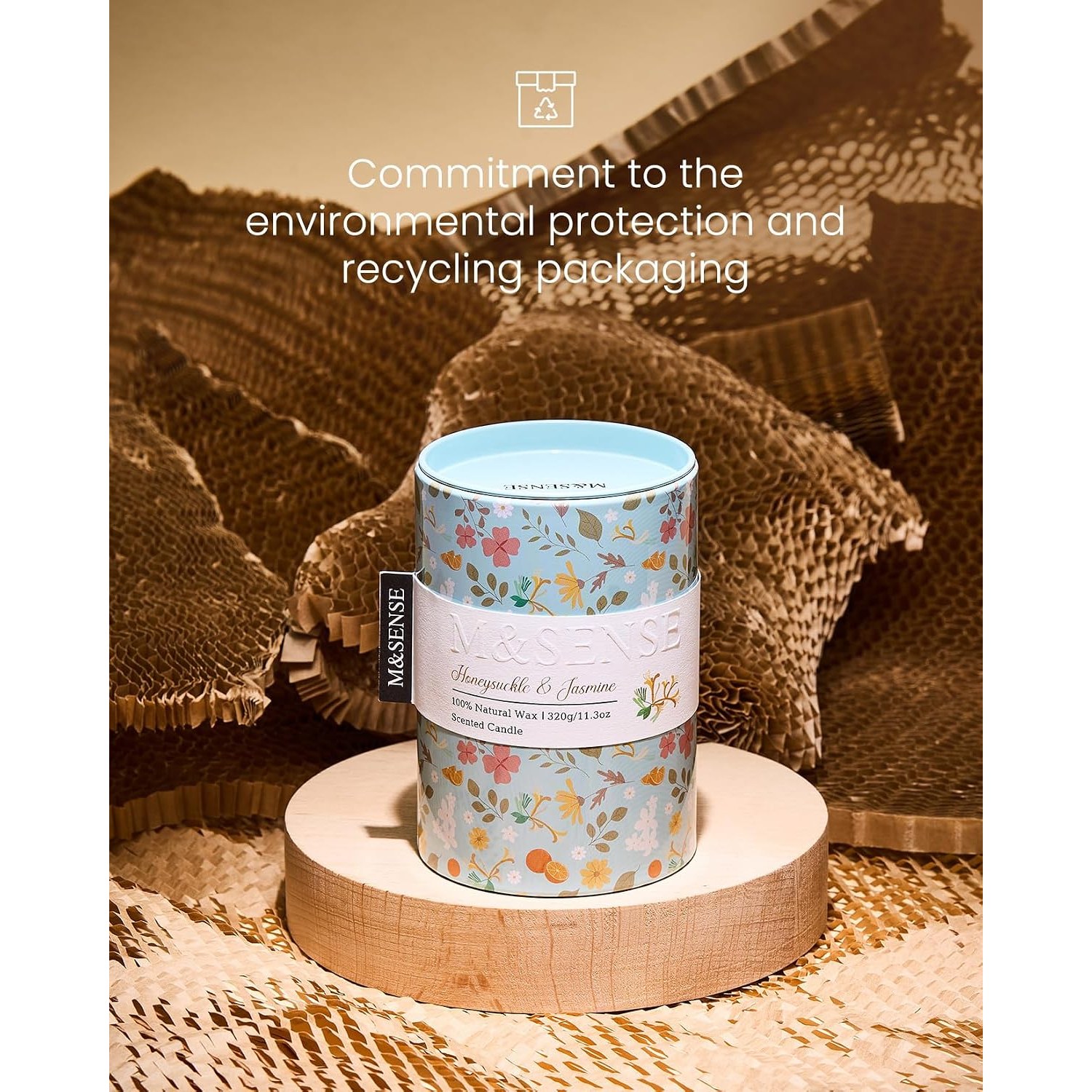
From there the tin is genuinely useful. Earrings and rings on a dresser. Paper clips and drawing pins on a desk. Buttons, needles, and thread in a sewing kit. Cotton buds in a bathroom. A small succulent if you add a layer of gravel at the bottom for drainage. The printed design means it still looks deliberate sitting out.
The short version
A 320 g soy candle in a printed tin, with a honeysuckle and jasmine blend that opens on bergamot and pineapple and settles into green leaves. Up to 60 hours of burn time if you treat it properly, which means a full first melt pool, a trimmed wick every time, and four-hour sessions rather than all-nighters.
It is a fresh floral, not a heavy one, so it works in bedrooms and bathrooms as comfortably as a living room. It gifts well without wrapping. And when the wax is finished you keep the tin, which is more than you can say for most candles.