
The complete guide
Choosing Linen Napkins, A Practical Buyer's Guide
The small thing that changes a table
Most of us have a drawer somewhere with a half-used pack of paper napkins in it. They do the job, technically. You wipe your hands, you screw one up, it goes in the bin, and nothing about the meal felt any different for it.
Then you eat somewhere that uses cloth, and you notice. The napkin has weight. It stays on your lap instead of slipping to the floor. It actually absorbs something instead of pilling into damp flakes. It is a tiny detail, but it quietly tells you that someone put thought into the meal.
That is what a linen napkins set of 4 is for. Not ceremony, not formality, just a table that feels a bit more considered for very little effort. And because these wash at 40 degrees in a normal machine, they are not a chore you have to plan around.
Why linen, specifically
Linen comes from flax, and people have been weaving it for the table for thousands of years. It stayed popular for practical reasons rather than romantic ones.
The fibre is strong. Linen is one of the more durable natural textiles, and unlike a lot of fabrics it tends to get better with age rather than worse. It absorbs quickly, which is the whole point of a napkin. It also dries fast, so a damp napkin folded after dinner does not sit sour overnight.
There is a texture element too. Linen has a slight irregularity in the weave, little variations in the thread, and that is what gives it character on a table. Cotton can look flat by comparison. Polyester blends look fine from a distance but feel like what they are the moment you pick one up.
The downside people mention is creasing. Linen creases. It always has. The trick is to stop treating that as a flaw. Washed linen in particular is meant to look relaxed, and a softly rumpled napkin reads as natural rather than careless. If you want sharp folds, you can press them. If you want easy, you can skip it entirely.
What "washed" means and why it matters
Raw linen straight off the loom can feel stiff, almost papery. It softens with use, but that takes a while and the first few months can be unpleasant if you were expecting something cosy.
Washed linen has been through a softening process before it gets to you. The fibres have already relaxed. You get the soft, slightly worn-in hand from the first dinner rather than waiting a year for it.
This matters most for napkins because they touch your face and hands. A stiff napkin is annoying in a way a stiff tablecloth never is. The washed finish on this set is what makes it feel like something you want to use, not something you have to use.
Getting the size right
These napkins are 45 x 45 cm each. It is worth understanding where that sits.
Around 30 to 35 cm is cocktail or tea territory. Fine for canapés and a glass of something, too small for a plate of pasta. The 45 cm mark is the standard dinner size for most of Europe, big enough to cover a lap properly and to fold into something that looks intentional beside a plate. Some very formal settings go up to 50 or 55 cm, which looks generous but can feel like a lot of fabric at a casual table.
For most households, 45 cm is the one you want. It handles a Sunday roast, it handles a weeknight bowl of soup, and it still folds down small enough that storing a few sets is no trouble.
Who this set actually suits
If you cook at home and eat at a table more than a couple of times a week, cloth napkins start to make sense fast. Four is a good starting number. One or two in use, one or two in the wash, and you never run out.
People setting up a first home often find table linen is the last thing they buy. It is easy to prioritise pans and plates and forget the soft stuff. That is exactly why a set of four linen dinner napkins makes a reliable housewarming or wedding gift. It is useful, it is not something most people buy for themselves, and it does not require you to know anything about their taste in crockery.
If you host, buy two sets. Eight napkins covers a full dinner table with a couple spare for the inevitable spill. Ordering both sets at the same time is worth doing because natural fabric can vary slightly between batches, and matching is easier when they come from the same run.
How to look after them
This is the part people worry about, and it is simpler than expected.
Wash at 40 degrees with similar colours. That is the instruction from the maker and it is all you need to follow. Use a normal mild detergent. Skip the fabric softener, because it coats natural fibres and makes them less absorbent, which defeats the purpose.
Dry on low heat or on the line. If you want to iron, take them out while still slightly damp and press on the linen setting. Damp linen irons beautifully. Bone dry linen fights you.
For stains, speed beats technique. Blot, do not rub, then rinse the back of the fabric with cool water. Cold water first, always. Heat sets protein and tannin stains, so a hot rinse on fresh red wine makes things worse. A dab of detergent before the main wash handles most things.
Avoid bleach. It weakens linen fibres and can leave uneven lightening. A gentle stain remover and a normal wash does more good over the life of the set.
Store them folded or rolled in a dry drawer. Linen likes air, so sealed plastic for long periods is not ideal.
A few ways to use them beyond dinner
A 45 cm linen square is handy well past the table. It lines a bread basket nicely and keeps rolls warm. It covers a bowl of dough while it proves. It dries glassware without leaving lint, which is why a lot of people who care about their stemware keep a linen cloth in the kitchen drawer.
None of that is the main job, but it is worth knowing. Good table linen tends to get used in ways you did not plan for.
What we can and cannot tell you
A note on honesty. This record does not specify the colour, the exact fibre percentages, the product weight, or the packaged dimensions. We would rather say that than guess.
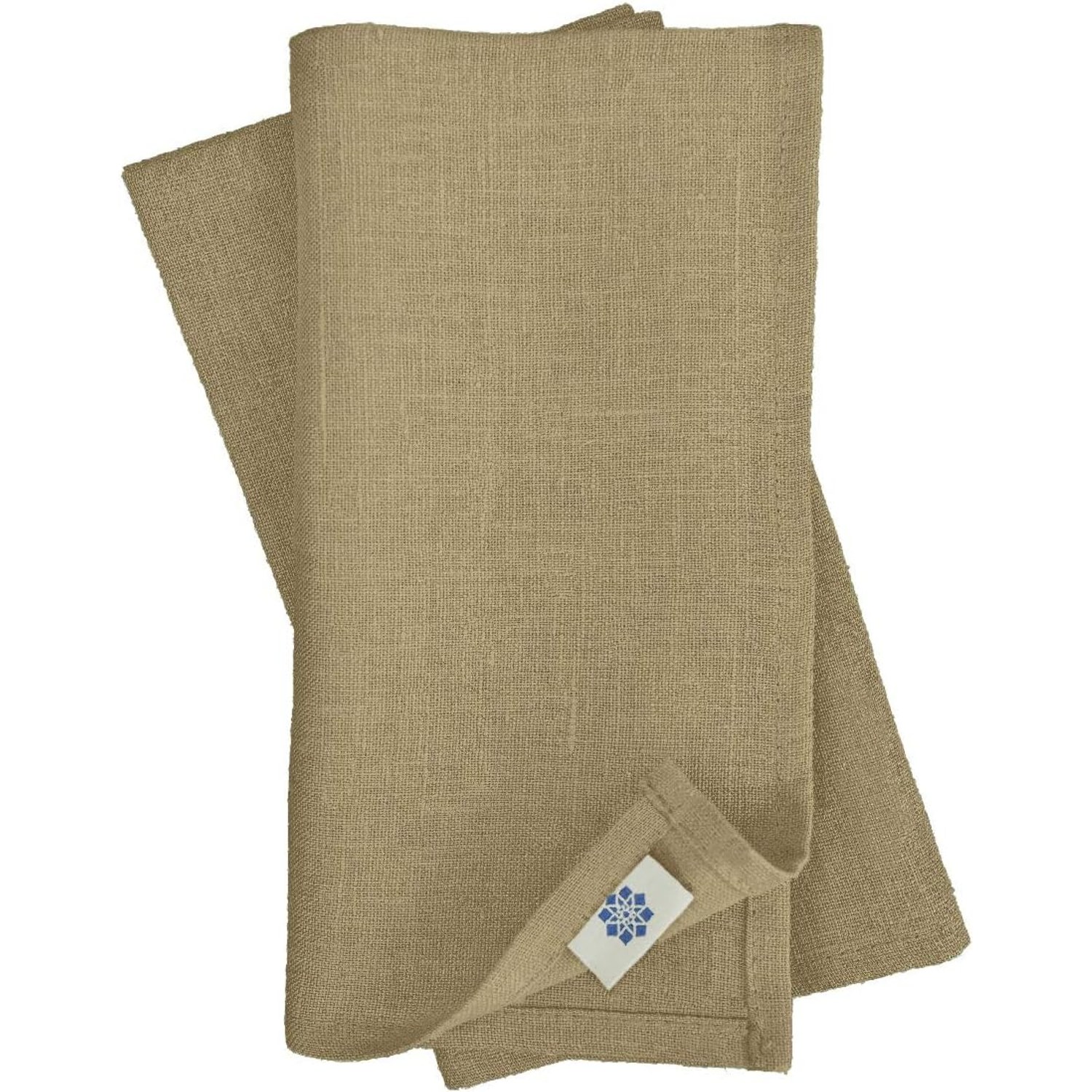
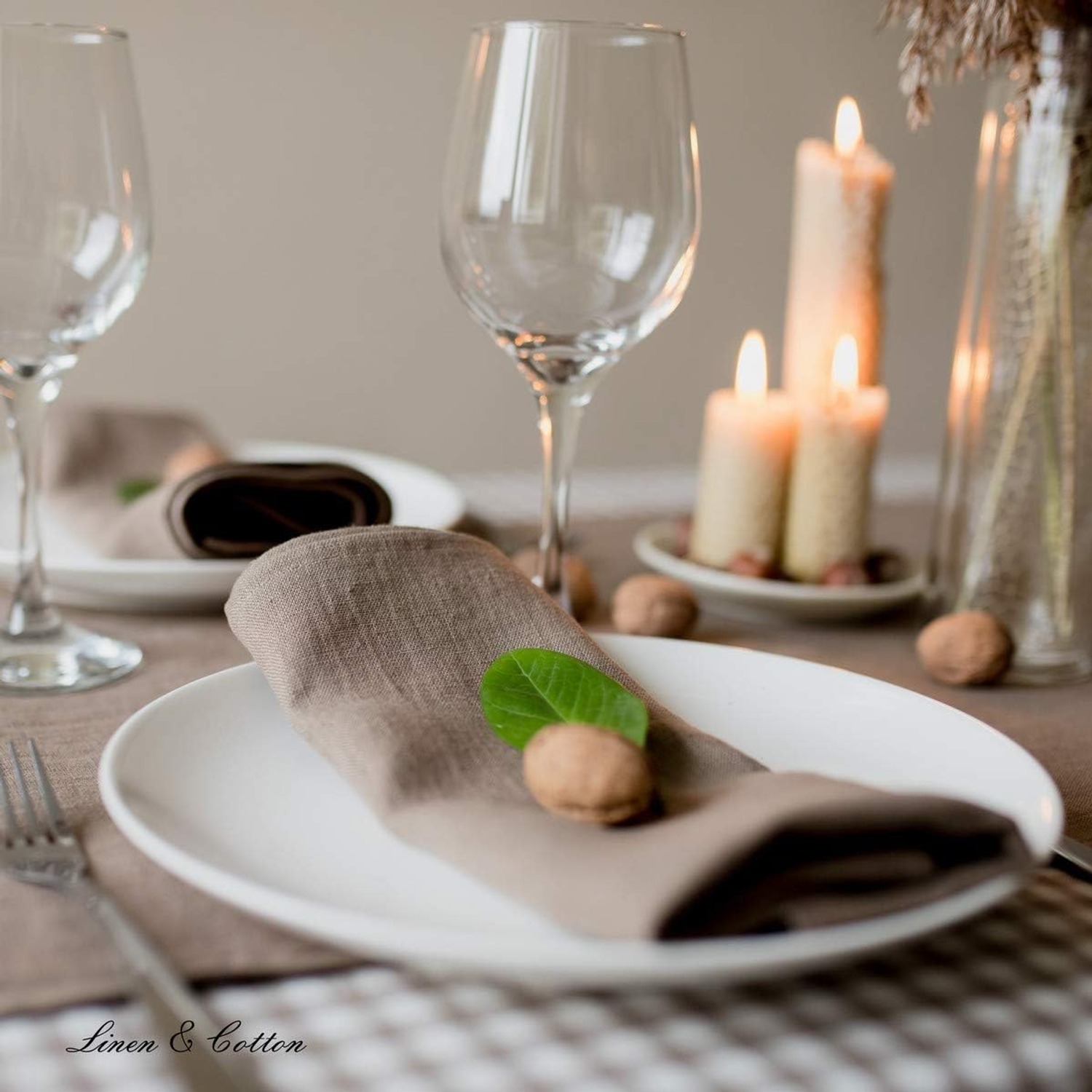
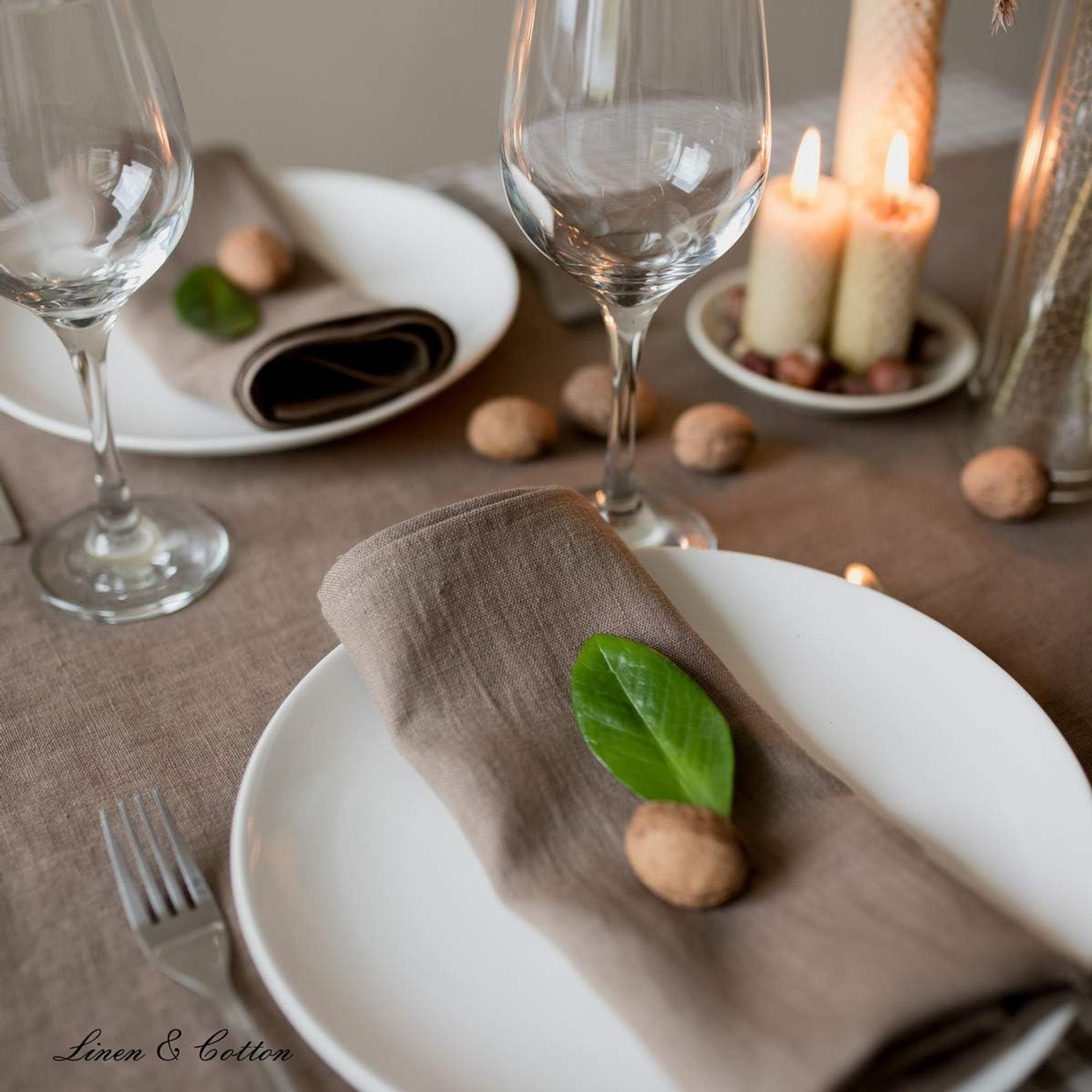
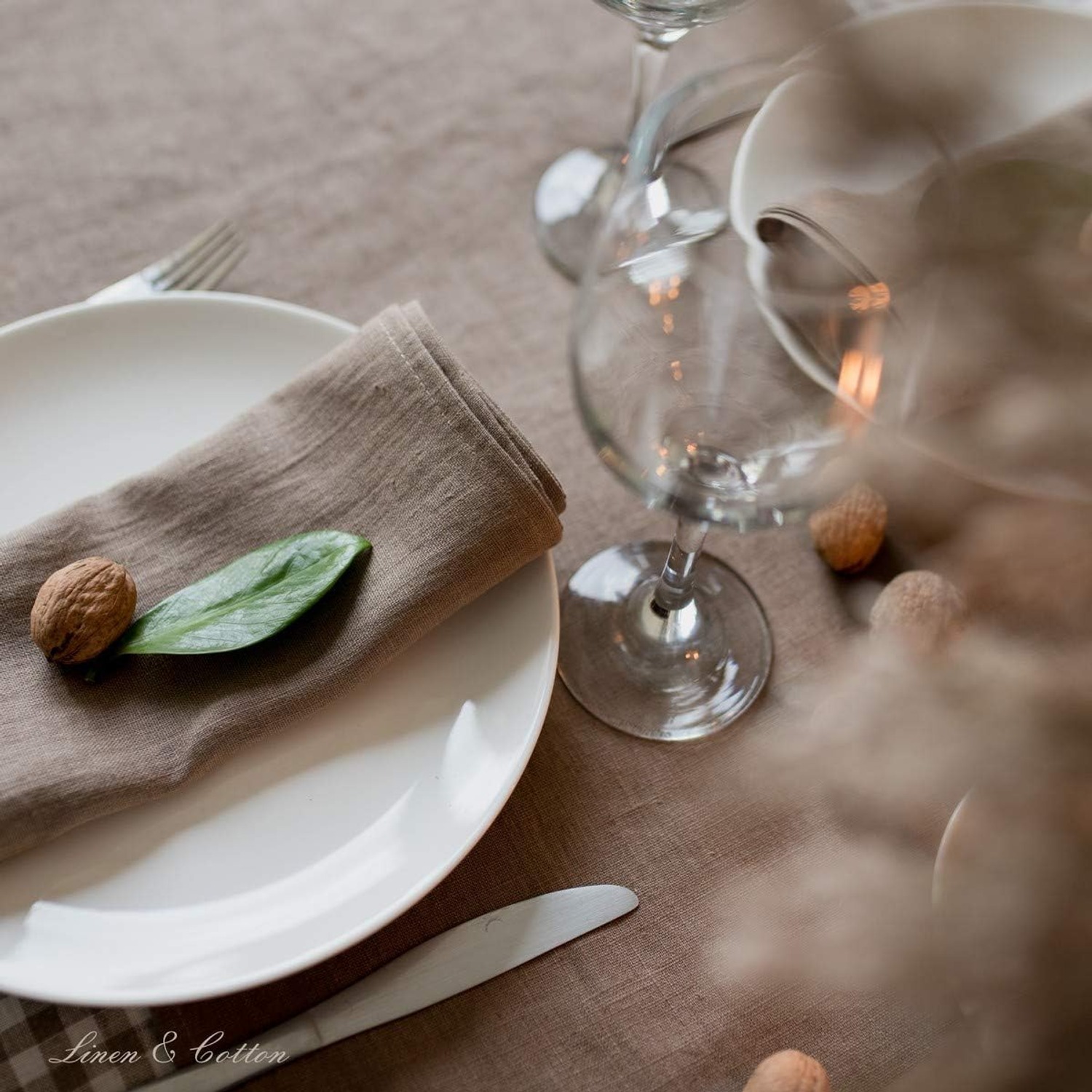
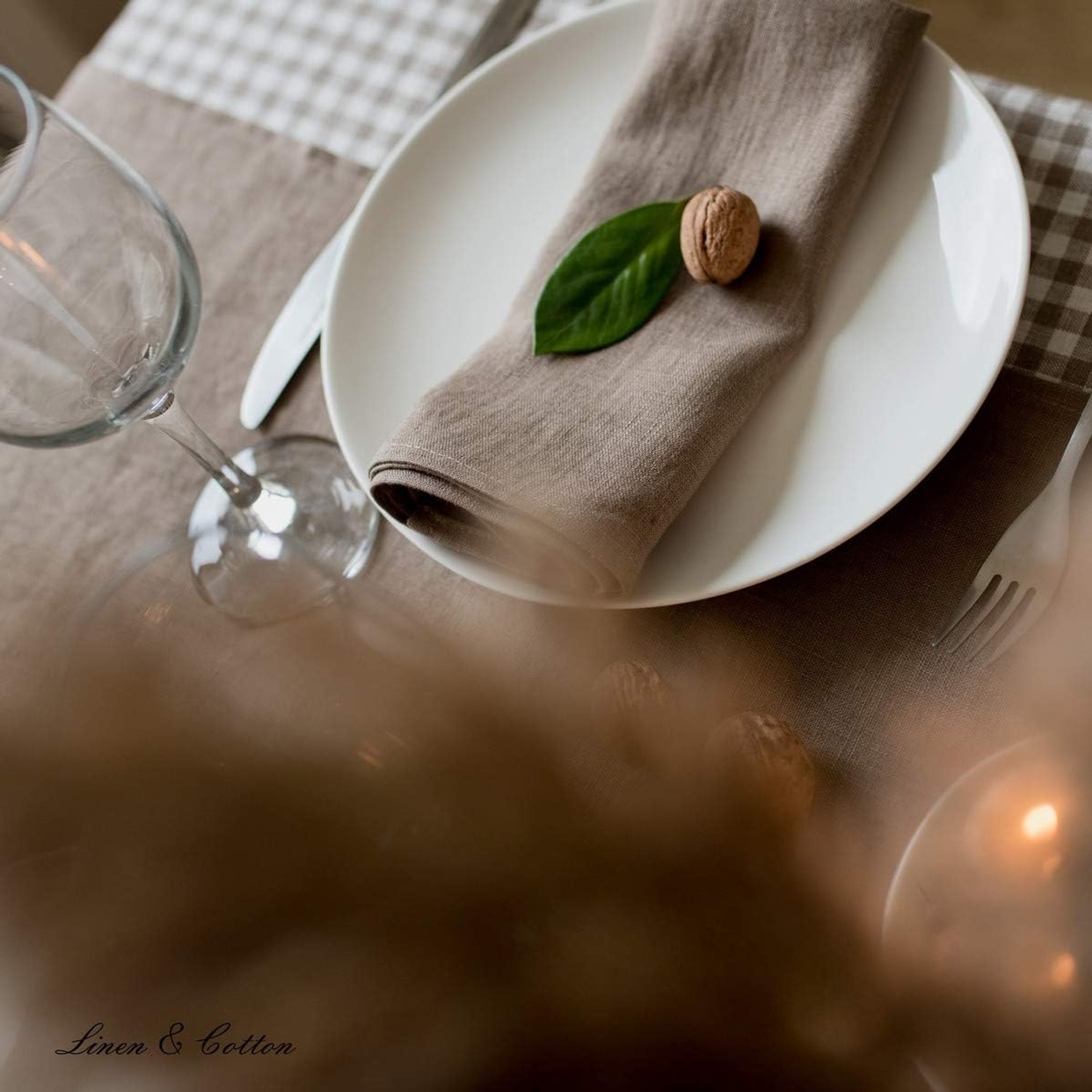
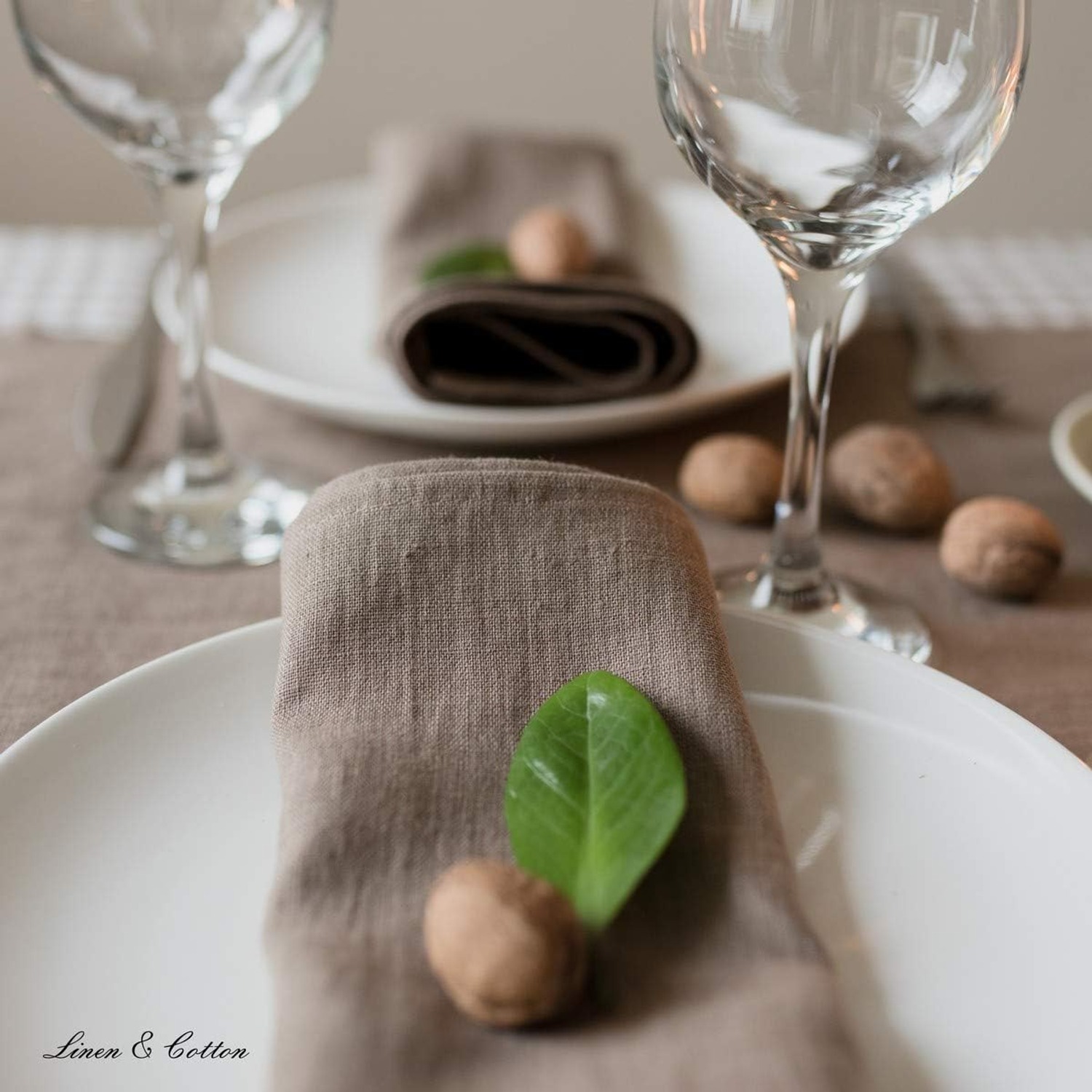
What we do know is the set contains four napkins, each 45 x 45 cm, in washed linen, machine washable at 40 degrees, made in the European Union by Linen & Cotton as part of their HYGGE range. Check the photographs for the shade shown, and if you need anything confirmed before you order, ask us.
The short version
Four washed linen napkins, 45 cm square, that wash at 40 degrees in a normal machine. They are soft when they arrive and get softer with use. They make an ordinary meal feel like it was given a bit of thought, and they replace a steady trickle of paper that you throw away every week.
If you eat at a table and you have never owned cloth napkins, this is a low-risk way to find out whether you like them. Most people do, and then they buy a second set.