
The complete guide
Choosing a Brass Candle Holder That Actually Gets Used
The problem with most candle holders
Most people buy a candle holder once, use it twice, and then it lives in a cupboard. The reasons are usually practical rather than aesthetic. It was too tall and blocked conversation. It was too light and tipped. The candle did not fit and sat at a drunken angle. Or it was so decorative that it only suited one particular kind of evening, which almost never came around.
A good candle holder is boring in the best way. It holds the candle straight, it does not move when somebody reaches for the salt, and it looks right in more than one room. That is the whole job. Everything else is decoration on top of a thing that already works.
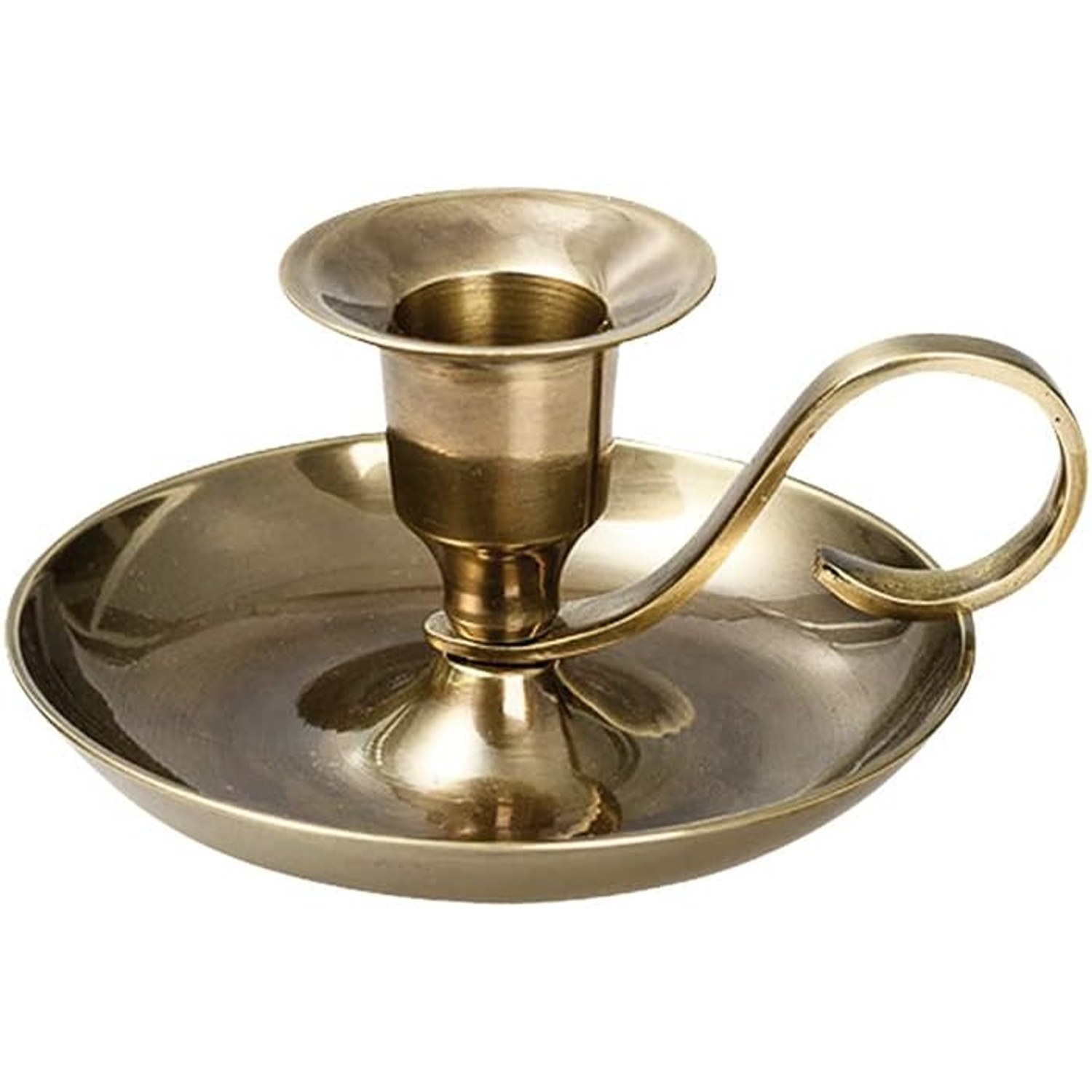
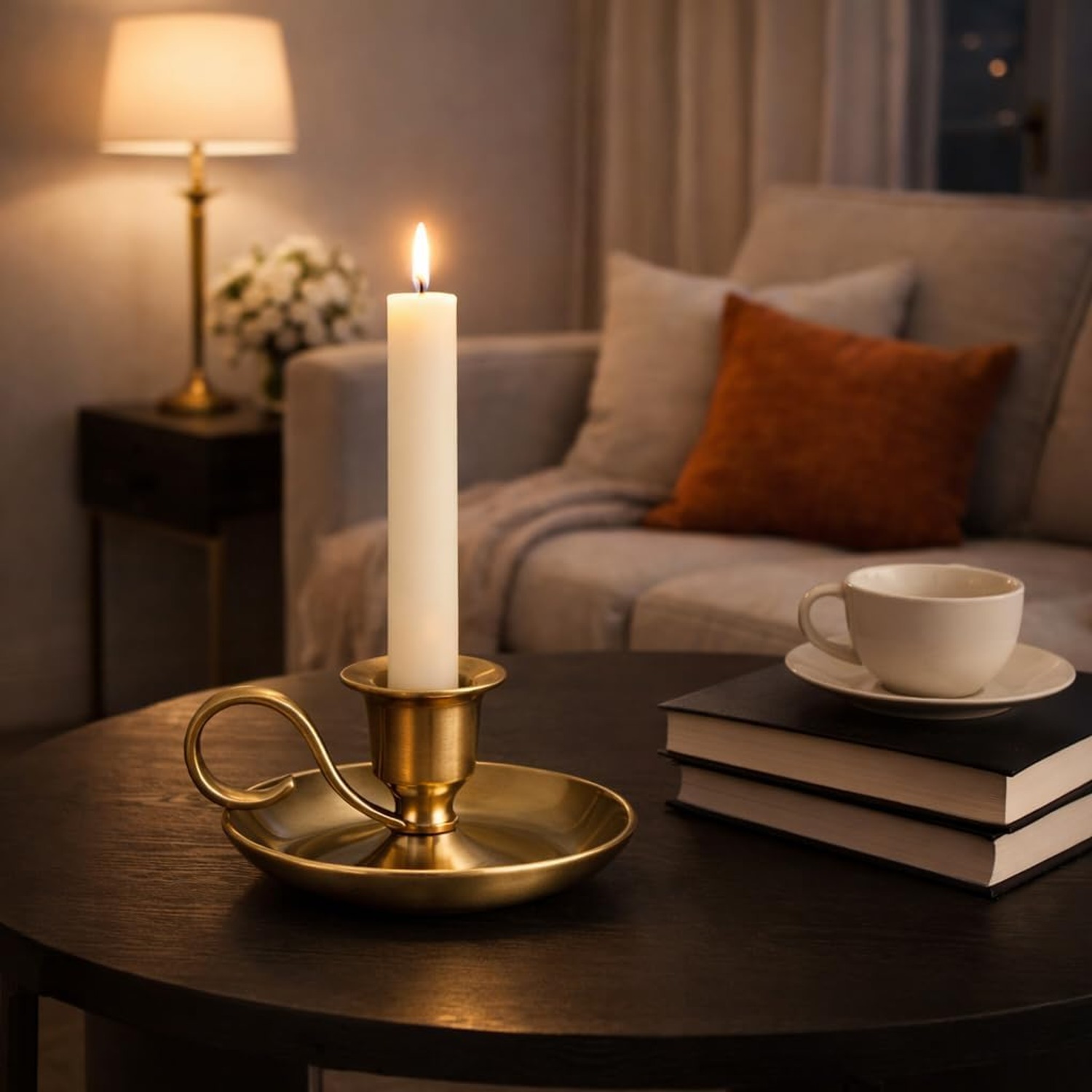
A brass hand chandelier candle holder is one of the oldest answers to this problem. The low, wide hand sconce shape has been around for centuries because it solves the stability issue by design. Put the mass at the bottom, keep the candle near the base, and you get something that stays upright through a crowded dinner.
How this one is built
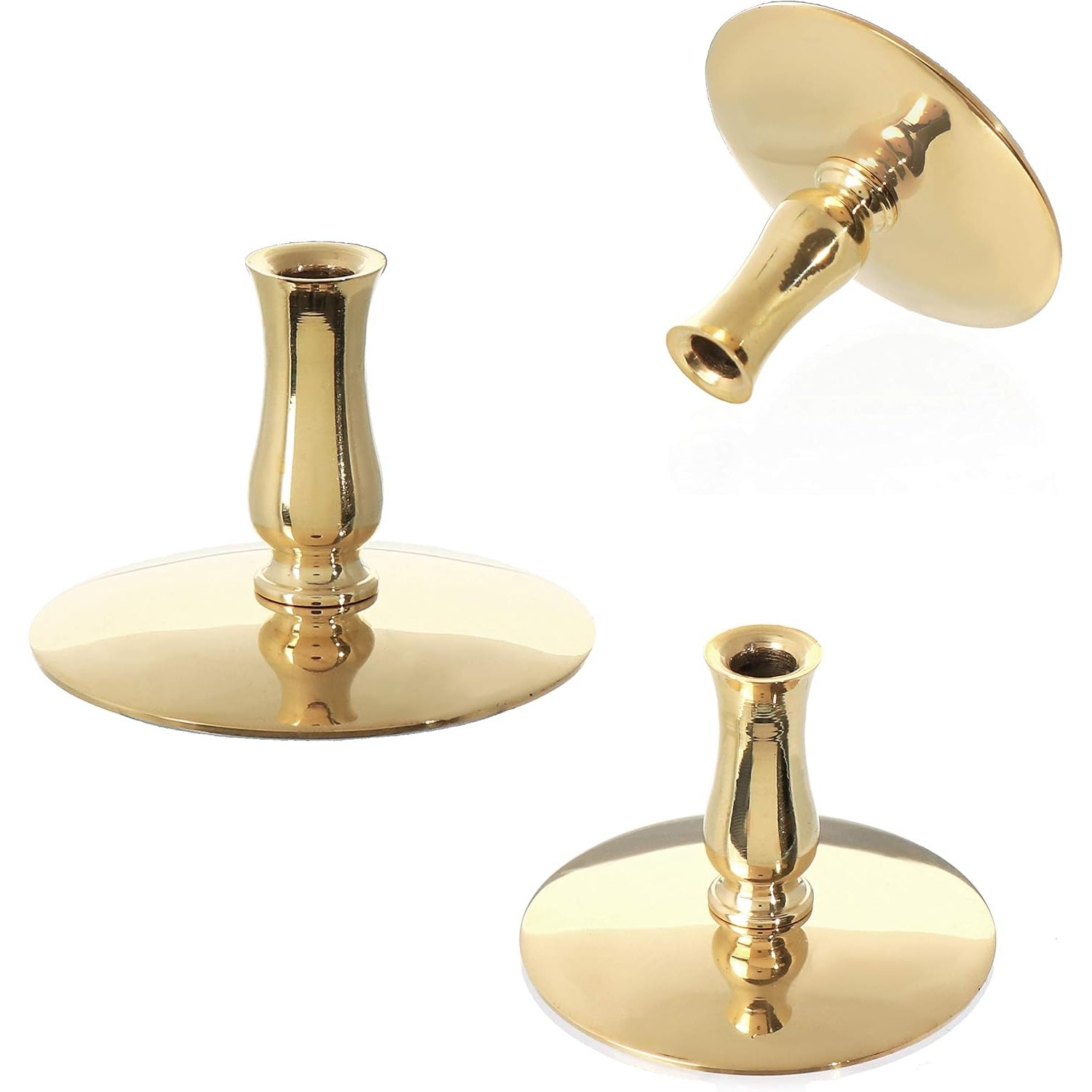
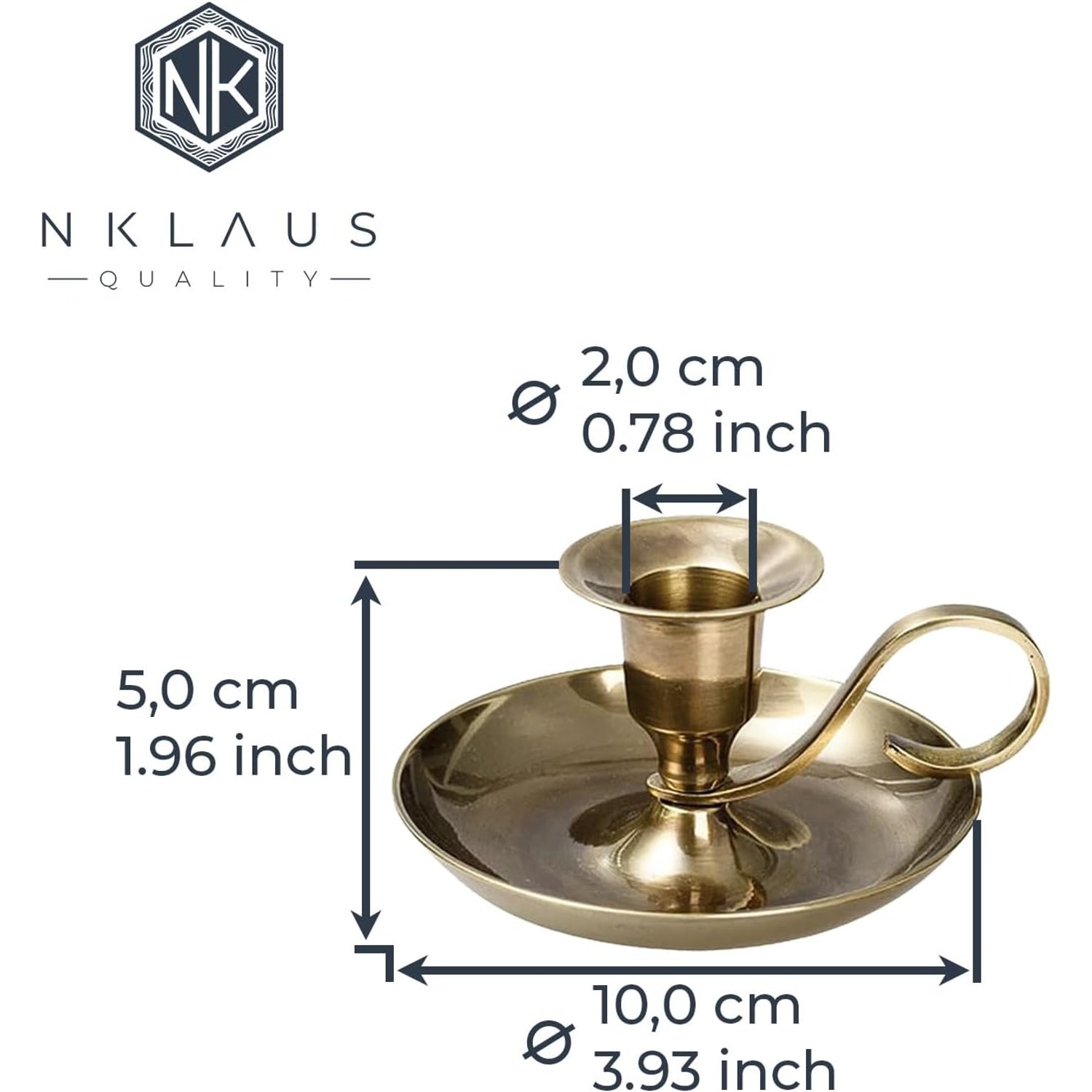
The construction here is straightforward. It is solid brass rather than plated steel, finished with a polish. Height is 5 cm, diameter is 10 cm, and the cup takes taper candles up to 22 mm across.
Those three numbers tell you most of what you need to know. The 5 cm height keeps the flame low, so it sits below eye level for seated guests. That is the difference between candlelight that flatters a table and candlelight that makes everyone squint. The 10 cm diameter spreads the weight across a wide footprint. And the 22 mm candle capacity matches the standard width of dinner tapers sold almost everywhere.
Solid brass matters more than it sounds. Plated items are brass-coloured on the surface and something cheaper underneath. They feel light in the hand and the plating eventually wears through at the edges, leaving a silvery patch. Solid brass has the same material all the way through, so wear just means a change in tone rather than a change in colour. It also means the piece has genuine heft, which is the single most useful safety feature a candle holder can have.
Who this suits
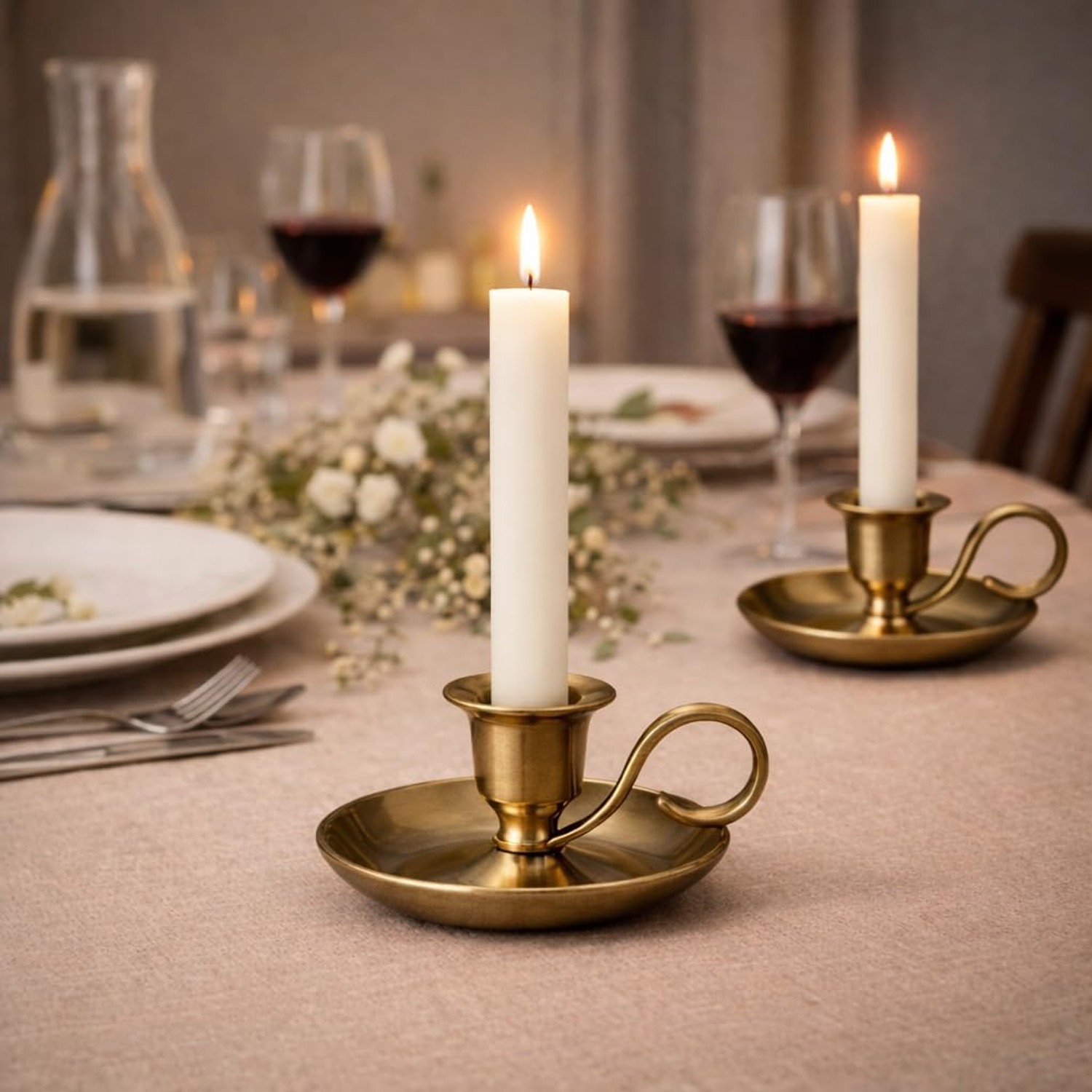
If you host dinners, this is an easy buy. Two or three down the centre of a table give you a soft band of light along the whole length without any one piece dominating.
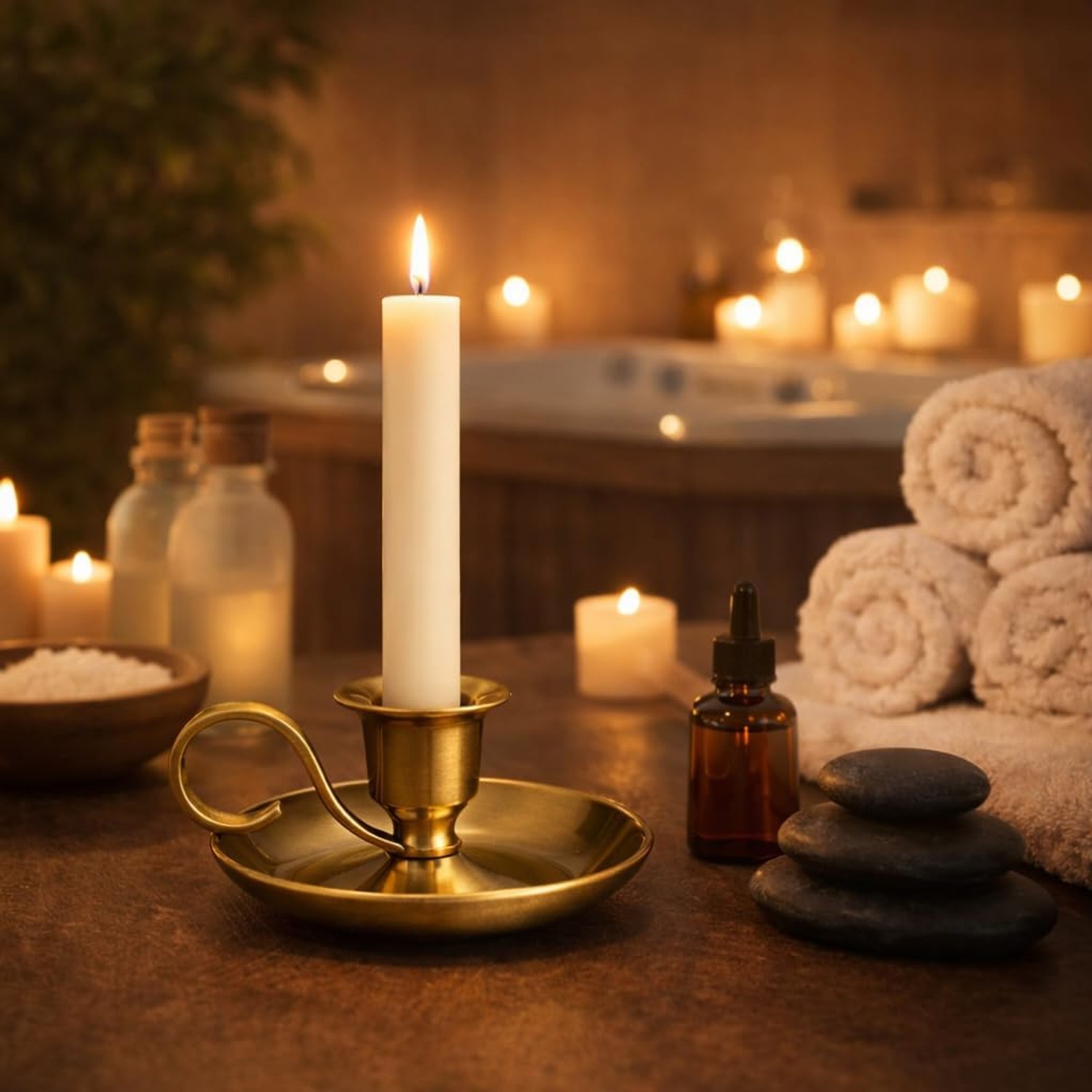
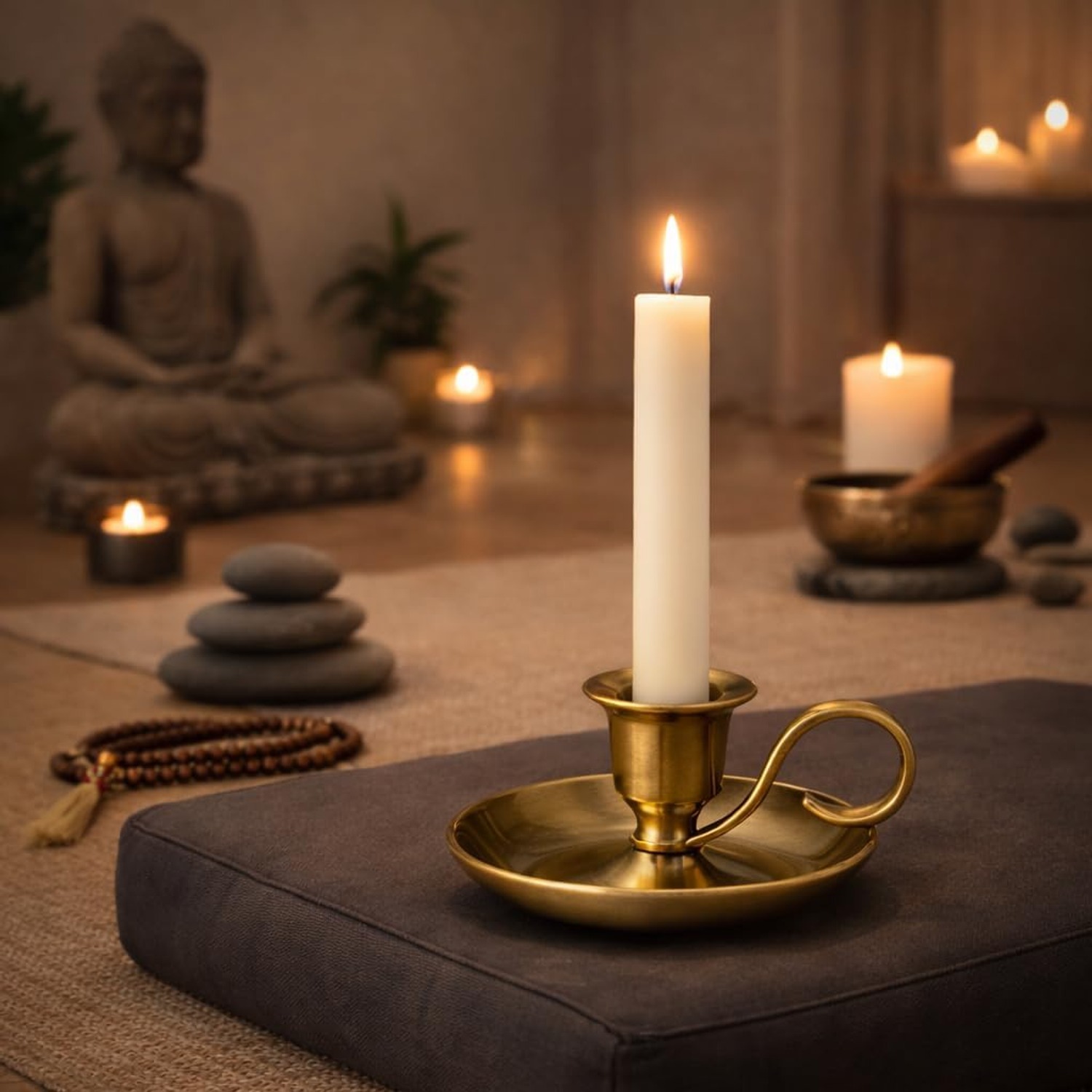
If you do not host much, it still earns its space. A single holder on a mantel, a hallway console, a bookshelf or a bedside table works perfectly well. The small footprint means it fits places a tall candlestick cannot.
It also suits anyone building a room around warm metals and stone. Brass against marble is a pairing that has survived decades of changing trends because the contrast between warm metal and cool stone is genuinely pleasant to look at. If you are already collecting pieces in that direction, this slots in without any effort.
Event use is the other common one. Ceremonies, long communal tables, outdoor dinners under a covered roof. Hand sconce holders travel well because there is nothing fragile sticking out to snap off in a box.
Picking the right candles
The candle does more work than the holder. A good taper burns evenly, drips very little, and lasts a reasonable number of hours. A cheap one slumps, smokes and leaves wax everywhere.
Look for tapers with a base diameter of 22 mm or under. This is sometimes printed on the pack and sometimes not, in which case measure one. Most standard dinner candles land between 20 and 22 mm, so the fit is usually fine.
Height is a matter of taste. A 20 cm taper in a 5 cm holder gives you a total of about 25 cm, which is comfortable for a dining table. Go taller for a mantel where nobody is sitting opposite. Go shorter for a bedside or a crowded shelf.
Beeswax and quality paraffin both work well. Beeswax burns longer and smells faintly of honey. Unscented is usually the better choice at a dining table, since candle fragrance competes with food.
If you want the look without the flame, flameless LED tapers in the same diameter drop straight in. They are a sensible option in a house with small children or a cat that patrols the dining table.
Making a candle fit properly
Sometimes a taper is a touch narrow and rattles in the cup. This is normal and easy to fix. Wrap a small strip of masking tape or a thin twist of foil around the base until it seats snugly. Candle putty, sometimes sold as candle fix, does the same job and is reusable.
If a candle is slightly too wide, warm the base in your hand or in warm water for a minute until the wax softens, then press it in gently. Do not force a cold candle, since you risk cracking it or bending the holder's cup.
Never shave a candle down with a knife to make it fit. You end up with an uneven base and a candle that leans.
Living with brass
Brass is not a set-and-forget finish, and that is part of its appeal. Fresh from the box, a polished piece is bright and reflective. Over months and years, oxygen and skin oils darken it into something deeper and quieter. Antique dealers call this patina and charge extra for it.
You have two options. Leave it alone and let it age, which costs nothing and looks good. Or polish it now and then with a proper brass polish and a soft cloth, which keeps it bright.
What you should not do is clean it like kitchenware. Abrasive pads leave fine scratches in a polished surface that never come out. Dishwashers are worse, since the detergent is harsh enough to stain brass permanently. Keep it out of standing water and dry it immediately if it does get wet.
Wax removal is simple if you are patient. Wait for the wax to go completely hard, then lift it out in one piece. Warm water loosens anything stubborn. A wooden skewer gets into the bottom of the cup without scratching.
Safety, briefly
Open flame deserves a short paragraph of common sense. Put it on a level, heat-tolerant surface. Keep 30 cm of clear air above the flame and well away from curtains, paper and dried foliage. Trim the wick to about 5 mm before lighting for a cleaner burn. Do not leave it burning in an empty room, and put it out before you go to bed. Brass conducts heat, so the holder will be warm after a long burn. Let it cool before moving it.
Styling without overthinking it
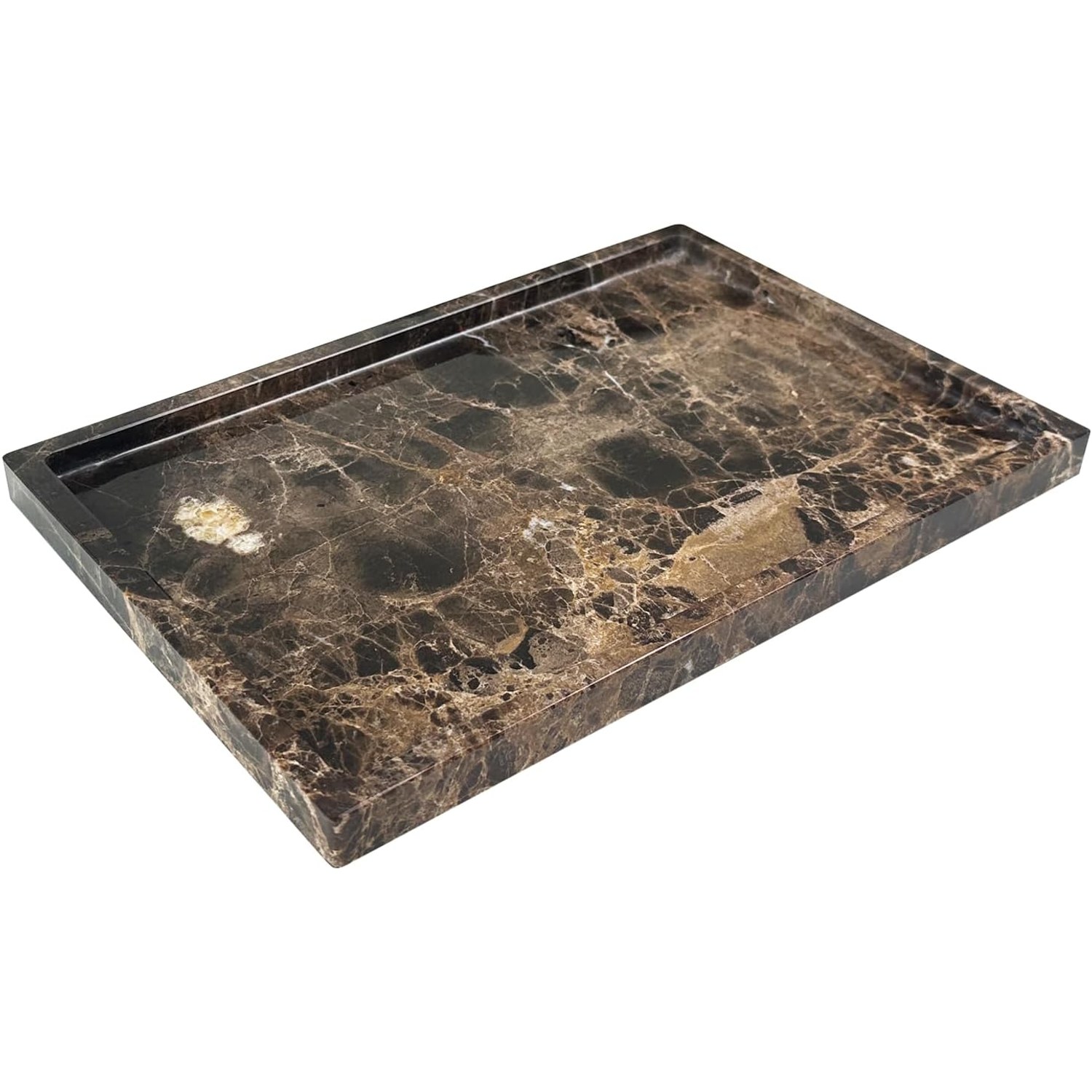
A few ideas that work in practice. Group an odd number rather than an even one, since three reads as more relaxed than four. Vary the candle heights slightly across a group for a less staged look. Put the holder on a runner or a small tray if you want a visual anchor and some wax protection in one move.
Mixing metal tones is fine. Brass alongside older, darker brass looks collected rather than mismatched. Brass with black iron is a strong, simple combination. Brass with marble, stone or raw timber is the easiest win of the lot.
The short version
This is a solid brass hand sconce candle holder, 5 cm tall and 10 cm across, built for taper candles up to 22 mm. It is heavy enough to stay put, low enough to keep the flame out of people's eyes, and plain enough to work on a dining table, a mantel or a bedside shelf.
Buy good tapers, give the holder a dry wipe now and then, and decide whether you want it bright or aged. That is genuinely the whole maintenance plan. It is the kind of object that gets used rather than stored, which is more than most decorative pieces can claim.