
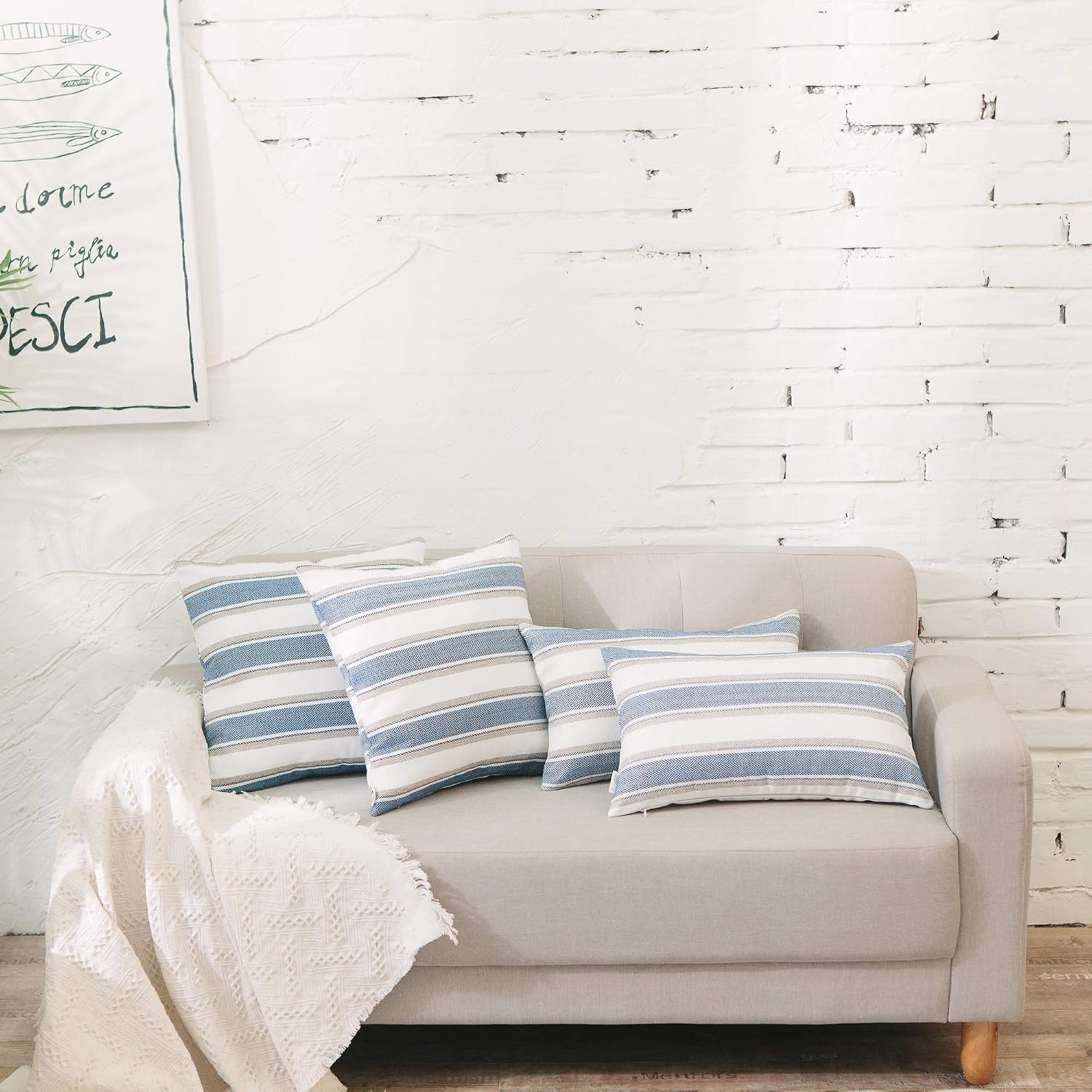
The complete guide
How To Choose Linen Look Cushion Covers That Actually Last
The problem with cushions, and why covers solve it
Cushions get ruined from the outside in. The filling is usually fine for years. It is the fabric that takes the hit, the coffee ring, the sun bleaching one side, the cat deciding that corner is now hers. Once the outer fabric of a sewn shut cushion is wrecked, the whole thing goes in the bin, filling and all.
A cover changes that maths. You keep the insert, you swap or wash the outside, and the cushion keeps going. That is the entire argument for buying cushion covers instead of finished cushions, and it is a good one.
The second argument is seasonal. Covers are light and flat, so a spare set stores in a drawer. Swapping the look of a room twice a year costs you ten minutes and no storage space, which is not true if you own fourteen full cushions.
What faux linen actually is
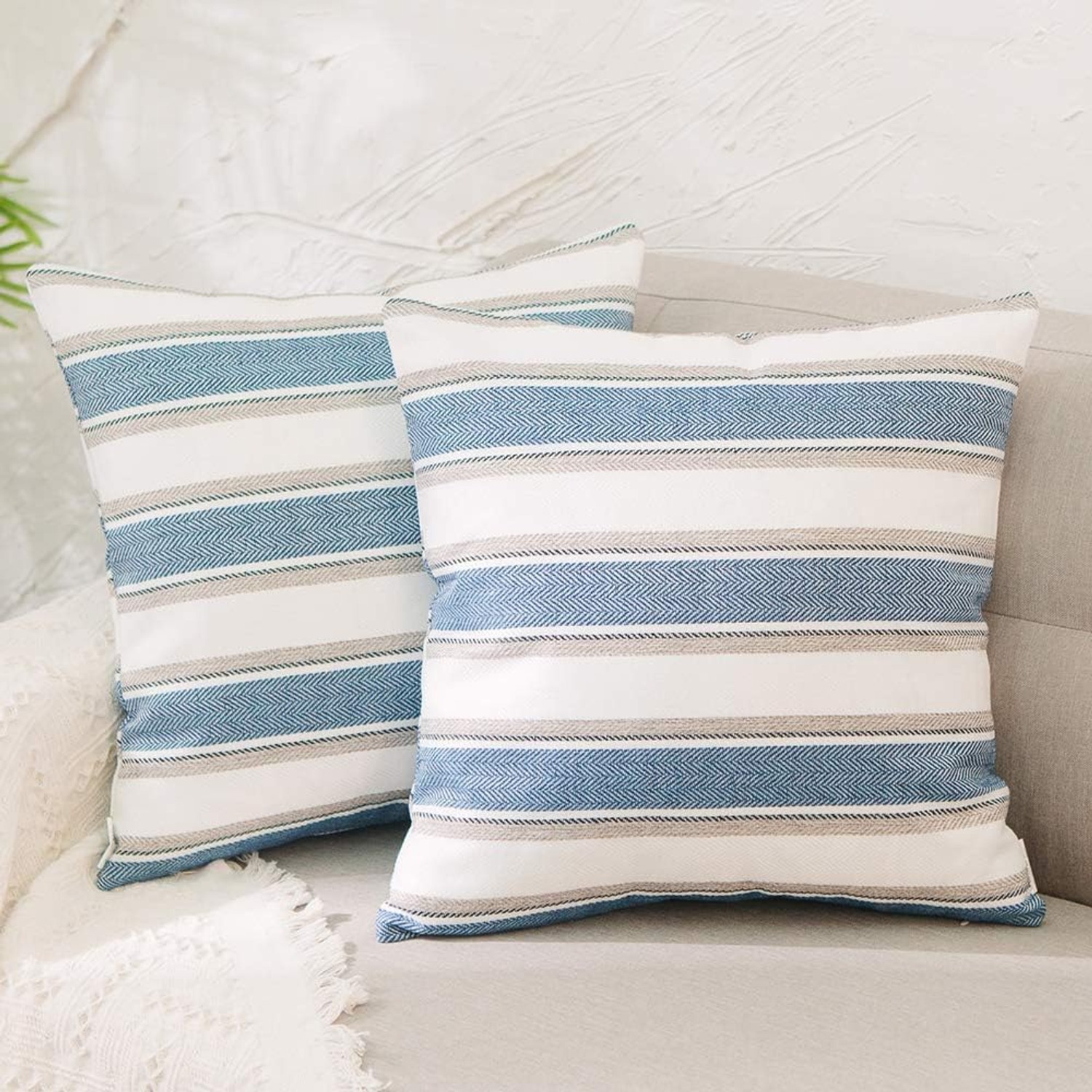
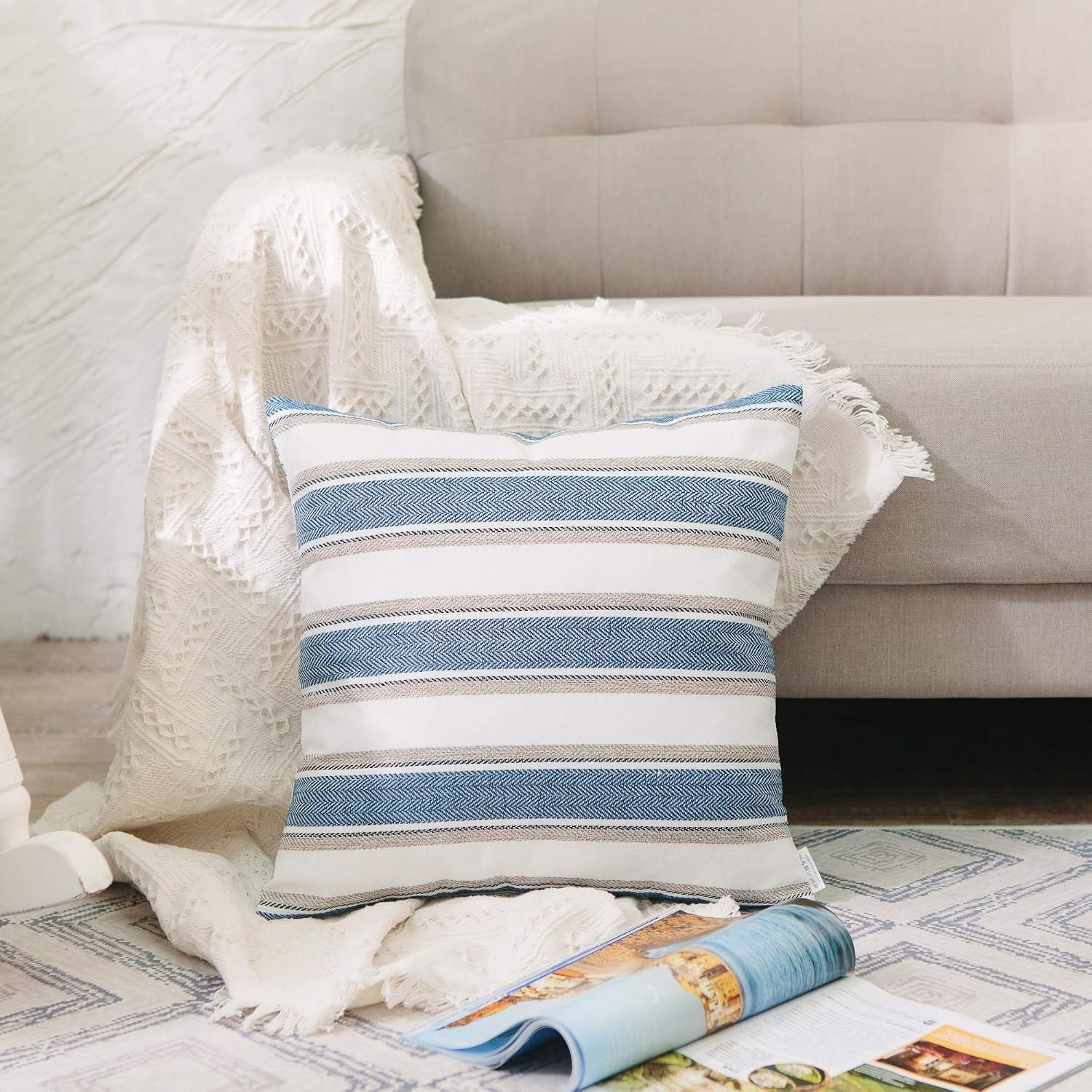
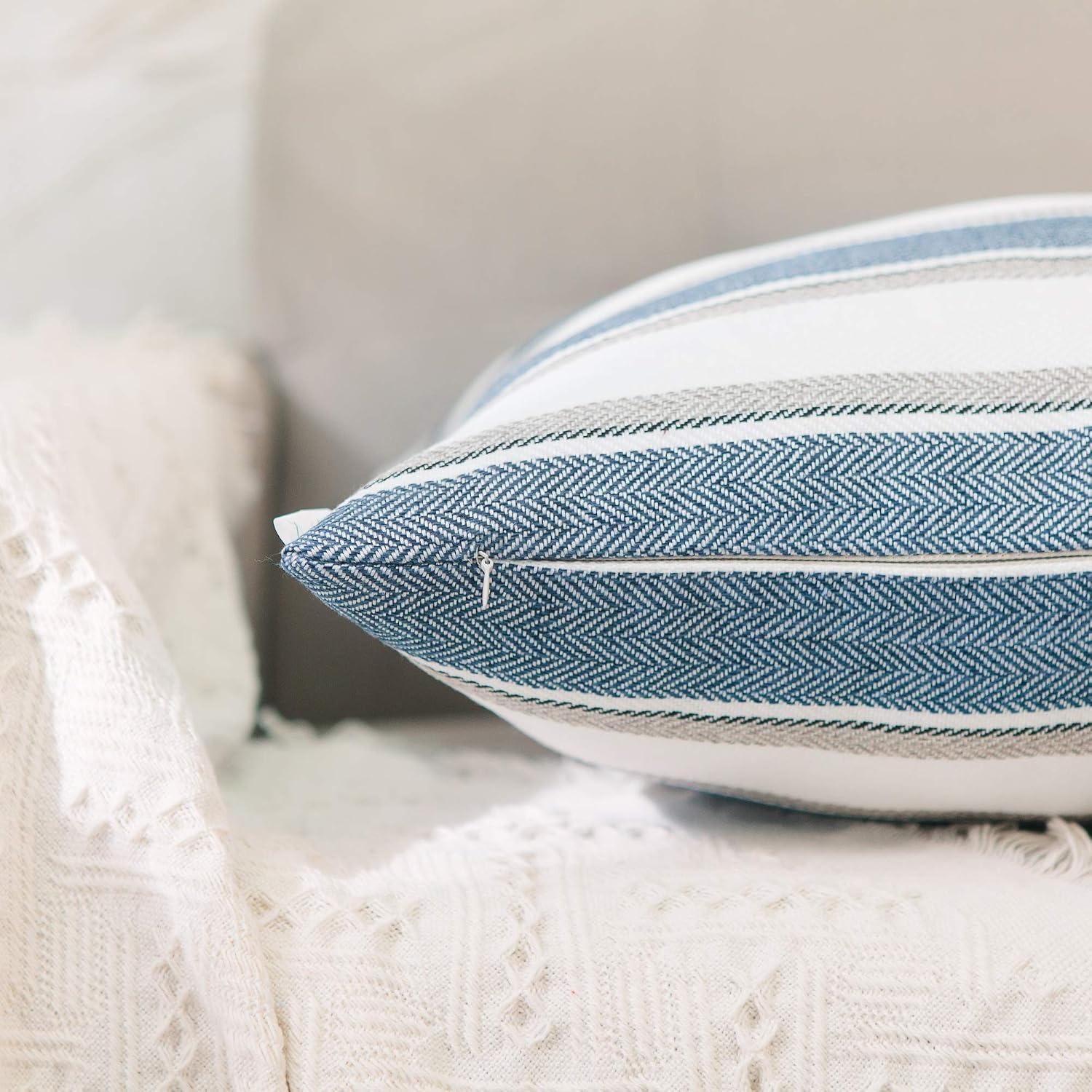
Linen look is a finish, not a fibre. This pair is made from 100% polyester faux linen, as stated by the maker. That means the yarn is polyester, spun and woven to mimic the slubby, slightly uneven surface of flax linen, then given a striped pattern.
It is worth being honest about the trade. Real linen has a hand feel nothing else quite matches, it breathes beautifully, and it gets softer every year. It also creases hard, costs more, and can fade and weaken in strong sun. Polyester faux linen gives you most of the visual character with none of the ironing and a much easier relationship with the washing machine.
For cushion covers specifically, the polyester version makes a lot of sense. A cushion cover is handled constantly, washed often, and sat on. Durability and recovery matter more than breathability, because you are not sleeping under it.
How the construction holds up
Two details decide whether a cushion cover survives a few years or falls apart in six months.
The first is the closure. A hidden zip set in the seam, colour matched to the fabric, keeps the front panel clean and stops the cover sliding off when someone leans back hard. Envelope backs are fine but they gape, and exposed zips look cheap and scratch leather sofas. A concealed zip is the better build.
The second is the seam finish. Inside these covers, the seams are finished with tight zigzag overlock stitching. That is the row of stitches that wraps the raw edge of the fabric so it cannot unravel. Without it, every pull of the insert in and out loosens the edge a little more, and eventually a seam opens. With it, the cover tolerates being stuffed, pulled, washed, and stuffed again.
Neither of these is glamorous. Both are the difference between a cover that lasts and one that does not.
Getting the insert right
This is where most people go wrong, and it has nothing to do with the cover itself.
If you put an insert the same size as the cover inside, you get a soft, flat, slightly slumped cushion. That looks relaxed and casual, and it suits a deep, loose sofa with linen upholstery.
If you go one size up, the insert fills the corners and the cushion looks plump and upholstered, the way it does in magazine photos. This is what most people are actually chasing when they say their cushions look sad.
Insert fill matters too. Feather and down inserts give the best shape and that satisfying karate chop dent, but they need regular plumping and some people react to them. Polyester fill inserts hold a rounder, firmer shape, cost less, and wash well. Both work with faux linen cushion covers. Pick based on whether you want to fuss over them.
Measure before you order. Measure the insert itself, flat, from seam to seam, not the cushion when it is squashed on the sofa.
Where a pair goes best
Buying two at once solves a problem you might not have noticed. Most cushion arrangements look wrong because of odd numbers in the wrong places, not because of colour.
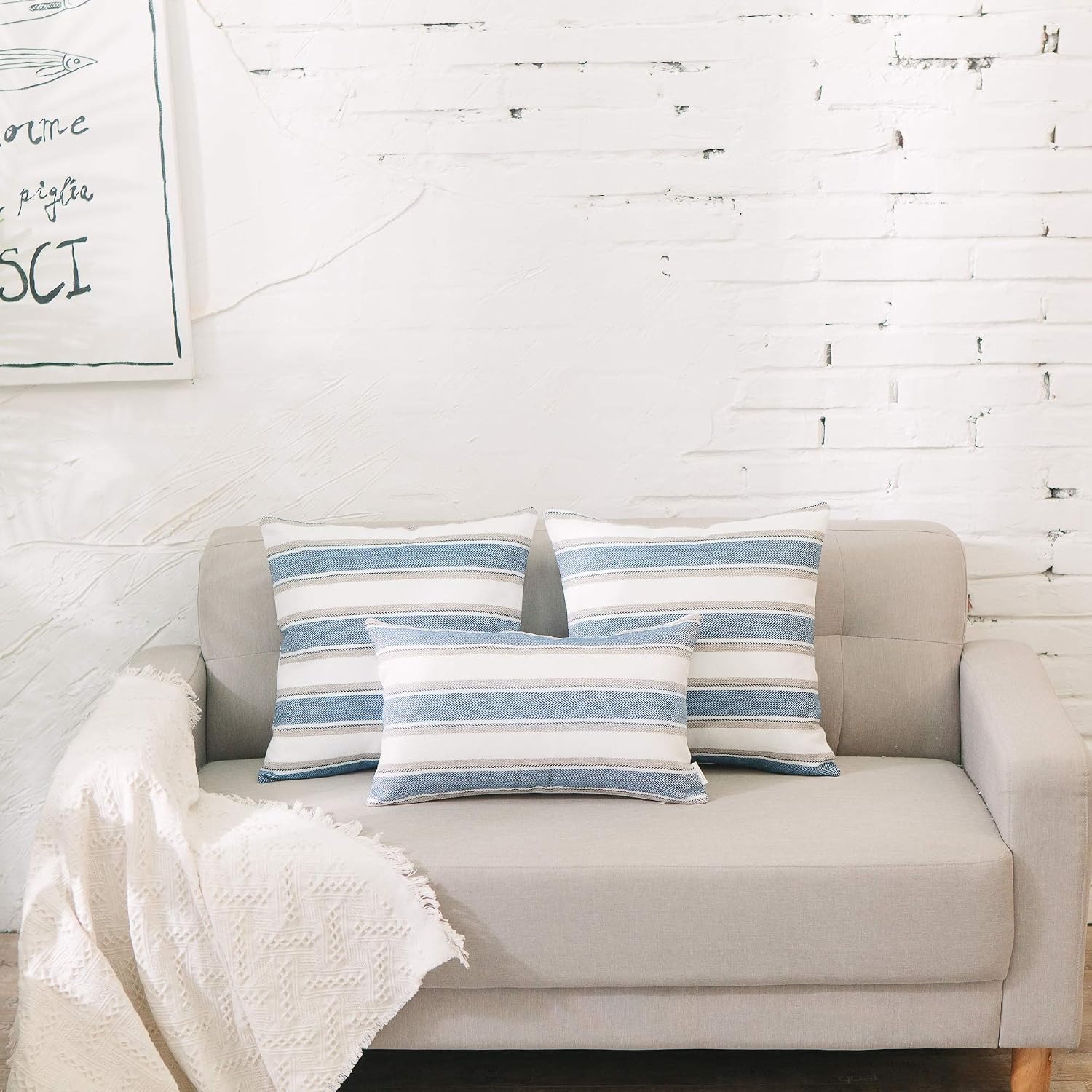
On a three seat sofa, a pair sitting at either end reads as deliberate and tidy. Add a different cushion in the middle if you want a layered look. On a two seater, one at each end is usually enough, and a second pair starts to crowd the seat.
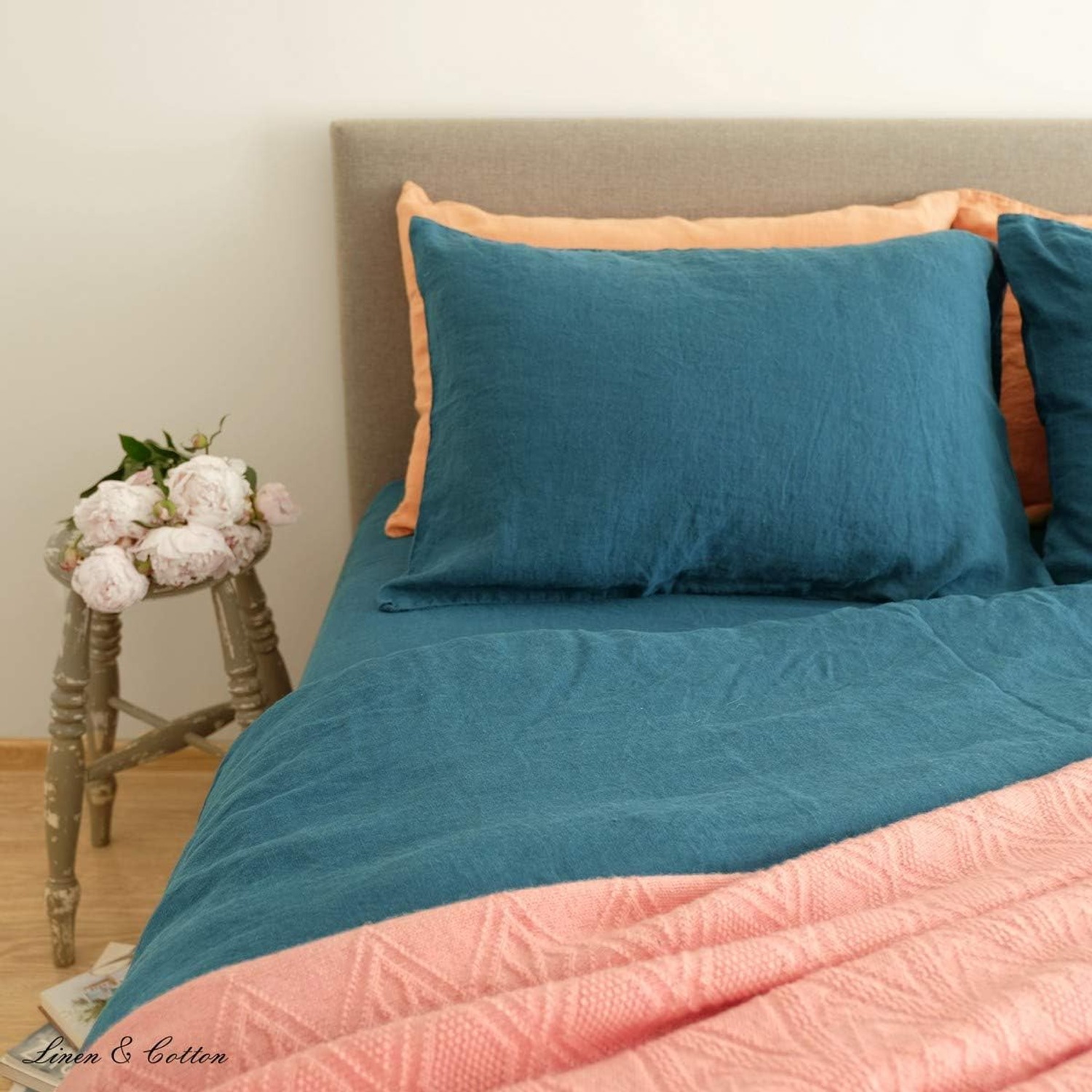
On a bed, two in front of the sleeping pillows finish the whole thing in one move. A striped linen look cushion sits well against plain white bedding because it adds texture without adding another colour to manage.
Beyond that, a pair works on dining chairs, on a window seat, on a bench at the end of a bed, or stashed in the car for long drives. They are not outdoor rated, so use them on a covered patio in dry weather only and bring them in afterwards.
Styling the stripe
A stripe is one of the easiest patterns to live with. It reads as structure rather than decoration, which is why it mixes with almost everything.
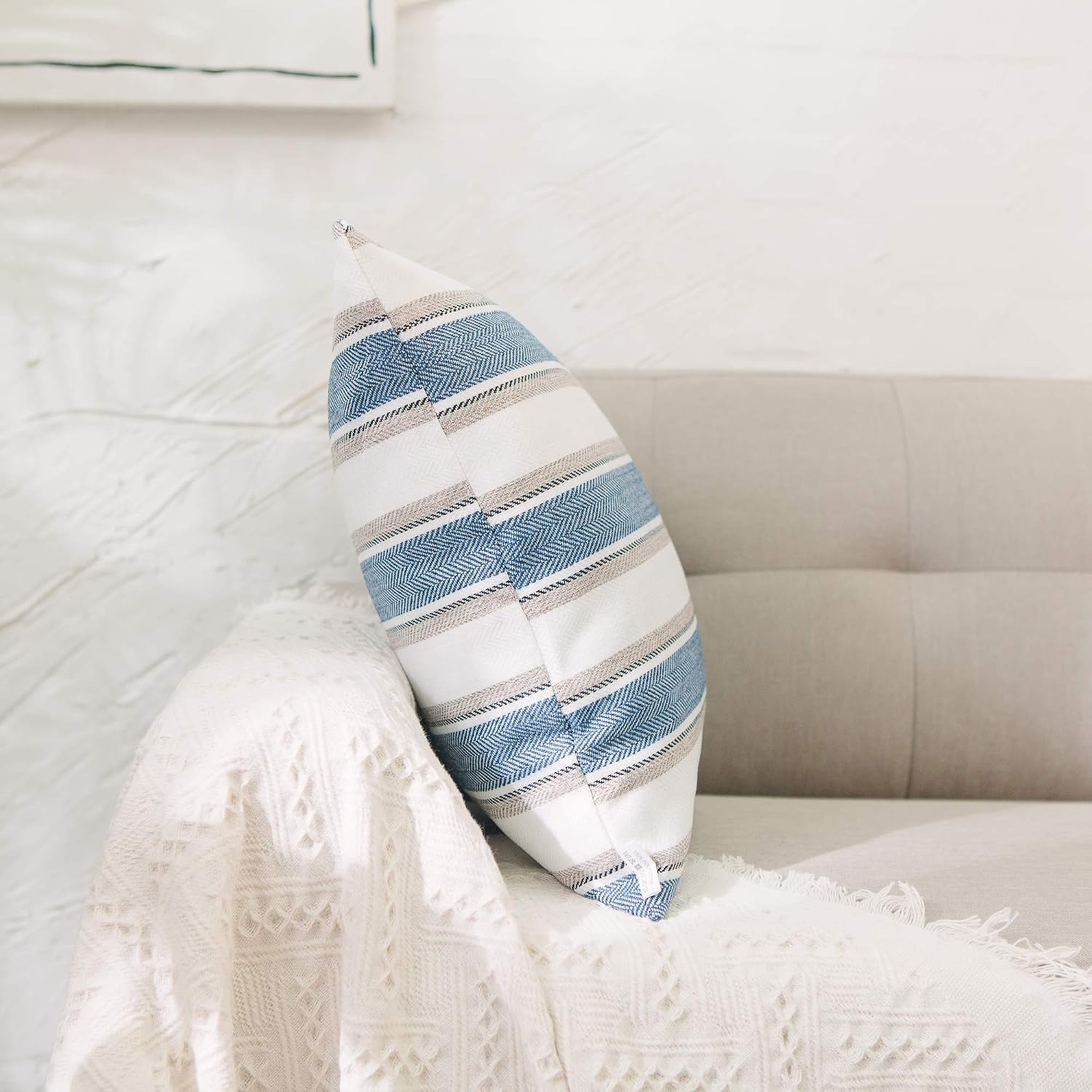
Run the stripes vertically on a tall, upright cushion for a crisp feel, or turn the cover a quarter turn so they run horizontally for something softer. If you have two covers, you can even set them in opposite directions, which sounds fussy but looks considered in person.
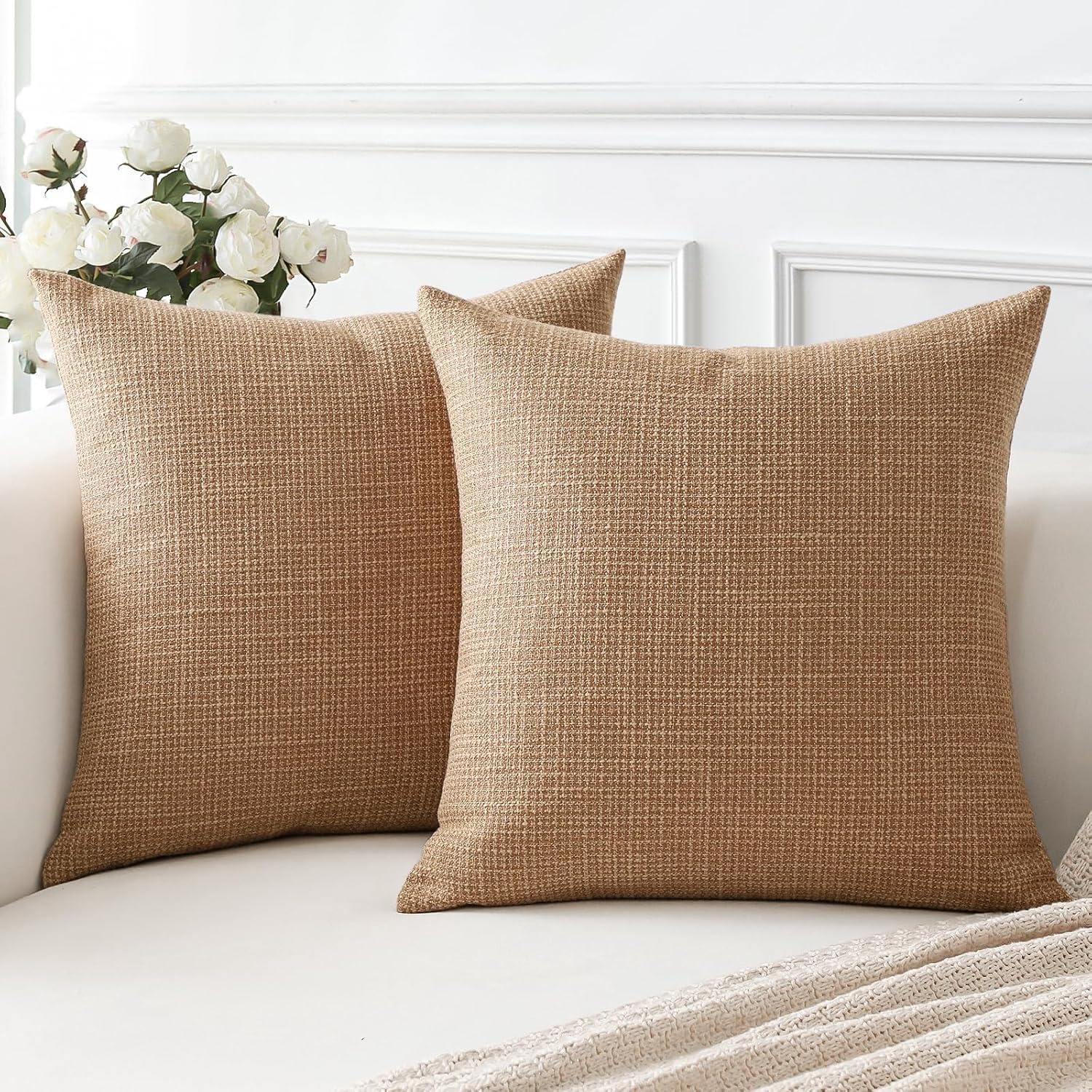
Pair the striped covers with plain textured cushions rather than another busy pattern. If you do want to mix patterns, keep the scale different. A fine stripe next to a large floral works. A fine stripe next to a fine check fights.
Care that actually extends their life
The care routine here is short. Machine wash cold, gentle cycle, separately from other items, no bleach. Tumble dry low or line dry in the shade.
Two habits matter more than the settings. Close the zip before washing, because an open slider chews fabric and catches on other items in the drum. And take the insert out first, always, because inserts and washing machines do not get along.
If you get a mark, deal with it fast. Blot, do not rub, and use cool water. Polyester releases most fresh stains easily. It is old, set stains that become permanent.
Rotate the covers occasionally if they sit in a sunny spot, so one face is not permanently in the light. And give them a shake and a plump every few days, which takes five seconds and does more for how a room looks than almost anything else.
The short version
You are buying two cushion covers, no inserts, in a polyester fabric made to look like striped linen. The maker is clear that it is 100% polyester faux linen, so go in knowing that and you will be happy with it.
The build is sound where it counts, a hidden zip and overlocked internal seams. Care is genuinely easy, cold wash and low heat. The thing most likely to affect your satisfaction is the insert you choose, so measure first and go one size up if you want that full, plump look.
If you are refreshing a sofa or finishing a bed without replacing anything you already own, a pair of covers is the cheapest change that reads as a real change.