
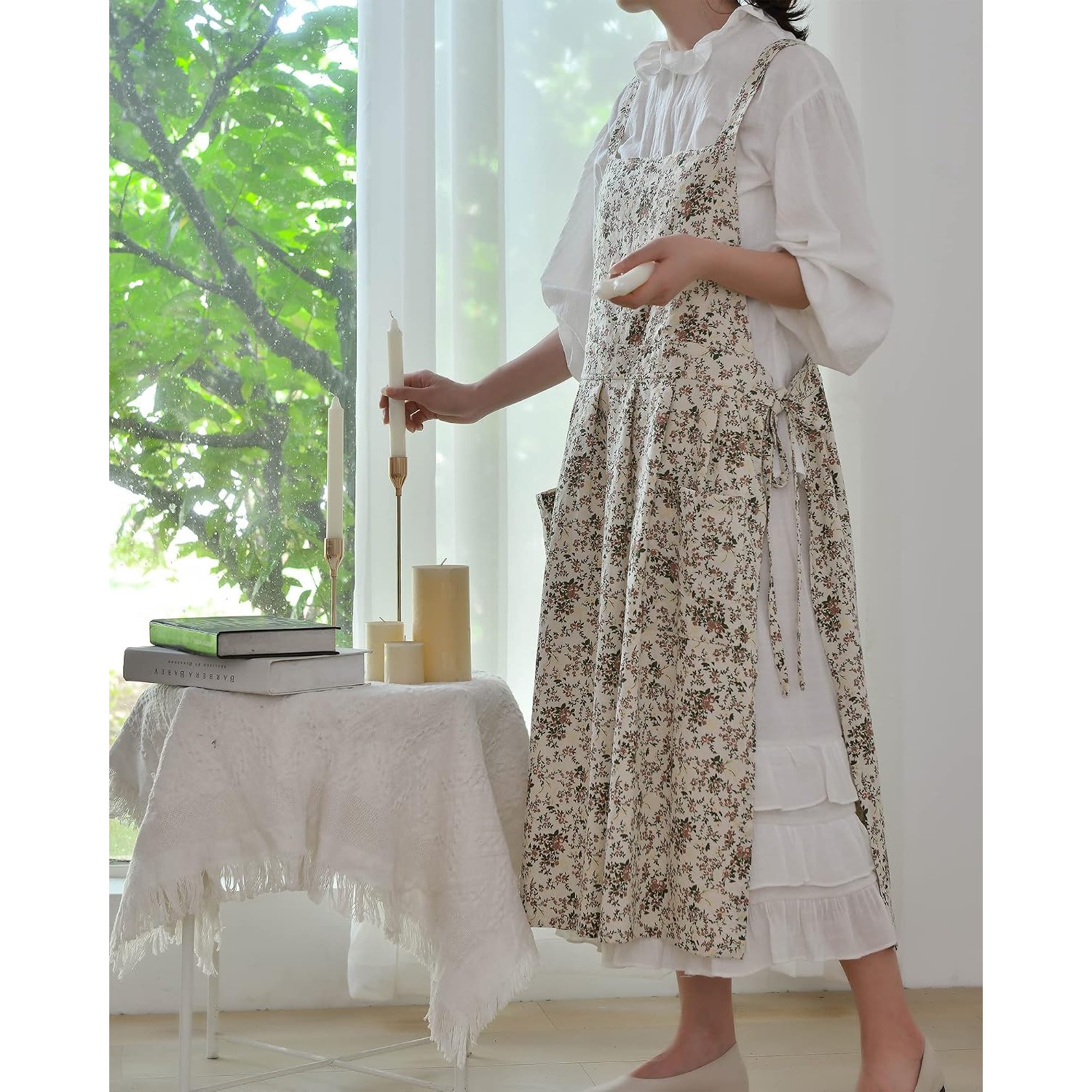
The complete guide
How to Choose a Cotton Apron That You Will Actually Wear
The apron problem nobody talks about
Most households own an apron. Far fewer households use one. It usually hangs on the back of a door, slowly collecting dust, while people cook in their good clothes and then wonder why there is turmeric on a white shirt.
The reason is almost never the idea of an apron. It is the apron itself. The strap digs in. The neck tie has to be knotted behind your head, which is fine until your hands are covered in raw chicken. The fabric is some glossy coated thing that feels like a tablecloth from a function centre. Or it is a thin cotton rectangle that soaks straight through and does nothing at all.
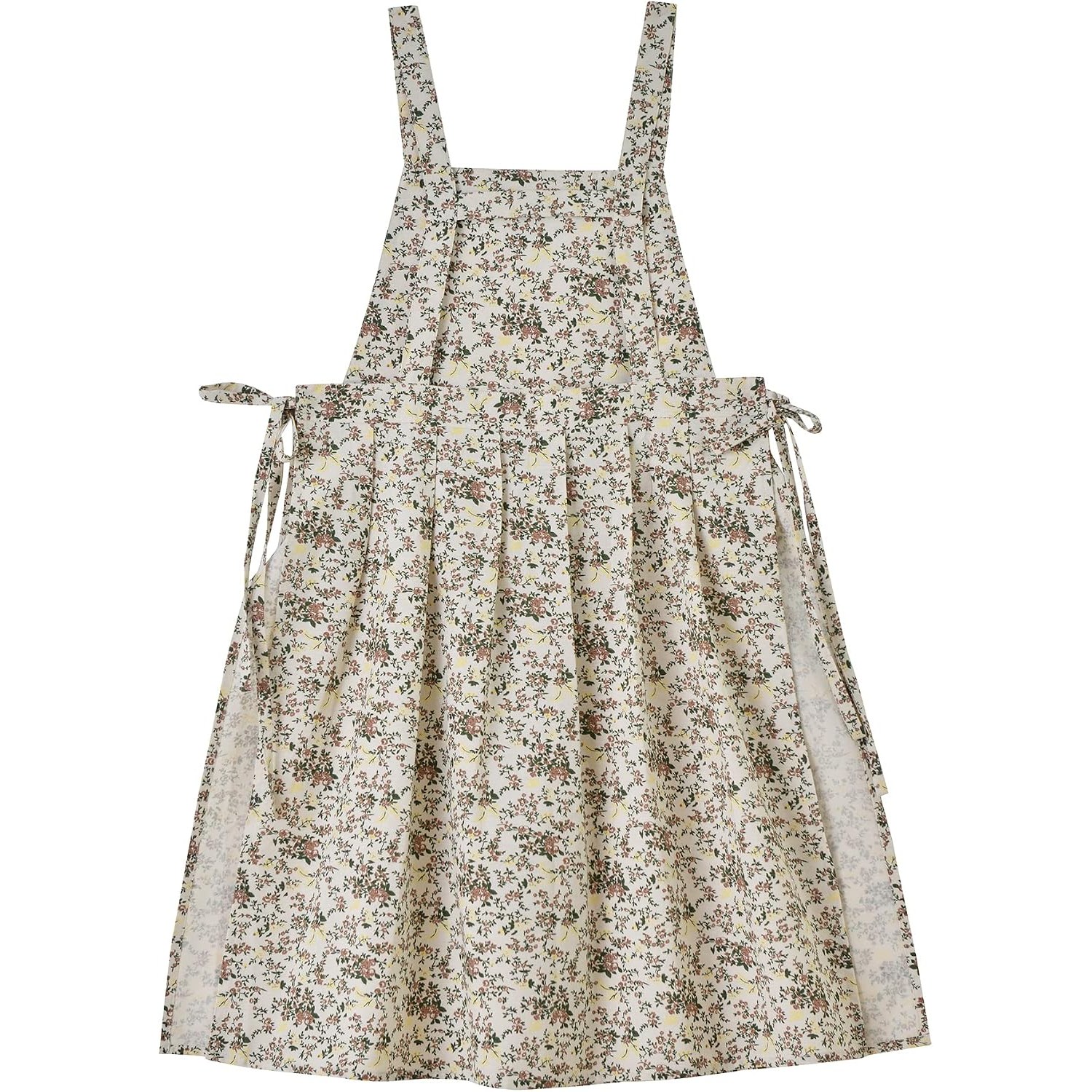
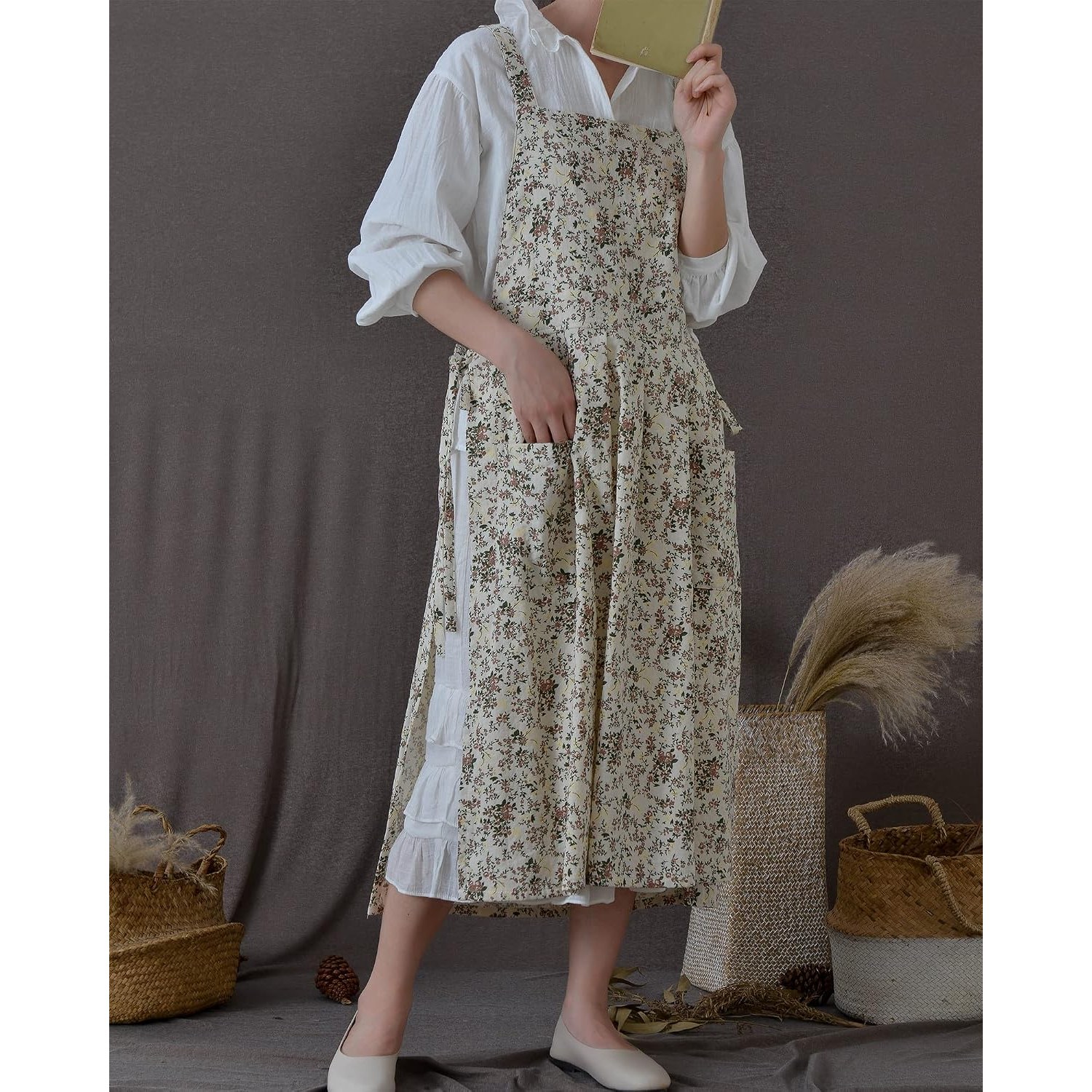
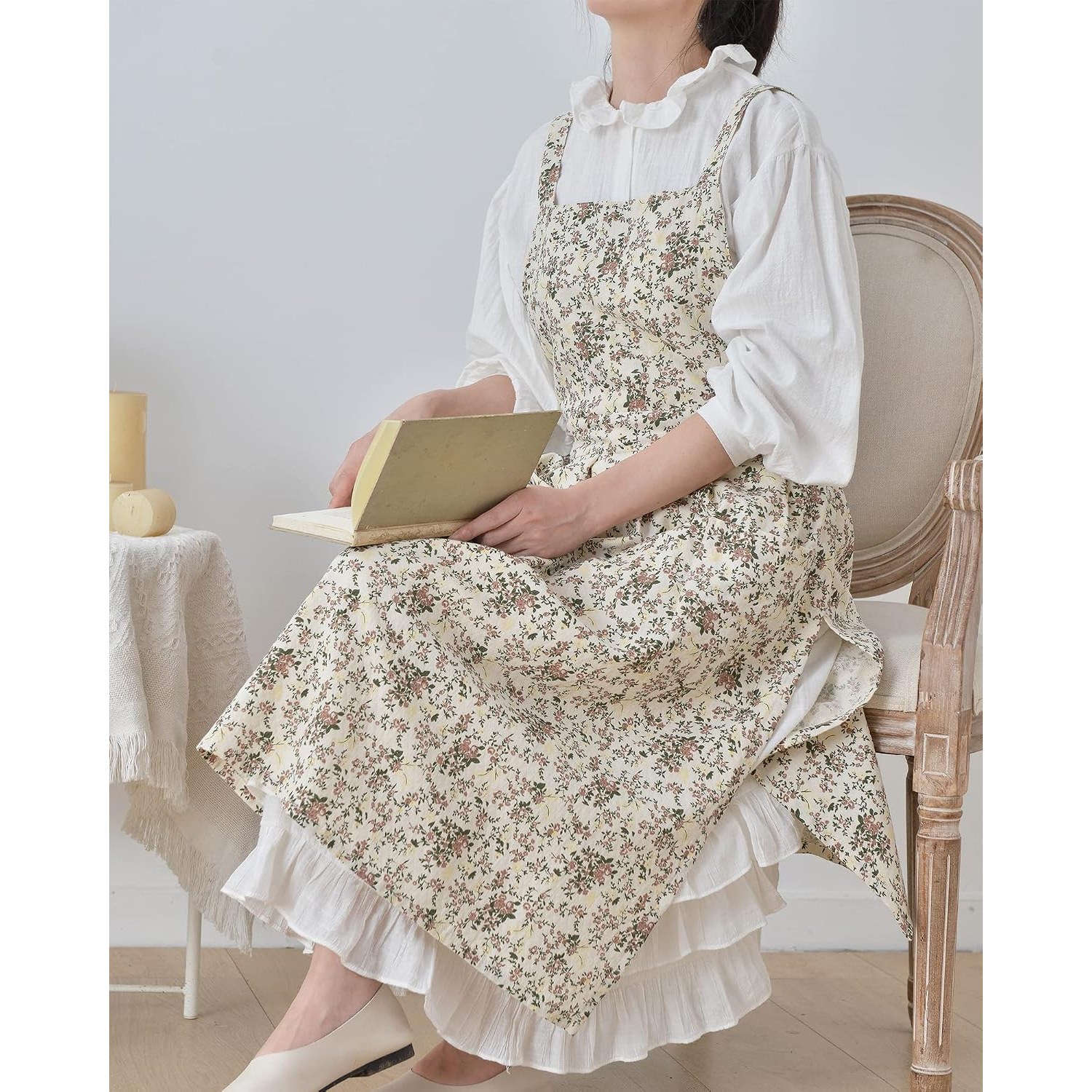
A pinafore in washed cotton fixes most of that in one move. You pull it over your head. There is nothing to tie at the neck. The fabric is soft enough that you forget you are wearing it, which is the single biggest factor in whether an apron gets used or ignored.
What washed cotton actually means
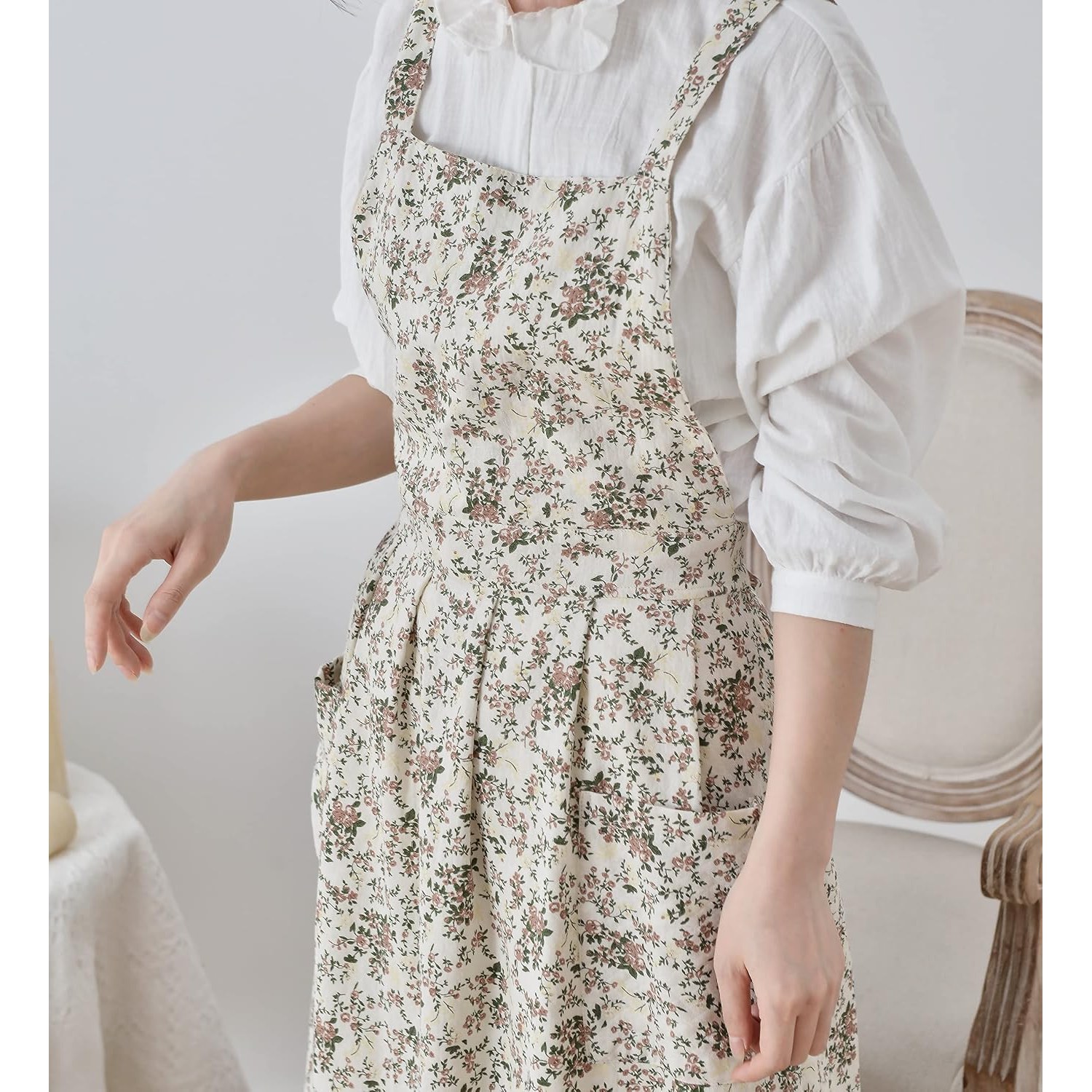
Cotton fabric usually leaves the mill crisp and a little stiff. Washed cotton has been run through a wash and finish process before it becomes a garment. That does two things. It softens the fibres, and it gives the surface a gentle, uneven crinkle.
The visual result is close to linen. Linen has that same relaxed, slightly rumpled texture, and it is why so many listings describe this kind of fabric as cotton-linen style. We want to be straight about it. This apron is cotton. The maker says so, and so do we. You get the look people like about linen with the softness and the easier care of cotton.
That matters practically, not just visually. Linen creases hard and can feel cool and crisp against the skin. Cotton drapes softer, stays comfortable against bare arms in summer, and goes through a normal wash cycle without drama. For something you put on and take off several times a day, that is the better trade.
Why the pinafore shape wins
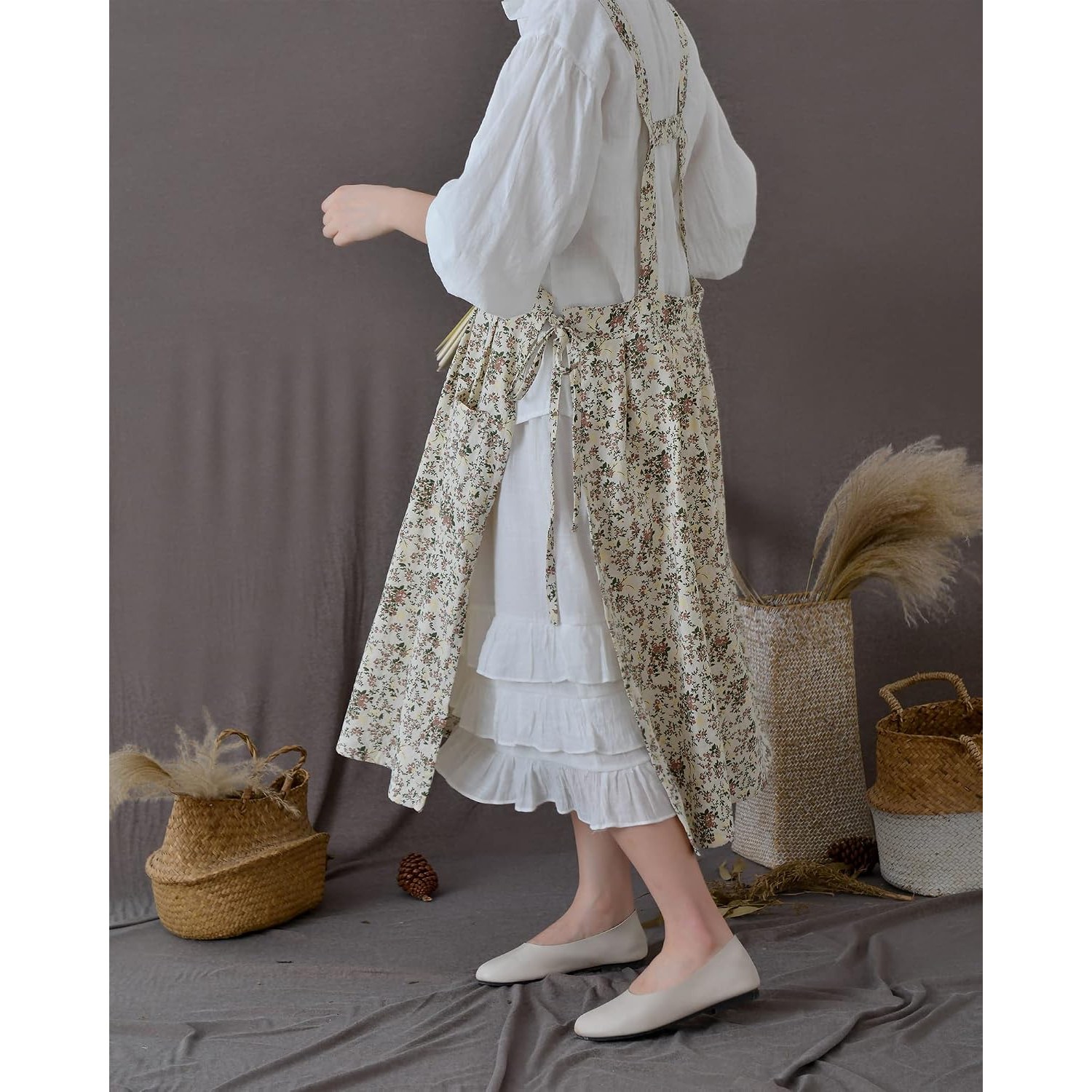
A pinafore is an apron that goes over the head as a single piece, rather than hanging from a neck loop with waist ties at the back. The weight sits across both shoulders instead of pulling on the back of your neck.
Anyone who has worn a traditional apron for a long session knows the difference. A neck loop concentrates all the pull in one narrow band, and after an hour of standing at a bench you feel it. Spreading that load across the shoulders is more comfortable and it stops the apron sliding sideways every time you reach across the stove.
The second advantage is speed. You are not fumbling behind your head with sticky fingers. On, off, on again. When something is that easy, you use it for the five minute jobs too, not just the big Sunday cook.
The third is coverage. Pinafore styles tend to cover more of the chest and more of the hip than a bib apron, so splashes land on fabric rather than on your sleeve or your thigh.
The pockets are the part you will use most
Two large pockets run across the front. This sounds minor. It is not.
Think about what you carry while you cook. A phone with a timer running, or a recipe open on it. Reading glasses. A pen for the shopping list. A tea towel. A thermometer. Without pockets, all of that gets put down somewhere and then hunted for.
The same applies outside the kitchen. In the garden, the pockets hold seed packets, a trowel, string, secateurs and gloves. At a craft table, they hold brushes, a pencil and a scrap of paper. At a market stall, they hold a float, a pen and a card reader.
Front pockets have one more advantage over hip pockets. You can drop something in without twisting, and you can see what is in there with a glance down. It is a small ergonomic thing that you notice after a week.
Who this suits
Home cooks who are in the kitchen daily get the most out of it, simply because the ease of putting it on means it gets worn. If you cook once a fortnight, any apron will do. If you cook every night, the fiddly ones get abandoned.
Bakers like the chest coverage, because flour goes everywhere and lands high. Gardeners like the pockets and the fact that cotton handles soil and sap. People who paint, pot, sew or glue things like it as a smock, because the arms are completely free and nothing binds at the shoulder.
It also works well for anyone buying a gift and worried about sizing. The cut is loose by design. You are not guessing someone's measurements the way you would with a shirt.
Where it is less ideal is heavy industrial work or anything involving a lot of standing liquid. Cotton absorbs. For deep-fry stations or wet trade work, a coated or rubberised apron is the right tool. For normal cooking, baking, garden jobs and craft, cotton is more comfortable and far nicer to wear.
How to choose between apron styles
If you are comparing options, three questions sort it out quickly.
First, how often will you wear it? Daily use argues for an over-the-head design every time. Occasional use means a traditional tie apron is fine.
Second, what do you need to carry? If the answer is nothing, pocket design does not matter. If you reach for a phone or a tool constantly, two front pockets save a surprising amount of walking back and forth.
Third, how do you feel about washing it? Cotton goes in the machine with the rest of the laundry. Coated and waxed fabrics usually need wiping or hand care. If you want something you can throw in with the towels without thinking, cotton is the practical pick.
Caring for washed cotton
This part is easy, which is sort of the point.
Machine wash or hand wash, both are fine. Use a gentle cycle, a mild detergent, and wash with similar colours. Skip bleach, which can leave uneven light patches on cotton.
Line drying is the best option. It is gentler on the fibres, it keeps the shape, and washed cotton dries fairly quickly. If you use a dryer, keep the heat low and pull the apron out while it is still slightly damp.
Ironing is optional. The soft wrinkle is part of the character of washed cotton, and most people leave it. If you want it crisper, a warm iron will flatten it out without any special handling.
For stains, act fast. Dab rather than rub, treat oil marks with a drop of dish soap before they dry, and then wash as usual. Cotton responds well to prompt treatment and poorly to being left in a heap for a week.
Getting more life out of it
Two small habits make a real difference. Hang it up instead of folding it into a drawer, so it airs out and keeps its shape. And wash it before stains set rather than saving it for a big laundry day.
If you cook most days, owning two is genuinely useful. One stays on the hook while the other dries. It sounds indulgent until the first time you reach for an apron and find it still wet on the line.
The short version
This is a washed pure cotton pinafore apron with the texture of linen and the softness of cotton. It goes over your head, so there is no neck tie to knot. Two big front pockets hold the things you keep reaching for. It suits cooking, baking, gardening, flower arranging and craft work, and it washes in the machine like anything else.
It is comfortable enough that you will actually wear it, which is the only test an apron really has to pass.