
The complete guide
Choosing a Rectangular Leather Tray, A Practical Buyer's Guide
The problem it actually solves
Most clutter in a home is not big. It is small and it is daily. Keys, coins, a watch, a lip balm, two hair ties, a receipt you meant to keep. None of that is worth a drawer, and none of it stays put on a flat surface. So it spreads.
The fix is embarrassingly simple. Give those items a boundary. Once there is a tray with raised sides sitting in the place you naturally walk past, your hands learn the drop point in about three days. After that, you stop losing things, because you stopped putting them in random places.
That is the whole job of a vide poche. The French name translates to "empty pocket", and it tells you exactly how it is meant to be used. Walk in, empty your pockets, done.
Why leather works for this
You can buy a catchall in ceramic, metal, wood, concrete or plastic. Leather has a few quiet advantages over all of them.
It is soft, so a watch case, a wedding ring or a phone back does not get scratched when you toss it in. Hard trays do scuff metal and glass over time, and that is the sort of damage you only notice a year later. Leather also absorbs noise. Keys landing in a ceramic dish at 6am is a sound your household will have opinions about. Keys landing in leather are almost silent.
Then there is how it ages. Real leather picks up a surface over time, a slight sheen where your hand passes, a deepening of tone near the light. Ceramic just stays the same until it chips. If you like objects that look better after a few years of use, leather is the material that rewards you.
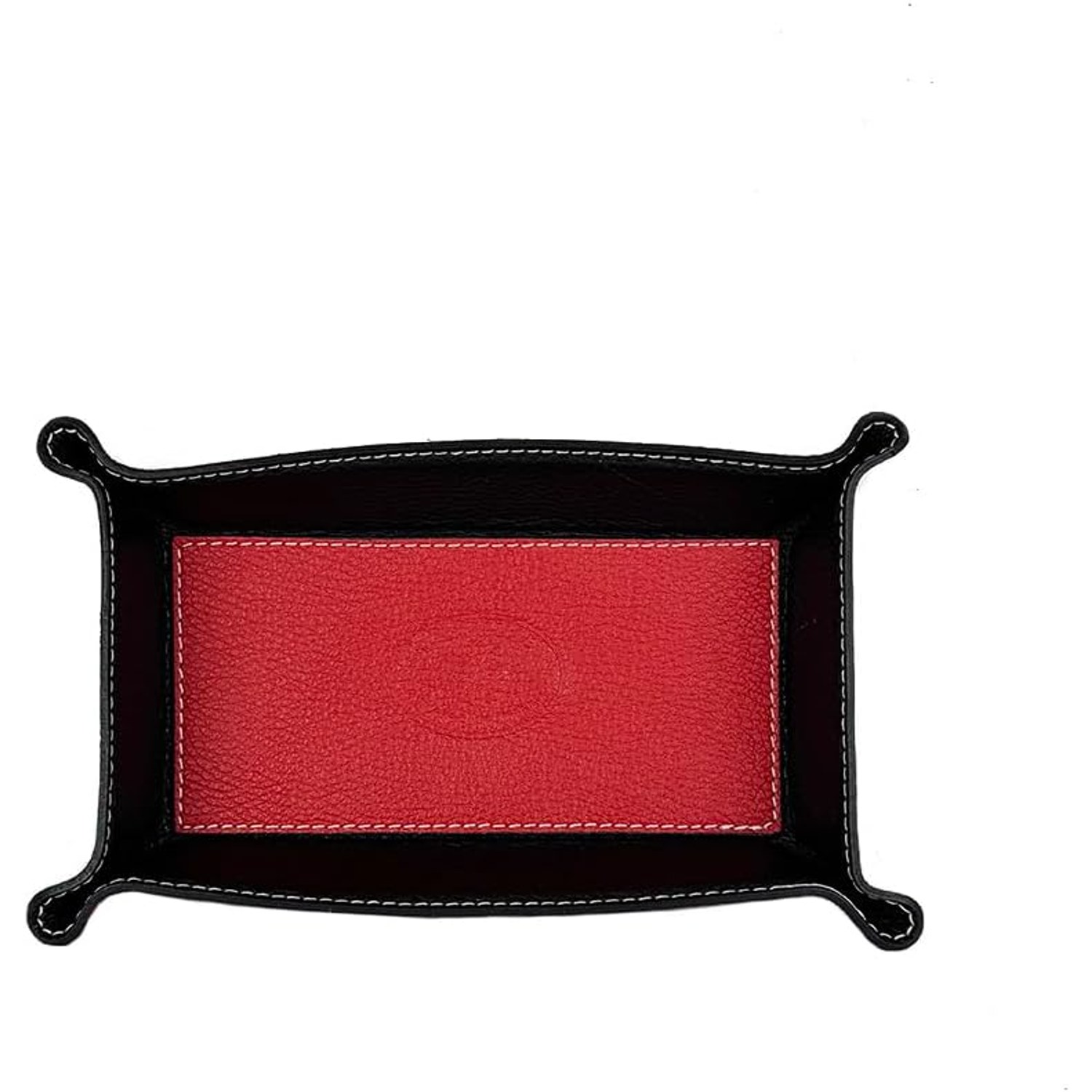
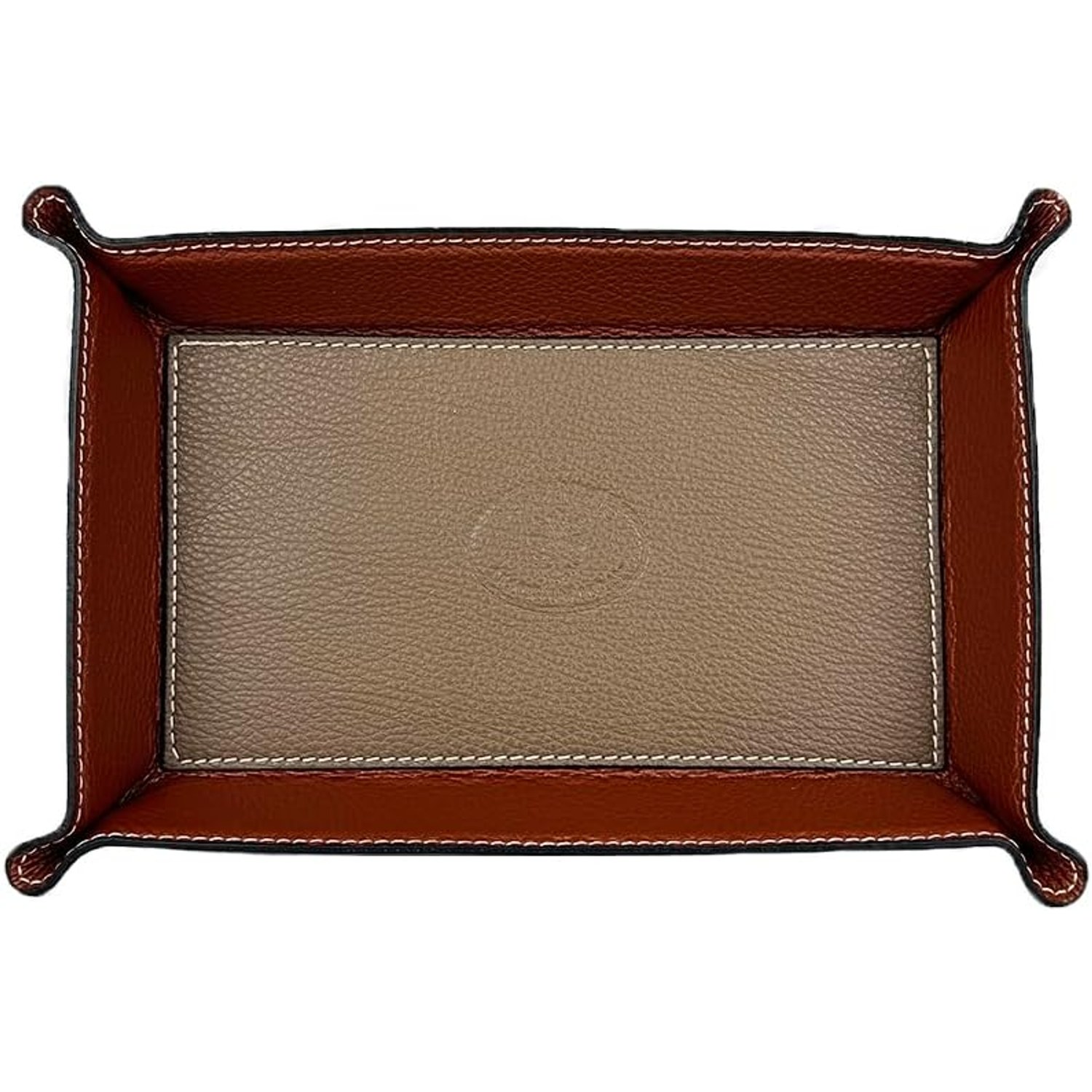
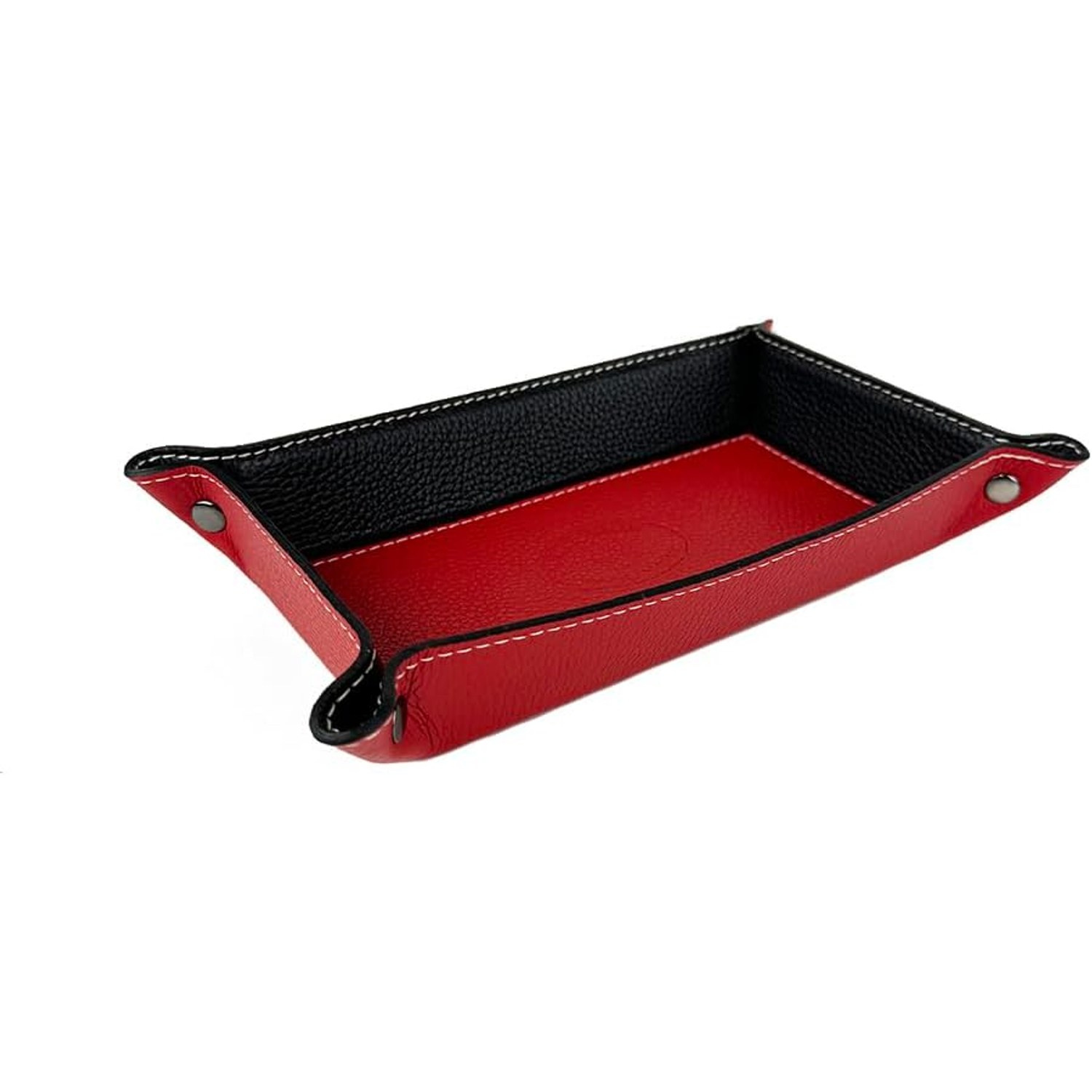
This particular tray is made in Italy, handmade by Tuscan craftspeople. Tuscany is the region most associated with traditional leather work, and it generally means the piece has been cut, shaped and finished by hand rather than stamped out of a sheet.
Getting the size right
Size is where people most often guess wrong, so it is worth being specific.
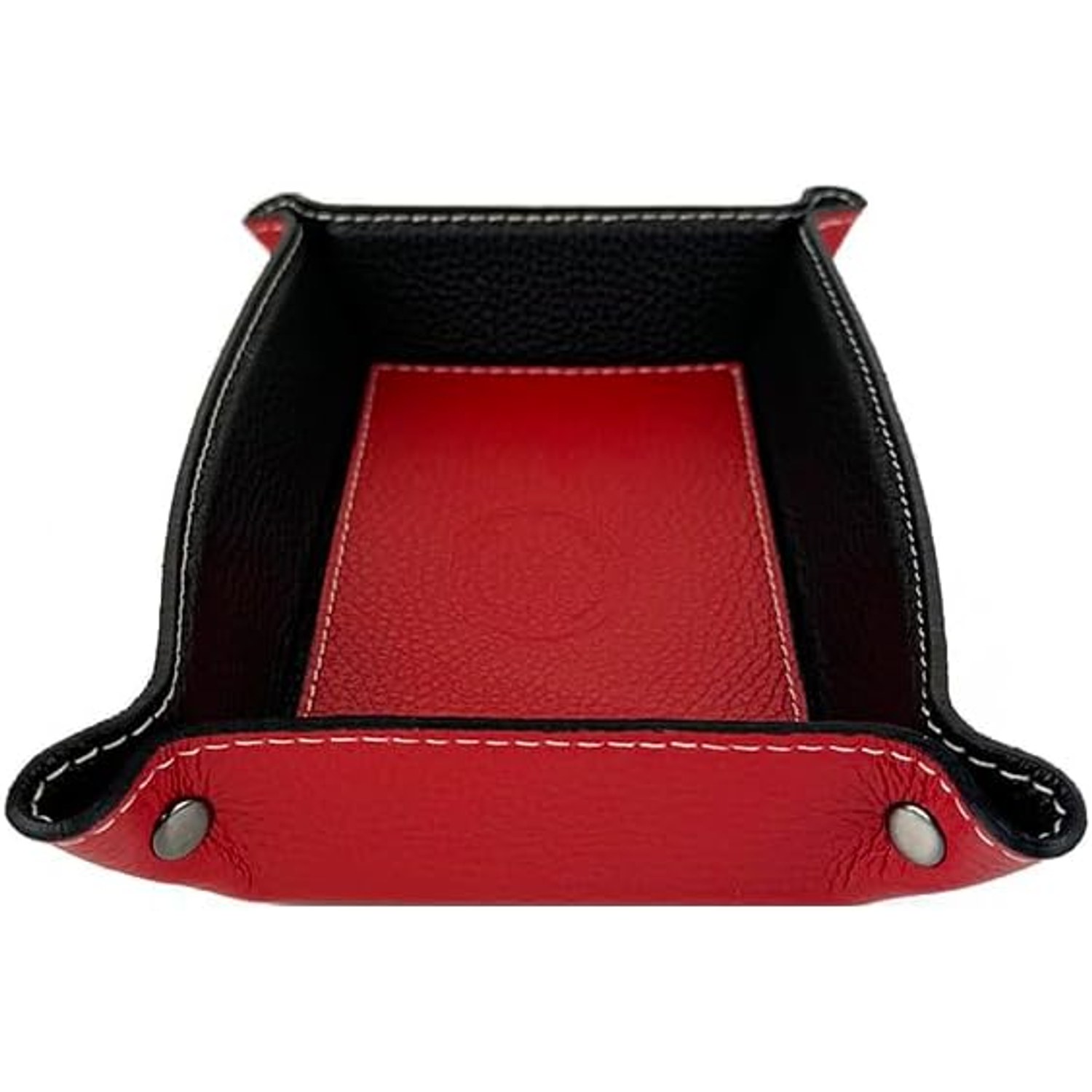
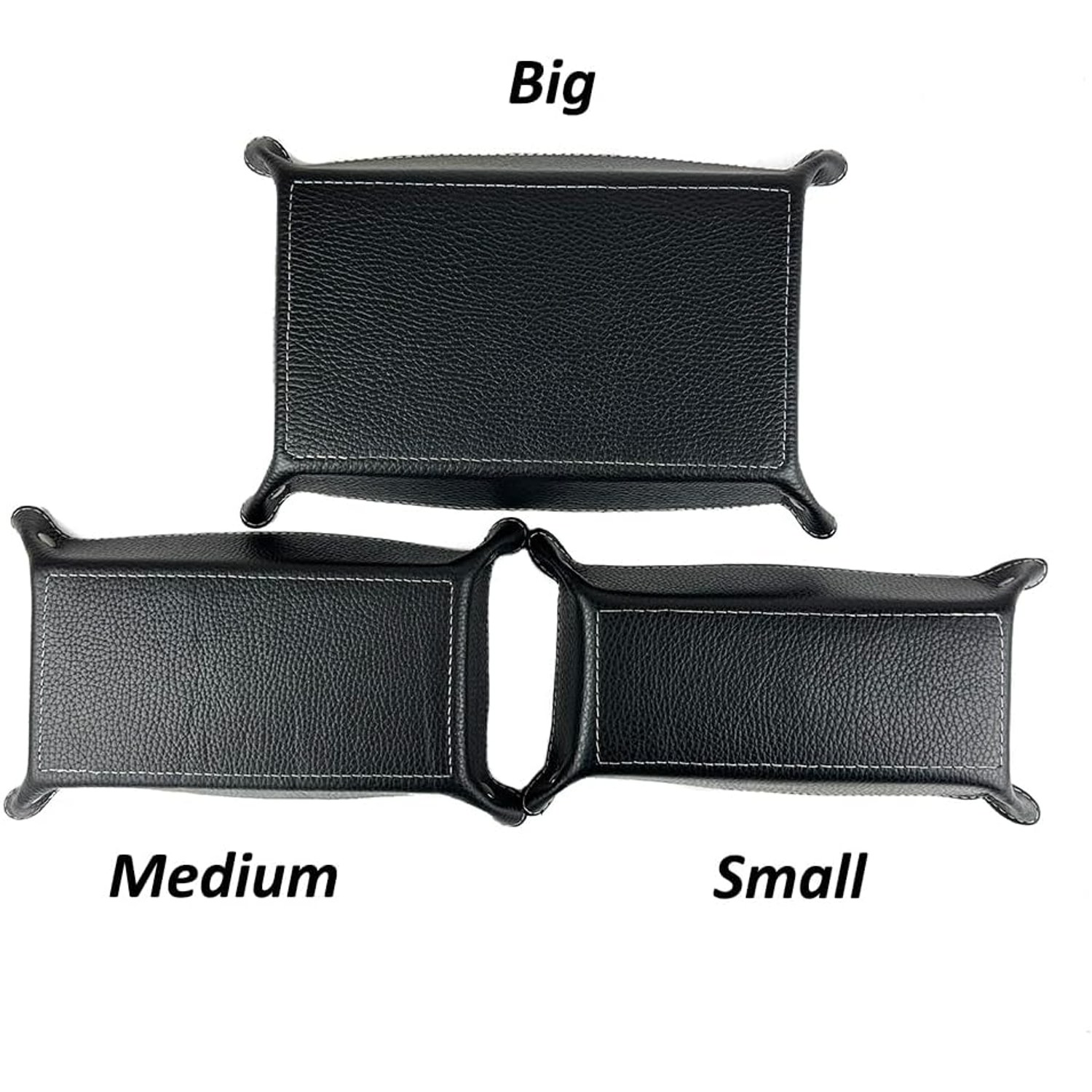
This tray is 23.5 cm wide, 15 cm deep and 4 cm tall on the outside. The inner well, which is the part that actually holds things, is 21 cm wide, 11.5 cm deep and 3 cm tall. Walls take up a bit of the footprint, which is normal, but it is the inner number you should be measuring against.
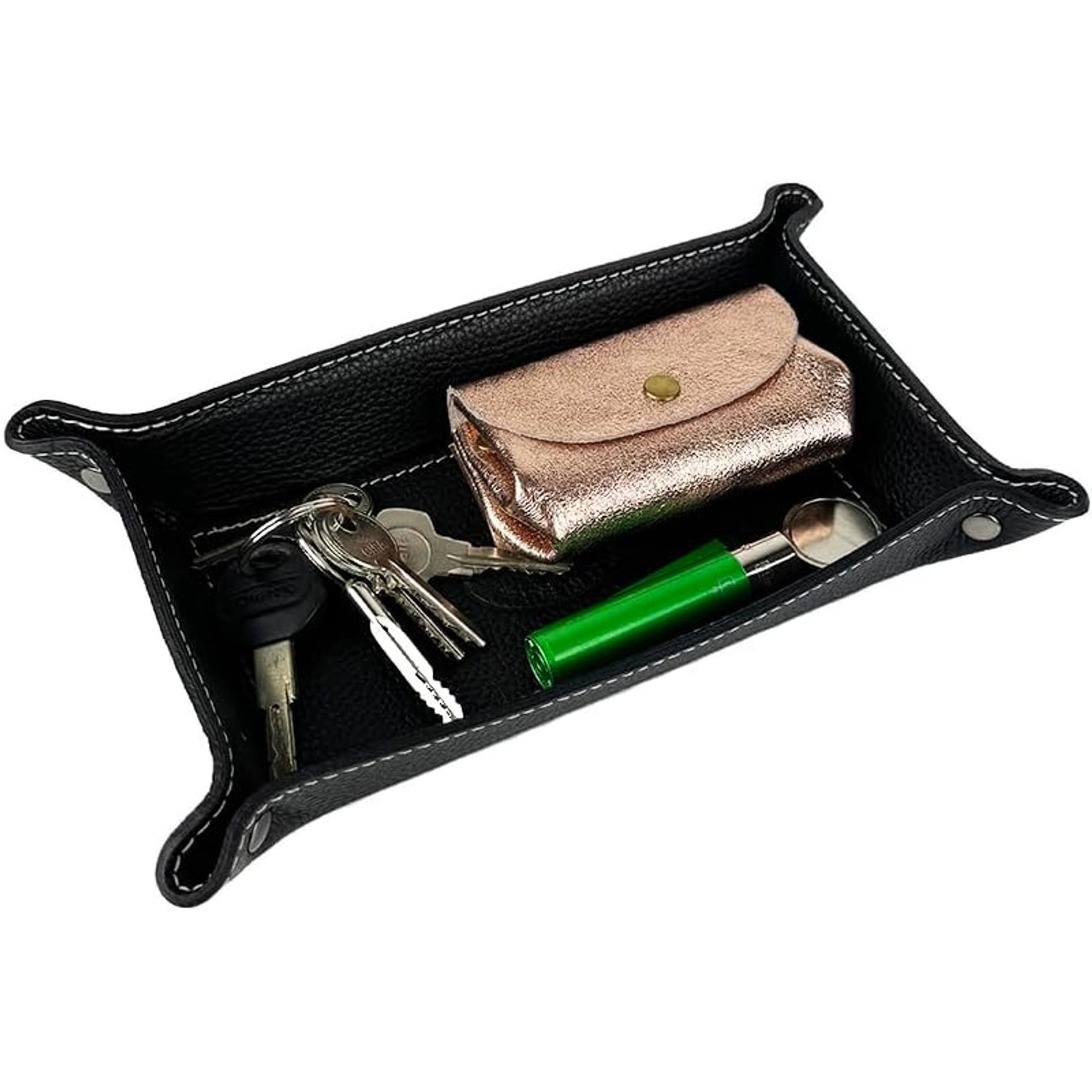
What does that hold in practice? A watch lying flat with the strap open, a set of car and house keys, a handful of coins, a couple of rings and still a bit of room. Or a phone plus keys. Or AirPods, a pen, a USB stick and some loose change on a desk.
What it does not do is replace a drawer. If you are trying to corral a full jewellery collection or a stack of mail, you need something larger or something with lids. A valet tray is for the daily rotation, not for storage.
Before you buy, do one thing. Go to the spot where you think it will live and mark out 23.5 by 15 cm with your hands or a piece of paper. On a narrow hallway shelf or a shallow bedside table, that matters more than you would expect.
Where to put it
Placement decides whether the tray gets used or becomes decoration.
The entryway is the classic spot. A console table, a shelf by the door, the top of a shoe cabinet. The rule is that it has to be in the path you already walk, not slightly off it. A key tray two steps out of your way gets ignored.
The bedside table is the second-best option, especially for a watch, reading glasses and whatever is in your pockets when you sit down. The raised sides earn their keep here, since nothing rolls off when you reach for the lamp in the dark.
On a desk, it works as a corral for the items that migrate across your workspace. Pens, clips, a cable end, a charger plug. Having one leather desk tray within arm's reach cuts the daily tidy-up down to about four seconds.
A coffee table is the fourth option, mostly for remotes and coasters. Less common, but it works well in a living room where surfaces are shared.
How to judge quality in a leather tray
A few things separate a tray you keep for a decade from one you quietly replace.
Look at the material claim first. "Genuine leather" means real leather, which is what this one uses. Bonded leather, which is shredded offcuts glued and pressed, is a different product and tends to flake at the corners after a year or two of handling.
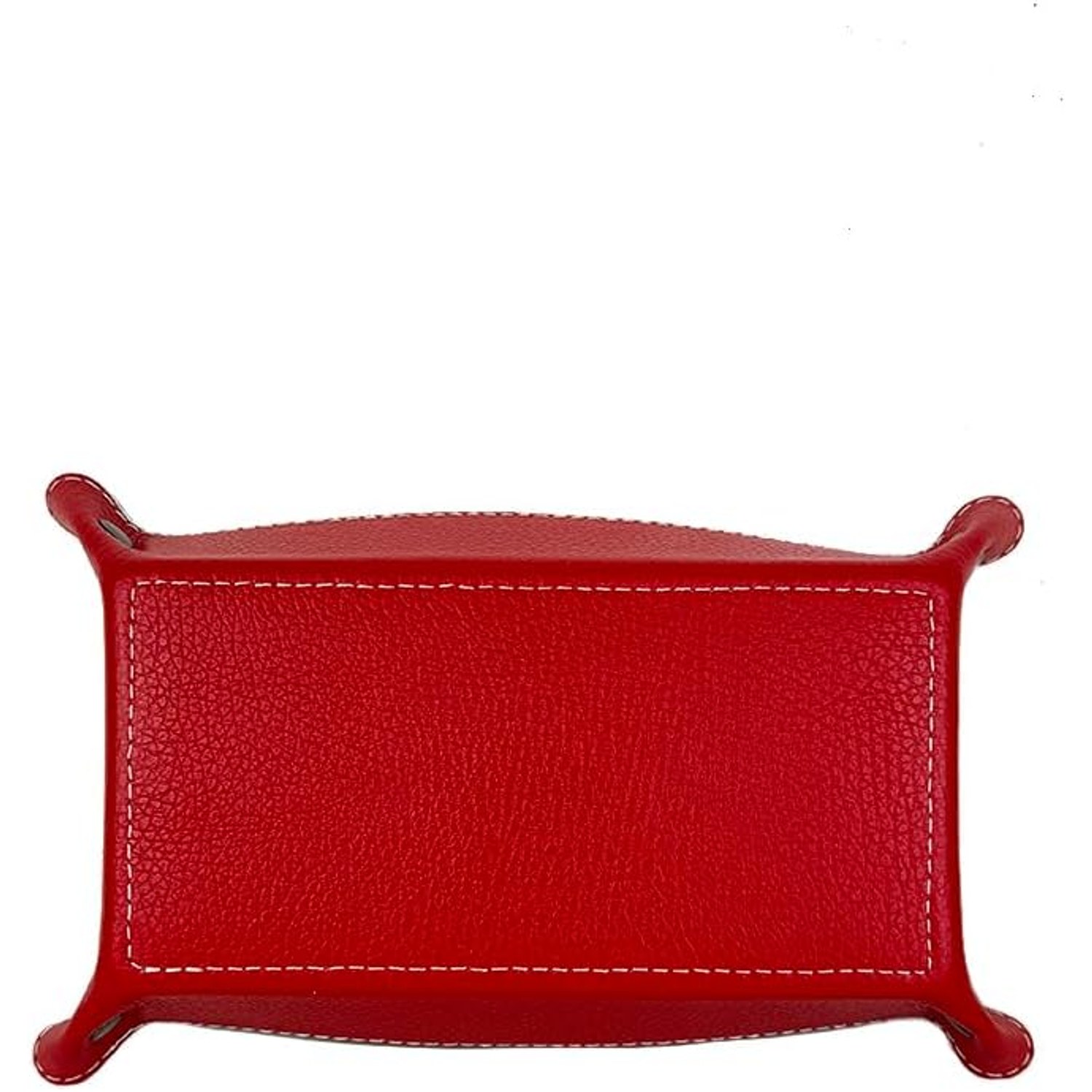
Check the corners, because that is where a tray is built or botched. On a formed leather tray the corners are where the walls hold their shape, and a hand-finished piece tends to hold a crisper fold.
Consider the wall height. Too low and items slide out when the surface gets knocked. Too high and you cannot see what is inside at a glance, which defeats the purpose. The 4 cm here sits in the practical middle.
Finally, think about the shape in relation to your furniture. A rectangle sits flush against a wall, a monitor stand or the back edge of a shelf. A round dish always leaves awkward gaps. If space is tight, the rectangle wins every time.
Looking after it
Leather care is far less involved than people assume, but it does have rules.
Dust it with a soft dry cloth whenever you tidy around it. If something leaves a mark, use a barely damp cloth, wipe gently, and let it dry on its own. Do not put it near a heater or in a sunny window to speed that up, because heat and strong light are what dry leather out and fade it.
Skip the household cleaners. Multi-surface sprays, alcohol wipes and solvents strip the finish. If you want to condition it, use a proper leather conditioner, apply a small amount, and test an out-of-sight patch first.
Keep it away from water generally. It is not a soap dish and it does not belong next to a kitchen sink. Treat it as you would a leather wallet and it will behave the same way, which is to say it will last a long time and look better as it goes.
Buying it as a gift
Trays like this get given a lot, for good reason. They are useful without being personal, they suit men and women equally, and almost nobody already owns one. That makes them a rare safe gift for a colleague, a parent, a new partner's father, or the person who claims they do not need anything.
The other advantage is that the usefulness is obvious within a day. Unlike a gadget that has to be learned, a tray explains itself. The recipient drops their keys in it once and the habit takes.
If you are giving it, a short note about where you imagined it sitting (hallway, desk, bedside) helps more than you would think. People are oddly indecisive about placing a new object.
The short version
If small items keep scattering across your home, a rectangular leather tray solves it with one habit and no maintenance. This one is genuine leather, handmade in Italy, 23.5 by 15 by 4 cm on the outside with a 21 by 11.5 cm well inside. It holds a watch, keys, coins and a few rings comfortably, it sits neatly against a wall or monitor, and it wipes clean with a dry cloth.
Measure your spot, check the 23.5 by 15 cm footprint fits, and put it somewhere you already walk past. That is the entire decision.