
The complete guide
How to Choose a Valet Tray That Actually Gets Used
The pile that forms itself
There is a spot in nearly every home where things land. A kitchen bench, a hall table, the corner of a dresser. Keys go down first, then a wallet, then the receipt from lunch, then a watch at bedtime, then coins because there is nowhere else for them. Within a week it is a small archaeological dig, and the one morning you are running late is the morning the car key has slipped under a magazine.
A valet tray solves this with almost no effort on your part. It does not require a new system or an app or a Sunday afternoon of sorting. It just gives the pile a shape. You empty your pockets into the same tray every evening, and the next morning everything you need is in one place at hip height.
The reason a five compartment tray works better than a plain dish is simple. A dish is still a pile, only with a rim around it. Sections force a tiny bit of order. Keys here, watch there, coins in the corner. After about four days you stop thinking about it and your hand goes to the right compartment on autopilot.
How this one is put together
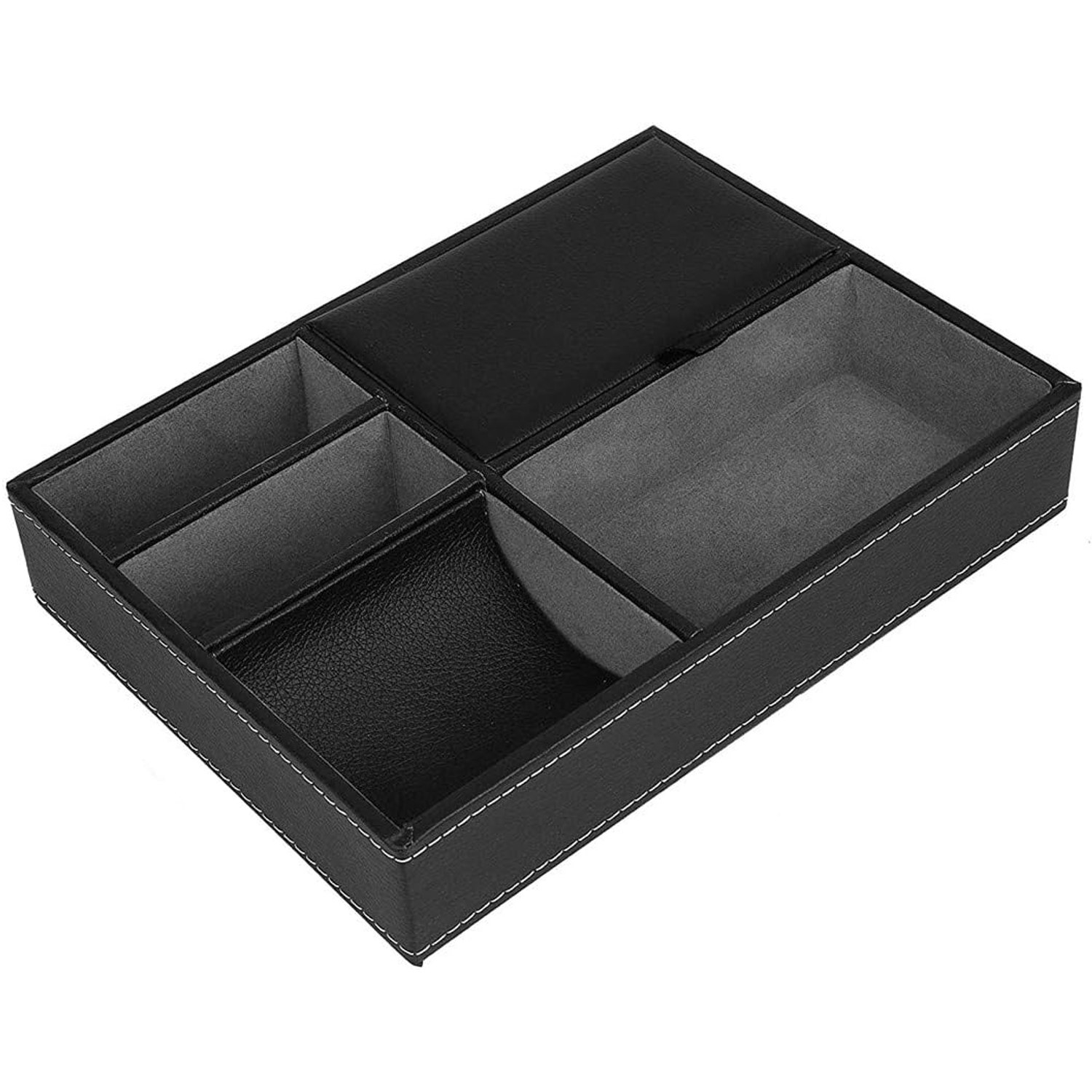
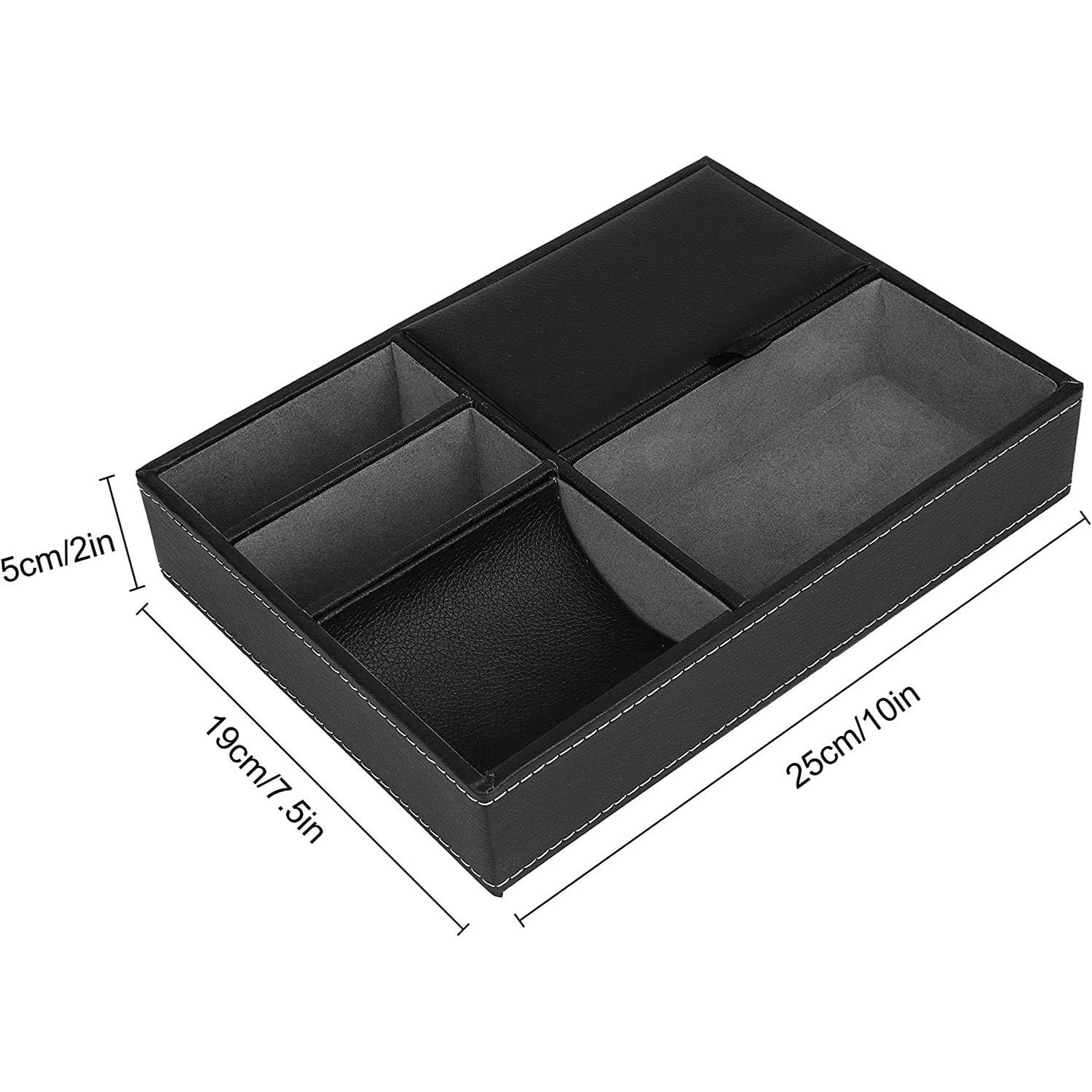
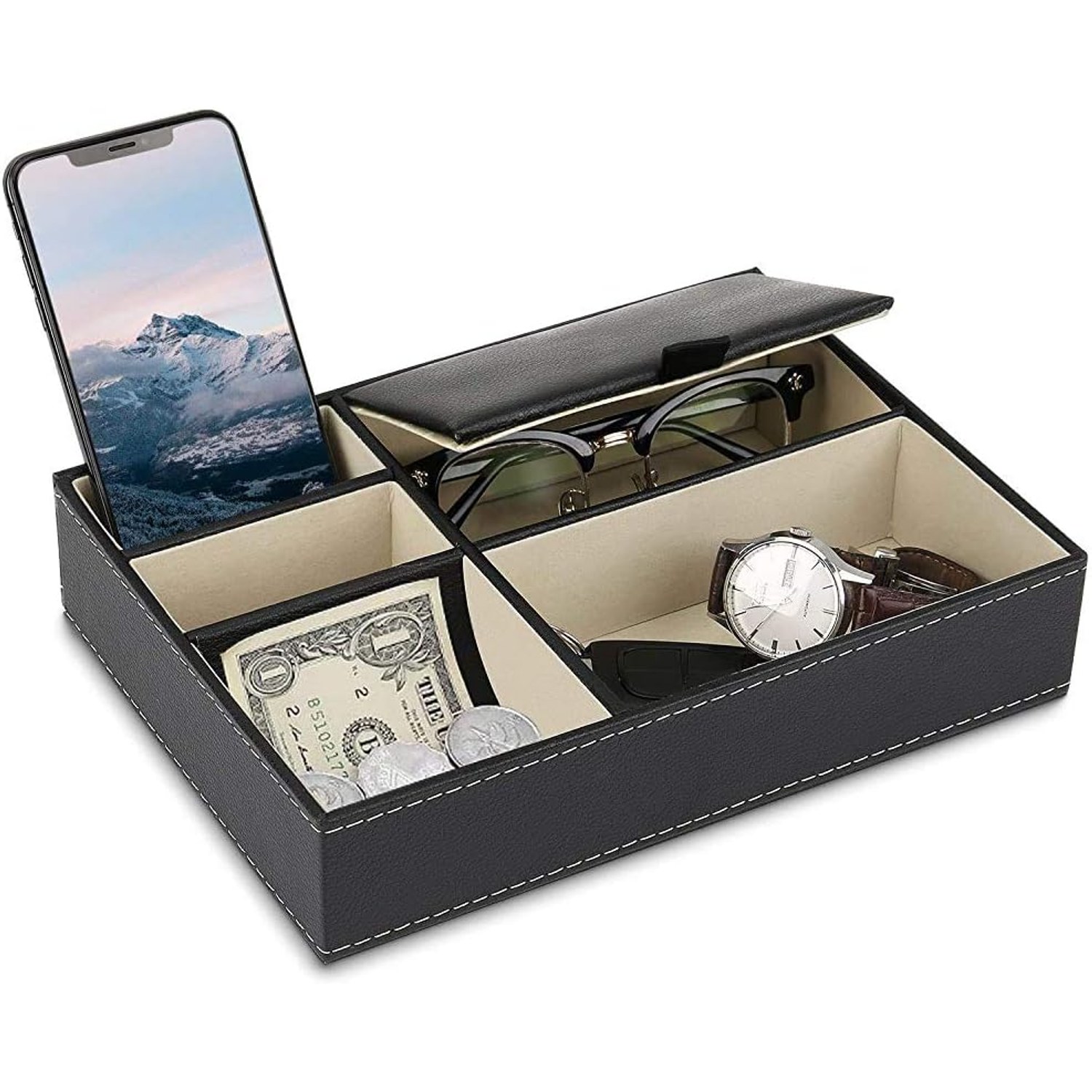
This tray has five separate sections inside a single shallow frame. The outer surface is synthetic (faux) leather and the interior is a faux suede, as stated by the maker. That is worth repeating because the word leather gets used loosely across this category. This is not genuine hide. It is a coated synthetic with a consistent grain and an even finish.
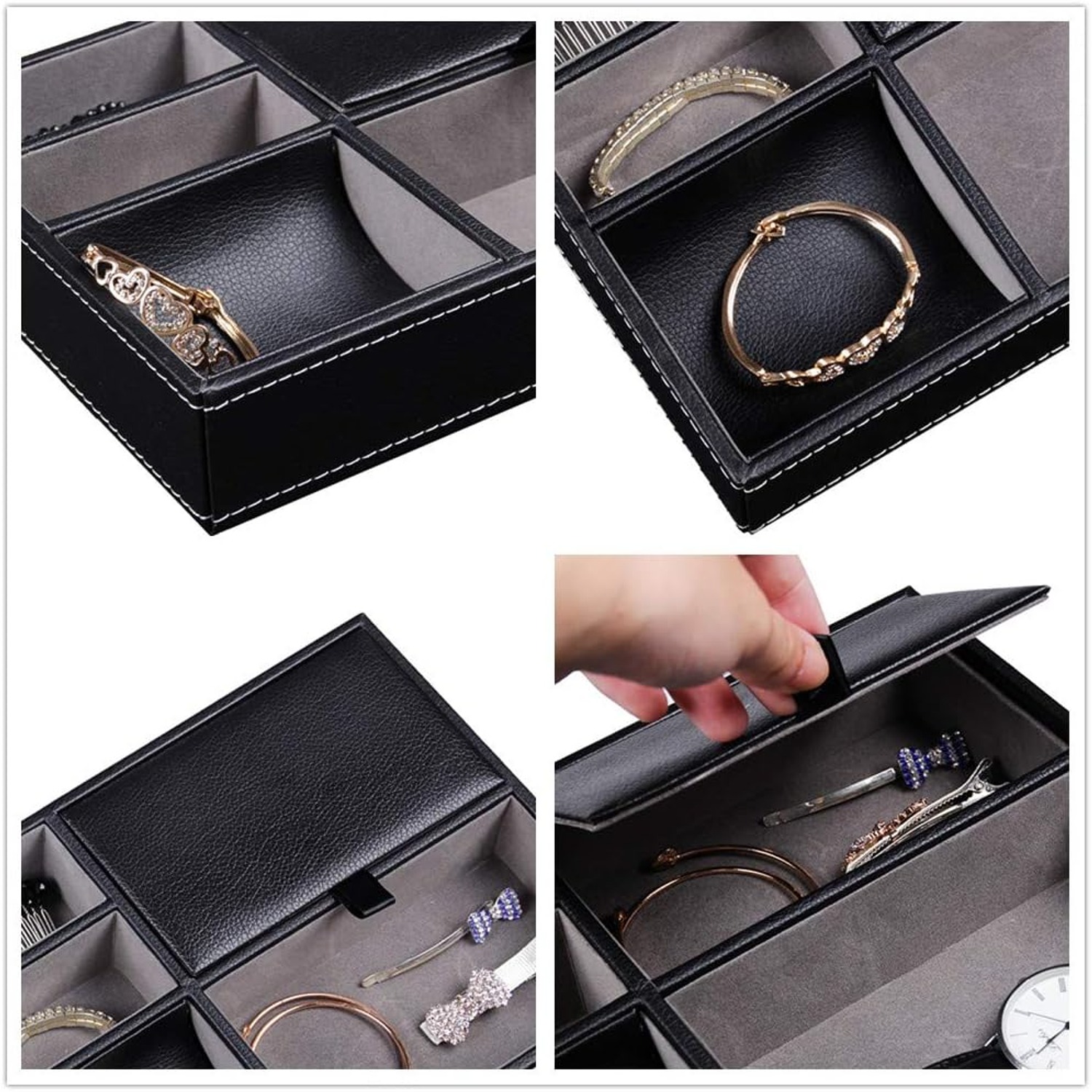
For a tray that lives on a dresser, synthetic is a perfectly sensible choice. The material is not being flexed, stretched or carried, which is where real leather earns its price. What matters here is that the surface wipes clean, the colour stays even, and the lining is soft enough not to mark a watch case. The faux suede interior handles that last job well. It gives polished metal something forgiving to sit on.
It arrives in a hard shell box, which is a small thing that matters more than you would think. It means the tray turns up undamaged, and it means you can hand it over as a gift without hunting for a box at eleven o'clock on Christmas Eve.
Exact dimensions, weight, colour and country of origin are not specified in the product record we hold. We would rather say that than guess, so if you are measuring up a specific shelf, ask us first.
Who gets the most out of one
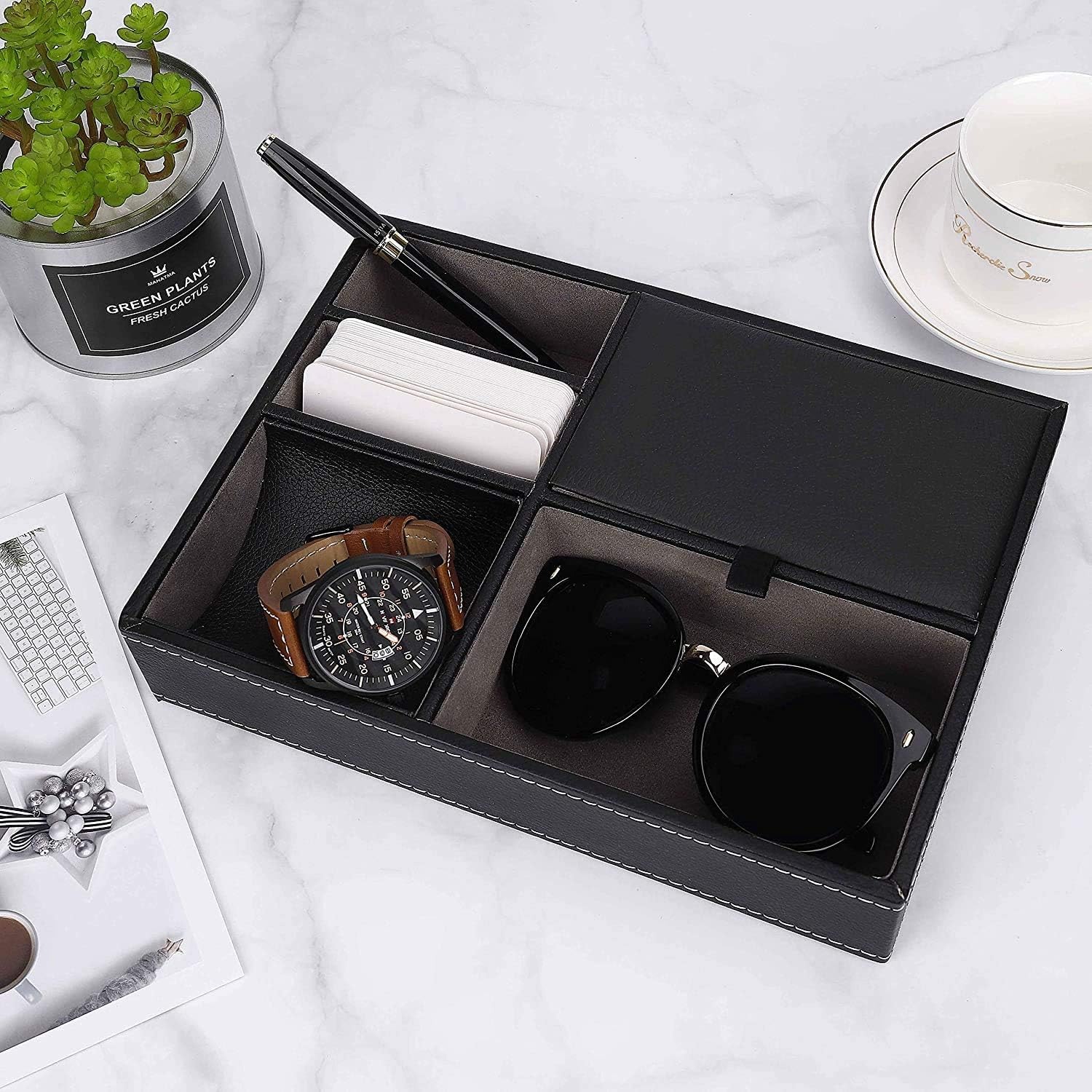
The obvious person is someone who carries a lot: keys, wallet, phone, watch, maybe a security pass and a set of earbuds. That is five categories of thing, and this tray has five compartments. It lines up neatly.
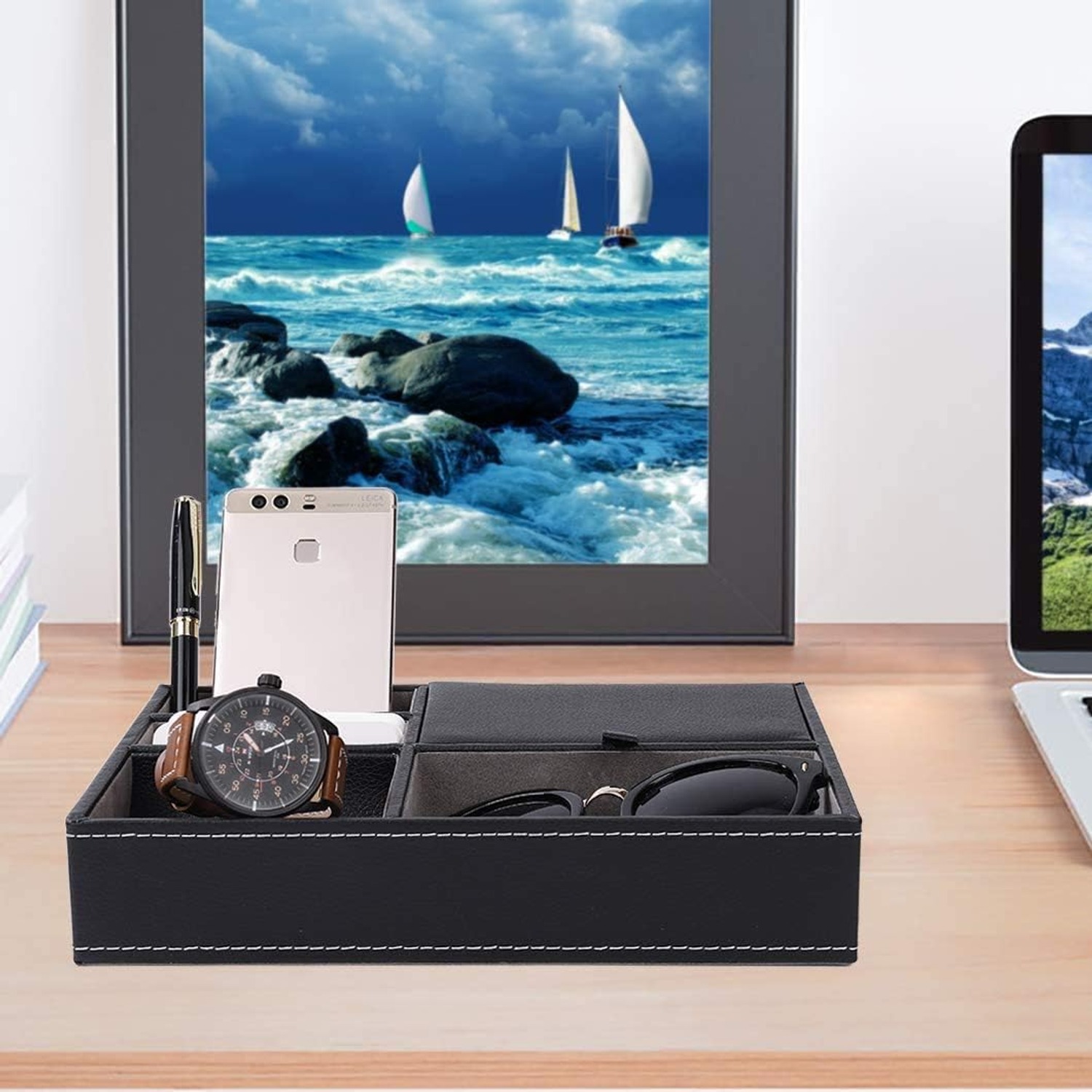
But the uses spread wider than that. On a dressing table it becomes a jewellery tray, with the suede lining protecting rings and earrings from scratches. On a home office desk it holds a phone, a USB drive, pens and a spare charging cable, which is often all you need to feel like the desk is under control. Beside a front door it becomes an entryway catch all, so nobody in the house leaves without their keys.
Parents of teenagers find them useful for a different reason. One tray per person in a shared hallway means fewer arguments about who moved what. Students in shared housing use them to keep a desk corner from being overrun. People who work with small parts, watch straps, model kits, hobby electronics, use the compartments to keep tiny components from vanishing into carpet.
Choosing between the options
If you are weighing up a few trays, a handful of things actually separate a good one from a disappointing one.
Compartment count comes first. One large open tray looks elegant in photos and fails in practice, because everything still ends up touching. Two or three sections are better. Five is about the point where every category of thing you carry has somewhere to go without the sections becoming too narrow to be useful.
Lining comes second. A hard plastic or bare board base will mark a watch crystal and make a racket every time you drop keys in. A soft lining, suede or felt or velvet, is quieter and kinder. If you are shopping for the best suede lined tray, check that the lining runs through every compartment and not just the main one.
Depth is third. Too shallow and coins skate out when you knock the tray. Too deep and it starts to look like a box, and you have to reach down into it. A low profile tray that sits a couple of fingers high is usually the sweet spot.
Finish matters last, and mostly for where it is going. Black is the safe answer because it disappears against most furniture and does not fight with a bedroom scheme. If the tray is going on a desk at work, something plain and dark also reads as professional rather than decorative.
Price is worth a thought too. Spend very little and you tend to get thin card wrapped in vinyl that warps within a year. Spend a lot and you are usually paying for genuine hide, which is lovely but not necessary for an object that sits still. The middle is where most people land, and the best 5 compartment organiser for daily use is normally a well made synthetic rather than the cheapest or the dearest thing on the shelf.
Where to put it
Placement decides whether a tray gets used or becomes clutter itself. Put it where your hands already go.
If you empty your pockets in the bedroom, the dresser or nightstand is right. If you do it at the door, the hall table is right. Do not put it somewhere logical but out of the way, like a shelf in a wardrobe, because you will walk past it for a fortnight and then stop seeing it.
A few people buy two, one for the hallway and one for the desk, and that works nicely. The hallway tray takes keys and wallet, the desk tray takes the work items. Nothing has to travel between rooms.
On a very polished surface the tray may shift when you drop keys in. Four small self adhesive felt pads on the base will stop that and protect the furniture underneath at the same time.
Keeping it looking right
Care is genuinely easy, which is part of the appeal.
Wipe the outer faux leather with a soft cloth that is barely damp, then dry it straight away. Do not soak it, do not put it anywhere near a washing machine or dishwasher, and skip solvents, bleach and oily polishes. Leather conditioners are not appropriate here either, since they are formulated for hide and can leave a tacky film on a synthetic surface.
The suede lining collects dust and pocket lint over time. A dry soft brush or a quick pass with a lint roller lifts it out in seconds. Do this once a month and the tray keeps looking new.
Keep it out of direct sunlight and away from a heater or a sunny windowsill. Heat and UV are what eventually dull and stiffen any coated surface, and avoiding them is the single biggest thing you can do to extend the life of a tray like this.
If something spills, tip it out, blot with a dry cloth and let it air dry. No hairdryers, no radiators. Direct heat can distort the material.
Making it a gift
This one gifts well because it is useful without being personal, which is a rare combination. You do not need to know someone's taste in clothes or their shoe size. You just need to know they have keys.
The hard shell box means it presents properly out of the parcel. It suits a father, a partner, a new graduate starting an office job, or someone moving into their first place. Pair it with something small that lives in it, a keyring or a pair of cufflinks, and you have a complete present without much effort.
The short version
A five compartment faux leather valet tray gives your everyday carry a permanent address. The outer is synthetic leather with a faux suede interior, stated plainly by the maker, so you know exactly what you are getting. Five sections keep keys away from a watch face. The suede lining is soft enough for jewellery. It wipes clean with a damp cloth and asks nothing else of you.
Put it where you already drop your pockets, use it for a week, and you will wonder why the pile ever existed.