
The complete guide
The Honest Buyer's Guide to Linen Napkins
The small thing that makes a table look finished
There is a moment when you set the table for people you actually care about and realise something is off. The plates are fine. The glasses are fine. Then you put down a folded paper napkin and the whole thing deflates a little.
Napkins are the cheapest part of a table setting and the one that does the most visual work. A proper cloth napkin sits with weight. It folds and holds. It does not tear when someone grips it. And when the meal is over, it goes in the wash instead of the bin.
This guide is about choosing linen napkins well, what to expect from real linen, and how to look after a set so it lasts.
Why linen rather than cotton
Cotton napkins are common and they are not bad. Linen is different in ways you notice within about one meal.
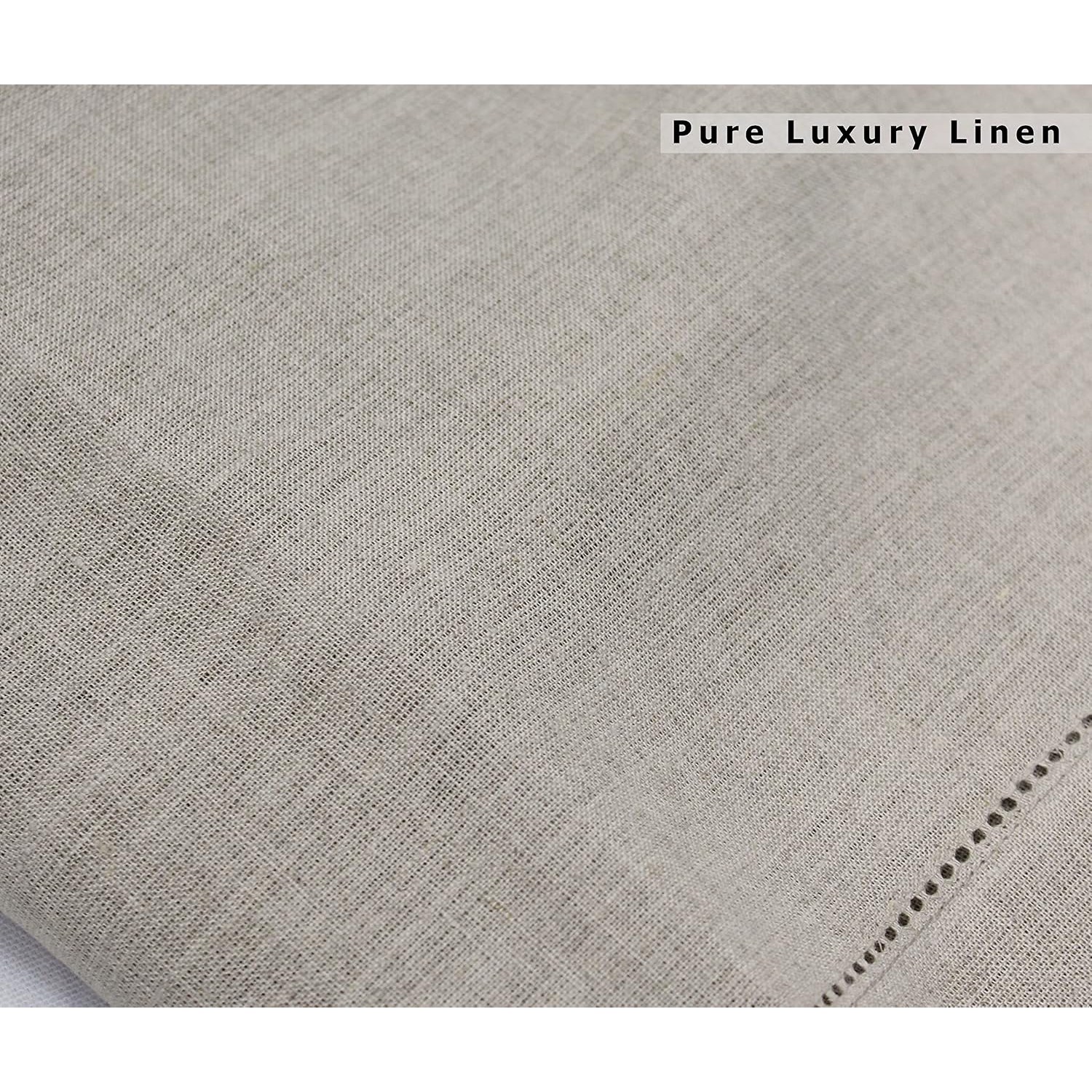
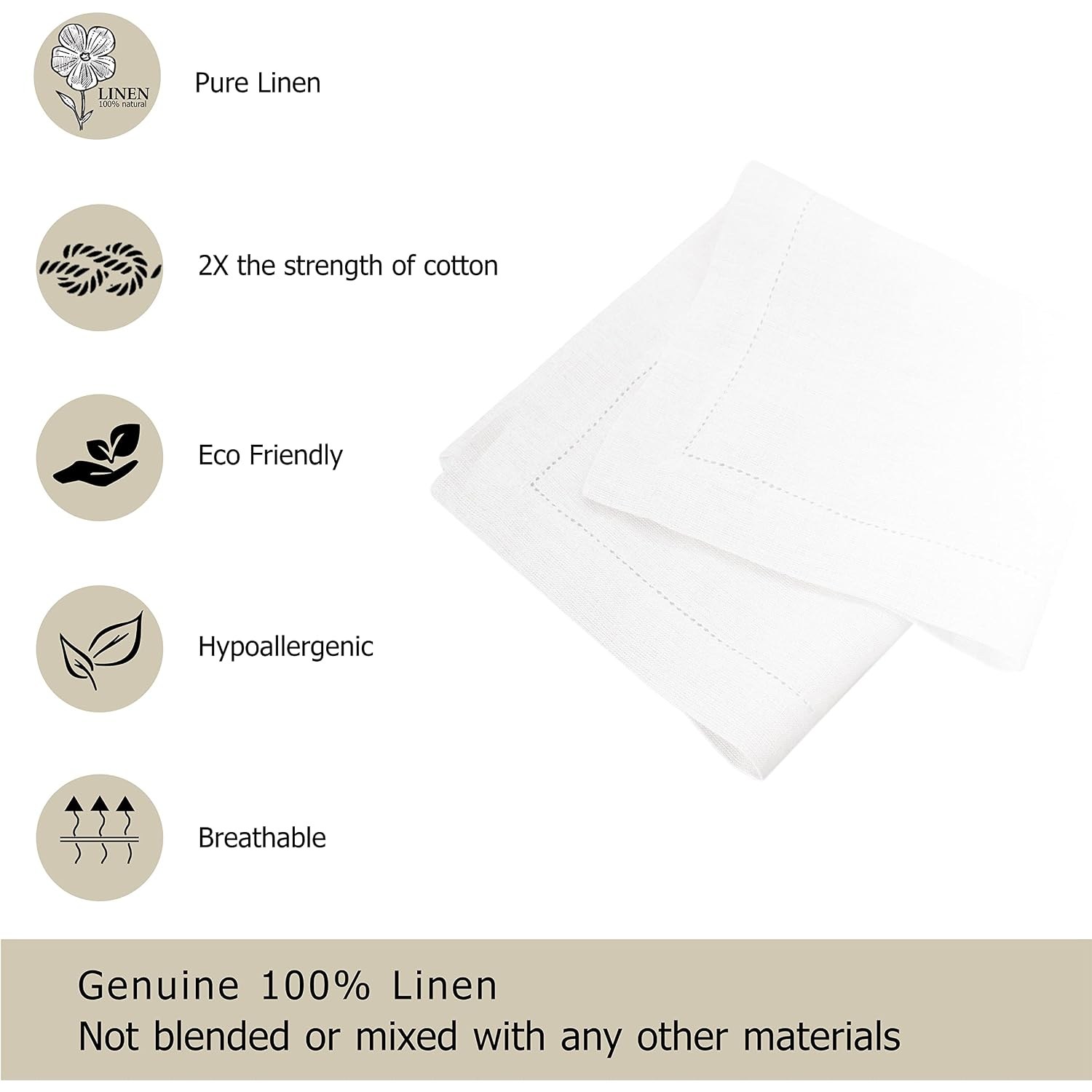
Linen comes from flax. The fibre is hollow and strong, which means it absorbs well and dries faster than cotton. That matters at the table because a napkin spends its evening getting damp. A linen napkin handles that and still feels dry to the touch an hour later.
The other difference is how linen ages. Cotton tends to hold whatever character it has from the start. Linen begins with a little stiffness and body, then relaxes with every wash until it drapes. Three years in, a good linen napkin feels better than it did new. That is unusual in household textiles and it is the main reason people get attached to them.
Worth knowing: a lot of products sold as linen napkins are actually a cotton-linen blend. A blend is cheaper and creases less, but it does not soften the same way. If pure linen matters to you, read the fibre description rather than the product name.
Size is the spec people get wrong
The most common complaint about cloth napkins is that they are too small. Cocktail napkins and dinner napkins are very different things, and plenty of sets sold for dinner are closer to the former.
An oversized dinner napkin earns its keep in three ways. It stays on a lap instead of sliding to the floor. It holds a fold, which is what makes a table look styled rather than thrown together. And it gives you enough surface area that you are not using the same damp patch all meal.
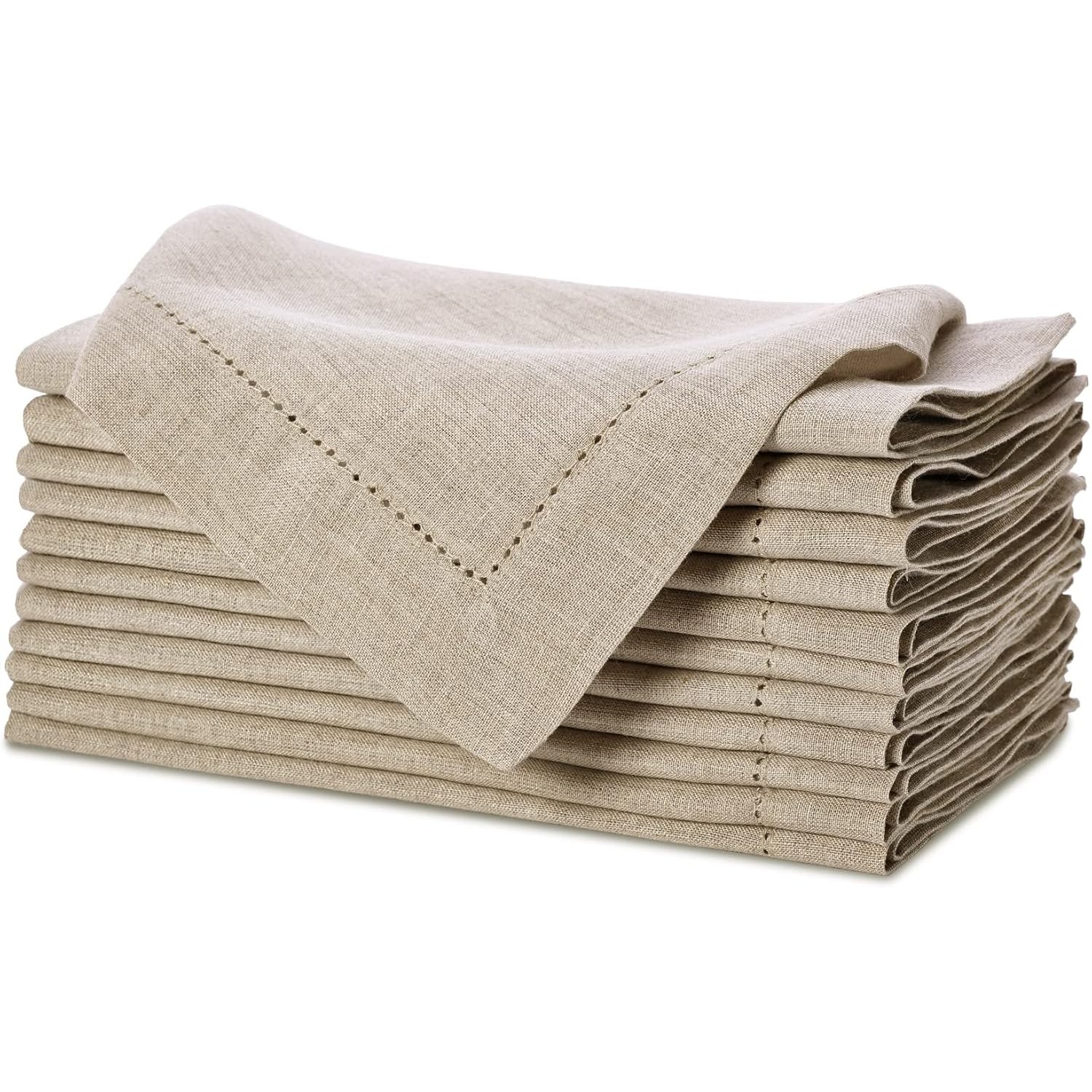
These napkins are sold as oversized, which puts them in the proper dinner category. If you need an exact measurement for a specific napkin ring or fold, ask before you order, because the precise dimensions are not listed in this product record.
What hemstitch and mitered corners actually mean
Two bits of terminology come up constantly in table linen listings, and both are worth understanding because they tell you about construction quality.
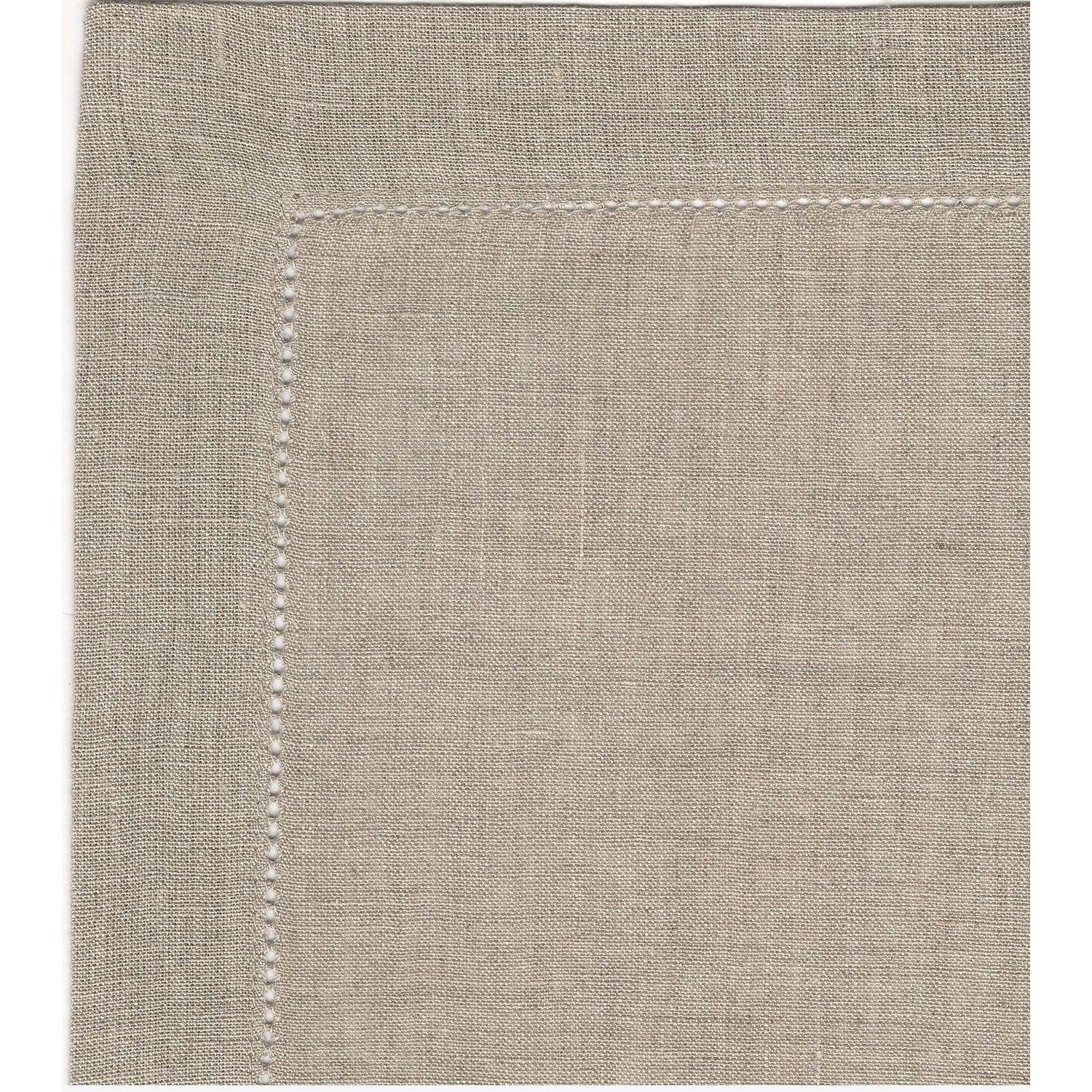
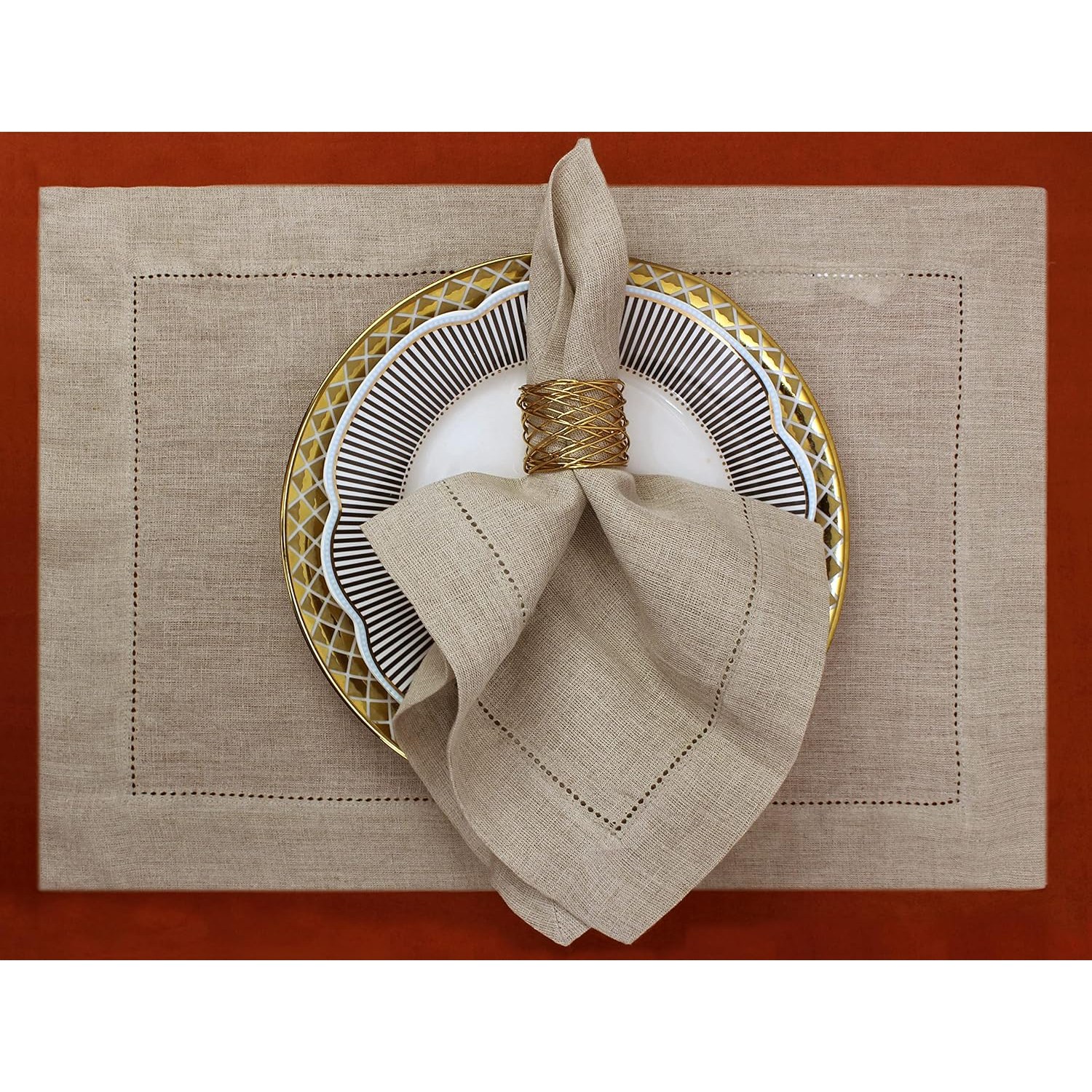
Hemstitch is a decorative border. Threads are drawn out of the fabric along the hem and the remaining threads are stitched into small bundles, leaving a fine open row. It is the detail you see on napkins in good restaurants. It costs more to produce than a plain folded hem, which is why it tends to signal a better napkin.
A mitered corner is the other tell. On a cheap napkin the hem simply folds over itself at each corner, which creates a thick lump that will not sit flat. A mitered corner is cut and folded on a 45 degree angle so the two hems meet in a clean diagonal. The corner lies flat, presses properly, and looks deliberate.
Neither detail changes how a napkin performs at absorbing soup. Both change how it looks on a table and how long the edges survive repeated washing.
Why natural is the colour that keeps working
Colour is where people overthink napkins and then regret the decision.
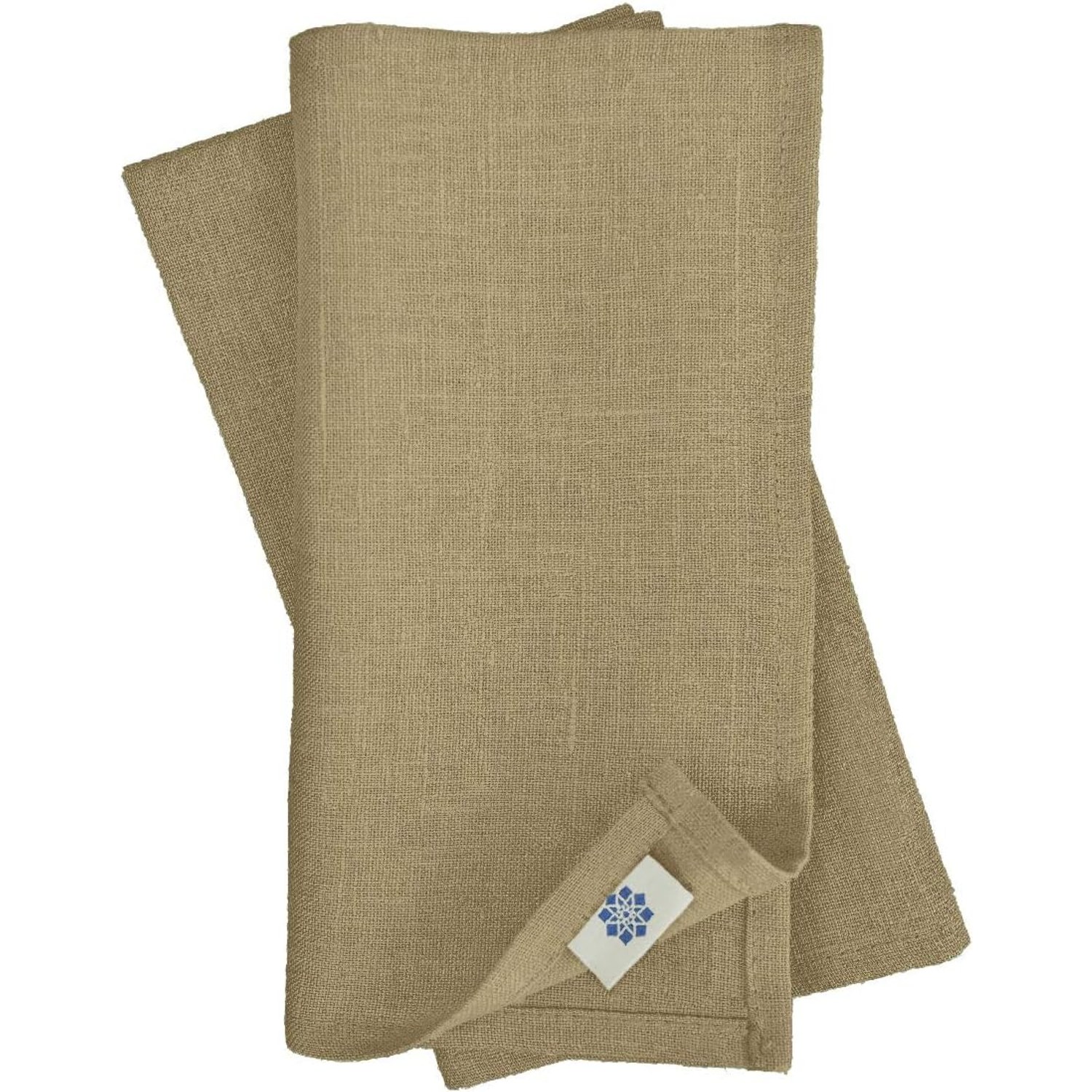
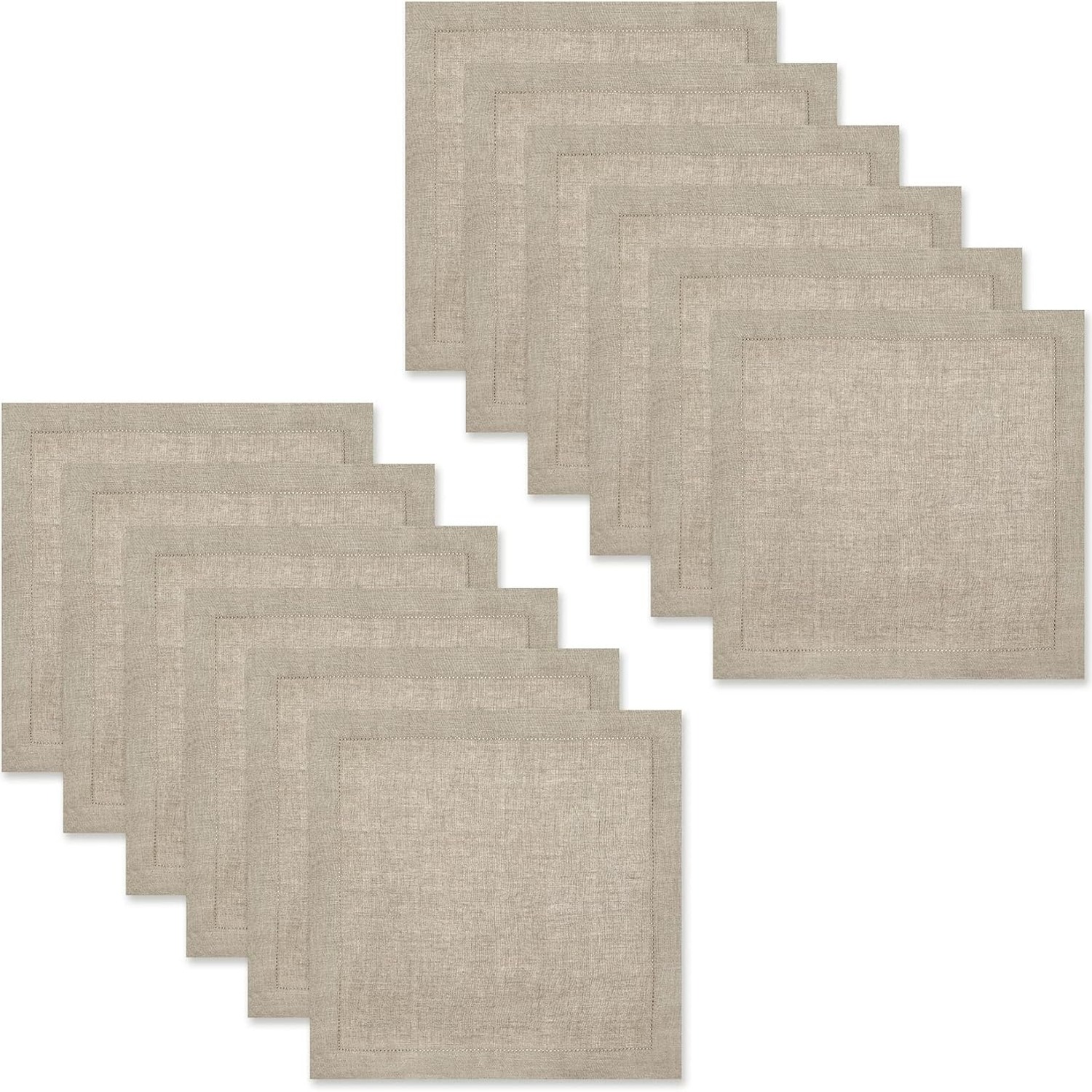
Strong colours look brilliant with one particular dinner set and awkward with everything else. Pure white looks sharp but shows every mark, and it needs careful washing to stay white. Natural sits between them. It is warm enough to soften a stark white plate, neutral enough to disappear next to patterned china, and forgiving about the small marks that any table linen collects.
That flexibility is also why natural coloured table linen holds up across seasons and occasions. The same napkins work for a Tuesday roast, a Christmas table, and a wedding reception. You are not buying for one event.
How many you need
Twelve is a deliberate number, not a round one.
For a dinner party, plan on two napkins per guest. That sounds generous until someone knocks a glass over or you want fresh napkins after a messy course. With twelve you can seat six people properly, or twelve people with no spares.
If you entertain regularly, twelve also means you are not doing laundry between consecutive dinners. You can run one set, wash it when convenient, and still have clean napkins if someone turns up unexpectedly. People who buy six almost always buy another six later.
Consider splitting the set if you want. Keep eight for occasions and let four go into daily rotation. Everyday use is exactly what softens linen fastest, so your weekday napkins end up being the nicest ones in a year or two.
Living with linen, practically
Linen has a reputation for being high maintenance. It is not, as long as you accept that it creases.
Wash with similar colours in warm or cool water with a gentle detergent. Skip the fabric softener. Softener works by depositing a coating on fibres, and that coating is the enemy of absorbency. Linen is naturally soft once it is broken in and does not need help.
These napkins are dryer safe. Use low heat and pull them out while still slightly damp. Damp linen presses beautifully with a warm iron. Bone dry linen is stubborn and takes twice as long to get flat.
For stains, speed beats chemistry. Rinse with cool water quickly, treat gently, then wash and check the result before anything goes in the dryer. Heat sets stains permanently, so never dry something you are not sure about. Avoid chlorine bleach entirely on natural linen, since it weakens the fibre and can shift the tone.
Store them clean and dry, folded loosely. Tight packing for months on end sets creases you will have to iron out later.
Where they fit beyond dinner
A dozen oversized cloth napkins find uses you did not plan for. They line bread baskets. They cover rising dough. They work as small hand towels when guests stay. They sit under a cheese board and catch crumbs.
None of that is a reason to buy them, but it is a reason the set rarely feels like too many.
The environmental maths
Switching from disposables is one of the few swaps where the household and the environmental case point the same way. A packet of paper napkins is a recurring purchase that ends in the bin every time. A set of washable dinner napkins is a single purchase that lasts years and goes in a wash load you were running anyway.
There is a real cost to washing, and it would be dishonest to pretend otherwise. But over the life of a good linen set, the comparison is not close.
The short version
Buy linen if you want napkins that get better rather than worse. Buy oversized if you want them to stay on a lap and fold properly. Look for hemstitch and mitered corners as a sign the edges are built to survive washing. Choose natural if you want one set that works with everything you own.
Twelve is the quantity that stops you wishing you had bought more. Wash them, skip the softener, iron them slightly damp if the occasion calls for it, and otherwise let them crease.
They are a small upgrade. They are also the one people notice.