
The complete guide
How to Choose a Desk Catchall Tray That Actually Gets Used
The small-stuff problem
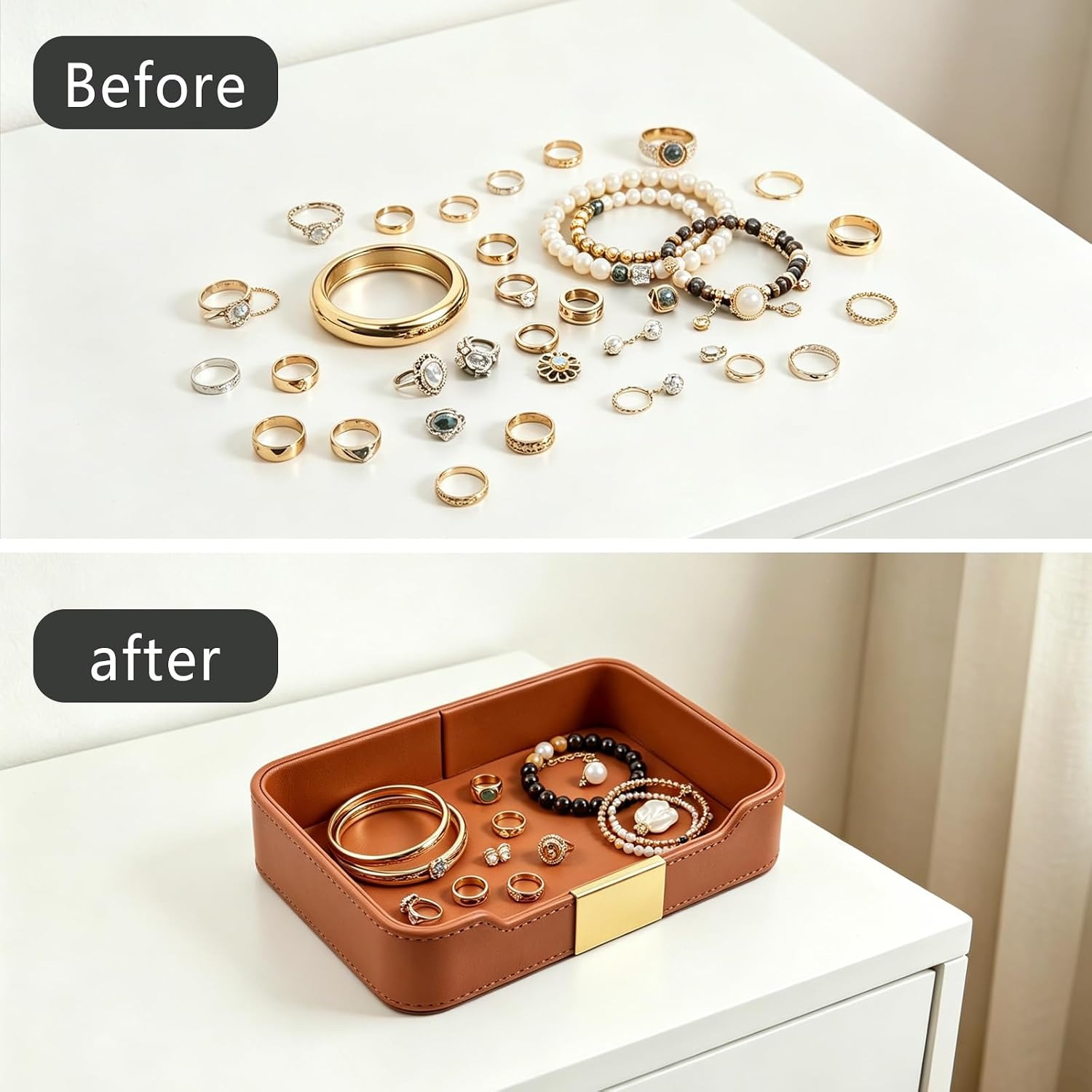
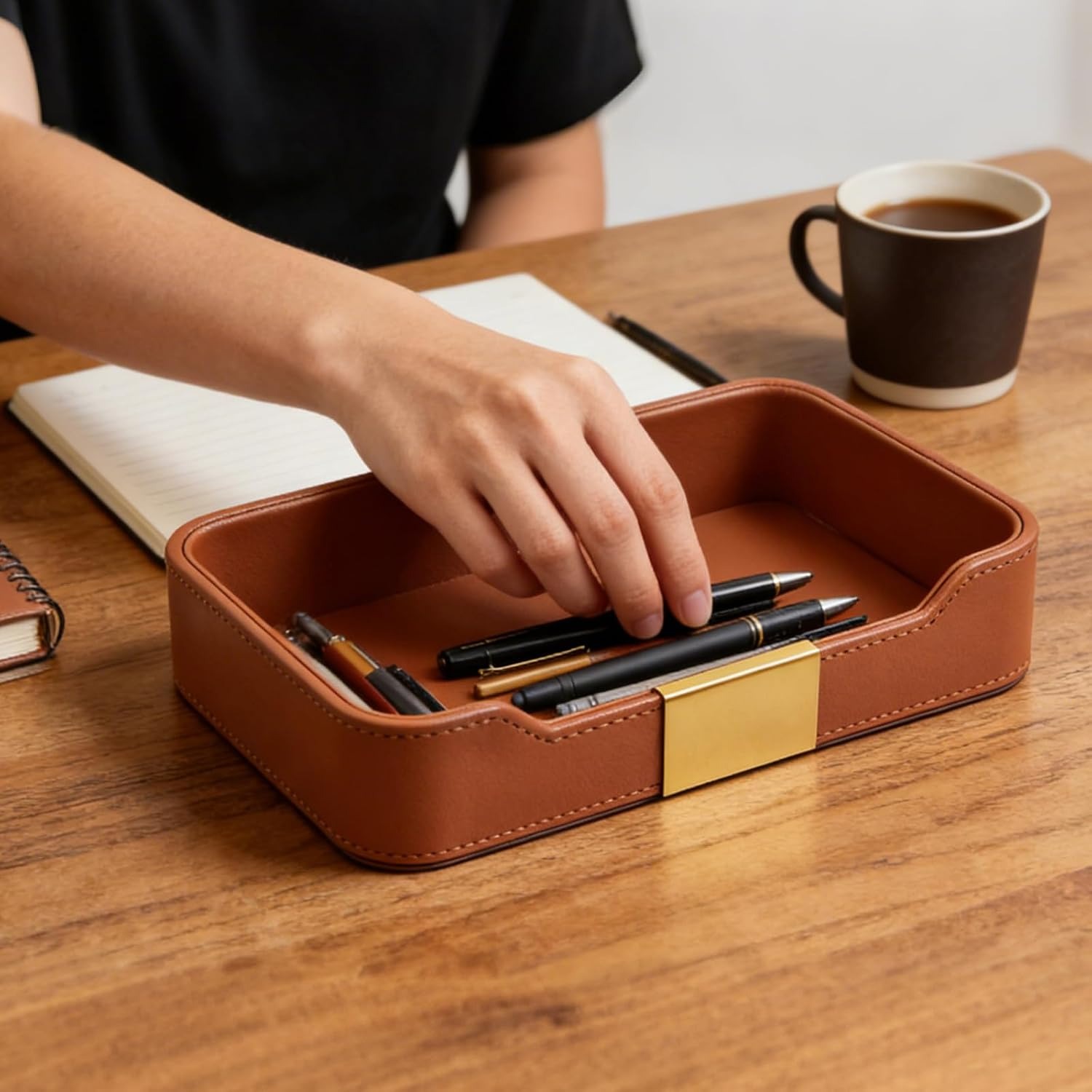
Walk past any desk that feels messy and look closely at what is actually on it. Nine times out of ten it is not files or books. It is a pile of small objects that never got assigned a place. A key fob. A watch taken off while typing. Two pens, a charging cable, a USB stick, a receipt, some loose change. Each one is harmless on its own. Together they make the whole surface read as chaos.
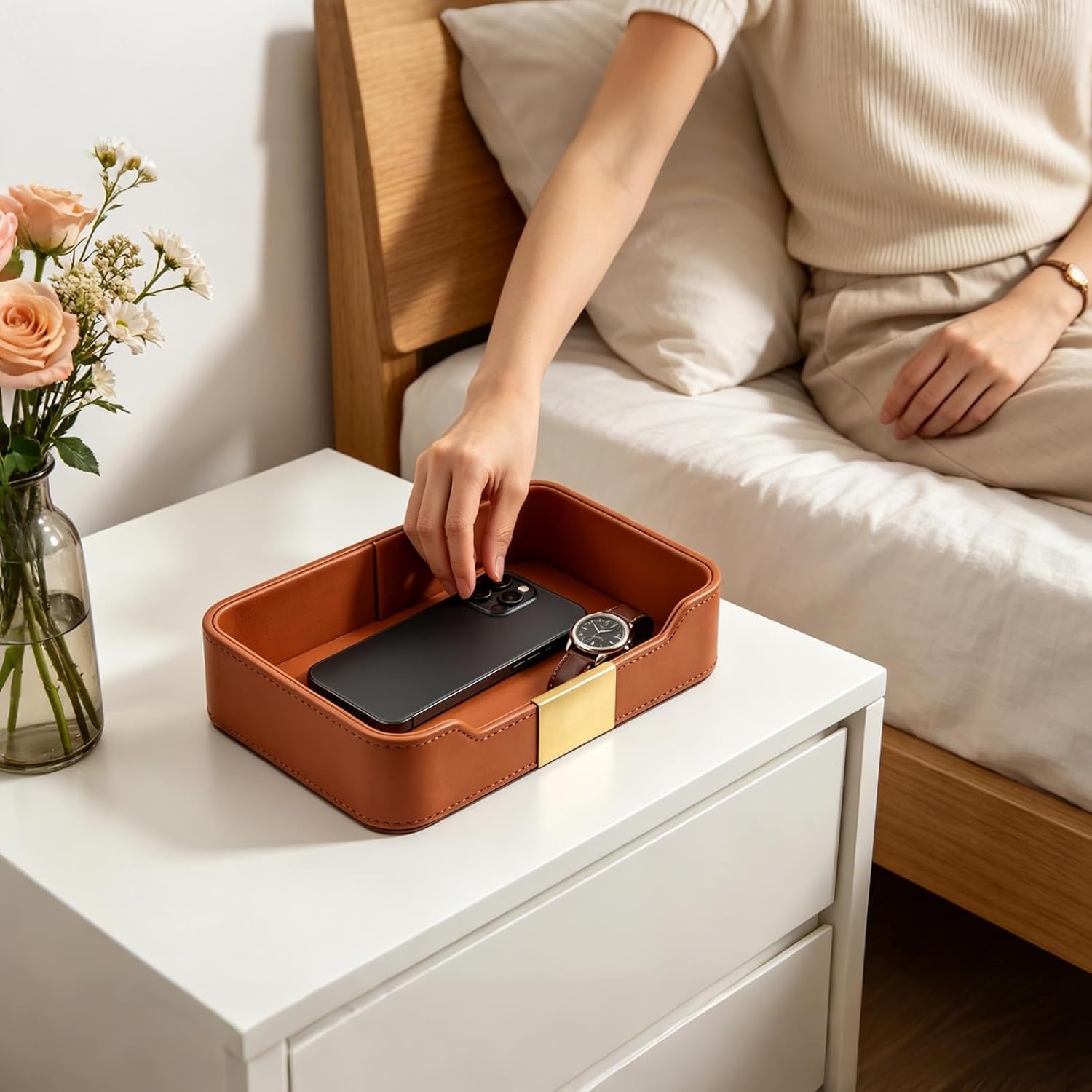
The same thing happens on bedside tables and entry consoles. You put something down because you are holding it, and then it stays there. Over a week you end up with twelve items spread across a surface, none of which you can find when you need them.
A tray fixes this with almost no effort on your part. It draws a border. Inside the border, things look deliberate. Outside it, you notice clutter straight away and deal with it. It is one of the cheapest organising tricks there is, and it works because it does not ask you to change your habits, only your aim.
How a catchall tray works
The idea is simple. You give the small, high-frequency items a landing zone near where you use them. Keys near the door. Watch and rings near the bed. Clips and pens near the laptop. The tray's job is to catch things as you set them down, not to store them long term.
The physical design matters more than people expect. A tray with sides that are too high becomes a bin, and things get buried. Sides that are too low or too soft mean a watch slides out when you bump the desk. A low, firm wall is the sweet spot. You can see everything at a glance and nothing escapes.
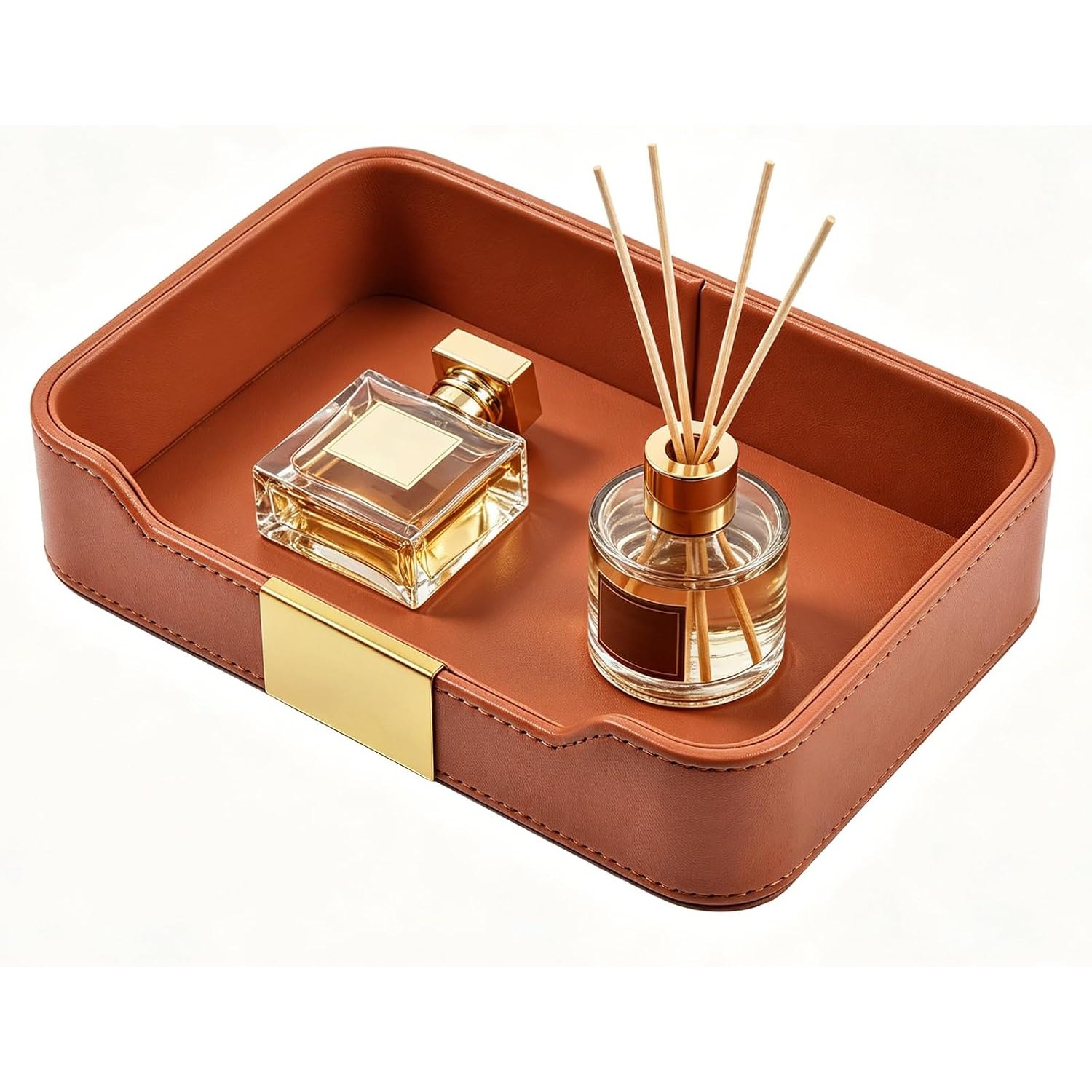
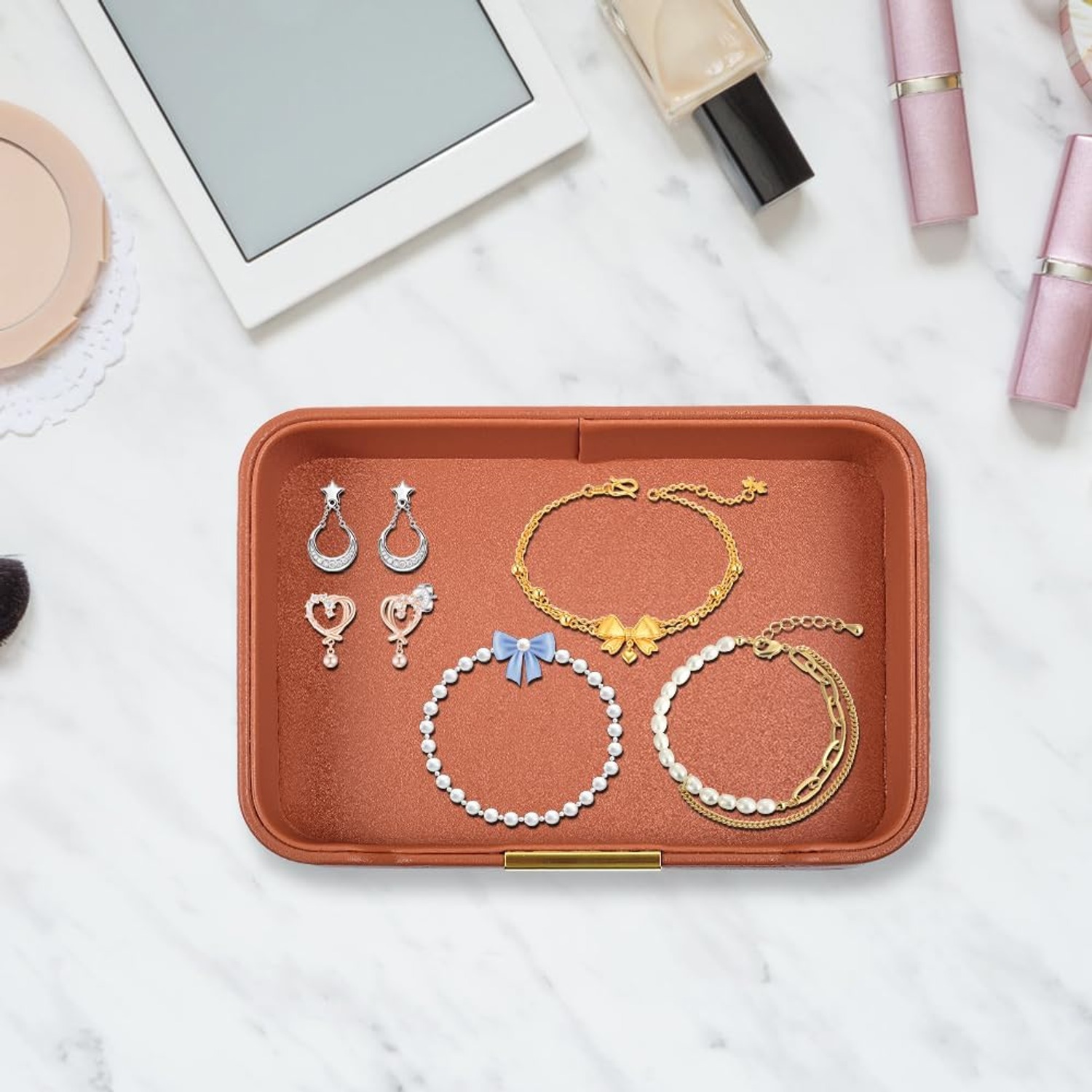
That is where construction comes in. This tray uses a PU (faux) leather outer over an MDF core. The board centre is what keeps the sides standing up straight. Without it, a fabric or soft vinyl tray slumps inward after a few weeks and loses its shape. The outer covering is what you touch and see, and PU has the advantage of being easy to wipe over.
The edges here are sewn rather than simply folded and glued, and the metal plates sit embedded in the covering rather than being tacked on the outside. Those two details are the difference between a tray that still looks sharp next year and one that starts to gap at the corners.
Be clear about the material
It is worth stating plainly, because some listings in this category are vague. This is PU leather, which is a synthetic material, not animal hide. The maker describes it as a PU (faux) leather outer over an MDF core.
That is not a drawback, it is just a different set of properties. Faux leather has a consistent finish with no natural grain variation, it does not need conditioning oils, and it wipes clean with a barely damp cloth. What it will not do is develop the patina that real hide develops over a decade. If you specifically want a tray that ages and darkens with handling, you are looking for a full-grain leather product instead and you should expect to pay more for it.
For a desk or dresser tray that holds keys and a watch, most people are better served by the easy-care option. Keys scratch. Coins are abrasive. A surface you can wipe without worrying is practical.
Who this suits
If you work from a home desk and your partner or housemate has quietly commented on the state of it, this is for you. It is also for anyone who has spent five minutes looking for keys while running late.
It suits people setting up a bedside routine. A dresser catchall gives your watch, rings and whatever is in your pockets a single place to land at night, which means no more morning scavenger hunt. Parents often keep one high on a shelf for small items that should not be within reach of toddlers.
It is a good pick for a shared office too. A desk organiser tray marks out your zone without needing a whole drawer system, and it is light enough to move if you hot-desk.
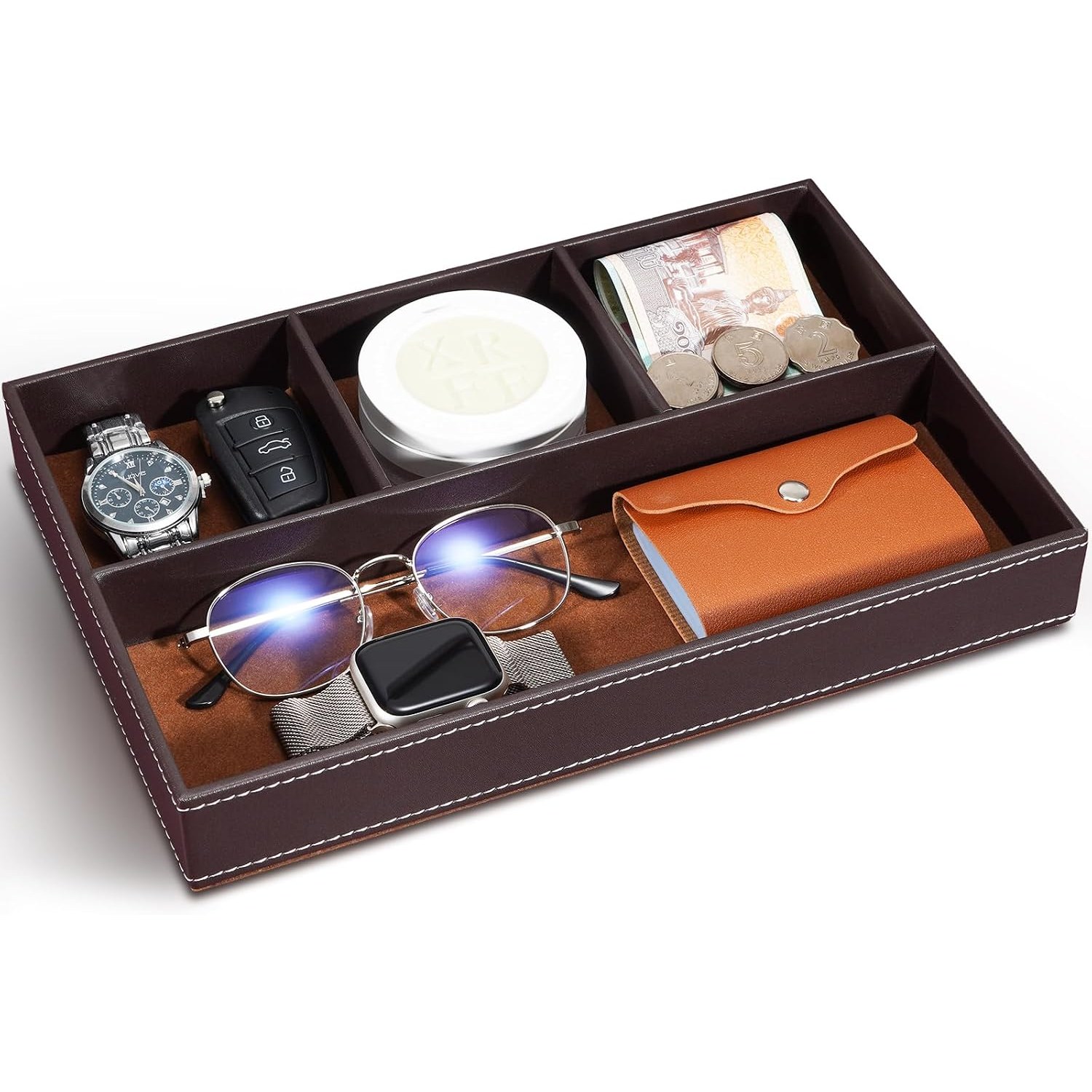
It is less suited to someone who wants sorted compartments. There are no dividers in a tray like this. If you need rings separated from cufflinks and earrings in individual slots, look for a compartmentalised jewellery box instead. You can get some of the way there by dropping a small dish inside the tray, which many people do.
How to choose the right size and spot
Start with the contents, not the tray. Put the items you actually want to corral into a rough pile and look at the footprint. That tells you the surface area you need. Then add a bit, because a tray that is exactly full looks cramped and stops being pleasant to use.
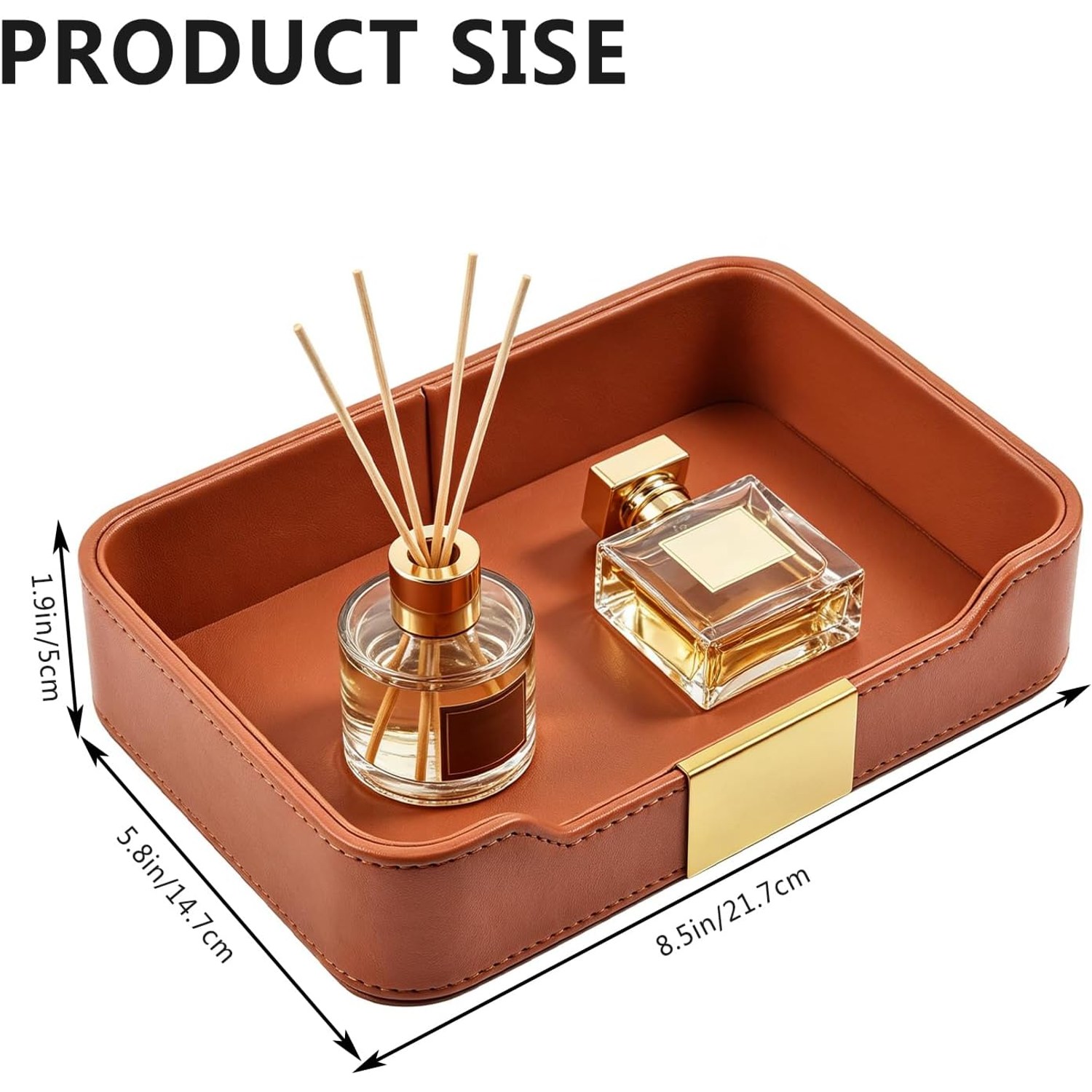
Next, pick the location. Measure it. The dimensions for this tray are not specified in the product record, so check the images on the product page and compare them to the space you have in mind. If it is going on a narrow hall console, depth matters more than width. If it is going in the corner of a desk, you want it out of the path of your mouse and keyboard.
Think about height clearance too. If the spot is under a shelf or a wall-mounted cabinet, make sure you have enough room above to drop things in comfortably rather than sliding them in sideways.
One more thing worth considering. Single tray or two? Plenty of people find that one tray at the door and one by the bed solves more problems than a single larger one in the middle of the house, because proximity is what makes the habit stick.
Living with it day to day
Keep it simple. The tray is for things you use daily or near daily. Anything you touch once a month belongs in a drawer. If the tray starts overflowing, that is a signal to clear it out rather than to buy a bigger one.
Cleaning takes about fifteen seconds. Tip the contents out, wipe the inside with a soft cloth that is only slightly damp, and dry it immediately with a clean cloth. Do not soak it, do not hold it under a tap, and keep it away from the dishwasher. Water that gets past the covering and reaches the MDF core can cause swelling, and that damage is not reversible.
Avoid solvents, bleach and scouring pads, since those can dull or strip a PU finish. Plain water handles the dust and fingerprints that a tray like this collects.
Position it out of long direct sunlight if you can. UV is hard on synthetic finishes over time and can fade a colour unevenly. The same goes for sitting it on top of a radiator or next to a heater vent.
The short version
A catchall tray is a small purchase that pays off every single day, because it removes one of the most annoying micro-frustrations in a home, not knowing where you put something you use constantly.
This one is built with a PU (faux) leather outer over an MDF core, with stitched edges and embedded metal plates that help it keep a crisp shape. It is not genuine leather, and we would rather say that up front than let you find out when it arrives. What you get is a wipe-clean surface, a firm body that stays upright, and a finish that looks considered on a desk, dresser or hall table.
Decide what you want it to hold, measure where it will live, and put it somewhere you naturally walk past. The habit builds itself from there.