
The complete guide
How to Choose a Kitchen Apron That You Will Actually Wear
The problem with not owning a decent apron
Most people own one apron, and it is usually the wrong one. It is either a stiff promotional thing from a work event, a thin novelty print that soaked through the first time someone drained pasta, or a lovely heavy canvas number that is too hot to wear past ten minutes. So it stays in the drawer, and you keep cooking in whatever you are wearing.
The result is predictable. Oil spots on a good shirt. Flour down the front of dark trousers. A tea towel permanently slung over your shoulder because you have nowhere to wipe your hands. None of this ruins your day, but it adds friction to cooking, and friction is what stops people from cooking.
A plain, comfortable bib apron fixes all of it quietly. You put it on, you stop caring about the clothes underneath, and you cook with both hands.
What a bib apron actually does
The bib shape is the standard for a reason. It covers your chest, your stomach and your thighs, which is where almost every spill lands. A half apron tied at the waist protects your lap and nothing else, which is fine for waiting tables and useless when you are browning meat.
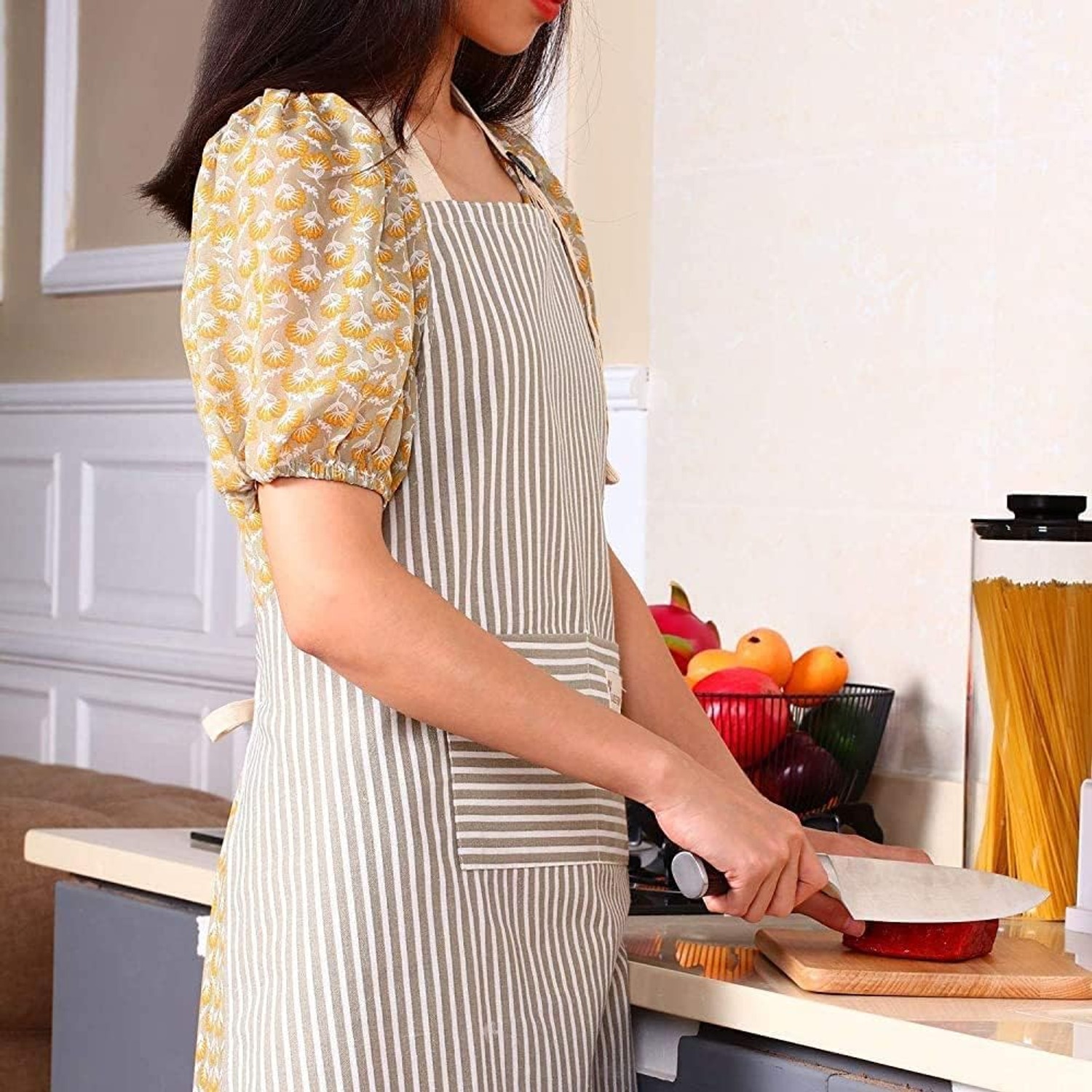
The other thing a bib apron does is give you somewhere to put things. Front pockets at hand height are not a luxury. Once you have cooked with them, the absence is obvious. A folded cloth lives in one pocket, your phone or a timer in the other, and you stop hunting around the bench mid-task.
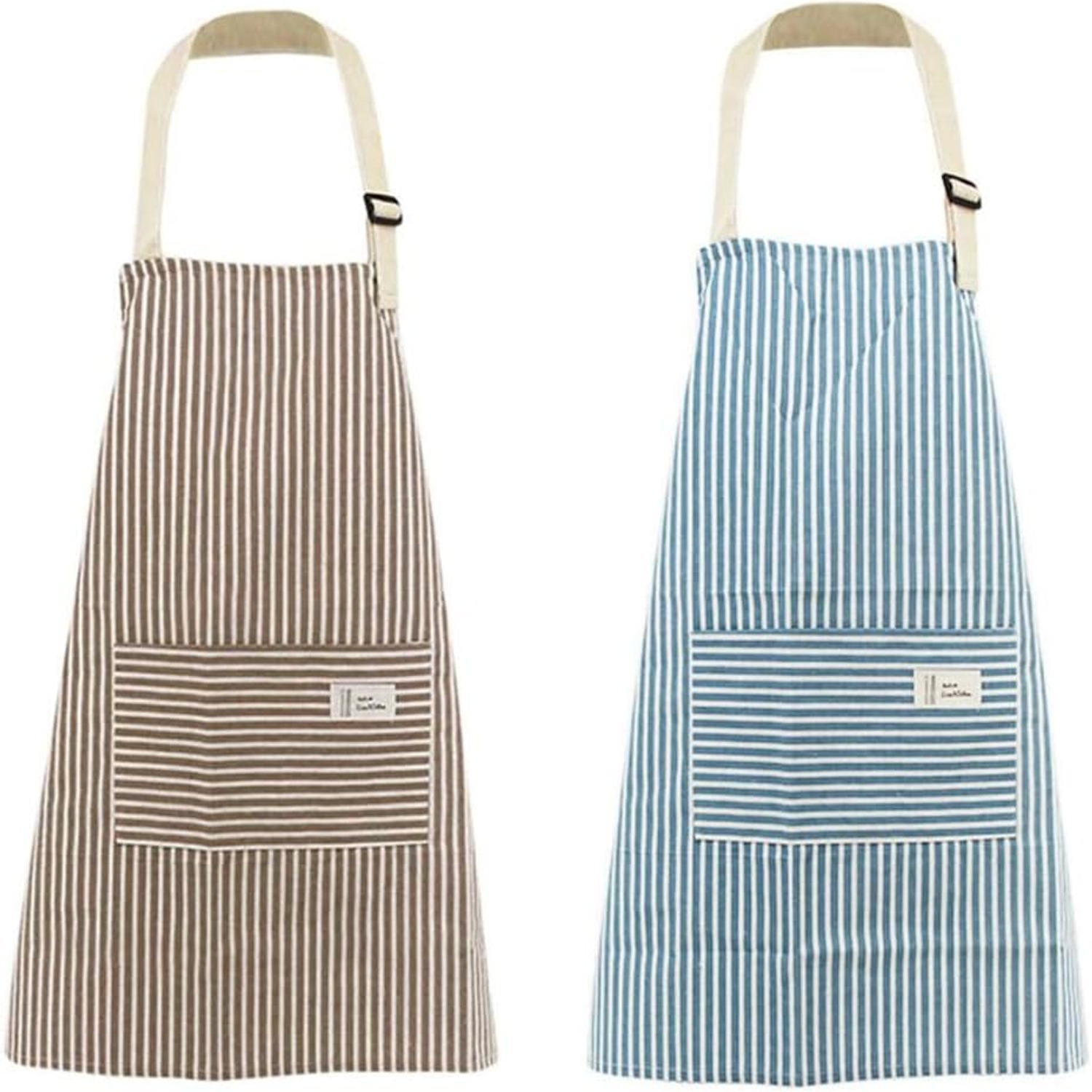
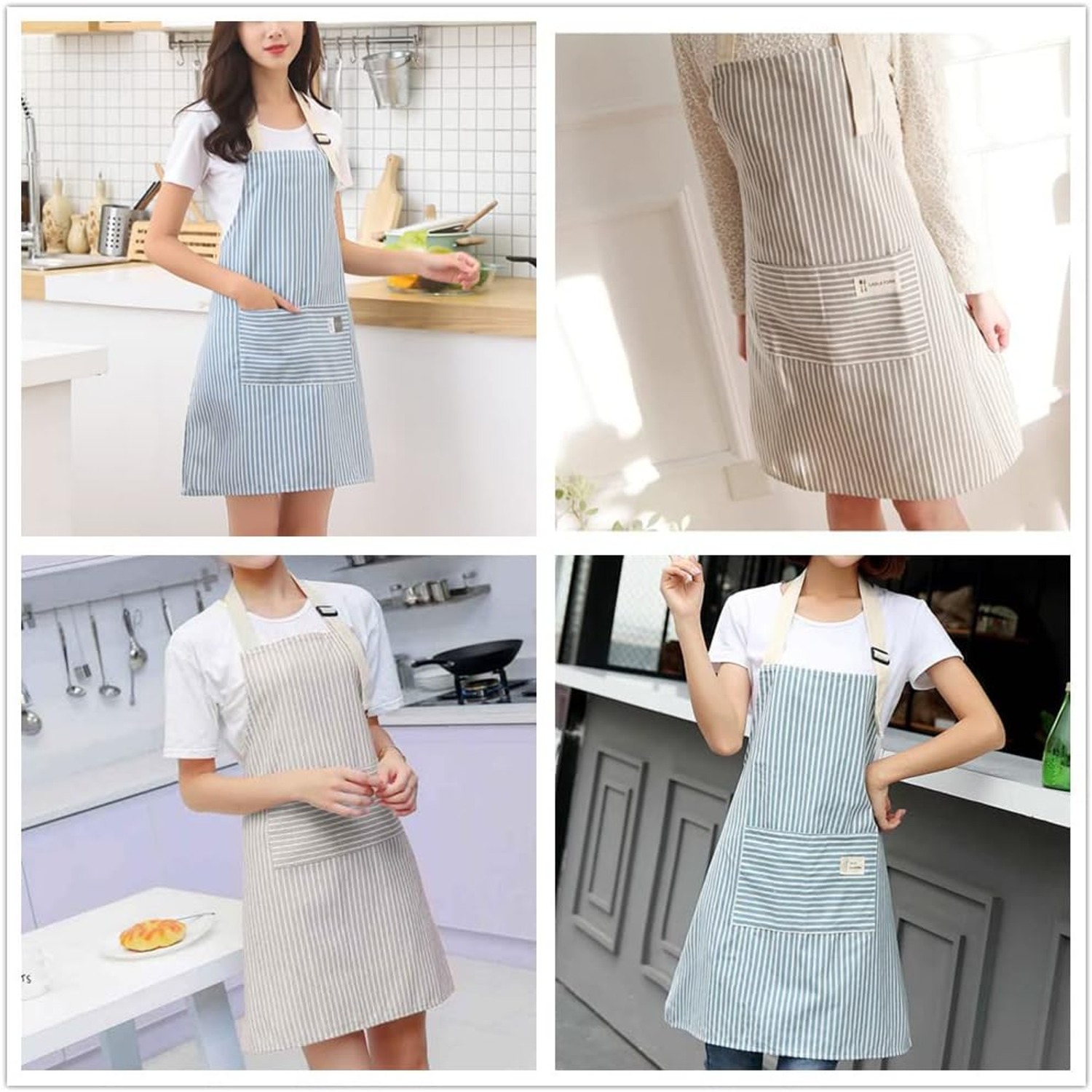
This set is a straightforward cotton-linen bib apron with two front pockets and an adjustable neck strap. That is the whole design, and there is not much more a working apron needs.
Why cotton and linen is a sensible blend
Fabric choice is where aprons usually go wrong. Heavy waxed canvas looks great in photos and feels like wearing a tent over a hot stove. Thin polyester is cheap but does not absorb anything, so a splash just sits on the surface and rolls off onto your shoes.
Cotton and linen sits in the middle. Cotton gives softness and absorbency. Linen adds breathability and a bit of structure, along with the slightly textured surface that makes the fabric look better the longer you own it. Together they make a cloth that is light enough to wear through a long session but substantial enough to actually stop a splash.
Linen blends do crease. That is the honest trade-off. Some people iron, most people decide the relaxed look is part of the appeal. Either way, the stripes do a good job of hiding the small marks a working apron collects.
Who this suits
Home cooks are the obvious group. If you make dinner most nights, an apron pays for itself in saved clothes within a month.
Bakers get particular value from it. Flour gets everywhere, and a bib apron with pockets is close to the best baking apron shape you can buy without spending a lot. Having somewhere to park a bench scraper while your hands are covered in dough is genuinely useful.
Small cafes, market stalls and food trucks are another fit. The striped look reads as professional without being formal, and two aprons per pack means a smaller team can be kitted out quickly. Anyone shopping for the best cafe apron on a budget should be looking at multi-packs rather than single premium pieces.
Then there is everyone outside the kitchen. People who paint, pot plants, do pottery, cut hair at home or help kids with messy craft projects all need the same thing, a washable layer with pockets. The second apron in the pack often ends up as the dedicated best craft apron while the first stays in the kitchen.
How to choose between apron styles
A few questions sort it out quickly.
How hot does your kitchen get? If you cook in a small space with poor ventilation, go light. Heavy canvas will make you miserable. A cotton-linen blend is a much better bet.
How much do you carry? If you want to keep a phone, a thermometer and a cloth on you, pockets are not optional. Two decent-sized front pockets cover most people.
Who else wears it? Fixed-length neck straps only suit one person. An adjustable strap means the same apron works for a tall partner and a shorter one. That flexibility is the main thing separating an average apron from the best adjustable apron for a shared house.
How often will you wash it? This is the argument for a two pack. A single apron means you either wash it constantly or keep wearing a dirty one. Two means rotation, and rotation means you actually keep wearing a clean apron.
Does the look matter? In a home kitchen, probably not much. In a cafe or at a stall where customers see you, a simple stripe is safer than a slogan or a loud print. It stays looking tidy as it ages.
Getting the fit right
Put the apron on and adjust the neck strap first, before you tie the waist. The bib should sit high enough to cover your chest but not so high that it rides up against your throat when you lean over the bench.
Then decide how you want to tie it. Wrapping the ties to the front and knotting them is popular because the knot is easy to undo with greasy hands and it holds the apron closer to your body. Tying at the back gives a cleaner front line, which some people prefer when customers can see them.
If the ties feel long, that is normal for a wrap-around design. Just double the wrap before you knot.
Care that keeps it looking good
The care instruction for this set is hand wash, and that is worth following. Cool water, mild detergent, no bleach. Wash it separately the first time in case any dye lifts from the stripes.
Do not wring it out hard. Press the water out instead, then hang it to dry in the shade. Direct sun fades dyed cotton faster than anything else. Hanging by the neck strap lets the body of the apron dry flat and avoids set-in creases across the middle.
For stains, deal with them while they are fresh. Oil responds to a dab of dish soap worked in before washing. Tomato and turmeric are stubborn, so get them under cold water early. On a striped apron, a faint mark or two after a year is just evidence that the thing is being used.
If you want a crisp finish, iron on the reverse while slightly damp with a warm setting. Most people skip this, and the apron looks perfectly fine.
A note on what we do and do not know
We publish what the supplier gives us. For this set, that means the cotton-linen material, the two front pockets, the adjustable neck strap, the unisex department, the hand-wash care instruction, the 15 x 10 x 5 cm package size and the 240 g package weight. Garment measurements, fabric weight per square metre, exact colour names and country of origin are not specified in this record, so we are not going to guess at them. If any of those details are decisive for you, ask before you order and we will check.
The short version
Buy an apron that is light enough to wear for an hour, has pockets where your hands naturally fall, and adjusts to fit more than one person. Then buy two of them, because the one you own is always the one in the wash.
This striped linen apron 2 pack covers all of that. Cotton-linen fabric that breathes, two front pockets, an adjustable neck strap and a spare in the cupboard. Hand wash it in cool water, dry it in the shade, and it will handle years of dinners, cakes, barbecues and craft projects without complaint.