
The complete guide
How to Choose and Use a Square Linen Table Topper
The problem with a bare table
A bare table is honest, but it is also loud. Every cup ring, every crumb, every pen mark shows. And when you want the room to feel finished, say when people are coming over, there is nothing for the eye to settle on. The usual answer is a full tablecloth, except a full cloth is a commitment. It hides the table you chose, it collects everything that gets dropped, and it needs washing after almost every use.
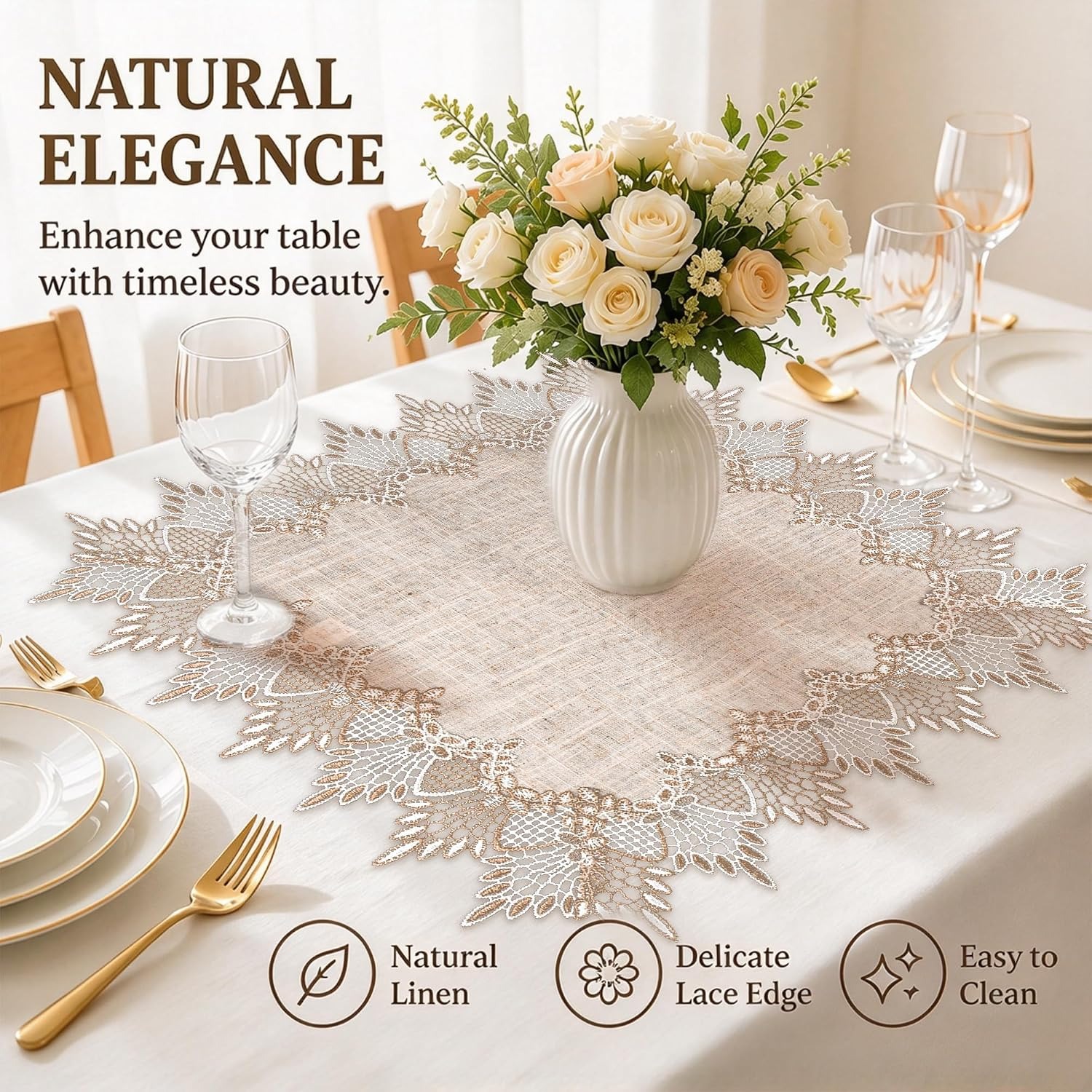
A square linen table topper solves the middle ground. It covers the working centre of the table, the part where the vase, the bowl, the teapot and the candles live, and leaves the rest of the surface showing. You keep the timber. You get the softness. And when something spills, you wash one small square instead of two metres of fabric.
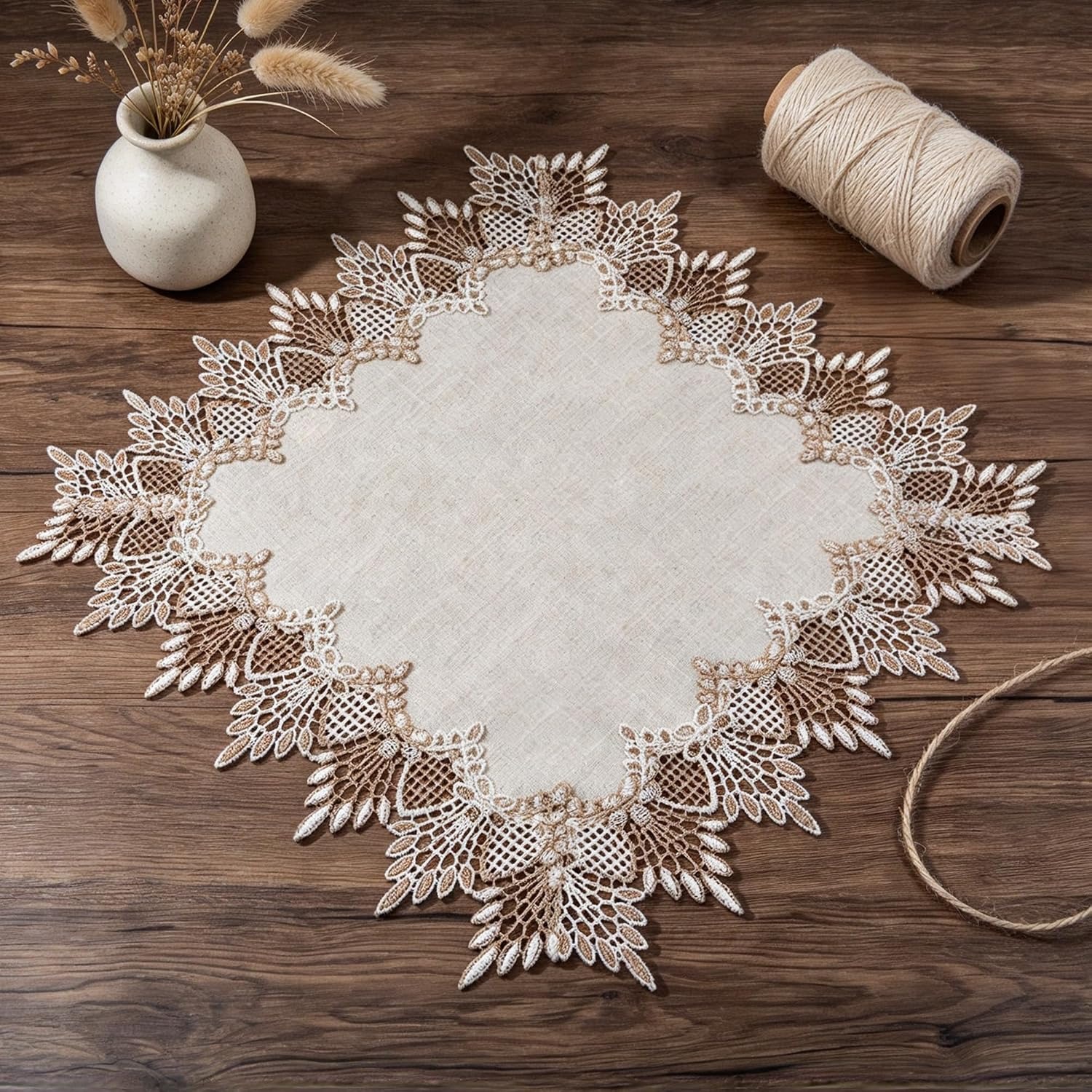
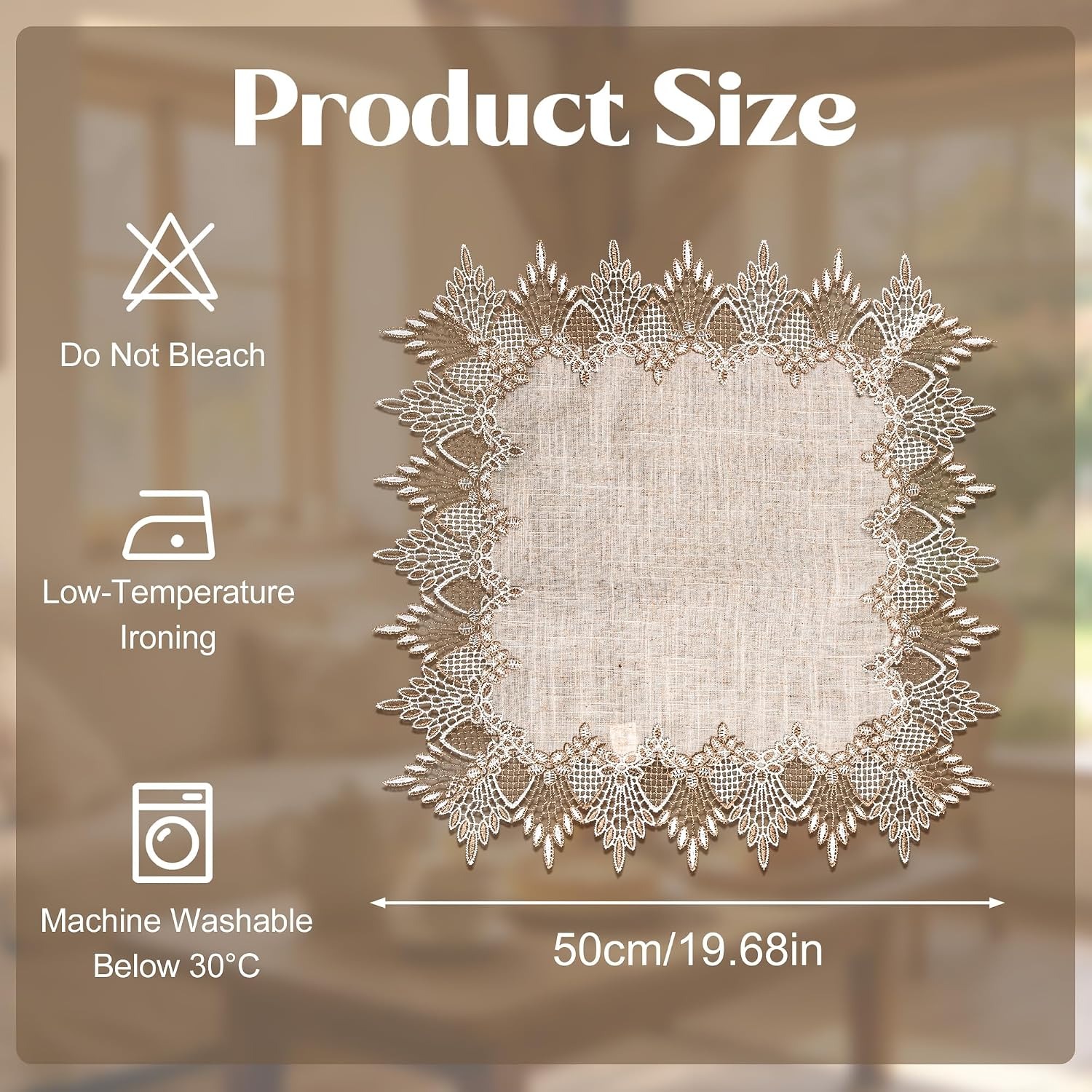
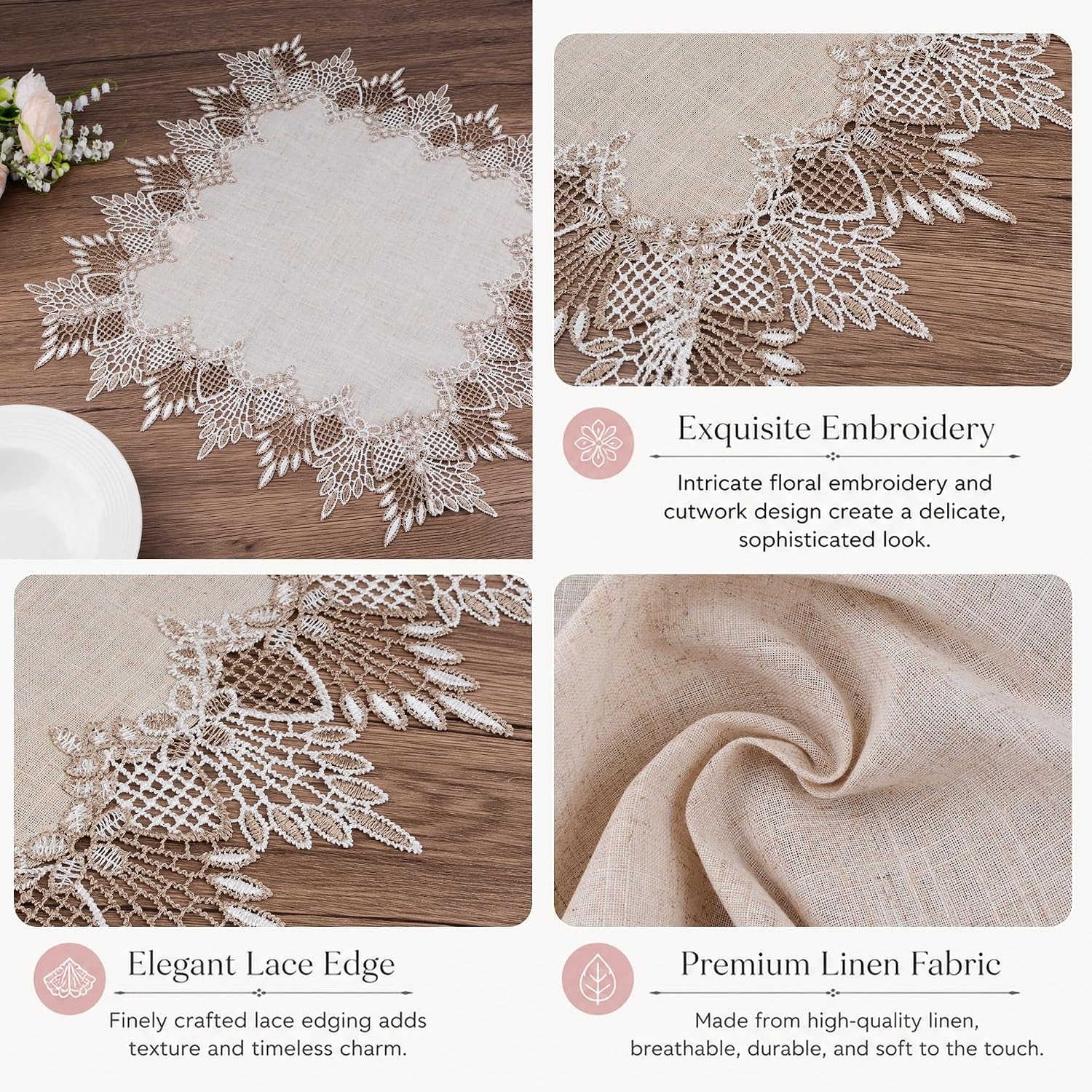
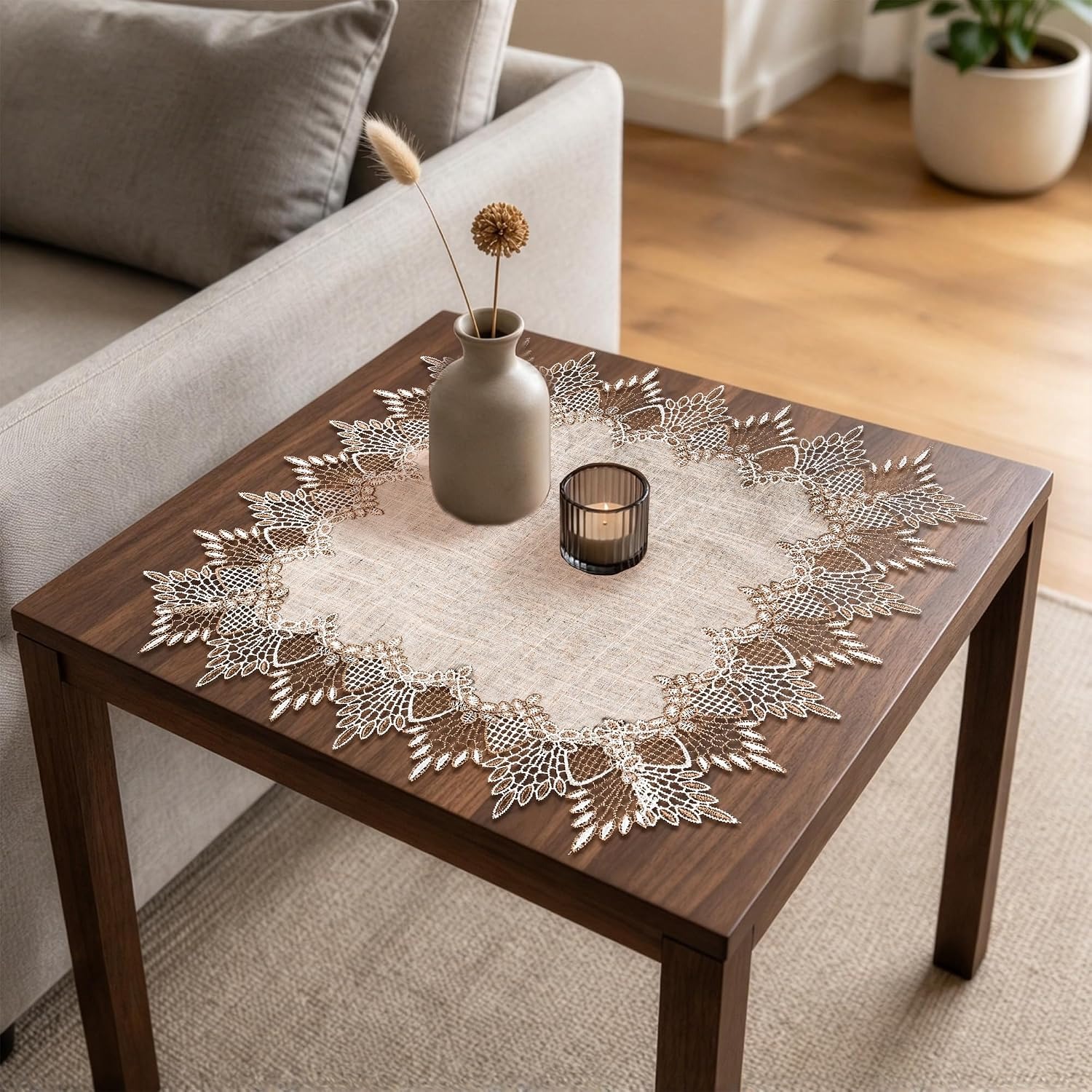
This particular topper is 50cm x 50cm, with a linen centre panel and an embroidered lace border around the edge. It is a single piece, not a set.
How a small square actually works
The logic is coverage where it counts. Most of the mess on a dining table happens in a narrow band down the middle, where the shared dishes sit. Place settings cause far less trouble because plates and glasses stay roughly in one place for an hour.
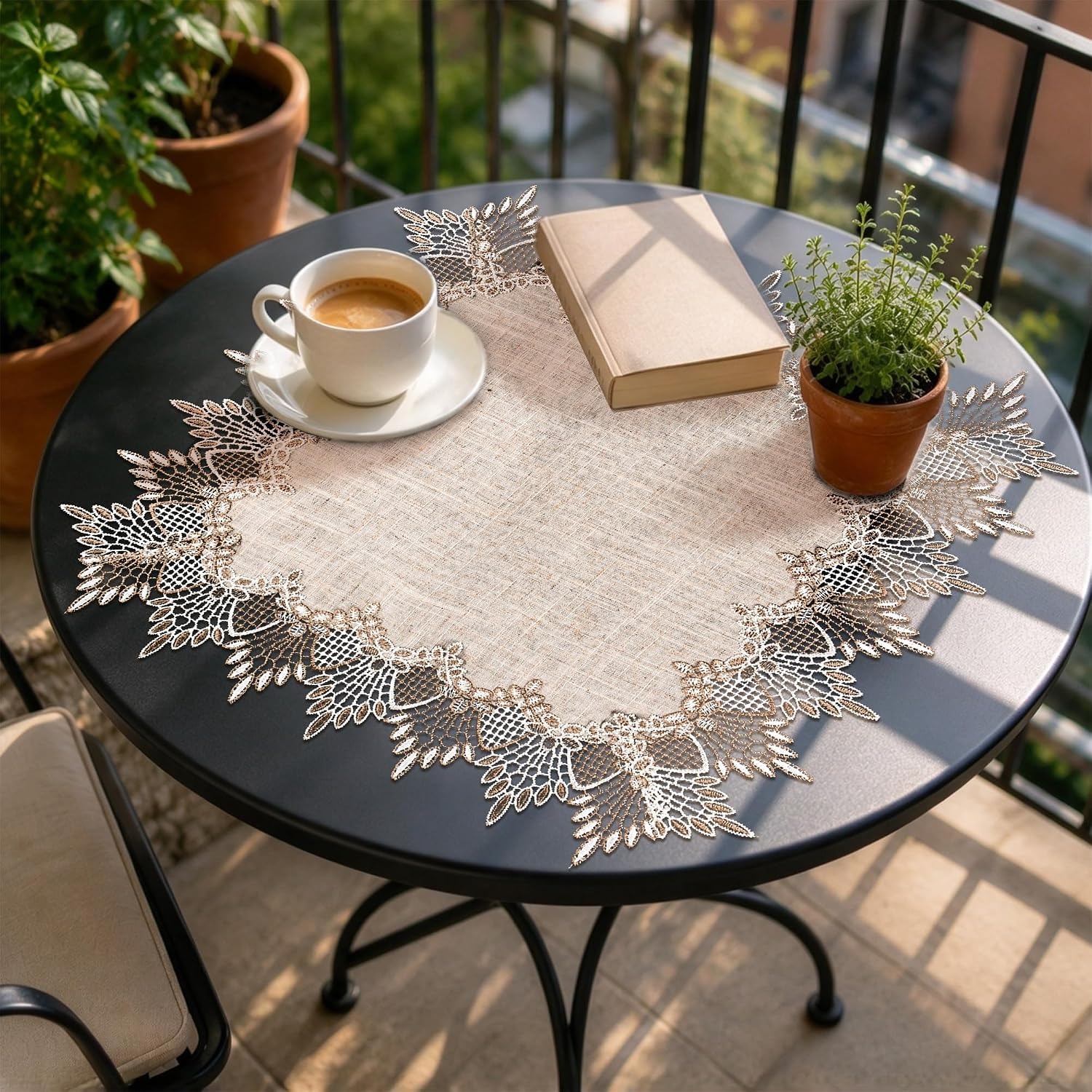
So you cover the middle. On a six-seater table, a 50cm square covers that centre zone with room to spare. On a small round side table it covers the whole top with the corners draping over the curve, which is where the lace border earns its place. The drape is what stops it looking like a flat mat.
The lace itself is polyester fibre. Some people see polyester and assume it is a corner cut, but for a trim it is a sensible choice. Polyester threads hold tension. They do not stretch and sag the way a soft cotton lace can after a few washes, and they keep their colour better over time. The linen panel gives the texture and the natural look. The polyester border gives the edge something to hold onto.
Who this suits
If you rent, or you move often, small table linen is far easier than full cloths. You do not need to know your next table's dimensions.
If you have a table you actually like, this is the right format. You are decorating around the timber instead of over it.
If you host, a few of these are more useful than one big cloth. You can dress a drinks table, a cake table and a dresser all at once, and they match.
If you want something low maintenance, the small size means the wash cycle is trivial. It takes up almost no room in a machine and dries flat on a rack overnight.
Where it is less suitable: formal full-coverage dining, buffet tables with heavy service, or anywhere you need the fabric to shield a large area from serious spills. For that, a full cloth is still the right tool.
Choosing the right size for your table
Measure before you buy. It takes a minute and it prevents the most common disappointment, which is a topper that looks lost or one that swamps the surface.
For a side table, dresser or console, measure the top and aim for a topper that leaves a few centimetres of surface showing on each side. On a 60cm square side table, a 50cm square leaves about 5cm of frame. That reads as deliberate.
For a dining table centre, work backwards from the place settings. A standard place setting needs around 40cm of depth. Measure the table width, take 80cm off for settings on both sides, and what is left is the space your topper can safely use. On a 90cm wide table you have very little room, so a 50cm square will overlap slightly into the settings, which is fine for everyday use but tight for a full dinner service. On a 100cm or wider table it sits comfortably.
For a round dining table, a square in the centre is the classic choice. The corners break the circle and stop the setting looking too symmetrical.
If you want a runner effect on a long table, place two or three squares in a line with a gap between each. It gives you flexibility a single long runner does not, since you can move them apart as the table extends.
Styling it without overthinking it
Three approaches cover almost everything.
Alone on the bare table. The simplest option. One topper, one bowl or vase on it, done. Best when you want the timber grain visible and the lace reading as a soft frame.
Layered over a larger cloth. Put a plain cloth down first, then centre the square on top. The lace becomes a feature panel and the plain cloth handles the mess. This is the approach for a set dinner, and it means you rarely need to wash the decorative piece.
Off the table entirely. A dresser scarf under a lamp and a photo frame. A base under a plant pot saucer on a shelf. A square under a jewellery dish on a bedside table. Small square table linen is genuinely flexible once you stop thinking of it as only a tablecloth.
For events, scale it to the furniture. A 50cm square suits a guest book table, a cake stand base, a gift table corner or a dessert bar. It does not suit a long trestle on its own, though several placed in sequence will work.
One practical note. Light fabric moves on glossy surfaces. Put something on it, a bowl, a vase, a candle holder, or slip a small non-slip pad underneath. Weight solves it.
Care that keeps the lace looking right
The care routine is short, and following it is most of the difference between a piece that lasts and one that goes limp after a season.
Wash cold, on a gentle cycle. Hand washing is better if you have the time, because it puts almost no stress on the embroidered edge. Either way, keep it away from heavy items like towels and jeans in the same load, which can pull at the lace.
No bleach. Bleach is harsh on linen fibres and it can discolour or weaken embroidery thread. For spot treatment, use a mild detergent and cold water, and blot rather than scrub.
Dry flat. Hanging a wet square by two corners pulls the fabric out of shape, and a hot dryer sets creases into linen that are hard to remove. A flat rack, or a towel on a surface, is all it takes.
Iron low. Your topper will arrive with fold lines from packing. That is normal for any folded fabric. A low iron pressed from the centre outwards flattens them and softens the whole piece. Keep the iron moving over the polyester lace, or lay a thin cloth over the trim first, because polyester does not tolerate high heat well.
Store it flat or loosely rolled rather than tightly folded in the same creases every time. Fold lines in the same place repeatedly will eventually wear.
The short version
This is a 50cm x 50cm square with a linen centre and an embroidered polyester lace border. It covers the middle of a table and leaves the rest visible, which is usually what people actually want.
Measure your surface first. Leave room for place settings on a dining table, and a few centimetres of visible frame on a side table. Use it alone, layer it over a bigger cloth, or move it to a dresser when the mood changes.
Wash it cold and gentle, skip the bleach, dry it flat, and press it on low. Do that and it stays looking like the day it arrived.
If you are buying for an event or styling more than one surface, order the quantity you need in a single go. Pieces from the same run match best, and matching is most of what makes a table look planned.