
The complete guide
How to Choose a Soy Candle That Actually Burns Well
The problem with most big candles
Here is a story most people recognise. You buy a large, good-looking candle. You light it for half an hour while you cook, blow it out, and repeat that for a week. Then you look down and there is a narrow hole burned straight through the middle, with a thick wall of wax welded to the glass that will never melt. Half the candle is gone before you ever used it.
That is tunnelling, and it is the single most common way a candle gets wasted. It is not usually the candle's fault. It is a mismatch between the jar width, the number of wicks and the way people actually burn things at home.
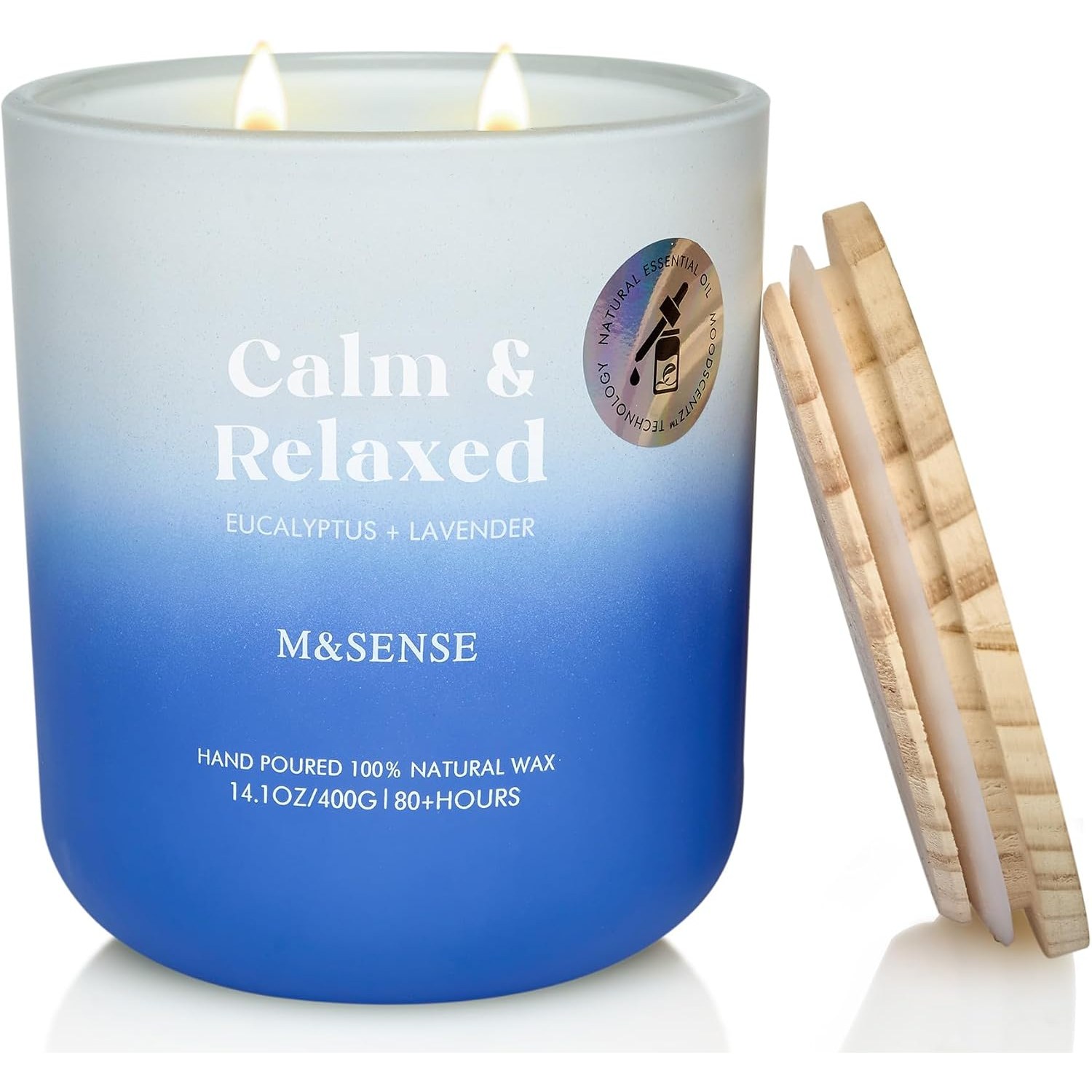
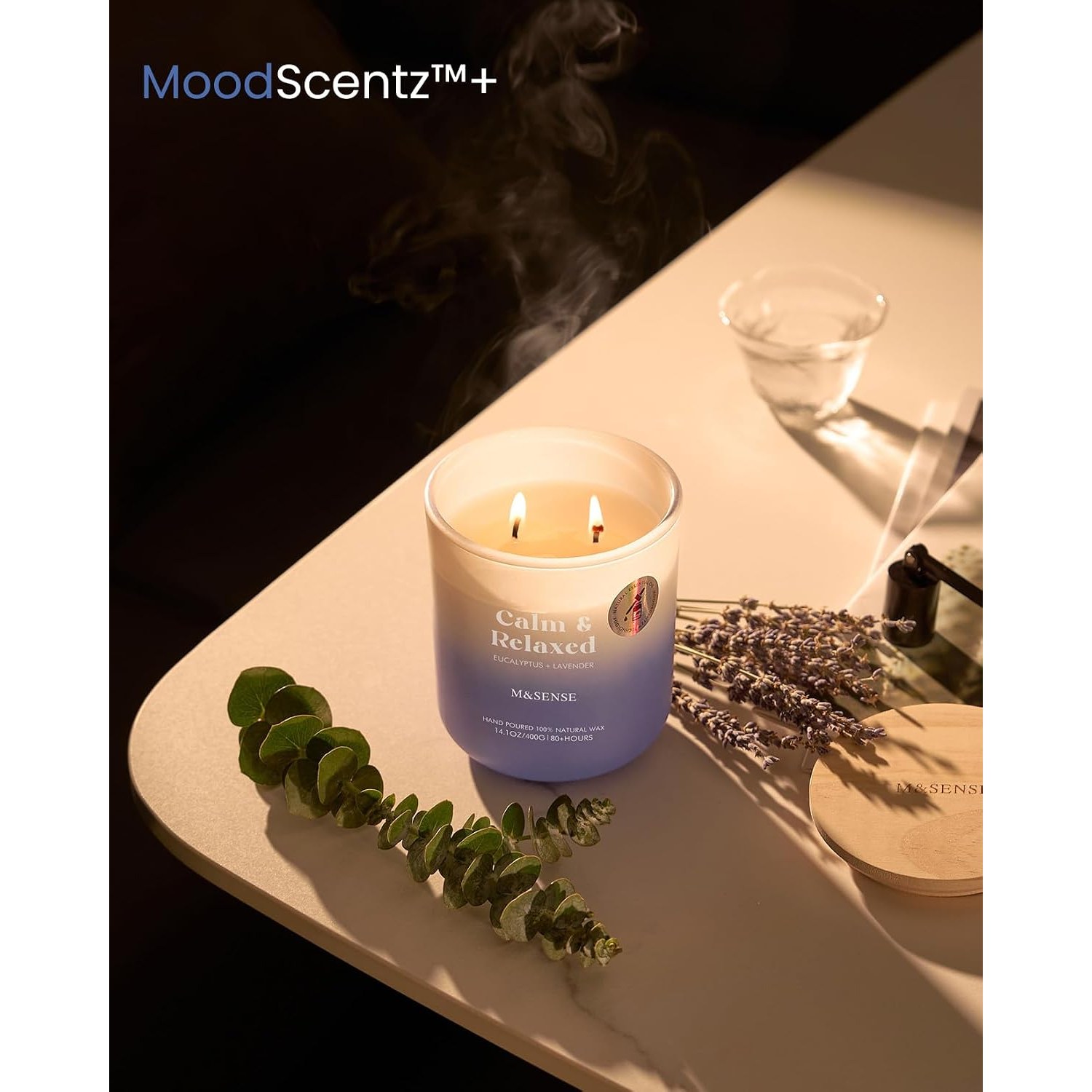
A 400 g jar is wide. One wick in that much surface area has to work hard, and on a short burn it simply cannot push the melt pool out to the edge. Two wicks fix that. The heat from the pair overlaps in the middle and spreads outward, so the wax across the whole top goes liquid. You use the wax you paid for, and the fragrance comes off a bigger surface instead of a small hole.
How a soy candle works
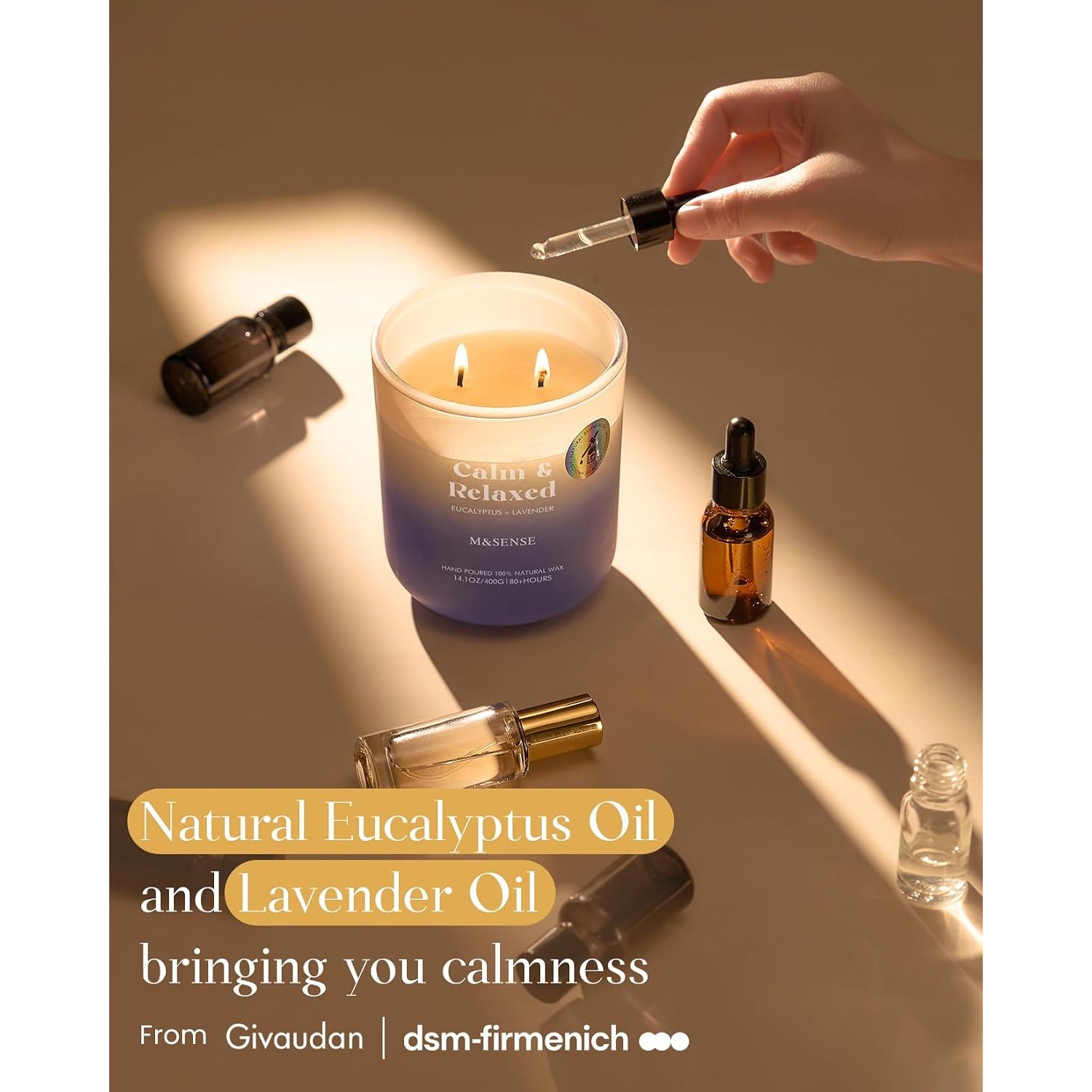
Wax is fuel. The wick draws liquid wax up by capillary action, the heat of the flame turns it to vapour, and that vapour burns. Fragrance oil is mixed into the wax, so as the pool heats it releases scent into the air. That is the whole mechanism, and it explains most of the advice you will read about candles.
Soy wax comes from soybean oil, hardened so it holds a shape. Its main difference from paraffin is melt point. Soy goes liquid at a lower temperature, which means the pool sits cooler, the wax burns down more slowly, and scent lifts off more gradually.
In practice that gives you a softer, steadier scent. Paraffin tends to hit you as you walk in the door and then fade into the background. Soy is more of a slow build that stays level. Neither is objectively better, but if strong candles tend to give you a headache, soy is usually the gentler choice. It also suits rooms you sit in for hours, like a bedroom or a reading corner.
One quirk worth knowing: soy sometimes develops a pale, frosted crystal pattern on the surface or against the glass. It looks like a flaw. It is not. It is a natural characteristic of vegetable wax and it has no effect on burn or scent.
Who this candle suits
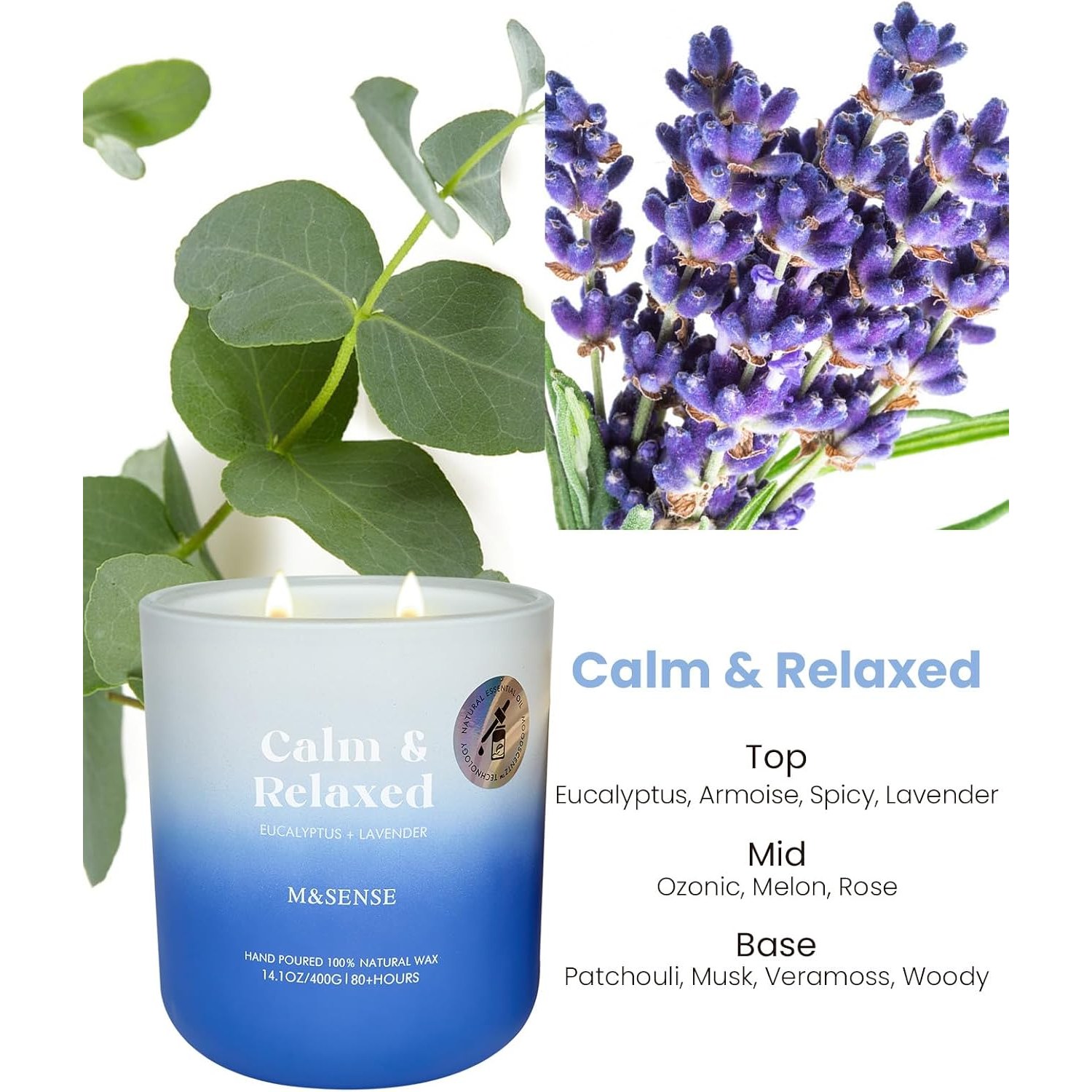
This eucalyptus and lavender blend is for people who want their home to smell clean and calm rather than sweet. If your shortlist of favourite scents includes things like sea salt, fig leaf, cedar or plain linen, this will sit comfortably in that group. If you love vanilla, caramel and bakery scents, it may read as too austere for you.
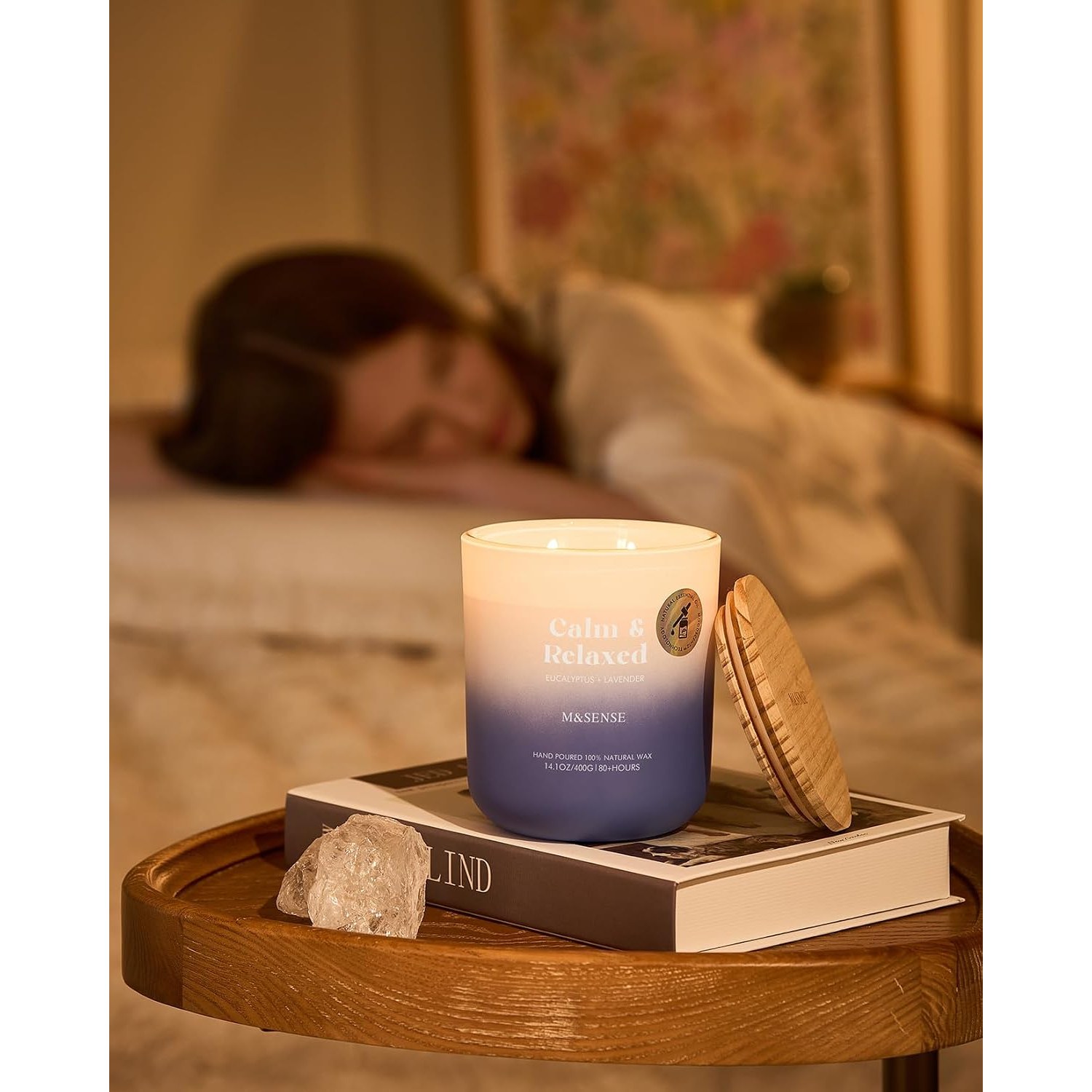
It works especially well in three situations. The first is the evening wind-down, lit on a side table an hour before bed. The second is the bathroom, where eucalyptus plays off steam and hot water the way it does in a spa. The third is any quiet practice, whether that is yoga, stretching, journalling or just sitting still for twenty minutes.
It is also a reliable gift. Eucalyptus and lavender is one of the least divisive scent pairings there is, so it is a sensible pick when you do not know someone's taste well. The glass jar and the size give it presence, which matters when a candle is the whole present.
How to choose between candles
A few things actually matter when you compare one jar candle to another.
Wax type. Soy, coconut blends, beeswax and paraffin all behave differently. Soy burns cool and slow. Paraffin throws hard and fast. If you are buying for a bedroom, lean soy.
Wick count versus jar width. This is the one most people skip. As a rough guide, anything over about 8 cm across benefits from two wicks. A single wick in a wide jar is asking for a tunnel.
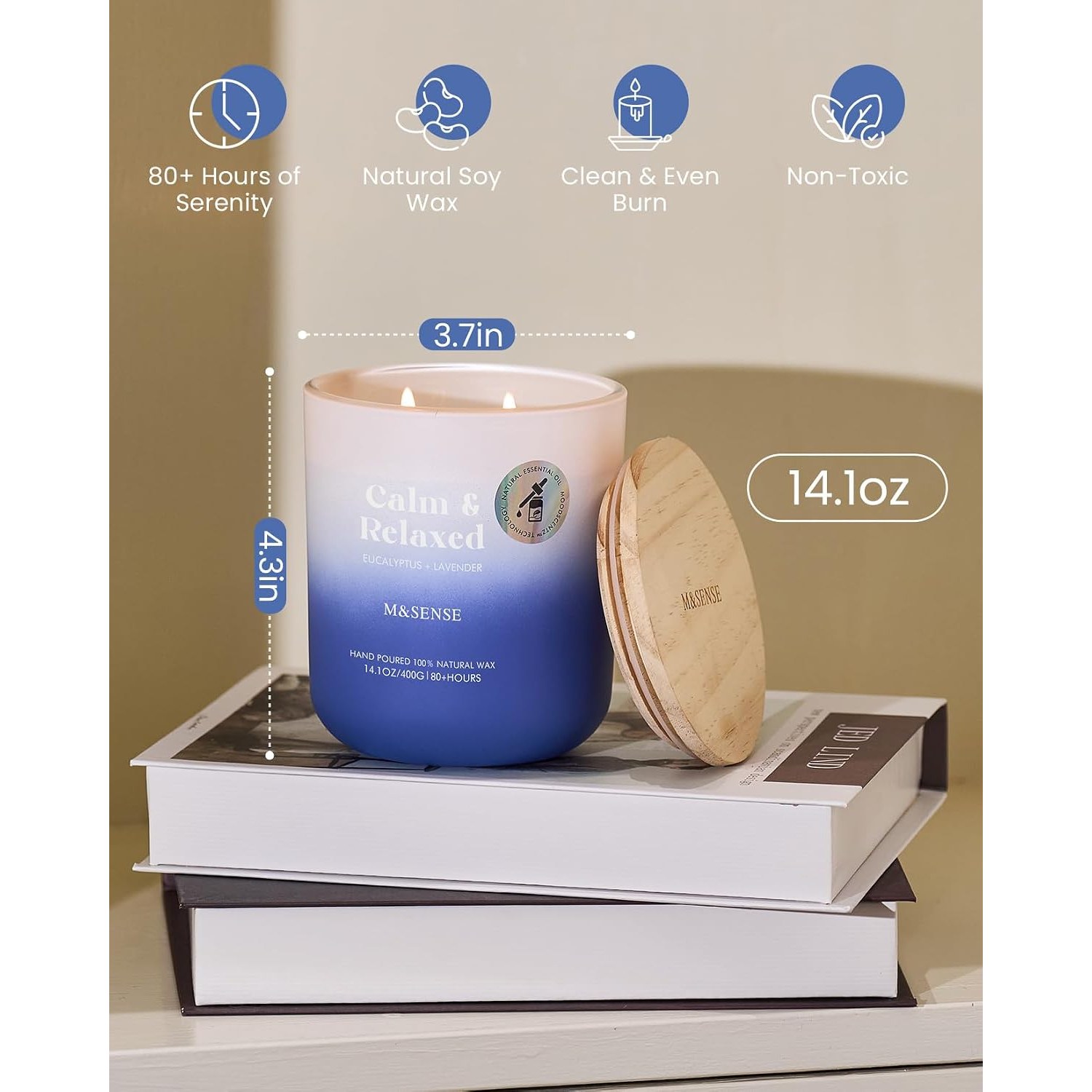
Fill weight. Weight tells you how much wax you are getting, which is a far better value comparison than jar size. A chunky jar with a thick base and a shallow pour can look bigger and hold less. At 400 g this one is a genuinely large candle.
Scent family. Think about the room, not just the name. Fresh and herbal scents suit bathrooms, bedrooms and workspaces. Warm and spiced scents suit living rooms in winter. Food scents are great in kitchens and odd everywhere else.
The vessel. A plain glass jar you can wash and keep is worth more than a decorated one you will throw away. Check whether the glass will suit your shelf once the label comes off.
Getting the burn right
The first burn sets everything. Light it when you have two to three hours free and let the melt pool reach the edge of the glass before you put it out. Wax has a memory, and that first pool becomes the boundary the candle returns to every time after. A rushed first burn locks in a tunnel you will be fighting for weeks.
After that, trim both wicks to about 5 mm before each light. This takes five seconds and solves most candle problems before they start. Long wicks produce tall flames, tall flames produce soot, and soot marks the inside of the glass and eats wax faster.
Keep it out of draughts. An open window, a ceiling fan or an air conditioning vent will make the flames lean and flicker, which burns the wax unevenly and leaves black streaks on one side of the jar. Moving the candle a metre away from the airflow usually fixes it.
Cap each session at about four hours. After that the glass is holding more heat than it needs to and the wicks start to mushroom at the tip. Snuff it, let it cool, trim, and come back to it later.
Use a snuffer or a wick dipper instead of blowing. Blowing scatters soot and sends a plume of smoke through the room, which rather undoes the point of a nice scent.
Stop when about 10 mm of wax remains. Burning the last scrap puts a lot of heat into the base of the glass, and there is no real benefit in it.
Care and the second life of the jar
Keep the candle out of direct sunlight when you are not using it. Sun and heat soften soy wax and will slowly dull the fragrance. A cupboard, a drawer or a shaded shelf is fine.
If dust settles on the surface, wipe it off with a dry cloth before lighting. Dust in the melt pool can catch and smoke.
When the candle is finished, let it cool completely, then scrape or scoop out the remaining wax. Warm soapy water lifts the film, and the metal wick tabs come away with a gentle twist. Dry it and you have a small glass container that is genuinely useful. Brushes, cotton buds, pens, hair ties, loose change, a plant cutting in water. It is a nicer end than the bin.
Safety, briefly
Never leave a lit candle unattended. Keep it away from curtains, bedding, paper and anything that can catch. Put it on a flat, stable, heat-resistant surface, not on a stack of books or directly on wood you care about. Keep it out of reach of children and pets, and remember the glass stays warm for a while after the flame is out. Do not move a candle while the wax is liquid.
The short version
A 400 g soy candle with two cotton wicks is built to solve the main thing that goes wrong with large candles, which is tunnelling. The eucalyptus and lavender blend leans herbal and calm rather than sweet, so it suits bedrooms, bathrooms and quiet evenings better than a kitchen. Soy wax burns cooler and slower than paraffin, which gives a steadier scent and a gentler experience over a long sitting.
Give it a proper first burn, trim the wicks before every light, keep it out of draughts and stop at four hours. Do those four things and the candle will see you through a lot of good evenings. When it is done, wash the jar and keep it.