
The complete guide
How To Choose A Short Ceramic Vase That Actually Gets Used
The problem with most vases
Open the cupboard above the fridge in almost any home and you will find vases. Tall glass ones from bouquets. A heavy one from a wedding. Something inherited. Almost none of them get used, because they are either too big for the flowers you actually buy or too plain to leave out empty.
That is the real test for a vase. Does it still look good with nothing in it? Because for most of us, flowers are a sometimes purchase, and the vase has to earn its spot on the shelf for the other fifty weeks of the year.
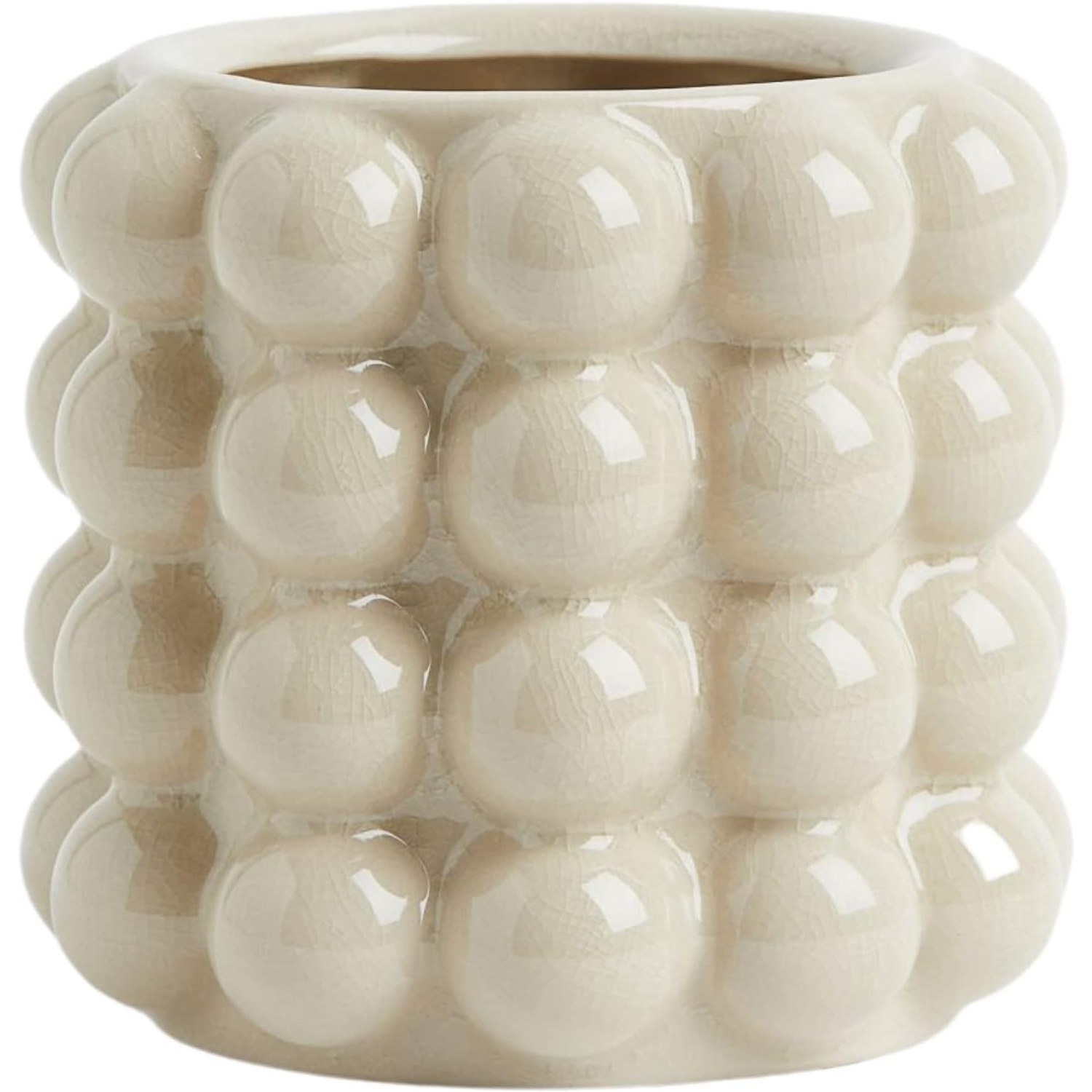
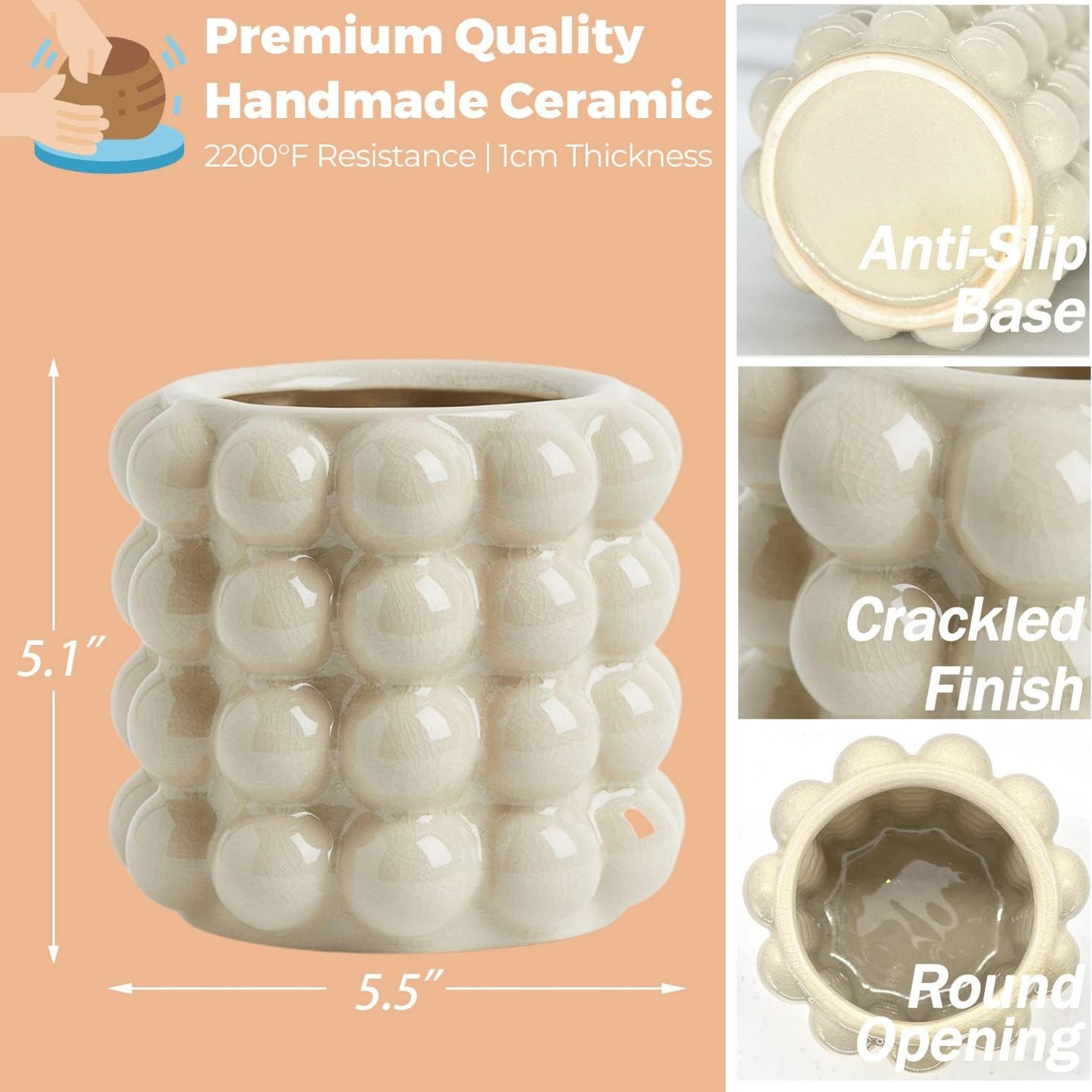
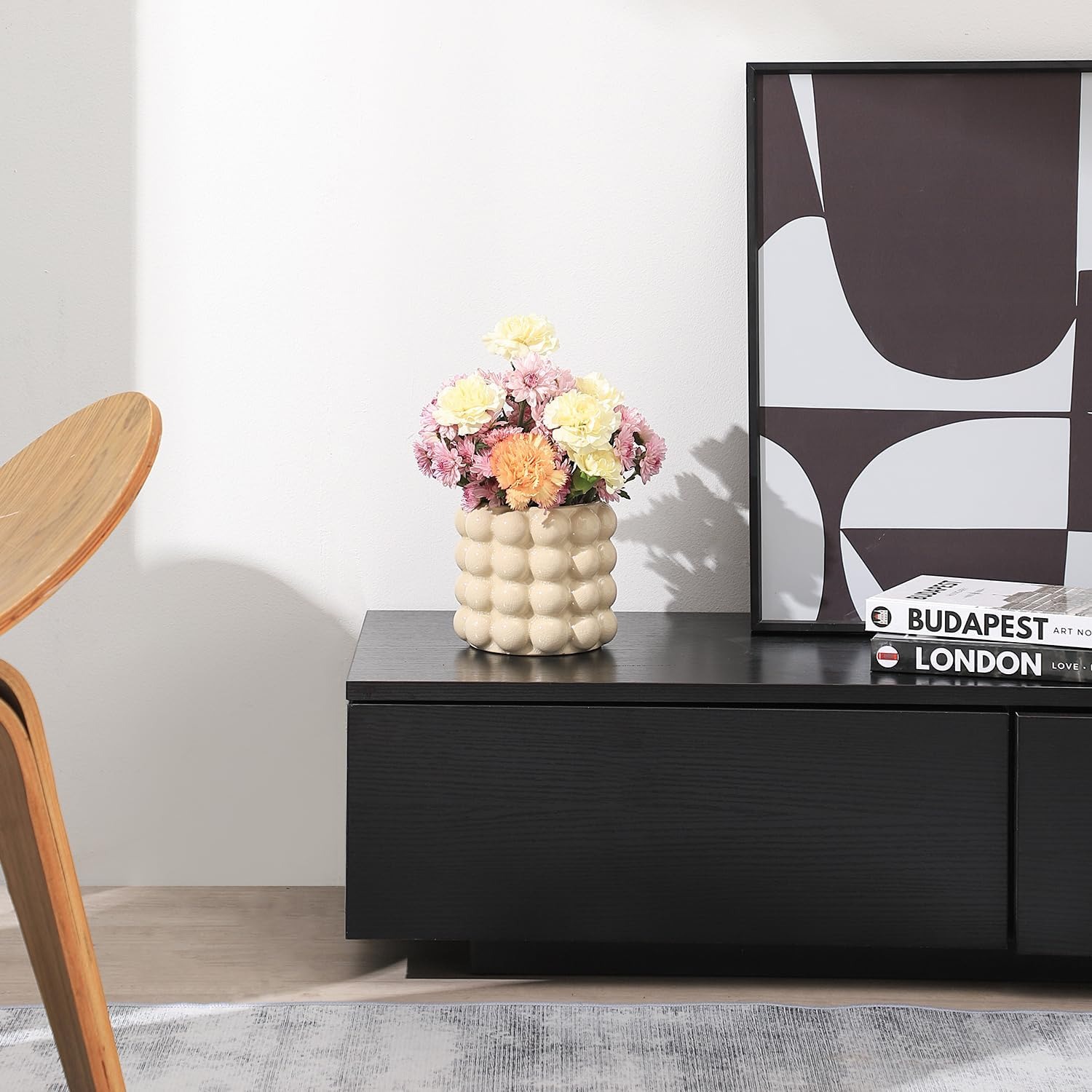
A short bubble vase passes that test. The texture does the work. Even dry and empty, the rounded dimples catch light from a lamp or a window and give the surface something to say. That is the main reason people hunting for the best small ceramic vase keep landing on this shape.
What a bubble texture actually does
The pattern is pressed into the ceramic body, so it is part of the piece rather than a coating. Each raised curve creates a small highlight on top and a small shadow underneath. Multiply that across the whole surface and you get a vase that changes slightly as the daylight moves across the room.
Flat glazes do not do this. A smooth white cylinder is fine, but it disappears against a white wall. Texture is what stops a neutral object from vanishing into a neutral room, and it is why interior stylists lean so hard on it when they are working with beige, cream and sand palettes.
Why height matters more than you think
Short vases and tall vases solve different problems.
A tall vase is for long-stemmed flowers, floor corners and entry consoles where you want a vertical line. It also blocks the view across a table, which is why restaurants never use them on two-seaters.
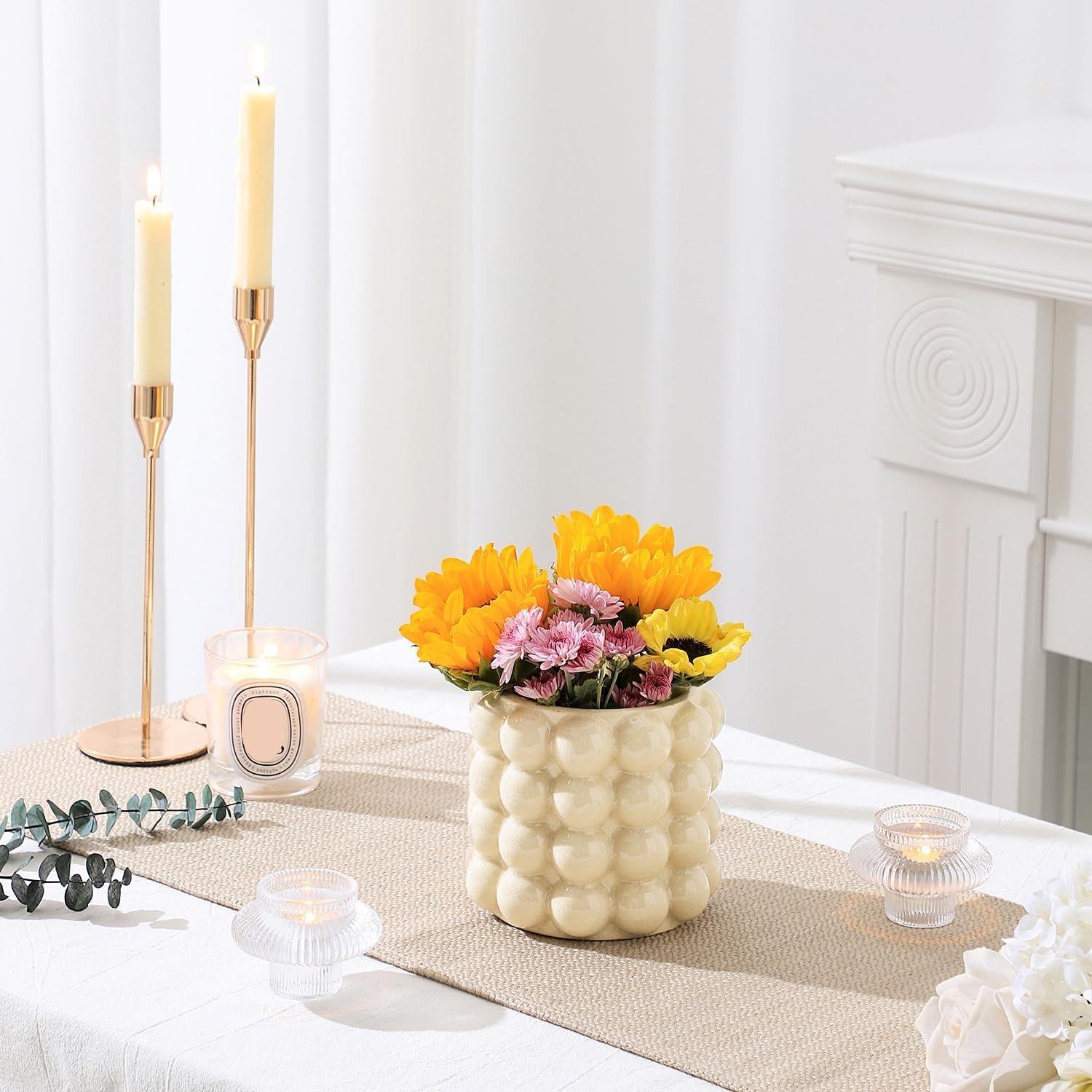
A short vase sits under eye level. On a dining table, people can talk over it. On a coffee table, it does not compete with the TV or get knocked by legs. On a bookshelf, it fills the gap in front of a row of spines without hiding the titles. If you are searching for the best short ceramic vase for flowers, this is the reasoning behind that search, even if you have never put it into words.
The trade-off is stem length. You will be trimming most supermarket bunches down, which is no bad thing. Shorter stems drink better and last longer anyway.
Matching flowers to the opening
The narrow neck is doing something useful. It gathers stems in close, so a small bunch stands up and holds a rounded shape rather than fanning out flat.
Flowers that suit it:
- Ranunculus and anemones, which have fine stems and a full head
- Sweet peas, for scent and soft colour
- Small garden roses or spray roses
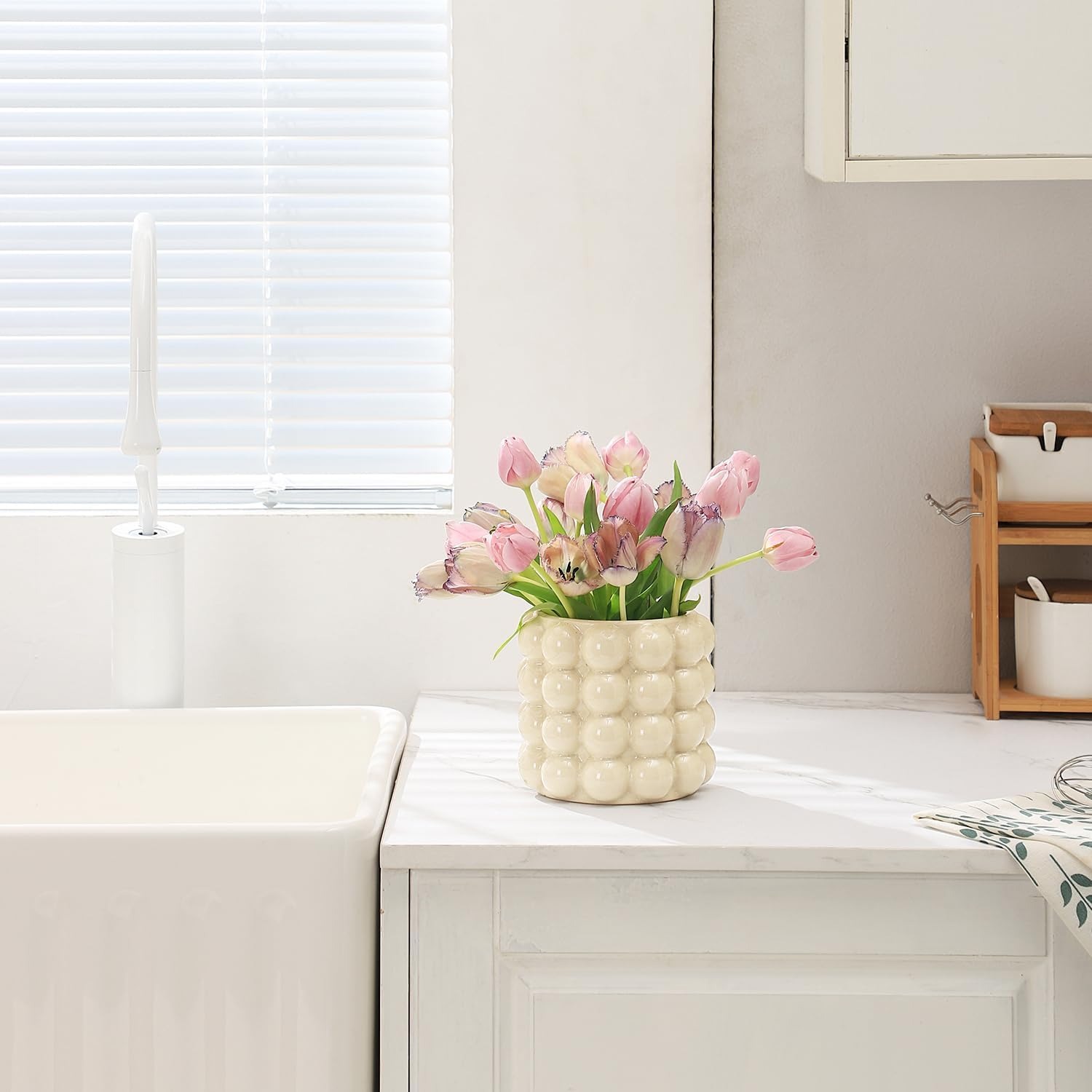
- Tulips, though they will bend and lean as they age, which is part of their charm
- Peonies, which open into a generous dome above the rim
Greenery is the easy shortcut. Three or four stems of eucalyptus in a vase like this is enough on its own, costs very little, and lasts for weeks. Dried stems last longer still. Bunny tails, wheat, lavender and preserved foliage make it one of the best vase for single stems solutions when you do not want weekly upkeep.
What does not work as well: thick woody branches, long gladioli, or a whole wrapped bouquet straight from a florist. Those want a different vase.
The waterproof lining explained
Ceramic can be slightly porous depending on how it is fired and glazed. With some unlined vases, water slowly works its way through the wall over a few days and leaves a faint damp ring on timber. It is not dramatic, but it is annoying, and it is one of the most common complaints about decorative ceramic.
This vase has a waterproof lining fitted inside to deal with that. You can fill it and use it for fresh cut flowers without hovering over it.
A small habit still helps. Pop a felt pad or a coaster underneath. On humid days or in an air-conditioned room, condensation can form on the outside of any cool, water-filled vessel. That is physics, not a defect.
Where to put it
The honest answer is almost anywhere, but some spots work harder than others.
A coffee table is the obvious one. Pair it with a stack of two books and a candle and you have a classic grouping that photographs well and does not get in the way.
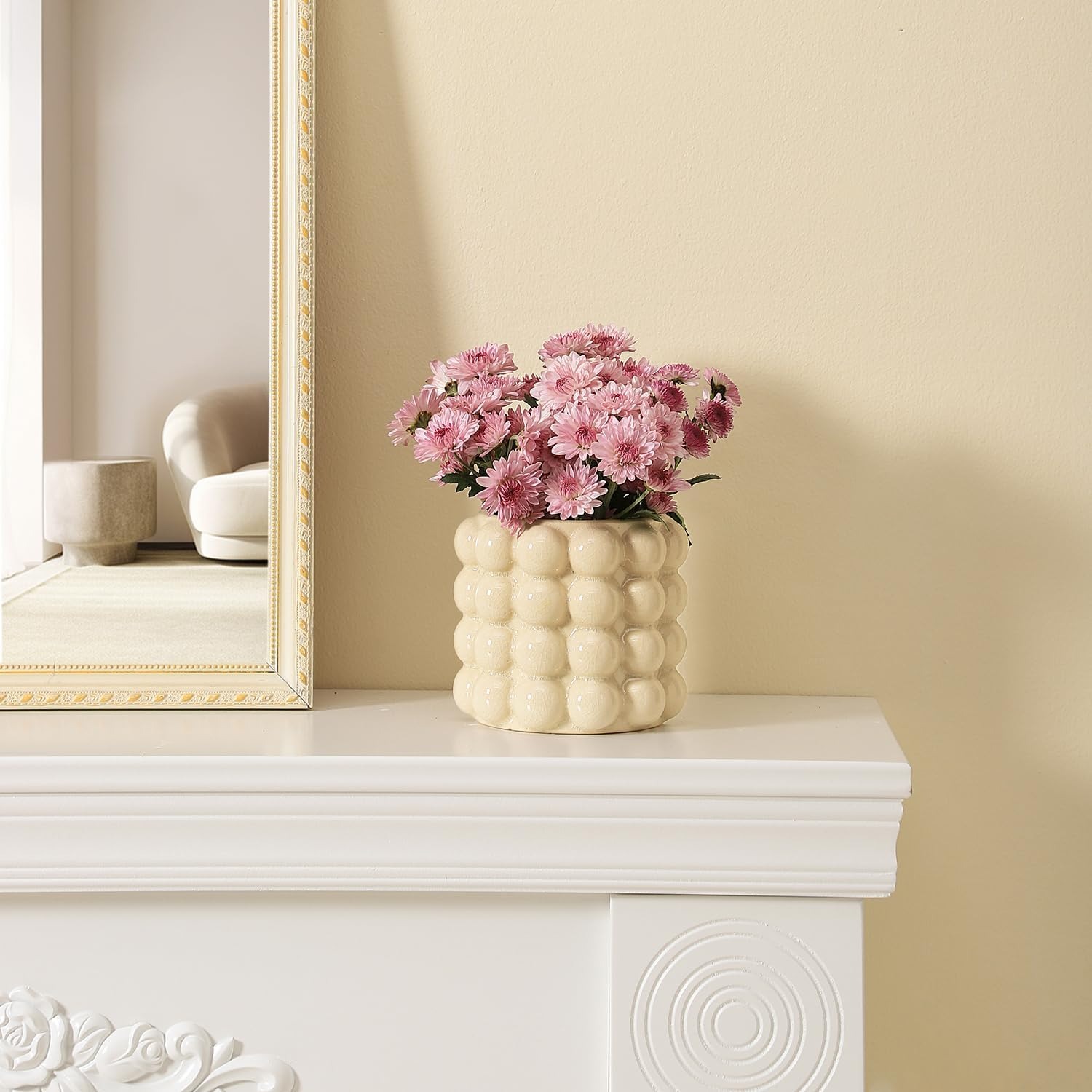
A mantel benefits from the low height, because you can line up a few objects without any of them hiding what is behind. The best mantel vase decor tends to be short, textured and repeated.
Bedside tables are underrated. A single flower next to the lamp is a small, cheap pleasure. Bathroom benches work too, as long as the vase is not sitting in the splash zone of the tap.
Kitchen windowsills, hallway consoles, bookshelf gaps and desk corners all suit it. On a shelf, treat it as one of the best neutral vase for shelf styling anchors and build books, a small frame and a trailing plant around it.
How to style it so it does not look lonely
Single objects on a big surface tend to look stranded. Grouping fixes that.
Try two or three items of different heights sitting close together, within about a hand's width of each other. A vase, a short candle and a small bowl is a good start. Vary the materials, so ceramic next to timber next to glass.
If you have two vases, do not line them up like soldiers. Offset them slightly, one a bit forward, so you get depth. And leave real empty space around the group. Negative space is what makes a styled surface look calm rather than cluttered.
Keeping it in good shape
Care is simple. Hand wash in warm water with a drop of dish soap, then dry it with a soft cloth. Skip the dishwasher, where heat, detergent and rattling racks all work against decorative ceramic.
Between bouquets, rinse the inside so nothing builds up at the bottom. If water has gone cloudy and left a film, a little bicarbonate of soda paste left to sit for ten minutes and then rinsed out will usually clear it. Avoid bleach and avoid abrasive scourers, which can scuff a finish.
Changing the water every two or three days and trimming stem ends on an angle will stretch your flowers out considerably. Strip any leaves that would sit under the water line, since that is where the bacteria starts.
Buying it as a gift
Vases are one of the safest gifts going, provided you pick a neutral. Beige works against white walls, dark timber, green paint and tiled bathrooms. You are not asking the recipient to match it to anything.
It covers a lot of occasions. Housewarmings, Mother's Day, Christmas, a thank you to someone who fed your cat. If you can, give it with flowers already in it. Handing someone a vase that is already doing its job removes the awkward moment where they wonder where to put it.
The short version
Buy a short bubble vase if you want something that looks good empty, suits small supermarket bunches, and fits on a table without blocking the view. The texture gives it presence, the narrow neck does the arranging for you, and the waterproof lining means fresh flowers are no trouble.
Skip it if you mostly buy large wrapped bouquets or long-stemmed flowers, because you will spend your life trimming them down. In that case, get a taller vase and add this one later for the off-cuts.
Exact dimensions, weight and colour code are not specified in this record. If scale is critical for a particular shelf, ask us before you order and we will help you work it out.