
The complete guide
How To Choose Euro Sham Cushion Covers That Actually Work In Your Room
The problem with most cushion shopping
Most people buy cushions the wrong way round. They pick a colour they like in a shop, bring it home, and find it sits awkwardly against the sofa, or it slumps flat within a month, or the fabric looks shiny under a lamp in a way it never did under the shop lights.
The fix is to think about three things separately: the cover, the fill, and the size. Buying covers on their own, as you are here, is the part that gives you the most control. The fabric is what you see and touch every day. The insert is what holds the shape. Mixing and matching them is how people get a bed that looks made rather than merely tidy.
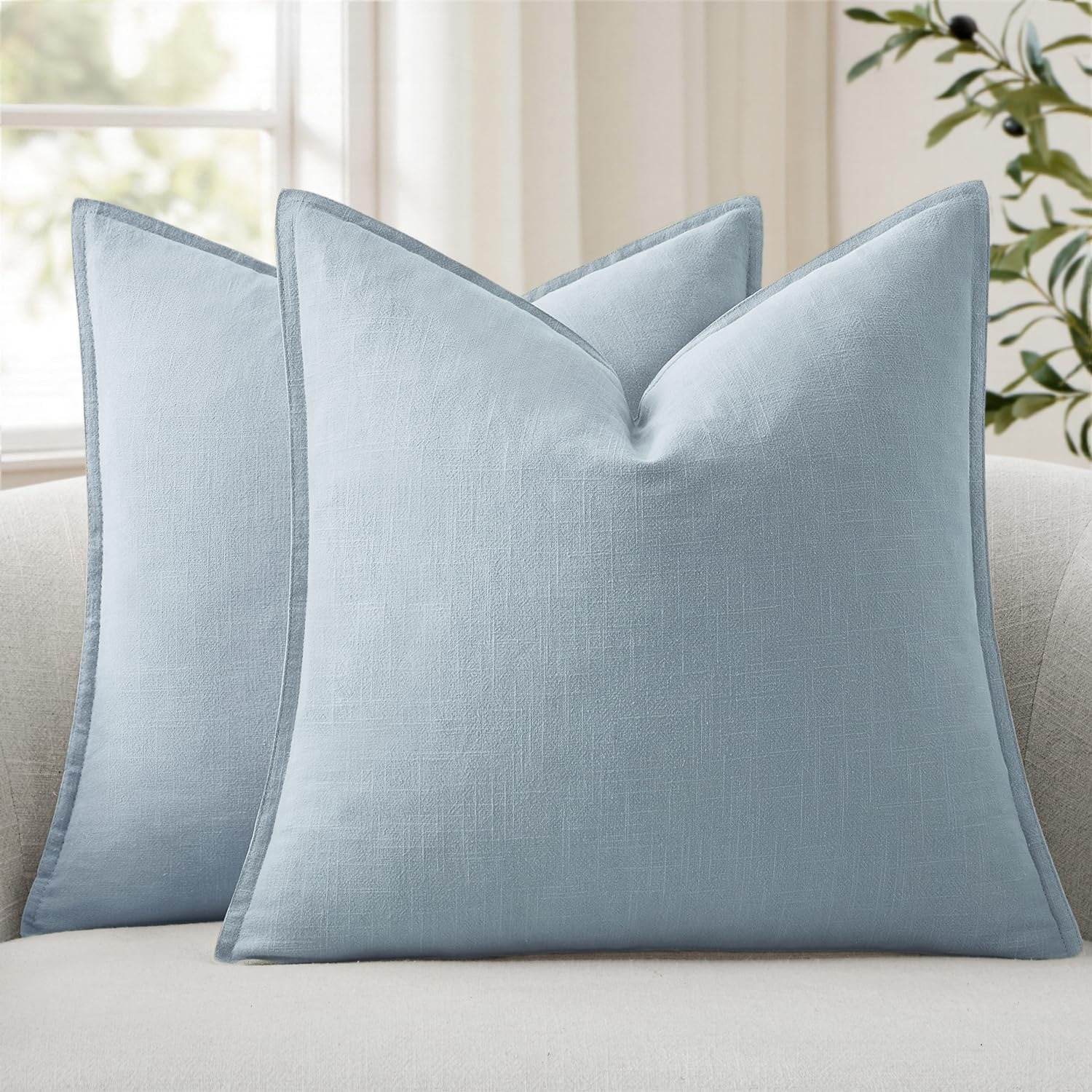
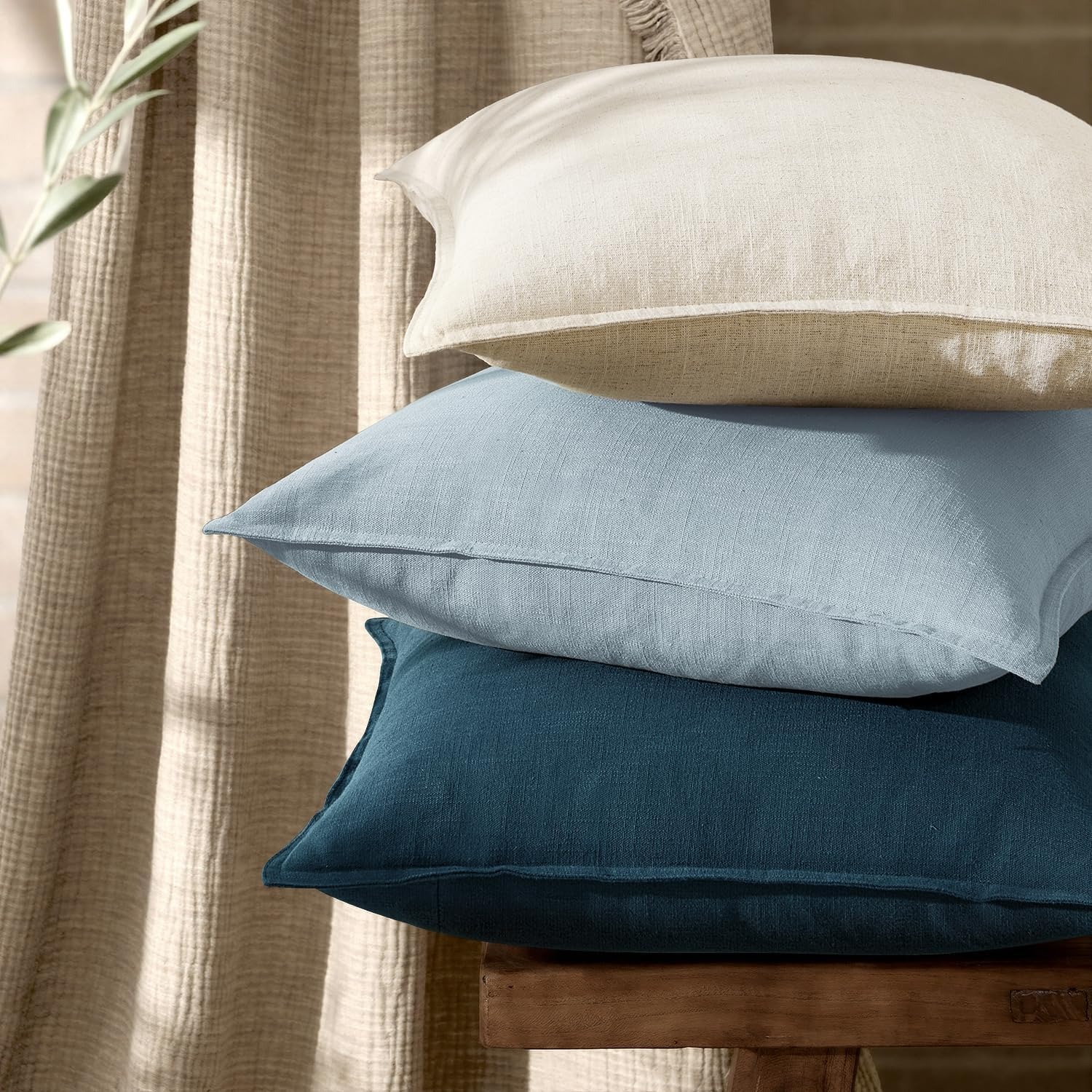
These particular covers are euro shams, which means the larger square format. They come as a set of two, in a light blue, made from a woven linen blend. The maker states the fabric is a linen blend and does not publish the linen percentage, so it is a blend rather than pure linen. That distinction matters less than people think, and I will come back to why.
What a linen blend actually gives you
Pure linen has a reputation, and it is mostly earned. It has a dry, slightly rough hand, it breathes well, and it wrinkles the moment you look at it. Some people love that creased, unmade look. Plenty of others hate it.
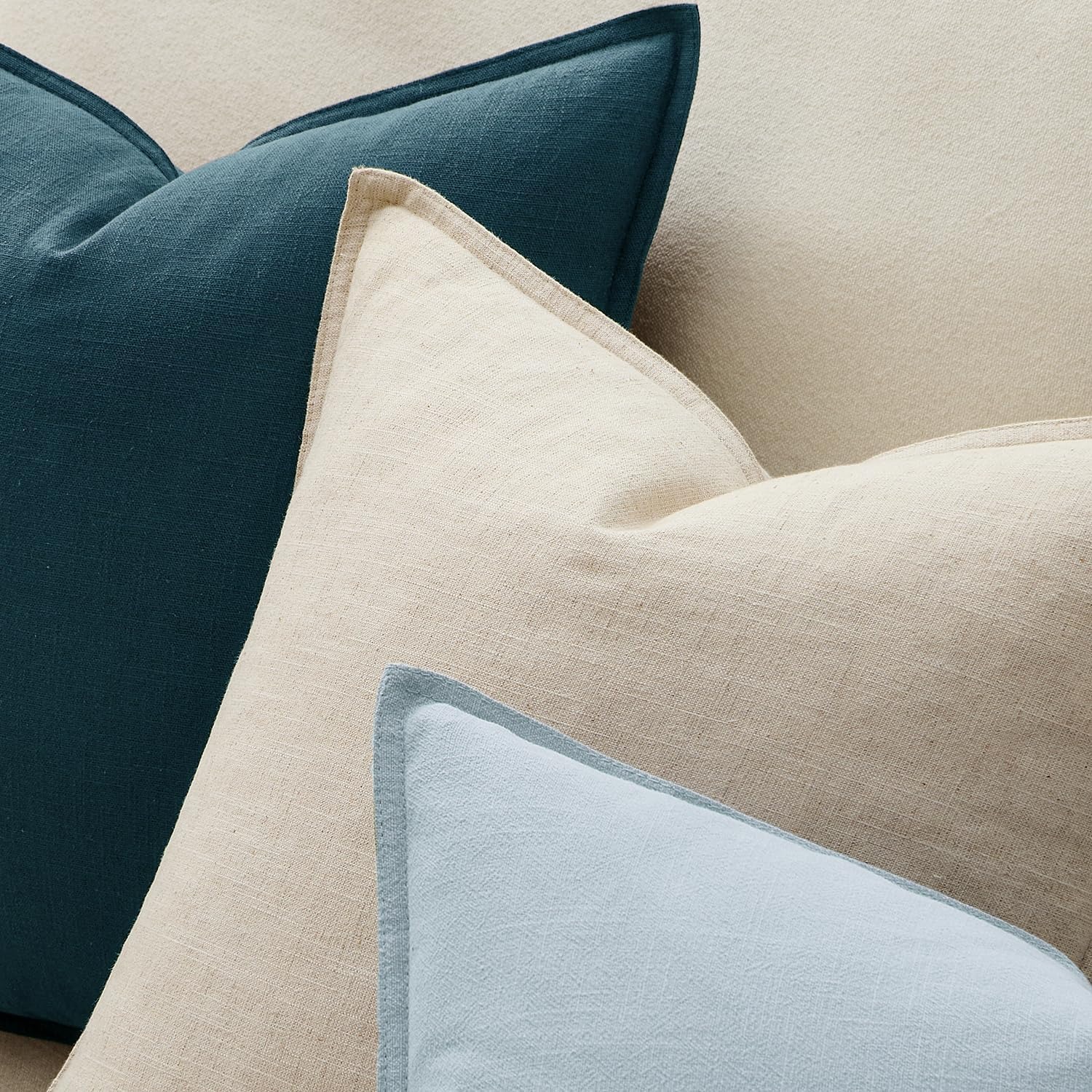
A linen blend sits in the middle. You keep most of the visible texture, that slightly uneven weave that catches light differently across the surface, but you lose some of the extreme creasing. Blends also tend to be softer out of the packet and more forgiving in a home washing machine. If you have been looking at the best linen blend cushion covers rather than full linen, this is usually the reason.
What you should not expect is the exact hand of a 100 percent linen cover. The percentage is not published here, so the honest answer is that the fabric is a linen blend woven fabric, as the maker states, with a naturally textured surface. If pure linen is non-negotiable for you, this is not that product, and it would be unhelpful of us to pretend otherwise.
Why the pressed edge matters more than you think
Look at a well-styled bed in a catalogue photo and you will notice the back cushions hold a crisp square shape. That is rarely the insert doing the work. It is usually a flange, the flat border that runs around the outside of the cover.
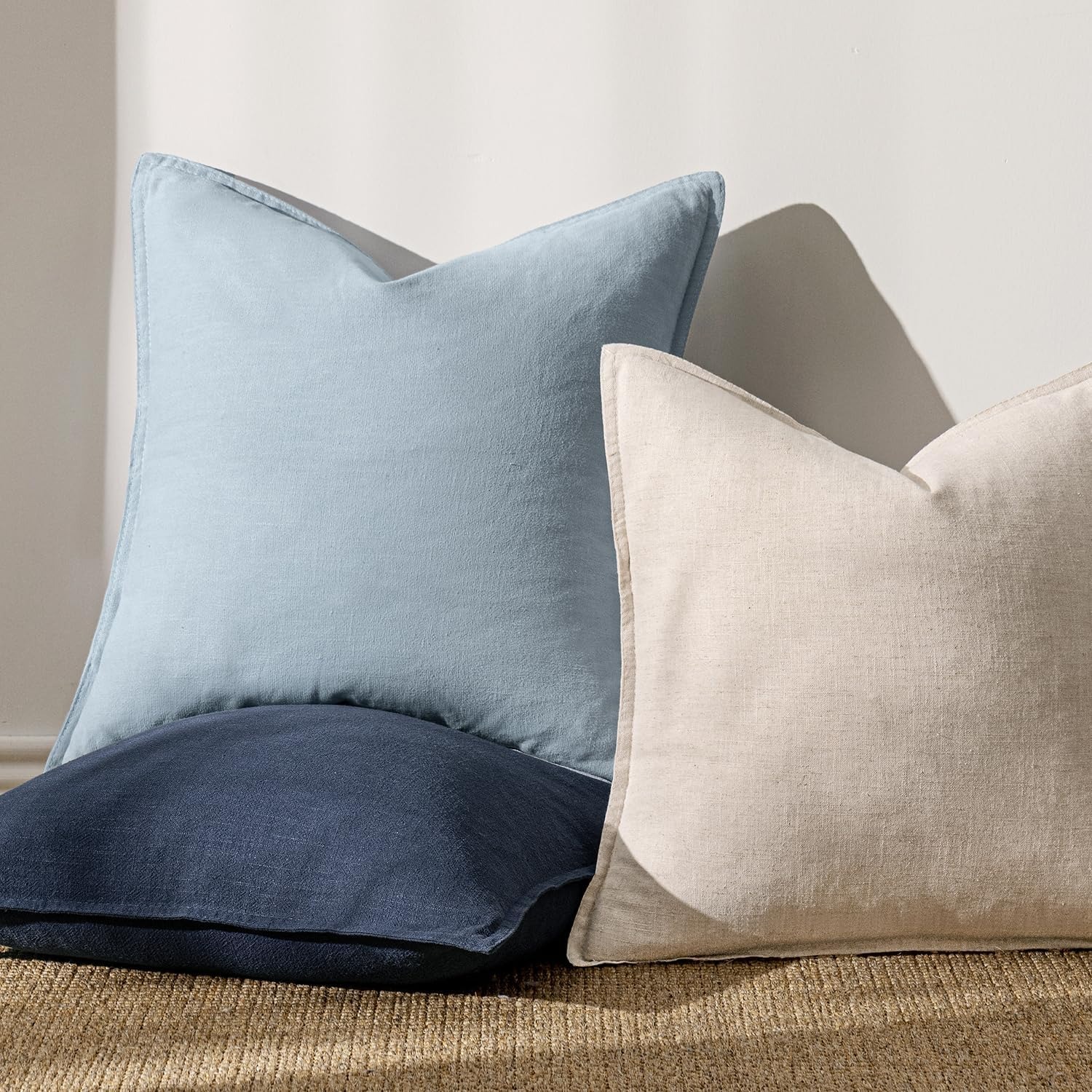
These covers have a pressed-edge detail, which does two things. It frames the filled cushion, giving a clean outline and a bit of visual weight. It also creates a small lip that sits flat against the headboard or the sofa back, so the cushion leans rather than rolls forward.
The practical knock-on is that a flanged cover looks better slightly overfilled. A plain seamed cover can look fine with a soft fill. A flanged one wants enough insert to push into the corners, or the border reads as floppy rather than tailored.
Picking the right insert
Since inserts are not included, this is the decision that will change how the cushions look most.
Start by measuring what you already own. Euro inserts come in a few common sizes depending on where you live, and they are not interchangeable across markets. Match the insert to the finished cover size for a soft, relaxed look. Go one size larger for a full, firm cushion that holds its shape between fluffs.
Fill type also changes the feel. Feather and down inserts collapse into a soft, slouchy shape and look wonderful on a bed, but they need a shake most mornings. Polyester inserts hold a fuller shape with less effort and cost less, though they can feel a bit springy. There is no correct answer here. A bedroom cushion that is mostly decorative suits a polyester fill. A reading nook cushion you actually lean on suits feather.
Who these suit, and who they do not
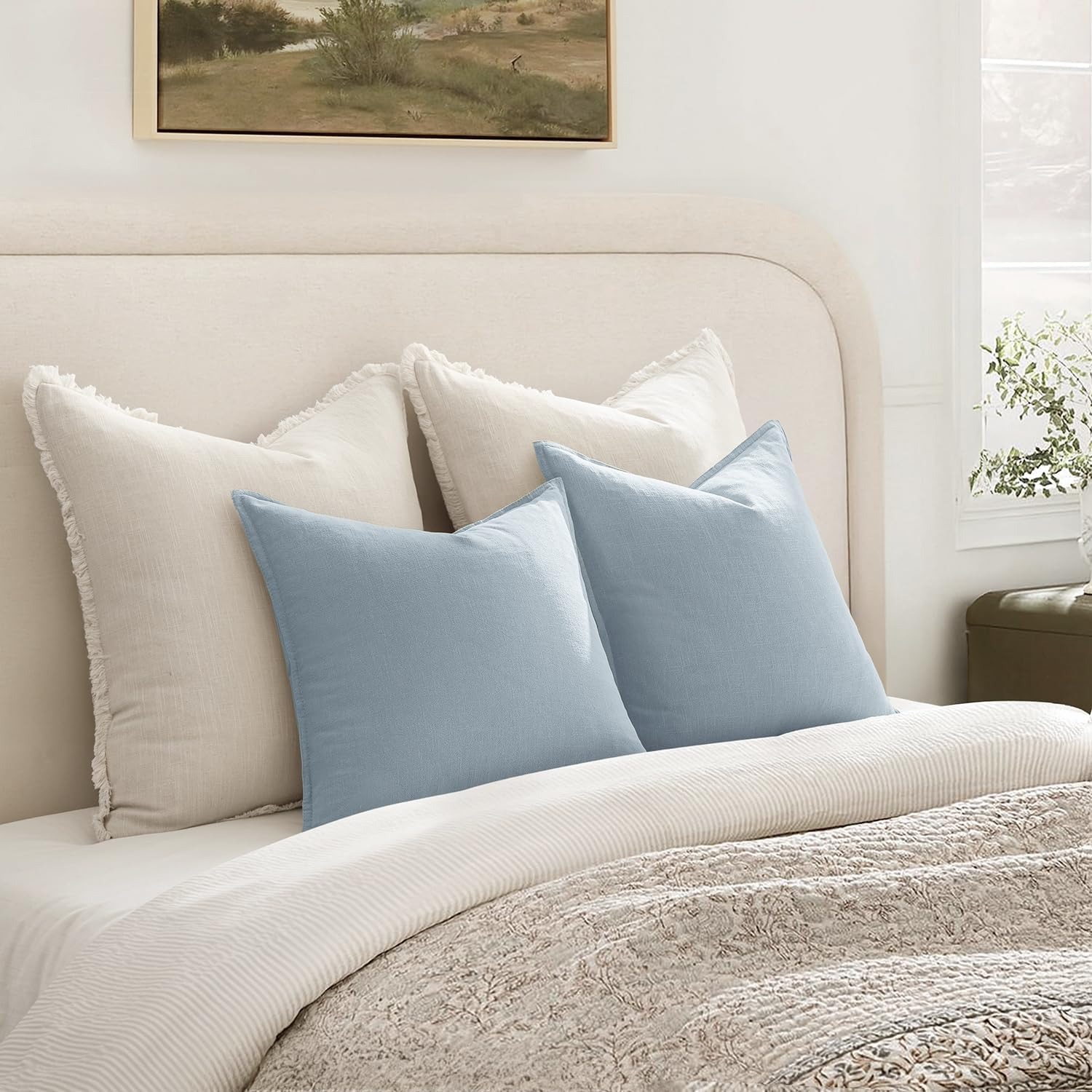
They suit anyone building a layered bed. Two euro shams across the back, sleeping pillows in front, maybe a lumbar cushion to finish. That arrangement works on a queen or king and needs almost no styling skill.
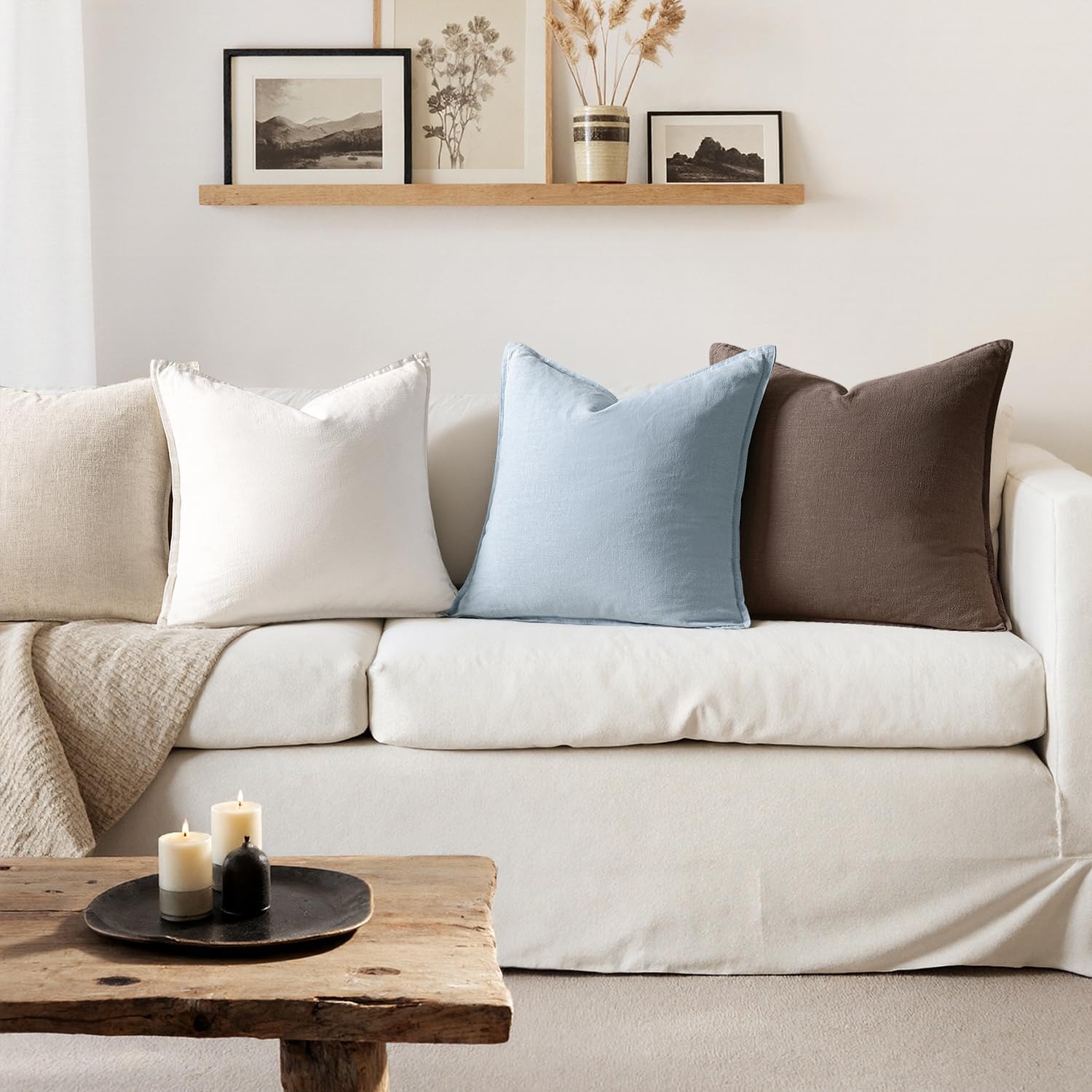
They suit sofas that have gone cluttered. Swapping four mismatched small cushions for two larger plain ones in a soft colour usually calms a room down immediately. Plain light blue works like a neutral next to white, oatmeal, grey, pale timber and most greens.
They also suit renters and anyone who changes a room seasonally. Covers store flat in a drawer, so you can keep two or three sets and rotate them without filling a cupboard with inserts.
They are less suited to high-traffic spots with pets who knead, to outdoor settings, and to anyone who needs an exact colour match to an existing fabric. Light blue photographs differently on every screen, and matching a dye by eye online is always a gamble.
Styling them without overthinking it
A few things that work reliably.
Keep the number of cushions odd on a sofa and even on a bed. Two euro shams behind, a single contrast cushion in front, and the arrangement reads as deliberate.
Let texture do the contrast rather than colour. A woven blend next to a chunky knit throw and a smooth cotton sheet gives a room depth without adding another colour to manage.
Give the light blue something to talk to. One other blue element somewhere in the room, a vase, a book spine, a stripe in a rug, makes the cushions look chosen rather than stranded.
And resist filling every surface. Two good cushions beat six mediocre ones, which is the quiet argument for buying a matched set rather than collecting singles.
Washing and keeping them looking right
The care is simple and worth following. Hand wash, or machine wash inside a mesh laundry bag on a gentle cycle. Tumble dry on low. Do not iron.
The wash bag is the part people skip. It stops the pressed edge catching on the drum or on a zip elsewhere in the load, which is the usual cause of a pulled thread on a flange.
Avoid bleach entirely. On a pale dyed fabric it creates patches you cannot undo. For a spill, blot with cool water and a little mild detergent, working from the outside of the mark inwards so you do not spread it.
The no-ironing instruction suits the fabric. A blend can go shiny under a hot plate, and the slight texture of the weave is part of what you paid for. If you want them flatter, pull them out of the dryer while still faintly warm and smooth them by hand.
Rotate the pair every few weeks if the room gets strong afternoon sun. Even fading across both covers is barely noticeable. One faded cover next to one fresh one is very noticeable.
The short version
Two light blue euro sham covers in a woven linen blend, with a tailored pressed edge, sold without inserts. The maker does not publish the linen percentage, so expect blend behaviour, which means good texture and more forgiving care than pure linen.
Buy them if you want a calm, textured pair to anchor a bed or settle a busy sofa, and if you already own inserts or are happy to choose your own. Measure before you order, size the insert to the cover or one size up, wash in a bag, and skip the iron. That is genuinely all there is to it.