
The complete guide
How to Choose and Style a Tall White Ceramic Floor Vase
The corner that never looks finished
Nearly every home has one. A patch of floor beside the sofa, the dead end of a hallway, the gap between a bookcase and a window. It is too narrow for a chair and too wide to pretend it is not there. You put a plant in it, the plant dies. You put a basket there, it collects shoes.
A tall floor vase solves that problem in a way almost nothing else does. It adds height, which is the thing most rooms are short on, and it does it on a footprint about the size of a dinner plate. It does not need watering, it does not need a power point, and it does not need to be moved every time you vacuum.
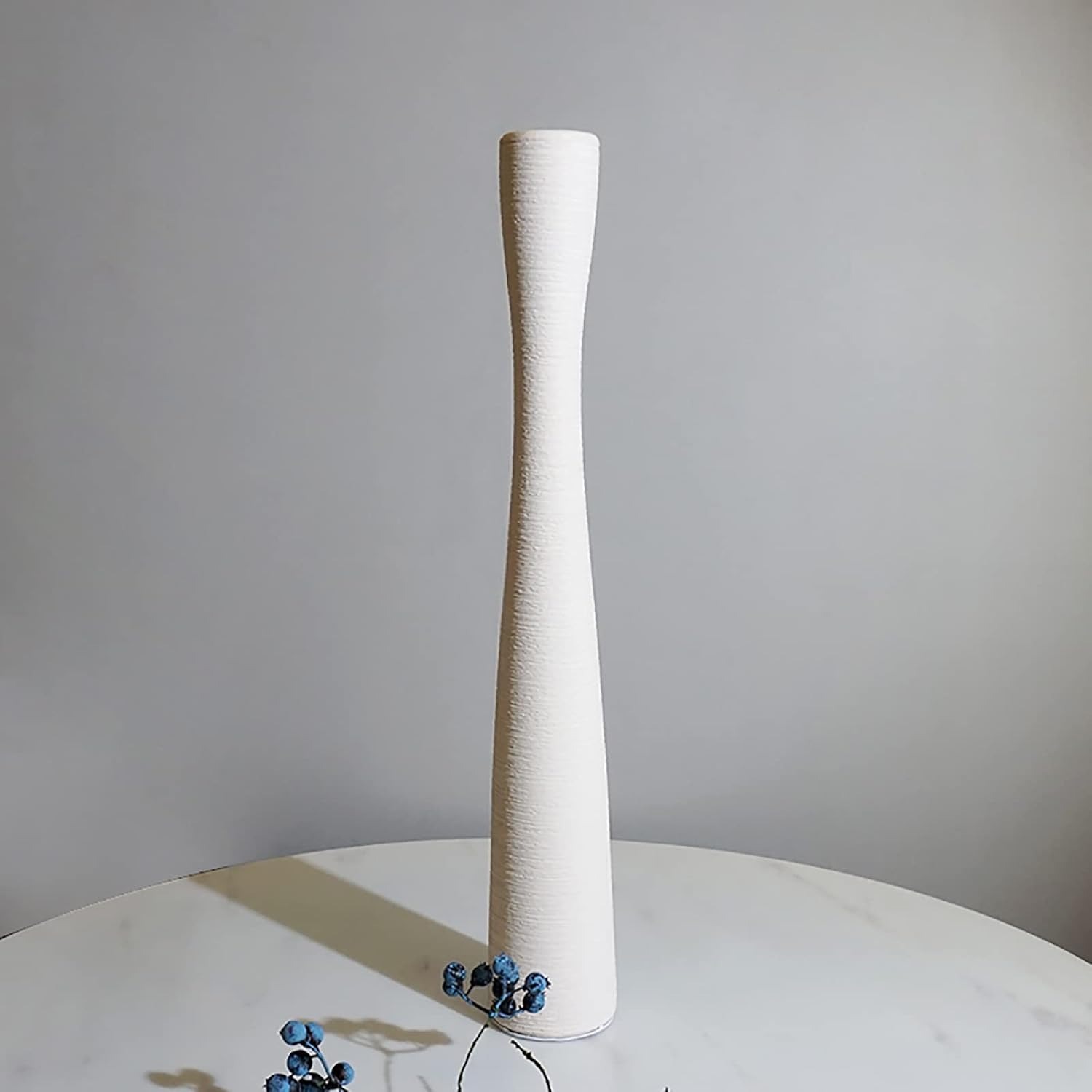
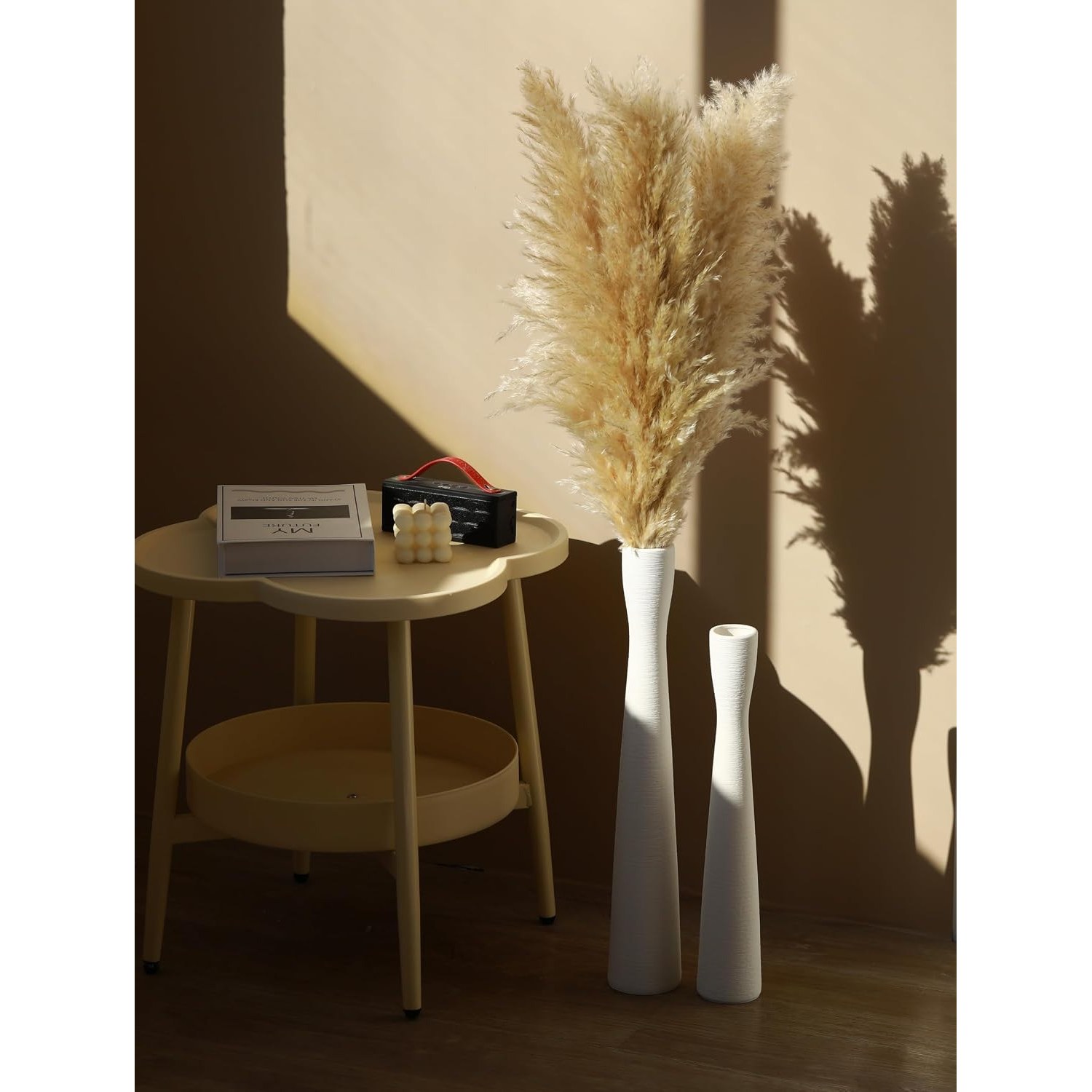
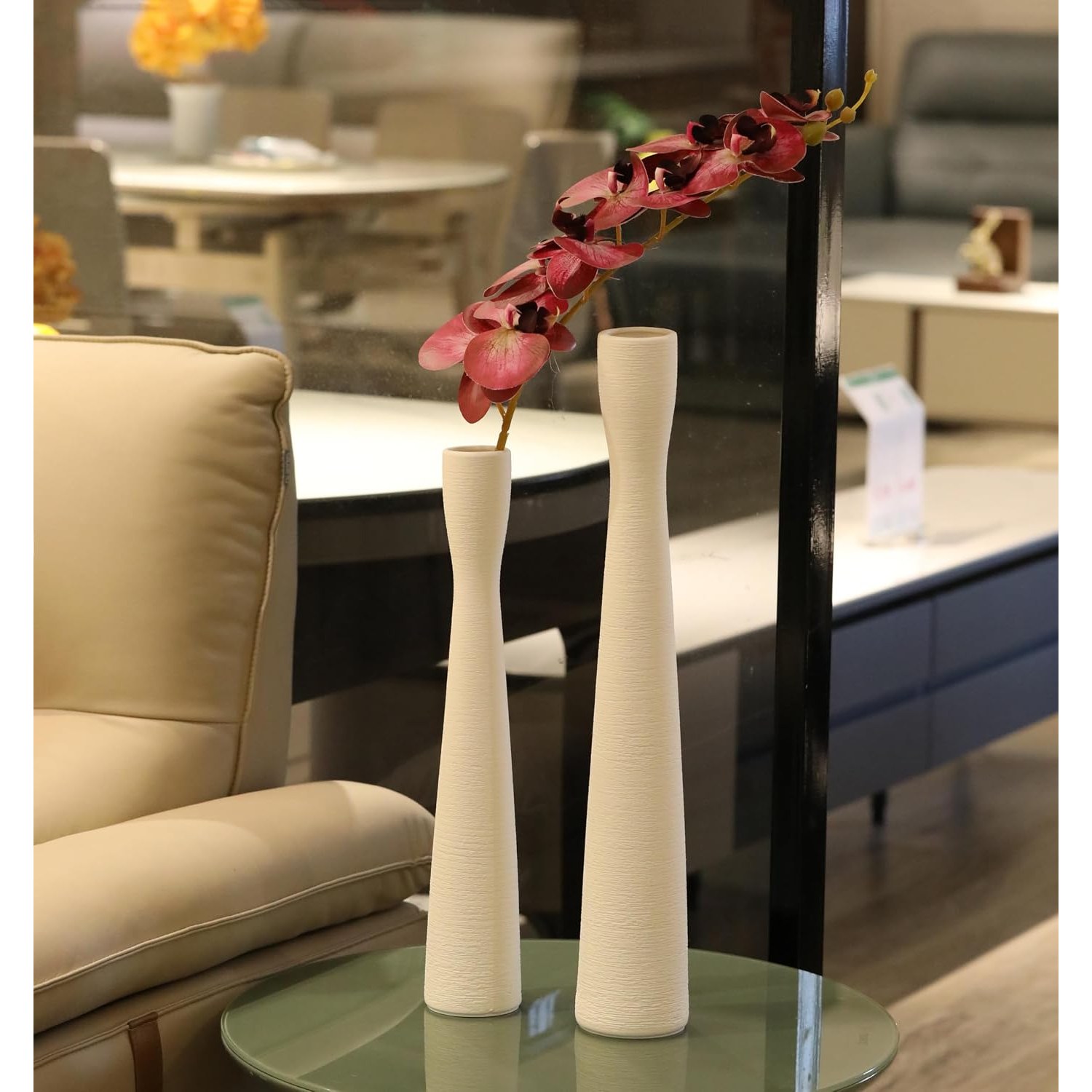
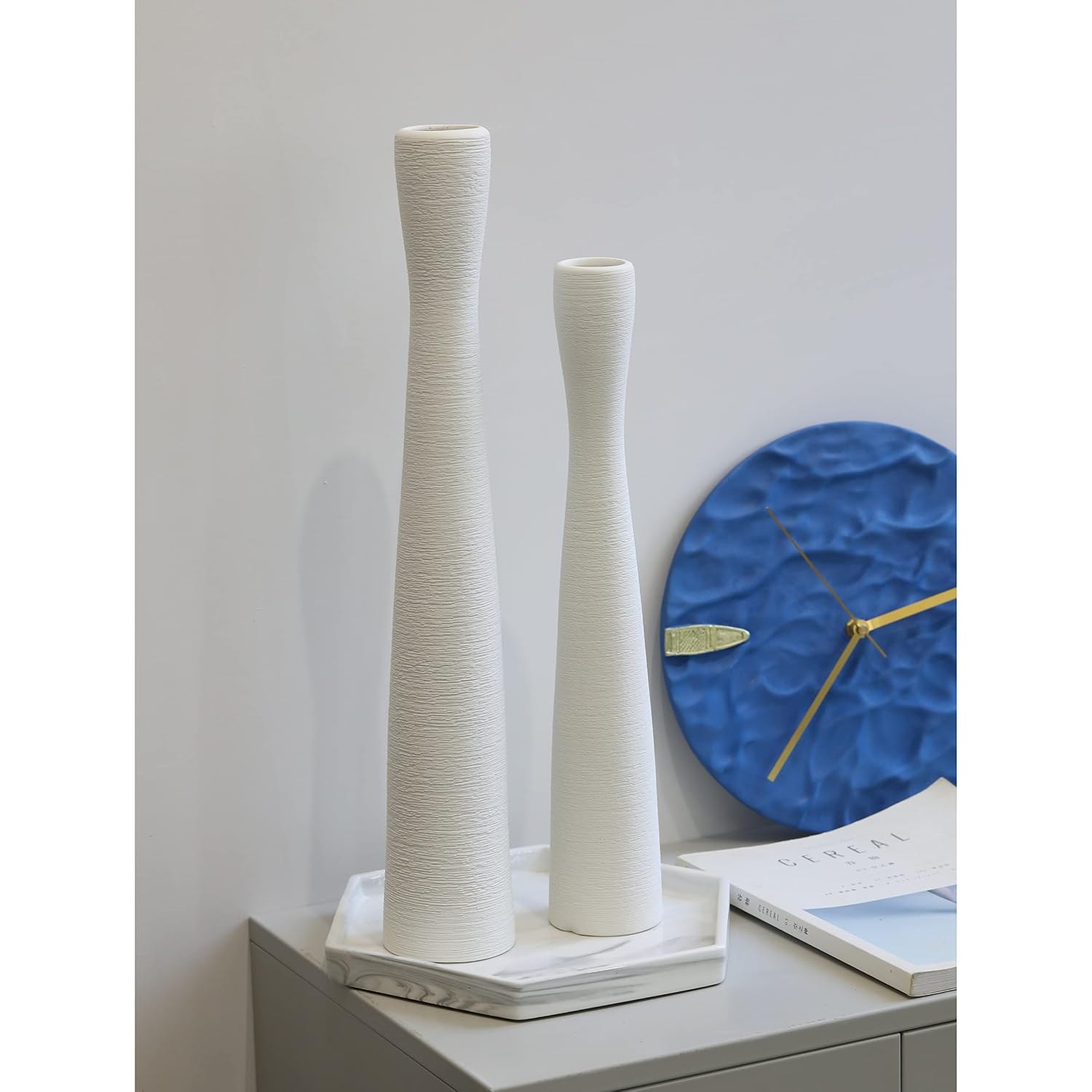
The vase on this page is the slim, floor-standing kind in plain white ceramic. It is built to be looked at from across the room rather than examined up close, which is exactly what a corner piece should be.
Why height matters more than width
Walk into a room where everything sits at knee and hip level and it feels flat. Sofas, coffee tables, side tables and rugs all live in roughly the same horizontal band. Your eye travels across the room and never goes up.
One tall object breaks that. It pulls the eye upward, which makes a ceiling feel higher and a small room feel less boxed in. Designers do this with floor lamps, tall plants and leaning mirrors. A floor vase does the same job quietly and costs less to maintain than any of them.
The catch is scale. A short vase on the floor looks lost, like something left behind mid-move. A 50 cm class piece is in the sweet spot for most rooms with standard ceilings, because once you add stems, the whole arrangement lands somewhere around waist to chest height. That is tall enough to register and short enough that it does not loom over a seated person.
What the narrow neck actually does
The opening on this vase is small relative to the body, and that is a design decision, not a limitation.
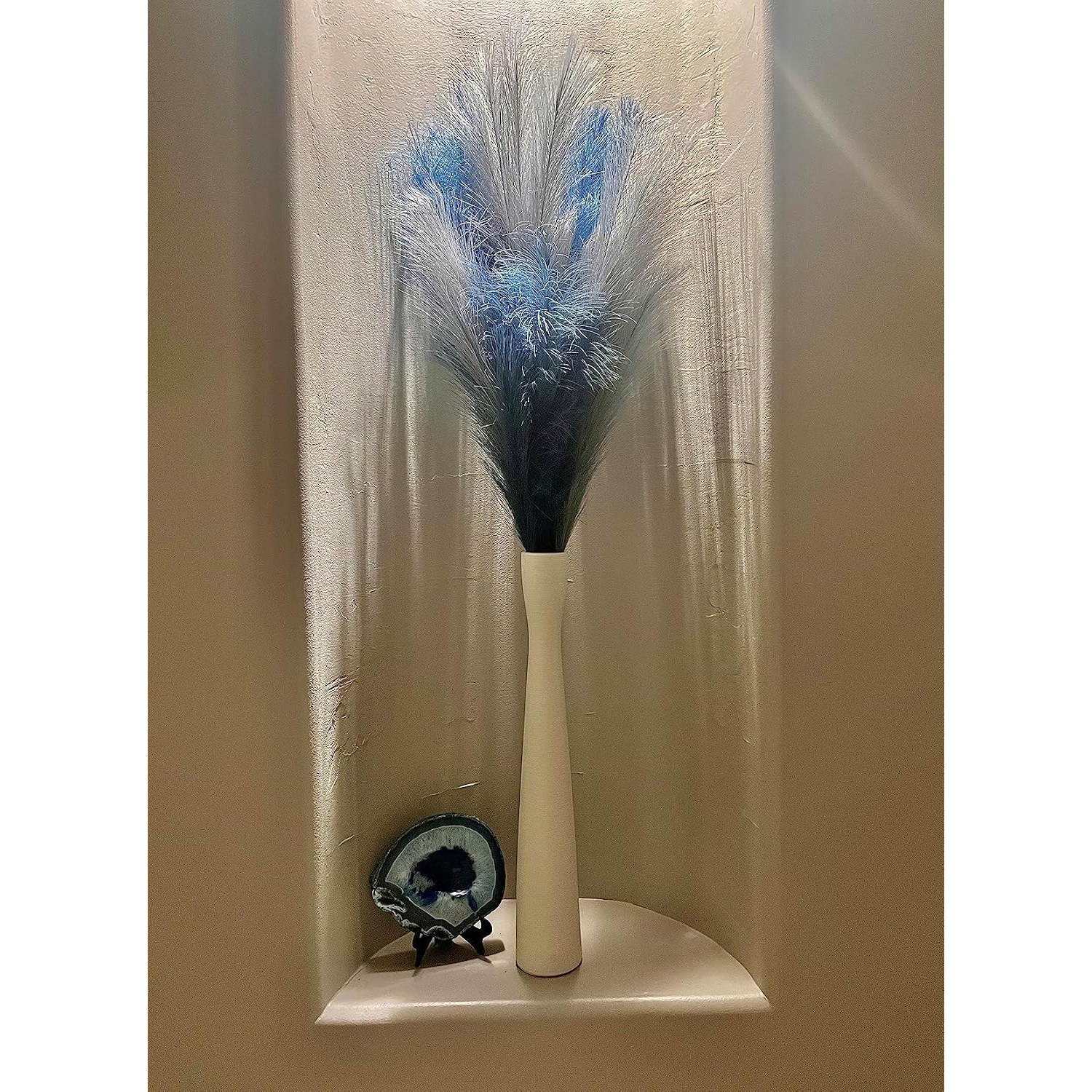
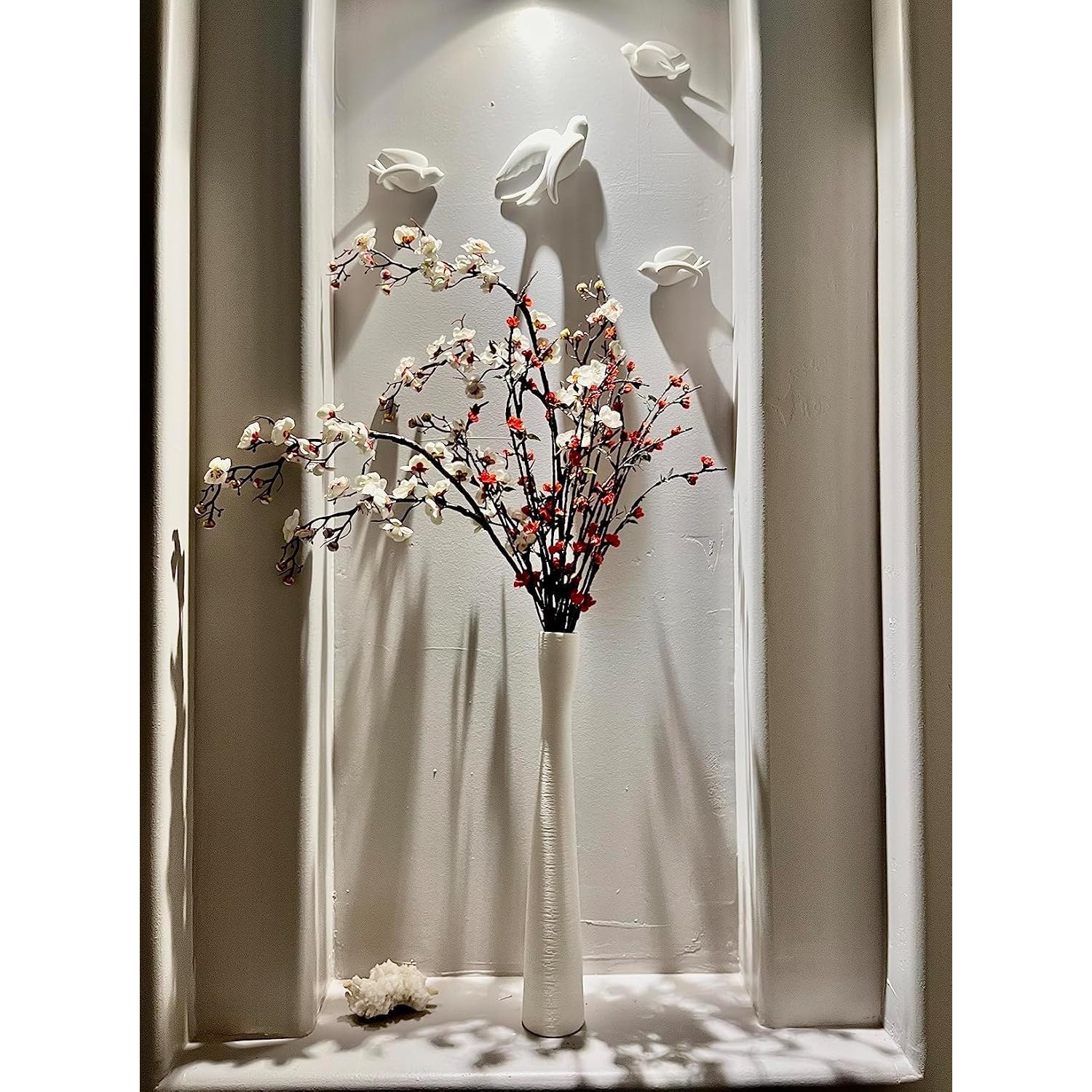
A wide-mouthed vessel lets stems fall outward. Put four branches in a bowl and they will lean toward the four walls, which looks fine for a loose garden bouquet and wrong for a sculptural arrangement. A narrow neck pins everything into a tight bundle at the base of the stems, so they rise almost vertically before fanning out near the top. That is the silhouette you see in magazine photos, and it comes from the vessel, not from skill.
It also means you need far fewer stems. Three pampas plumes, four dried palm fronds or five long eucalyptus branches will do it. Buying the best vase for long stemmed flowers is only half the job. Restraint with the stems is the other half.
Choosing the stems
The vase is sold empty, so this is the part you get to play with.
Pampas grass is the obvious match. Buy fewer plumes than you think you need, shake them out thoroughly, and give them a day to recover their volume after shipping. Plumes shed a little at first and then settle.
Dried and preserved stems last years with no upkeep. Bunny tails, wheat, dried palm, preserved eucalyptus and ruscus all work. If you are after the best vase for dried flowers that will not need rearranging every week, this height is ideal.
Branches are the underrated option. Curly willow, bare magnolia, manzanita or simply a well-shaped clipping from the garden gives you strong lines for very little money. Trim the bottoms at an angle so they wedge against the neck and hold position.
Fresh flowers are listed as suitable for this white vase. A sensible first step with any ceramic piece is to add a little water and leave it on a tray for an hour, just to confirm nothing weeps through before you set it on a timber floor.
Nothing at all is a legitimate choice. A well-proportioned empty vase is a sculpture. Some rooms are busy enough already.
Where to put it
Corners first. The spot beside a sofa arm or an armchair is the classic home for a floor vase, because it fills a gap that furniture cannot.
Hallway ends come second. People look straight down a hall as they walk, and a tall shape at the end gives the eye somewhere to land. The same logic applies to the far side of a landing or the end of a galley kitchen.
Beside a doorway works well, particularly entry halls. It greets people without blocking anything.
Then there is the lifted option. Set it on a sideboard, console or hearth and the same piece becomes a tall accent against a blank wall. If you have a stretch of wall you have never managed to hang art on, this is a decent alternative. Just check the surface is deep enough that the base sits fully on it with clearance to spare.
Avoid walkways, the bottom of stairs, and anywhere a swinging door passes. Ceramic is forgiving of everything except impact.
Making it feel deliberate
A single tall vase in an otherwise untouched corner can read as random. A few small moves fix that.
Repeat the white somewhere else nearby, even in something minor like a candle, a book spine or a cushion piping. Repetition tells the eye the piece belongs.
Group it with something shorter. A low bowl, a stack of books or a small lamp at a different height creates a relationship rather than an isolated object. Varied heights nearly always beat matched ones.
Mind the backdrop. A plain white vase in front of a plain white wall can disappear. Against a darker wall, a timber panel, a bookshelf or a curtain it gains definition immediately. If your wall is pale, consider the stems as the contrast element and choose something in a deeper tone.
If you have the space for two, flank a fireplace or a wide console. Give each one different stems so the pair looks collected rather than bought as a set.
Living with ceramic
It is low maintenance, not no maintenance.
Dust is the main thing. A soft dry cloth once a fortnight keeps a brushed finish looking right, since matte and low-sheen surfaces show dust more readily than gloss. Skip abrasive pads and strong cleaners, which can leave shiny patches that never fully blend back in.
If you use water, empty and rinse between arrangements. Standing water leaves a ring inside, which does not matter visually but can smell. Warm water with a little white vinegar, left to sit for an hour, clears most marks. A long-handled bottle brush reaches the bottom of a narrow neck.
Lift with two hands rather than dragging. Dragging a ceramic base across floorboards is how surfaces get scratched and how bases get chipped. A felt pad underneath is cheap insurance on an uneven floor.
Keep it out of frost and long spells of direct harsh sun if you use it on a covered balcony. It is built as an indoor piece.
A note on gifting
Tall white ceramic is one of the easiest gifts to get right, which is why it turns up so often at housewarmings and weddings. It does not impose a colour on someone's home, it does not need to be hidden in a cupboard when its giver visits, and it suits a first apartment as comfortably as a long-settled house.
For a complete present, pair the vase with a bunch of dried stems. The recipient gets something finished rather than a project. Wrapping is easier in a large bag with tissue than in paper, and a ribbon at the neck does the job.
The short version
Buy this if you have a bare vertical gap and nothing has worked in it yet. The slim body keeps the floor clear, the height fills the space, and the narrow opening does the arranging for you so a few good stems look considered instead of thrown in.
Style it with three to five tall stems, not a dozen. Keep it out of walkways. Dust it occasionally and lift it rather than slide it.
Skip it if your corner is a high-traffic route, if you have a toddler who climbs, or if your ceilings are low enough that a tall piece would feel cramped. In those cases a shorter vase on a surface will serve you better, and we are happy to point you toward one.