
The complete guide
How To Choose A Cashmere Blanket That You Will Actually Use
The problem with most throws
Most throw blankets end up folded over the arm of a chair and ignored. They are either too small to be useful, too heavy to be comfortable, or made from a synthetic that feels fine in the shop and clammy after twenty minutes. You buy one, you use it twice, and then it becomes decoration.
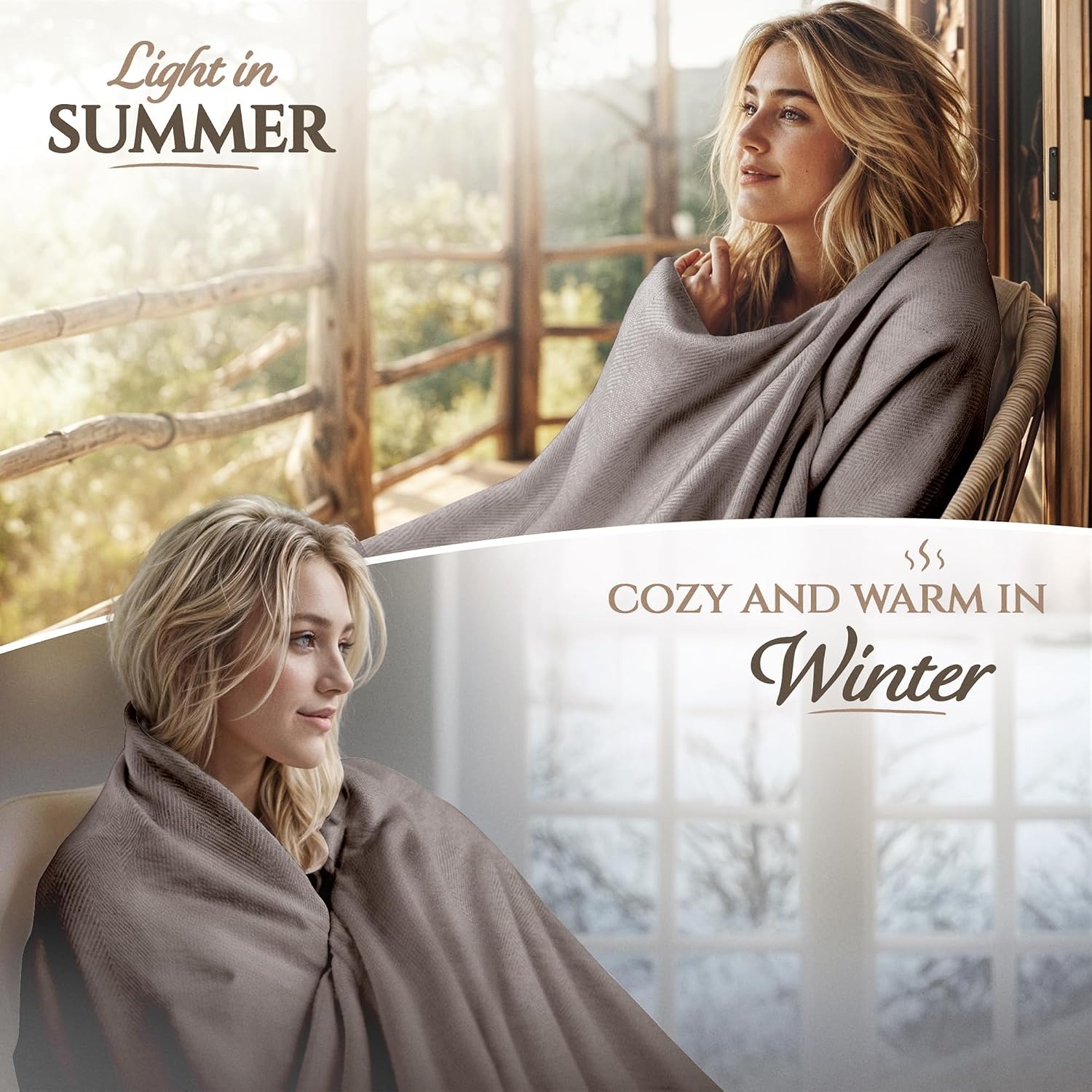
A cashmere blanket solves this for a simple reason. It is light enough that you forget you are under it, and warm enough that you do not need to add anything else. Those two things rarely come together. Thick fleece is warm but heavy and it traps sweat. Cotton throws are breathable but they barely hold heat. Cashmere sits in the middle and does both jobs properly.
This particular throw is 125 cm by 250 cm and weighs about 550 g. Put those two numbers next to each other and you can see what is going on. That is a lot of surface area for very little mass. The fibre is doing the work, not the bulk.
How cashmere works
Cashmere comes from the soft undercoat of cashmere goats. It is combed out rather than shorn, and a single goat produces only a small amount each year. That is most of the reason for the price.
The fibre itself is very fine, far finer than standard sheep wool. Fine fibres do two useful things. First, they bend easily when they touch your skin, so instead of a prickly point you feel softness. This is why people who find wool itchy often get on fine with cashmere. Second, more fine fibres fit into a given yarn than coarse ones, which means more tiny air pockets. Trapped air is insulation. That is the whole trick.
Because it breathes, cashmere also handles changing temperature better than synthetics. A polyester throw holds your heat and your moisture together, which is why you kick it off after half an hour. A pure cashmere throw lets moisture move away while keeping the warmth, so it stays comfortable for longer stretches.
What handwoven means in practice
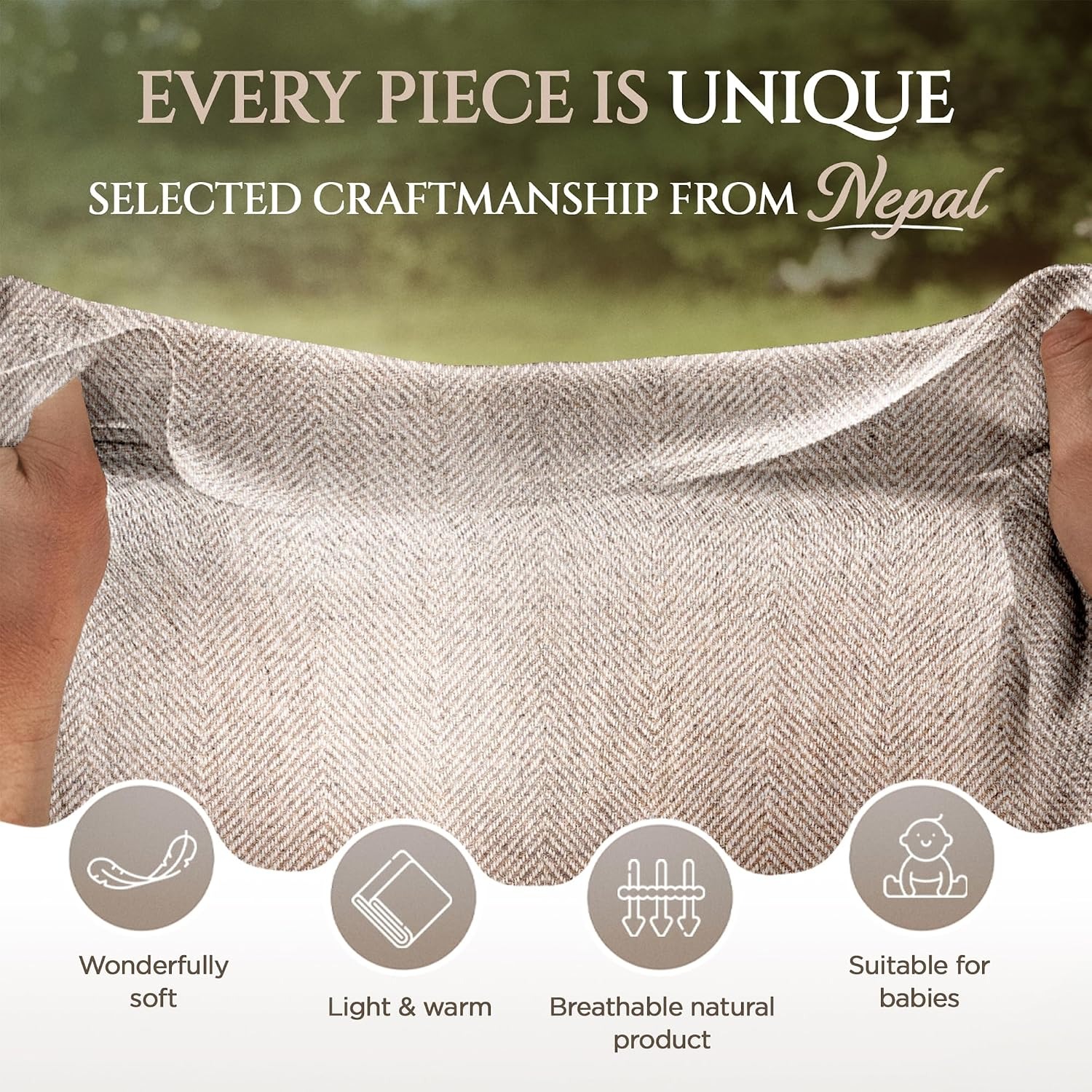
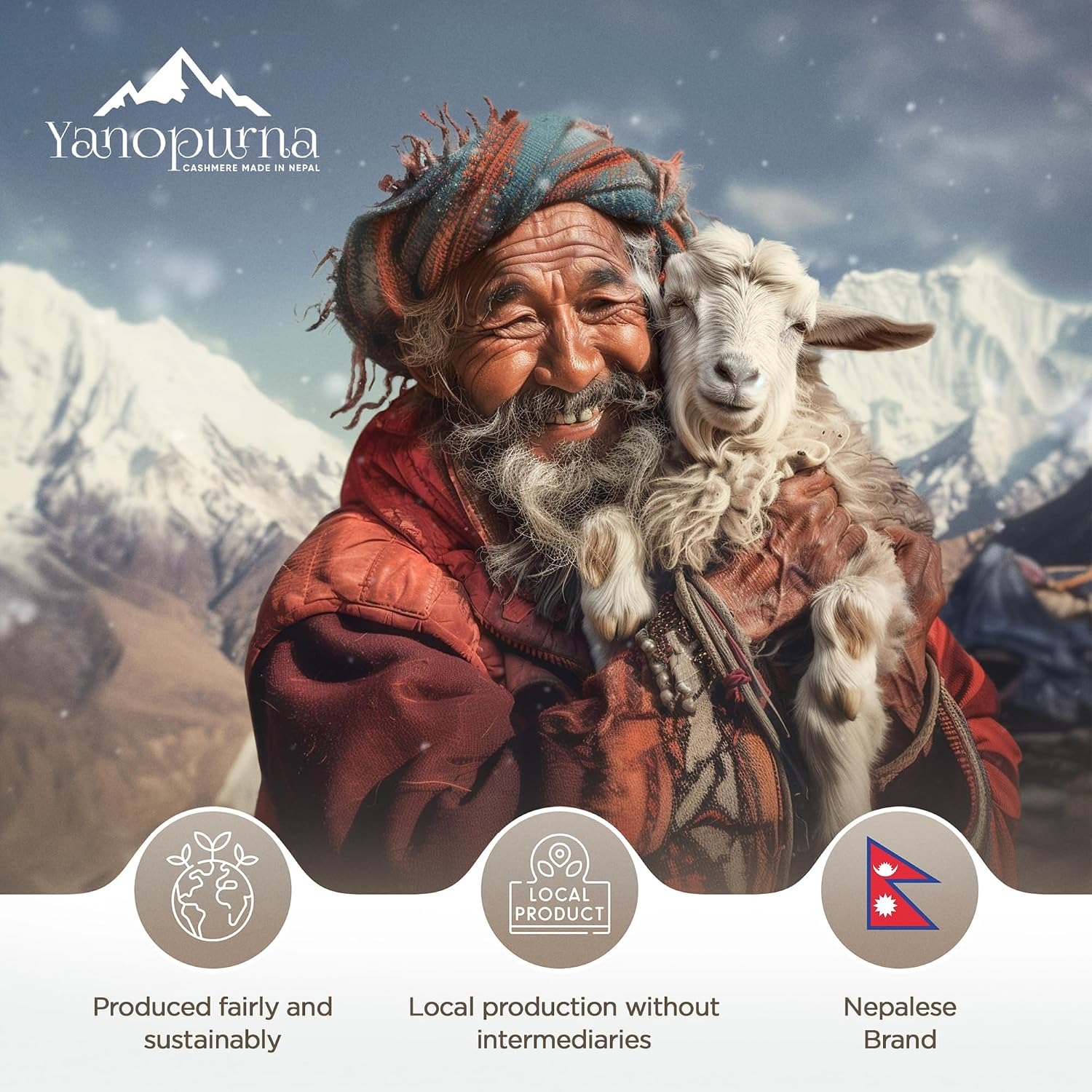
This blanket is made in Nepal by small family workshops. The cashmere is hand-combed, spun into fine yarn, then woven on a hand loom. That is a slow process compared with industrial production.
The practical difference shows up in the fabric. A handwoven cloth is not machine-perfect. You may see very slight variation in the weave across the width, or a tiny shift in tension here and there. That is normal and it is not a defect. It is also why no two pieces are identical.
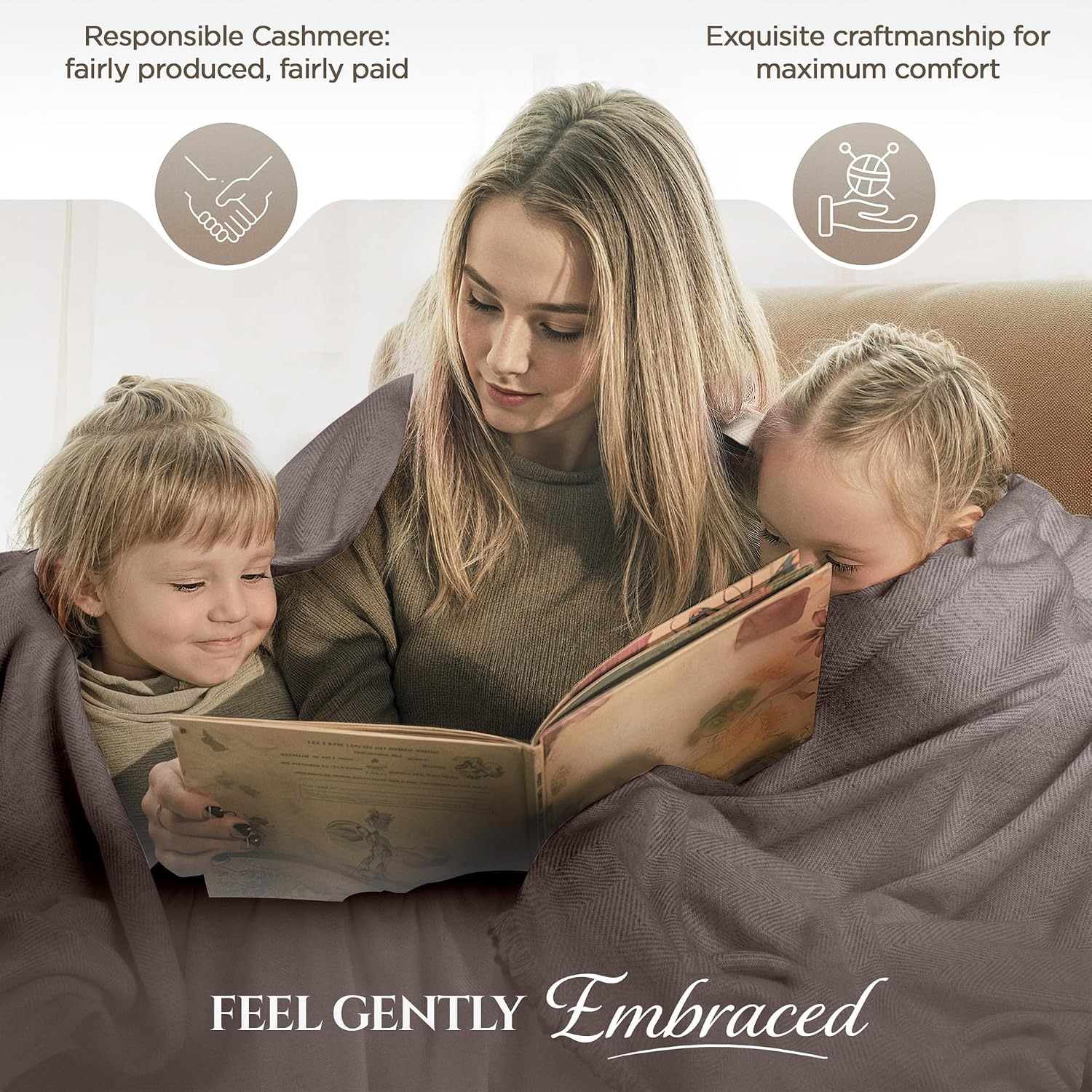
There is a second difference that matters less to the cloth and more to the purchase. Handweaving keeps work with the people doing it, in small workshops rather than large factories. If that part of the story matters to you, this is the kind of wool throw that carries it honestly.
Is the size right for you?
Size is where most throw purchases go wrong, so it is worth thinking about before you buy.
At 250 cm long, this is longer than a standard throw. An adult of almost any height can lie full length on a sofa and stay covered from shoulders to feet. If you have ever had a blanket that covered your legs but left your shoulders cold, that is the problem this length fixes.
The 125 cm width is deliberately not bedspread width. It keeps the blanket light and easy to handle for one person. Folded in half you get a double-thickness 125 x 125 cm lap blanket, which is the configuration most people end up using on a chair.
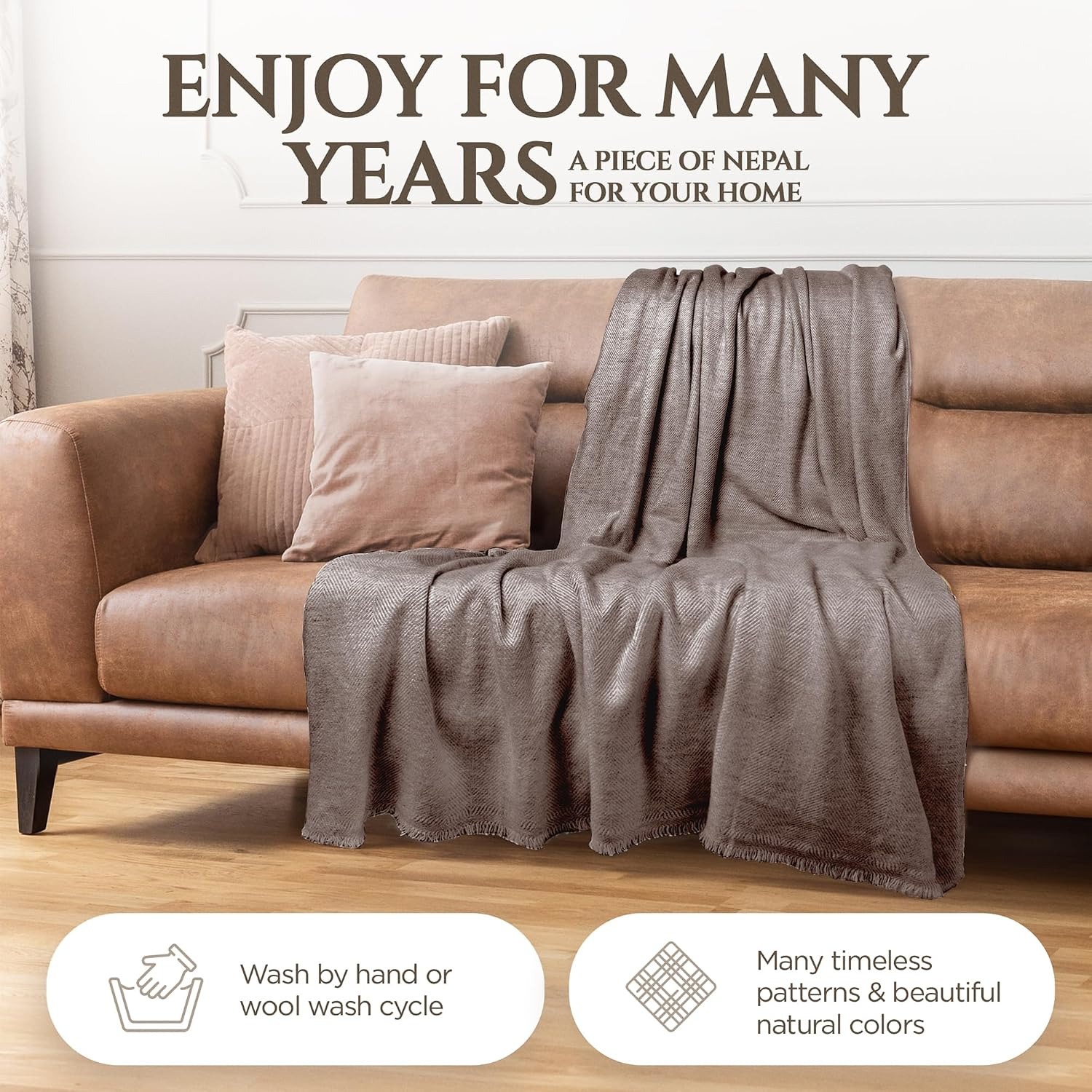
On a bed, it works best laid across the foot of a double, queen or king. On a sofa it covers a two or three seater nicely. If you want full upholstery coverage on a large sectional, you are looking at the wrong product category, and you would want two throws or a proper sofa cover.
Who this suits
It suits people who get cold in the evening but do not want to feel pinned down. It suits anyone who runs warm at night and needs a layer they can add and remove easily. It suits readers, nappers, and people whose living room has one draughty corner.
It also travels well. Around 550 g of cashmere compresses into almost nothing in a bag, which is why a cashmere travel blanket is a quiet favourite among frequent flyers. Aircraft cabins are cold and aircraft blankets are thin.
As a gift it removes most of the usual guesswork. There is no size to get wrong. The classic look does not fight with existing decor. And cashmere is one of the few materials where the recipient immediately understands the quality by touching it.
Who should skip it? If you need something that lives on a dog bed, gets dragged outside, or goes through a hot wash every week, buy a sturdy sheep wool throw instead. Cashmere rewards gentle treatment and punishes rough handling.
Caring for it without fuss
People assume cashmere is demanding. It is actually one of the lower-maintenance natural fibres, as long as you respect two rules: no heat, no agitation.
Cashmere is naturally dirt-repellent and does not hold odour, so it needs washing far less often than cotton or synthetic bedding. Hanging it outside on a dry, breezy day for a few hours freshens it completely. Most owners do this several times a year and wash it properly only once or twice.
When it does need washing, use cool water and a detergent made for wool. Hand washing is safest. If you use a machine, select a true wool program and turn the spin off entirely. Do not wring it. Press the water out, lay it flat on a towel, and let it dry away from radiators and direct sun.
Do not tumble dry it. Do not iron it. If it arrives creased from packaging, lay it flat or hang it for a day and the fold lines will relax on their own.
Expect a little surface pilling in the early weeks. This is loose fibre working free, not a fault. A cashmere comb or a soft fabric shaver clears it in a few minutes, and it slows down considerably after the first couple of months.
For summer storage, fold it clean into a breathable cotton bag. Avoid sealed plastic, which traps moisture. Cedar or lavender in the cupboard helps keep moths away, since moths are genuinely attracted to protein fibres like cashmere.
Comparing against cheaper options
You will find cashmere-blend throws for a fraction of the price. They usually mix a small percentage of cashmere with acrylic, viscose or lambswool. They feel reasonable in the first month and then flatten out, because the synthetic content does not recover its loft.
You will also find thick fleece throws that feel warmer in the shop. They are warmer for the first ten minutes. After that the lack of breathability catches up and you get the clammy feeling that makes you push the blanket off.
A 100% cashmere wool blanket costs more up front and lasts longer, softens with use rather than degrading, and stays comfortable across a wider range of temperatures. Whether that trade is worth it depends on how much you will actually use it. If it is going to live on your sofa every evening from April to September, the maths works out well.
The short version
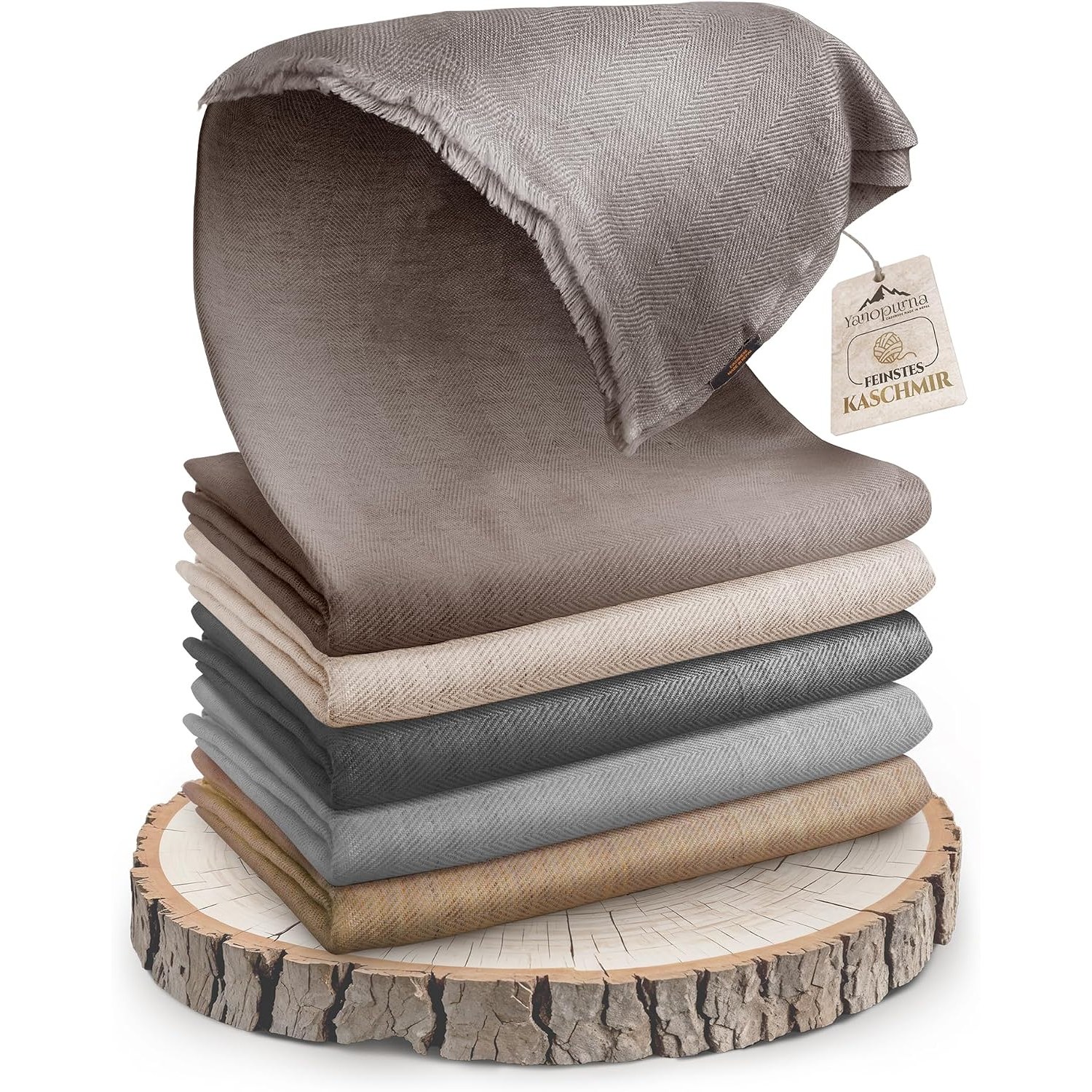
This is a 125 x 250 cm handwoven blanket made from 100% cashmere wool, weighing about 550 g, produced by small family workshops in Nepal. It is light, warm, breathable and soft enough for direct skin contact.
Use it on the sofa, across the end of a bed, or rolled into a travel bag. Wash it rarely, wash it cool, dry it flat, and keep it away from heat. Do that and it will outlast most of the furniture it sits on.
If you have been putting up with a throw that is too short, too heavy or too synthetic, this is the straightforward upgrade.