
The complete guide
Choosing a Travertine Vanity Tray, A Practical Buyer's Guide
The small mess nobody plans for
Bathroom counters fill up quietly. A hand soap arrives, then a hand cream, then a bottle of serum someone brought back from a trip. Within a month there are seven things standing on the bench with no relationship to each other, and the whole surface looks cluttered even though it is perfectly clean. The same thing happens on a bedroom dresser, on a hallway console, and on a coffee table.
The fix is not more storage. It is a boundary. A tray draws a line around a group of objects and tells your eye that they belong together. Everything inside the line reads as one considered arrangement. Everything outside it reads as stray. That is the whole trick, and it is why a good vanity tray does more visual work than almost anything else you can put on a counter for the same money.
Why stone instead of metal, timber or plastic
You can buy a tray in almost any material, so the question is what each one actually does over time.
Plastic is cheap and light. That lightness is the problem, because it skates around every time you lift a bottle off it, and it tends to yellow where sunlight hits it.
Timber looks warm but dislikes bathrooms. Steam and splashes get into the grain, and eventually the finish lifts or the joins swell.
Metal trays, including brass, hold up well and bring their own shine. They can show water spots and fingerprints though, and lacquered finishes eventually wear through at the contact points.
Stone sits in a different category. There is nothing laminated to it, nothing glued and nothing coated that can peel. A travertine tray is one solid piece of material. When it gets marked, it still looks like stone, which is a forgiving way for an object to age. That durability is why people hunting for the best natural stone bathroom tray usually land on travertine or marble rather than a composite.
What travertine actually is
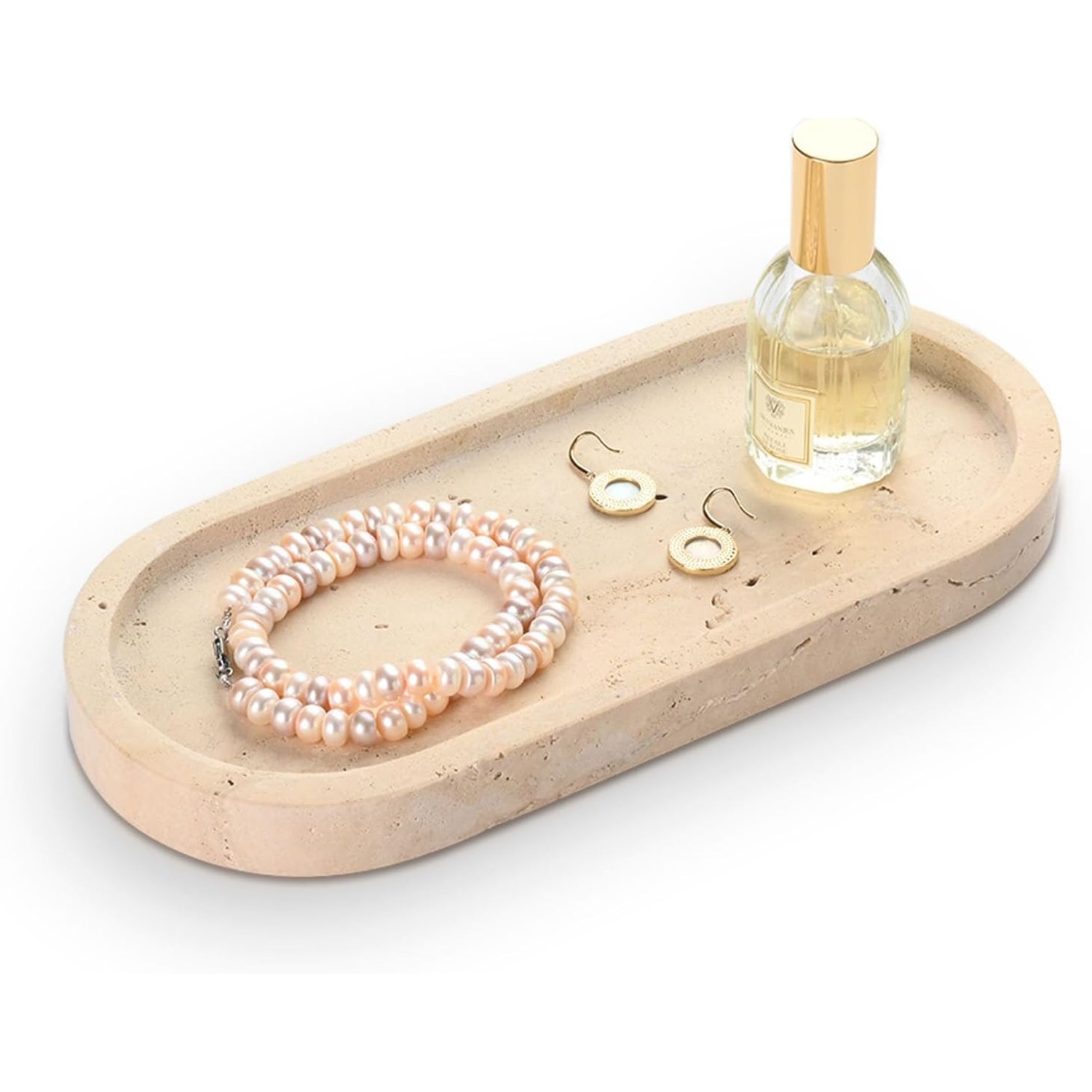
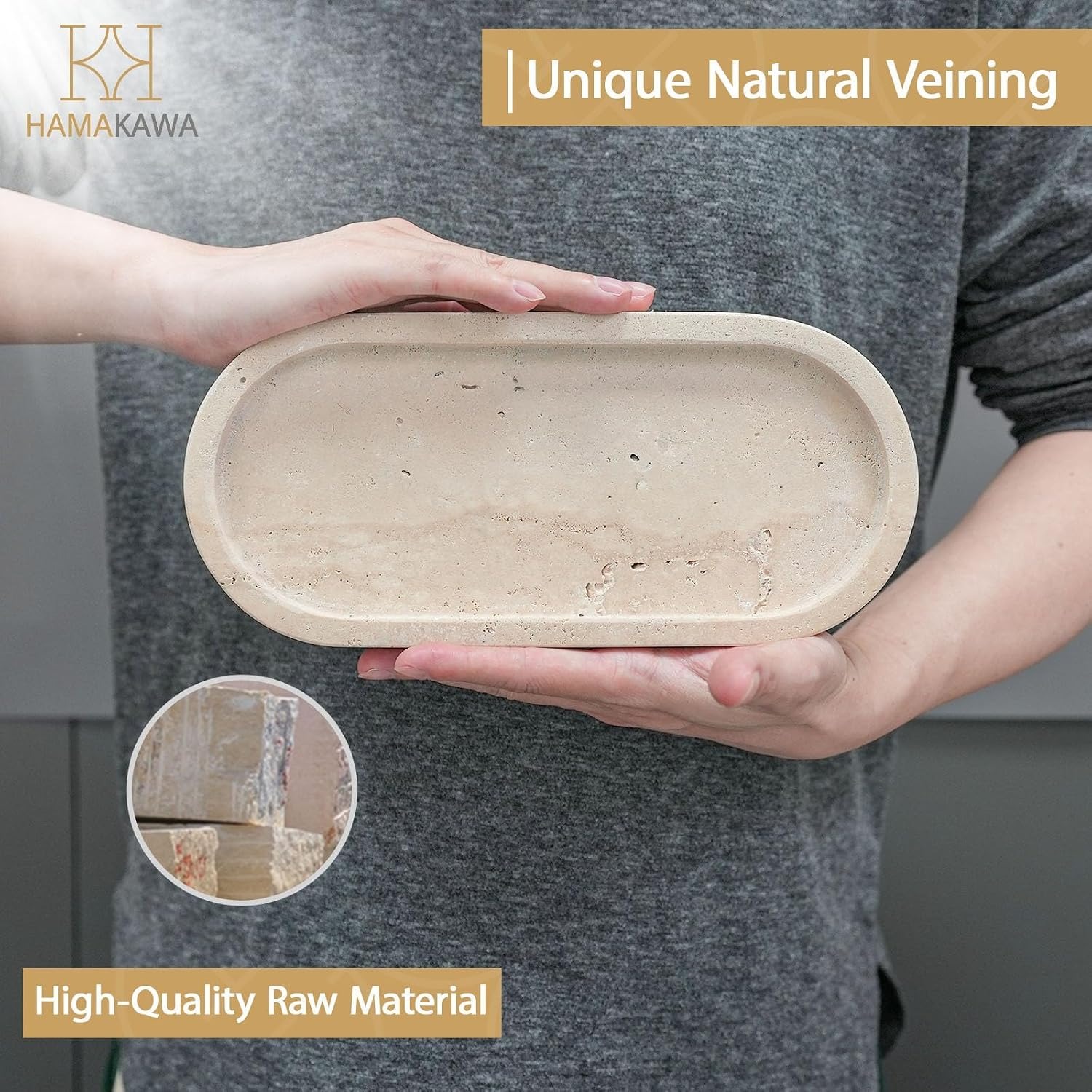
Travertine forms from mineral-rich water depositing calcium carbonate over long stretches of time. As it builds up, gas bubbles leave small voids in the stone. Those voids are the pores you can see and feel on the surface, and they are the fastest way to tell real travertine from a printed lookalike.
The colour tends toward warm beige, cream and soft tan, sometimes with faint banding running through it. Because it is a natural material, two trays cut from different blocks will not match. Some people want uniformity and find this frustrating. Most people find it is exactly the point, since a tray with its own markings has a presence that a moulded product never achieves.
The porous nature cuts both ways. It gives travertine its soft, matte look and its slightly cool, chalky feel in the hand. It also means the stone will absorb liquids if you let them sit. That is worth knowing up front, and it shapes how you care for the piece.
Why the oval shape earns its place
Shape sounds like a purely aesthetic choice. In practice it changes how much you can fit.
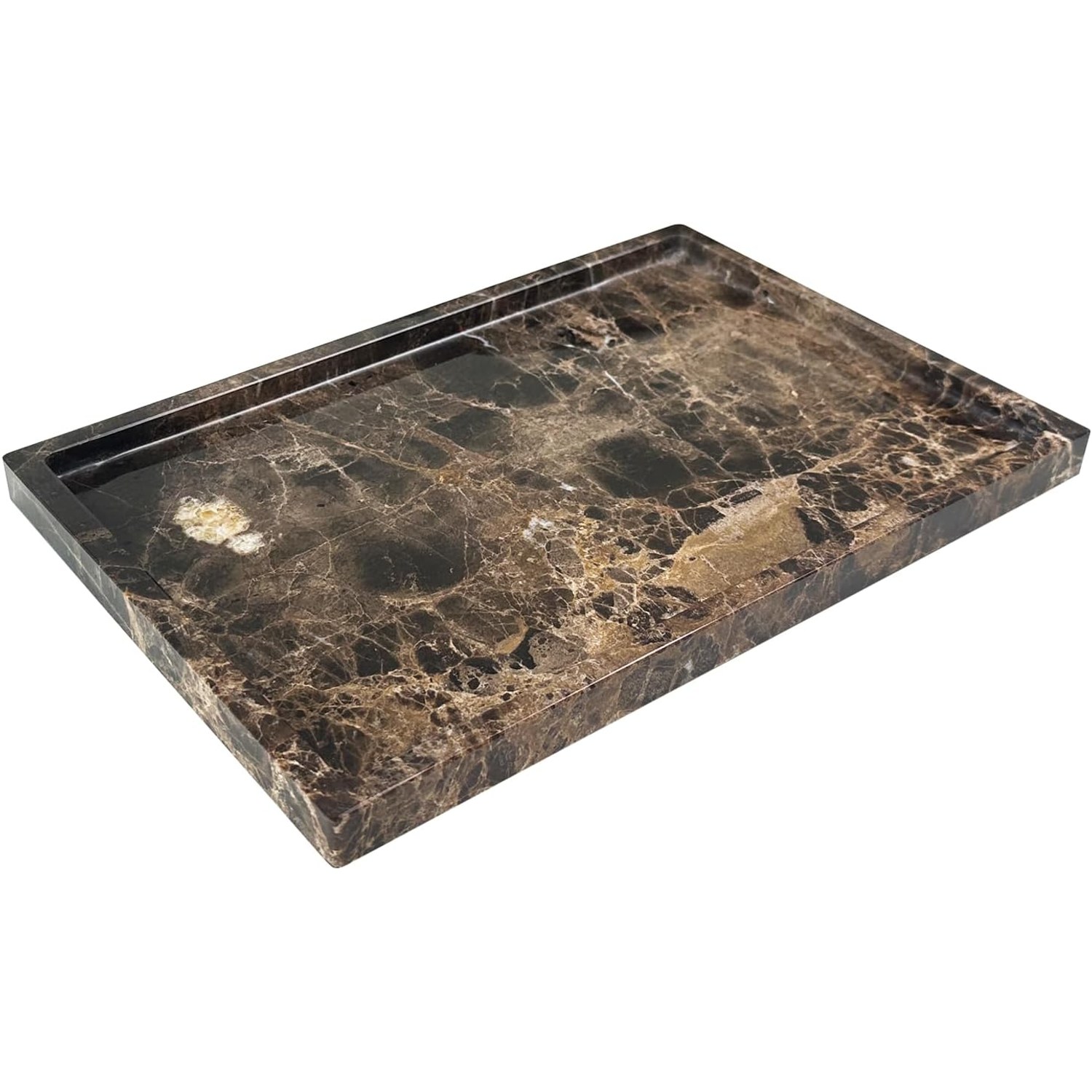
Rectangular trays have four corners, and corners are where nothing useful goes. Round bottles, jars and tubs leave dead triangles of space at each end. Round trays solve that but waste width along the sides and tend to look small for their footprint.
An oval keeps the length you need for lining up a few bottles while losing the awkward corners. It also reads as softer, which matters in a bathroom where most other shapes are hard rectangles: the mirror, the basin edge, the tiles. A curve breaks that up. If you are comparing options for the best oval stone tray, pay attention to how deep the rim is as well, since a shallow lip is what stops rings and earrings from wandering off the edge.
Where people actually use it
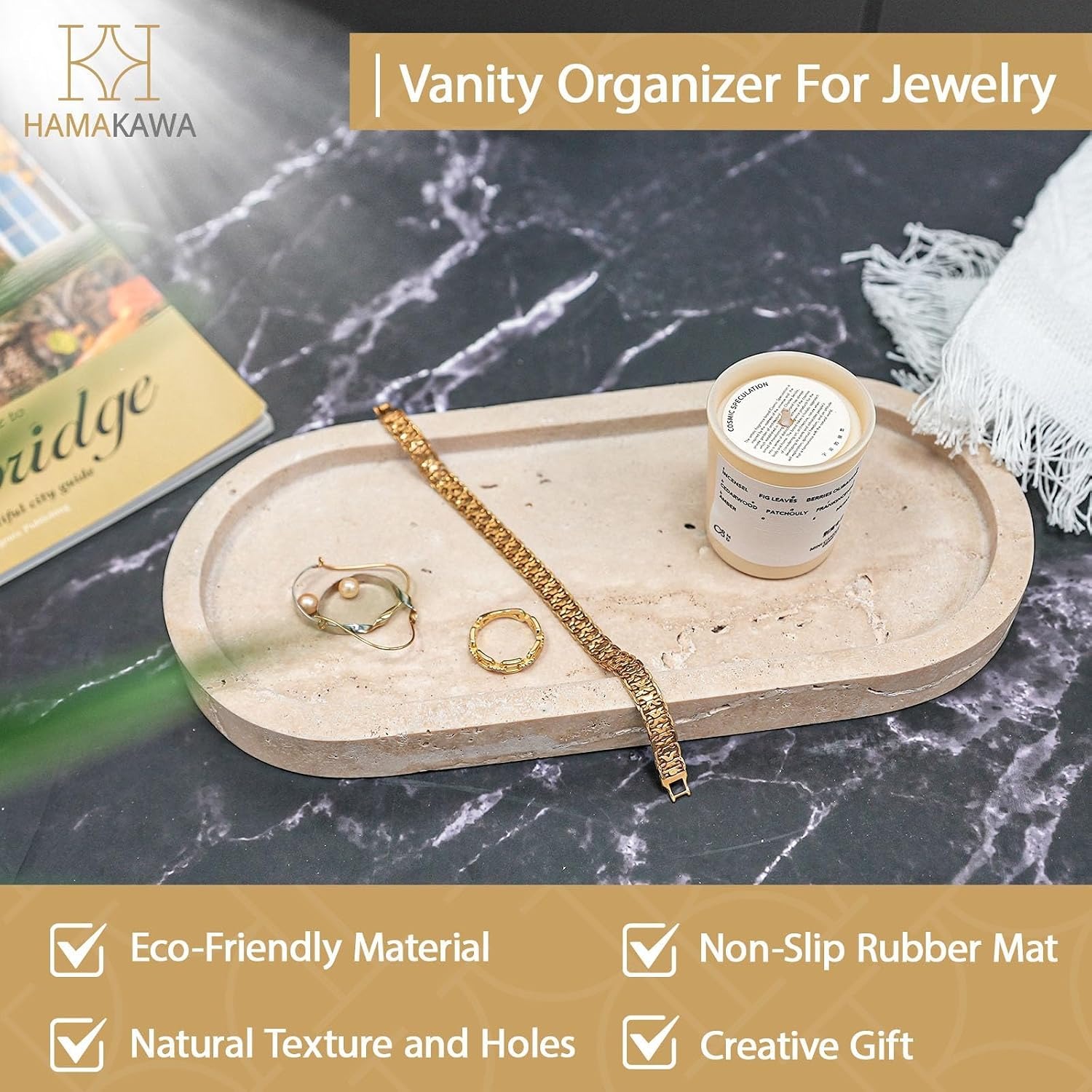
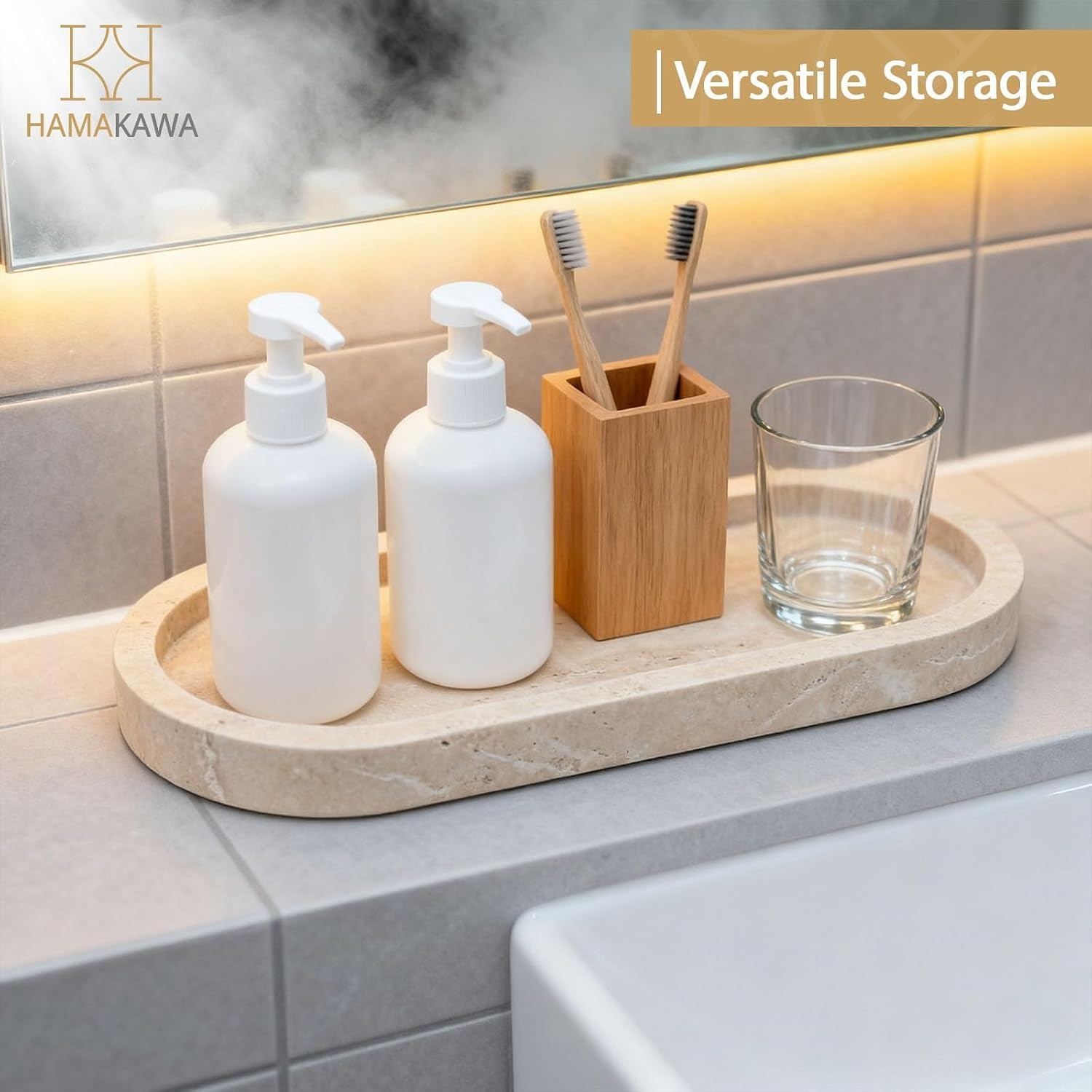
The bathroom vanity is the obvious home. Hand soap, a small candle and two or three skincare bottles fit comfortably, and the tray gives you something to lift when you wipe the bench rather than shuffling six items one at a time.
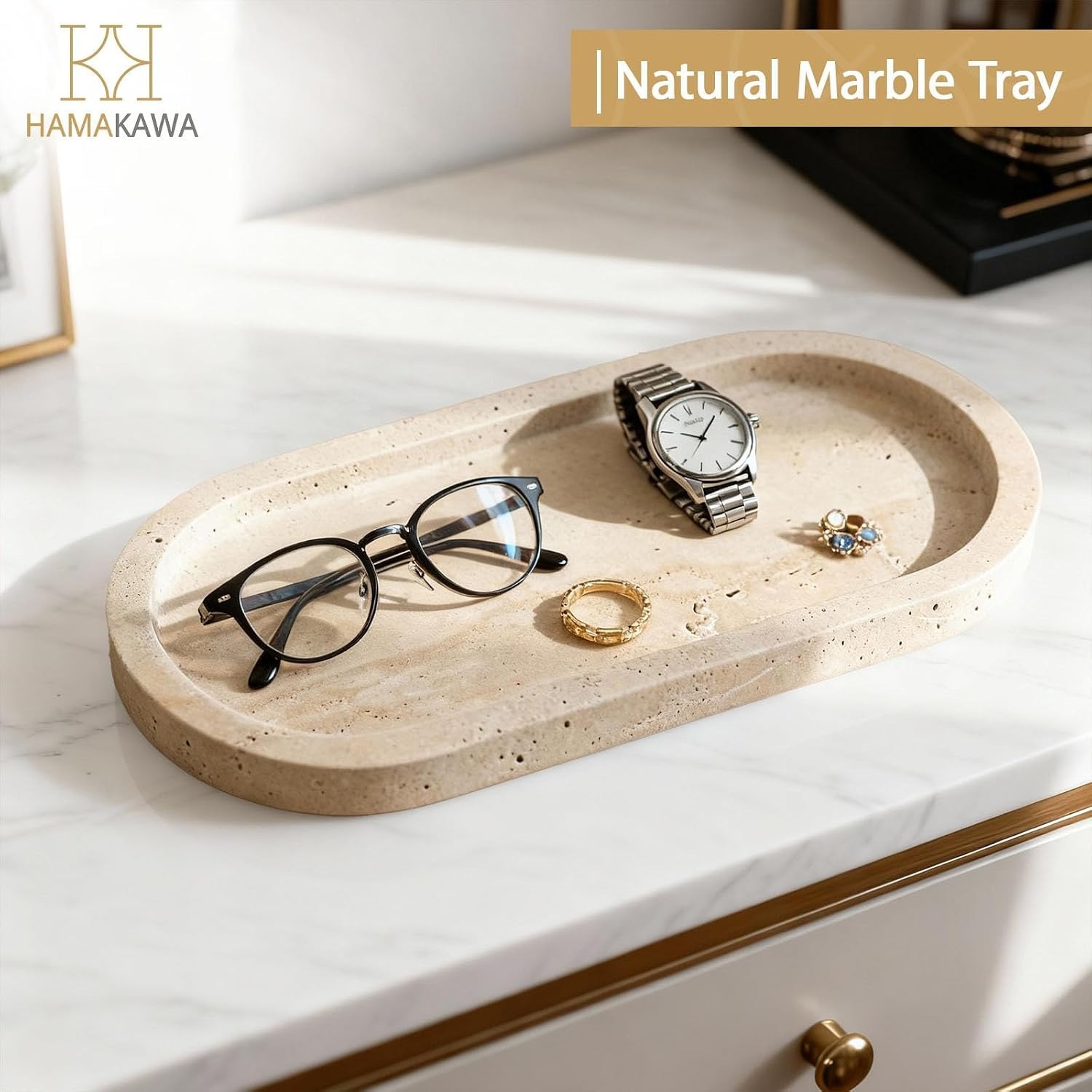
The bedroom dresser is the second most common spot. Used as a jewellery tray, it becomes the place rings and a watch land at the end of the day instead of migrating into pockets and bedside drawers. Anyone searching for the best jewellery tray for a dresser is usually trying to solve exactly this habit.
Then there is the entryway. A stone catchall by the door collects keys, sunglasses and cards. Having one defined landing spot is the single most effective way to stop the morning search for keys.
Finally, the coffee table. A tray anchors a candle, a small plant and a book or two, so the table looks arranged rather than randomly occupied.
How to choose well
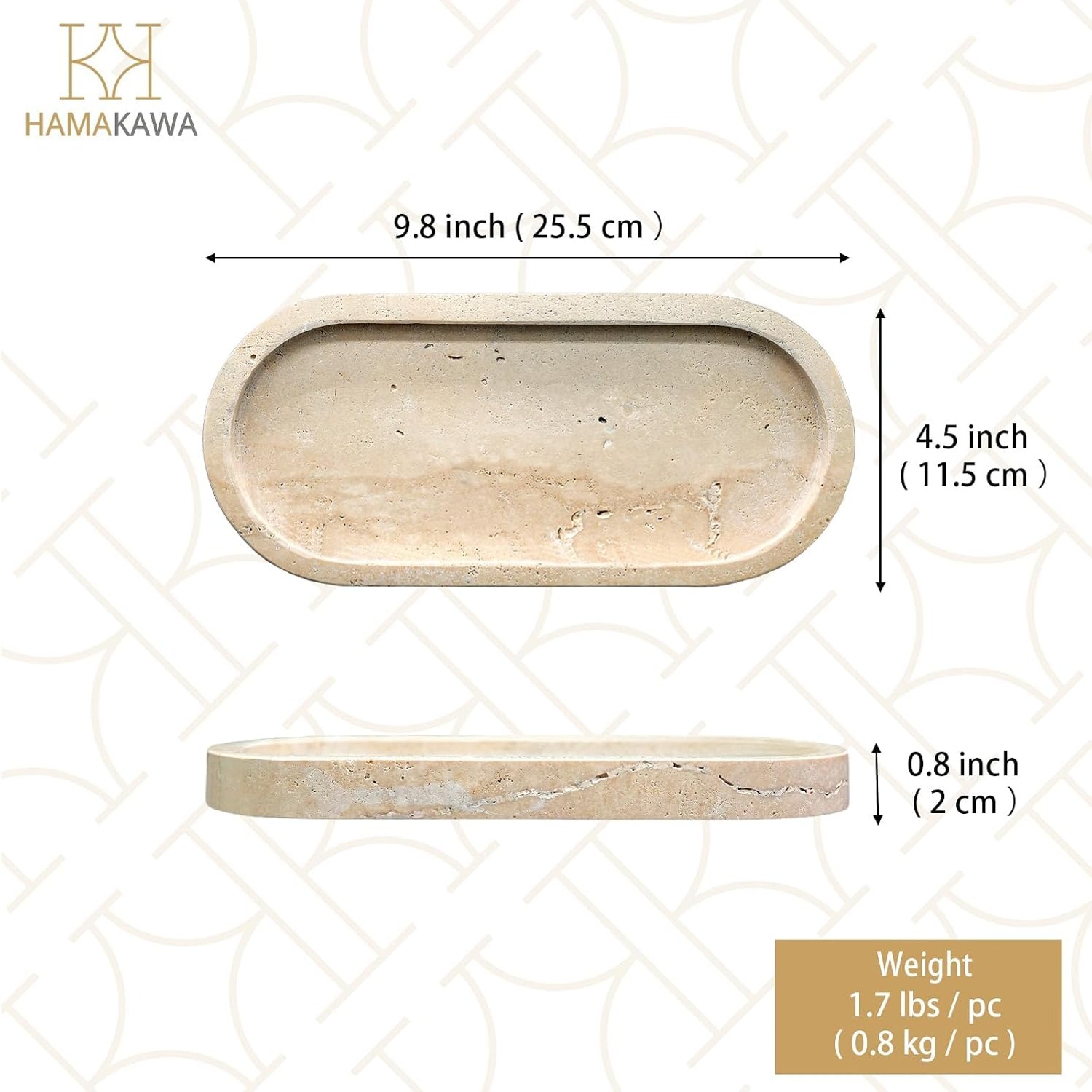
Start by measuring the space. Vanity counters vary enormously, and a tray that looks modest in a photo can dominate a narrow bench. Measure the usable depth between the basin and the back wall, then compare it to the tray width.
Next, think about what will live on it. A hand soap pump needs more height clearance than a ring dish, but the real constraint is footprint. Lay out the items you want to group and see how much floor space they take.
Check the base. A tray without any grip on the underside will slide, and on a glass shelf it will also make an unpleasant grinding sound. Rubber pads are a small detail that changes daily use.
Check the edges. Polished, burr-free edges matter if you are picking the tray up regularly or placing jewellery in it. Rough edges catch on cloth and feel unfinished.
Finally, be honest about maintenance. Natural stone asks for a quick wipe and some care with cleaners. If you want something you can scrub with bleach and forget about, stone is not the right pick. If you can manage a damp cloth, it will look good for years.
Caring for natural stone
The routine is short. Wipe the surface with a soft damp cloth, then dry it. Doing this when you clean the rest of the bench is enough for normal use.
Skip anything harsh or acidic. Bleach, vinegar, citrus sprays and strong bathroom cleaners can dull or etch stone. Plain water handles most marks, and a drop of pH-neutral soap handles the rest.
Blot spills rather than leaving them. Perfume, oil and strongly coloured liquids are the ones to watch, because porous stone draws them in. Catching a spill in the first minute usually means no trace at all.
Do not soak the tray and keep it out of the dishwasher. Lift it rather than dragging it, especially across stone or glass, and keep hot cookware off it if it lives in the kitchen.
Giving one as a gift
Stone trays make unusually safe gifts. They are useful without being a chore, neutral in colour so they do not clash with someone's palette, and they carry no branding or slogan. For a housewarming, a wedding or a holiday gift, a travertine tray lands somewhere between practical and decorative, which is the zone most gifts miss.
They also suit people who are hard to buy for. Someone who already owns everything still has a counter that could use organising.
The short version
A travertine tray solves a small, constant annoyance. It gathers scattered objects into a single arrangement, stays put thanks to its weight and rubber pads, and brings a warm natural surface into a room full of hard edges. The oval shape fits bottles better than a rectangle and looks less fussy than a circle.
Care is a damp cloth and a bit of common sense about spills and cleaners. In return you get an object with no coating to peel and no join to fail, one that looks like stone for as long as you own it. Whether it ends up on a vanity, a dresser, a hall console or a coffee table, it does the same quiet job every single day.