
The complete guide
The Complete Buyer's Guide to Linen Hemstitch Napkins
The problem with the napkin drawer
Most households own two kinds of napkin. There is the packet of paper ones in the cupboard, pulled out when guests arrive and binned at the end of the night. And there is the "good" set, usually four of them, inherited or bought years ago, that only come out at Christmas because there are never enough to go around.
Neither works very well. Paper napkins are a recurring cost and they do a poor job on a lap. The small set of good ones causes a different problem, because the moment you have more than four people at the table you are mixing and matching, or back to paper.
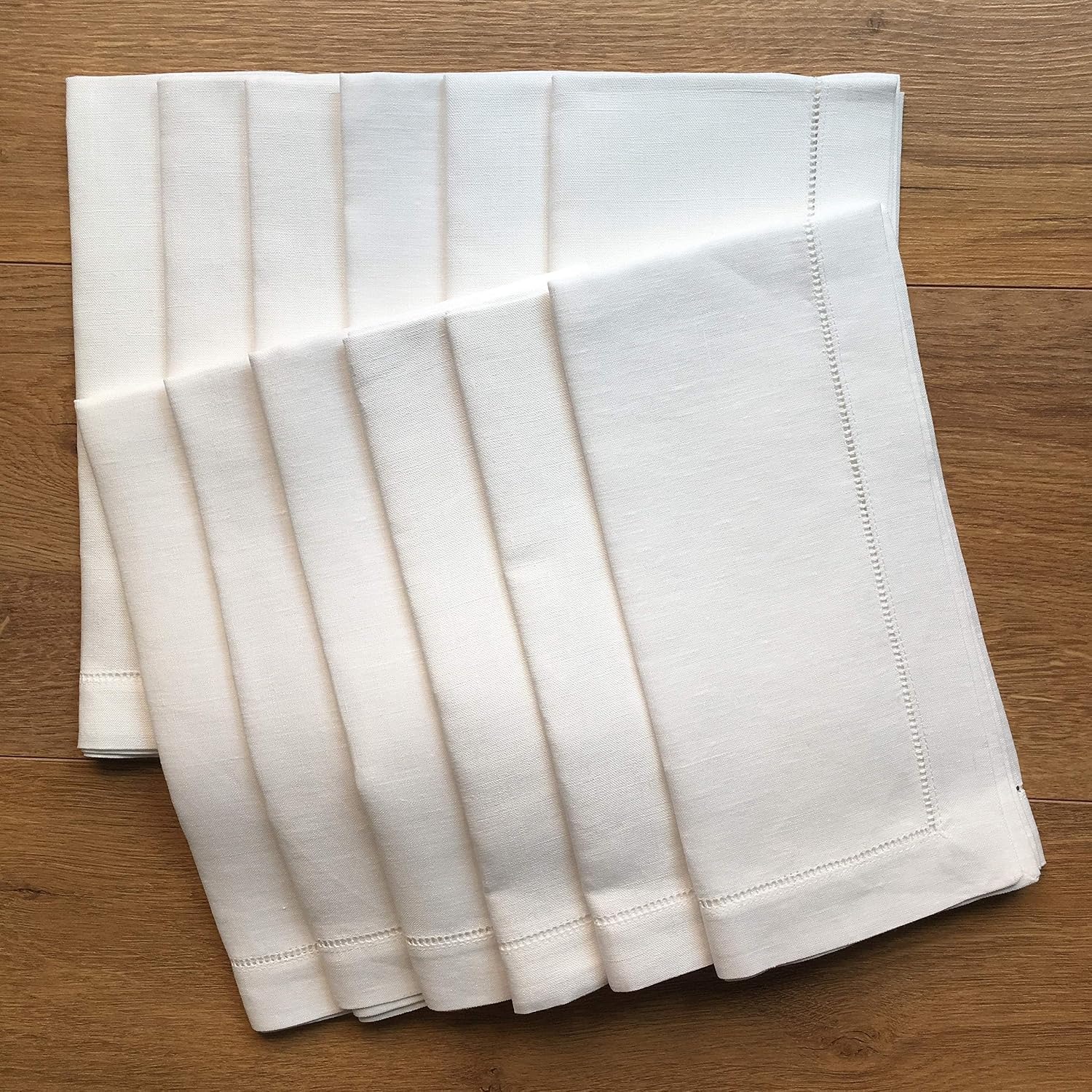
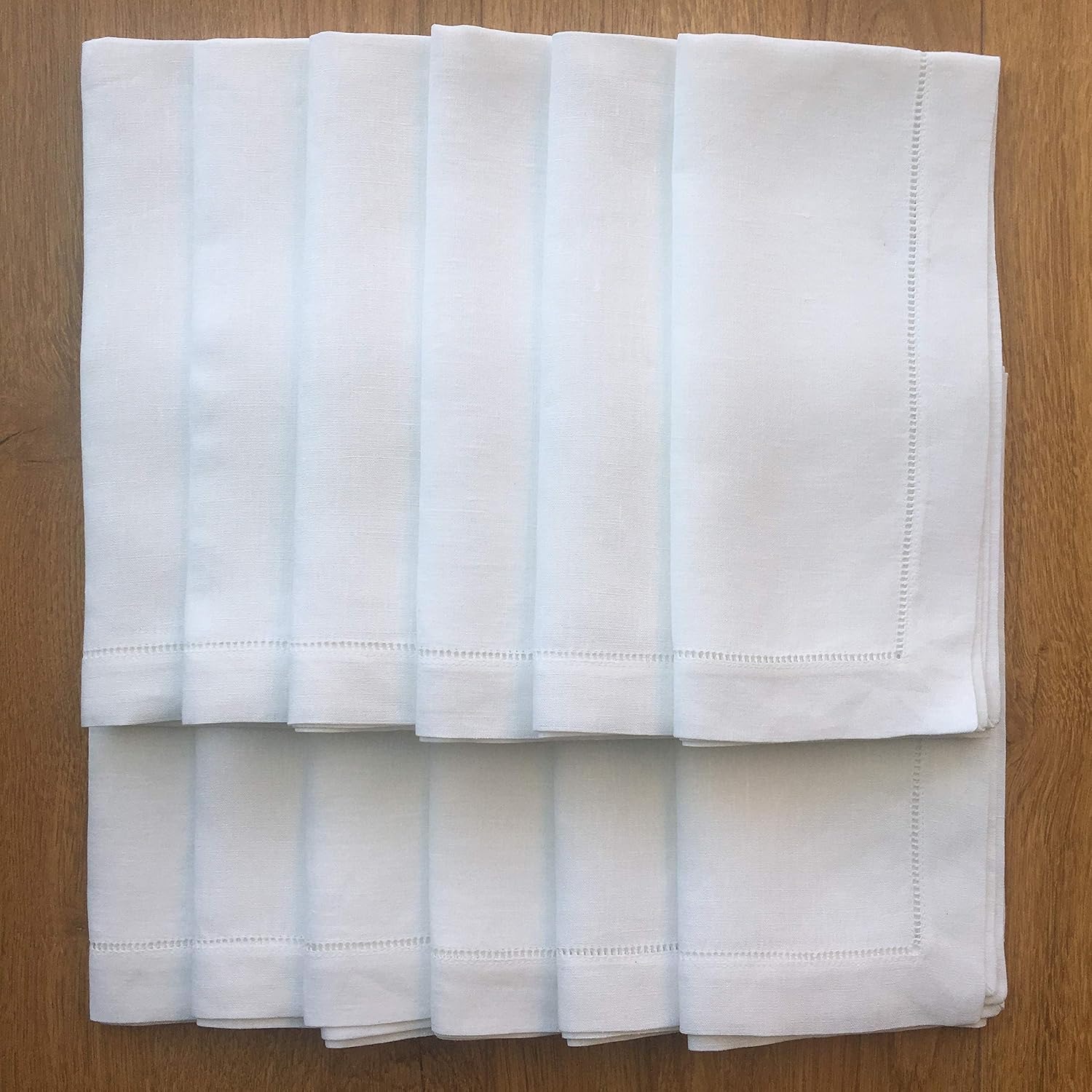
A set of twelve solves both at once. It is enough for a long table, enough to run two dinners back to back without laundry panic, and enough that you stop treating them as special. That is the whole point of these white linen hemstitch napkins. They are nice enough for a wedding and plentiful enough to use on a weeknight.
What a hemstitch actually is
The word gets used loosely in product listings, so it is worth being clear.
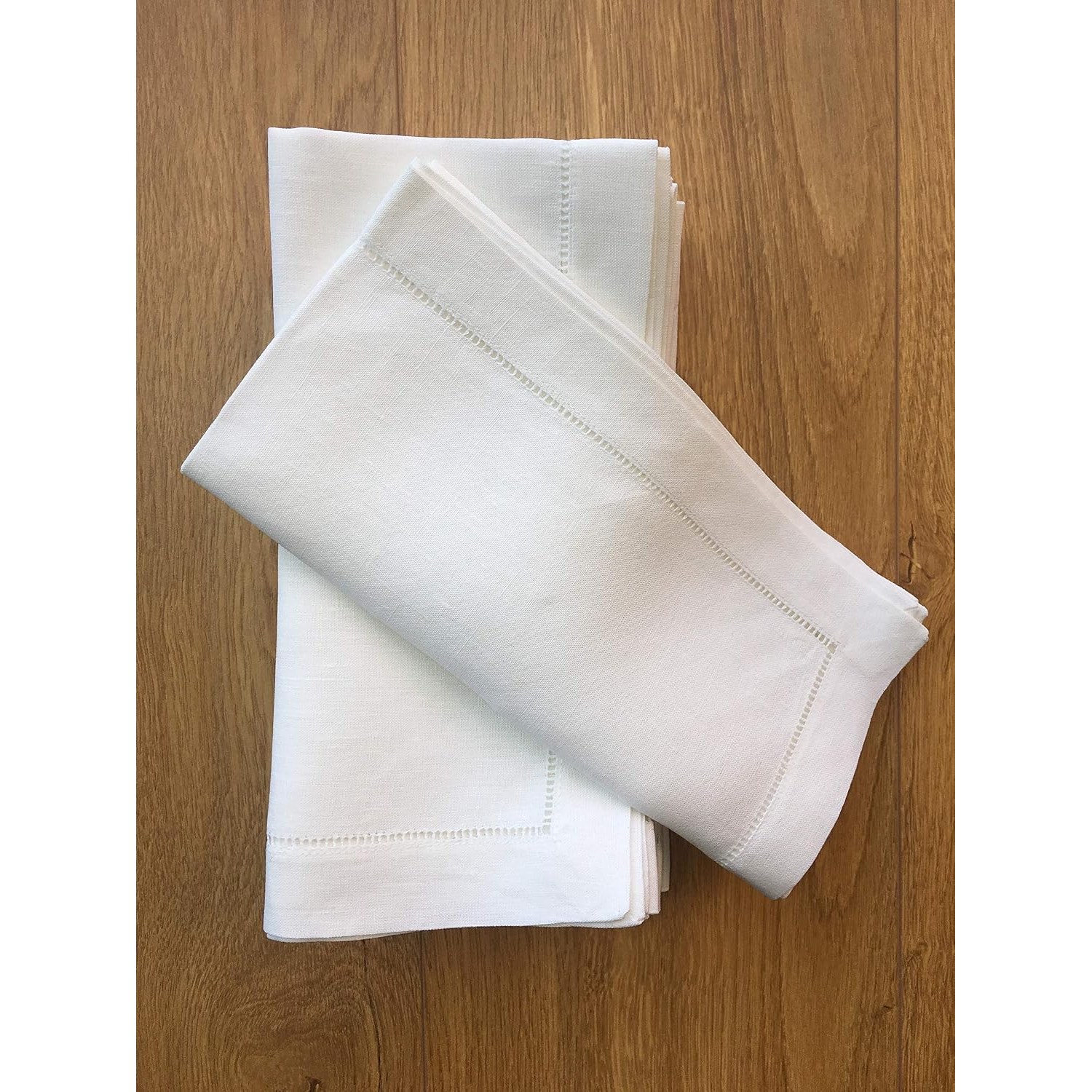
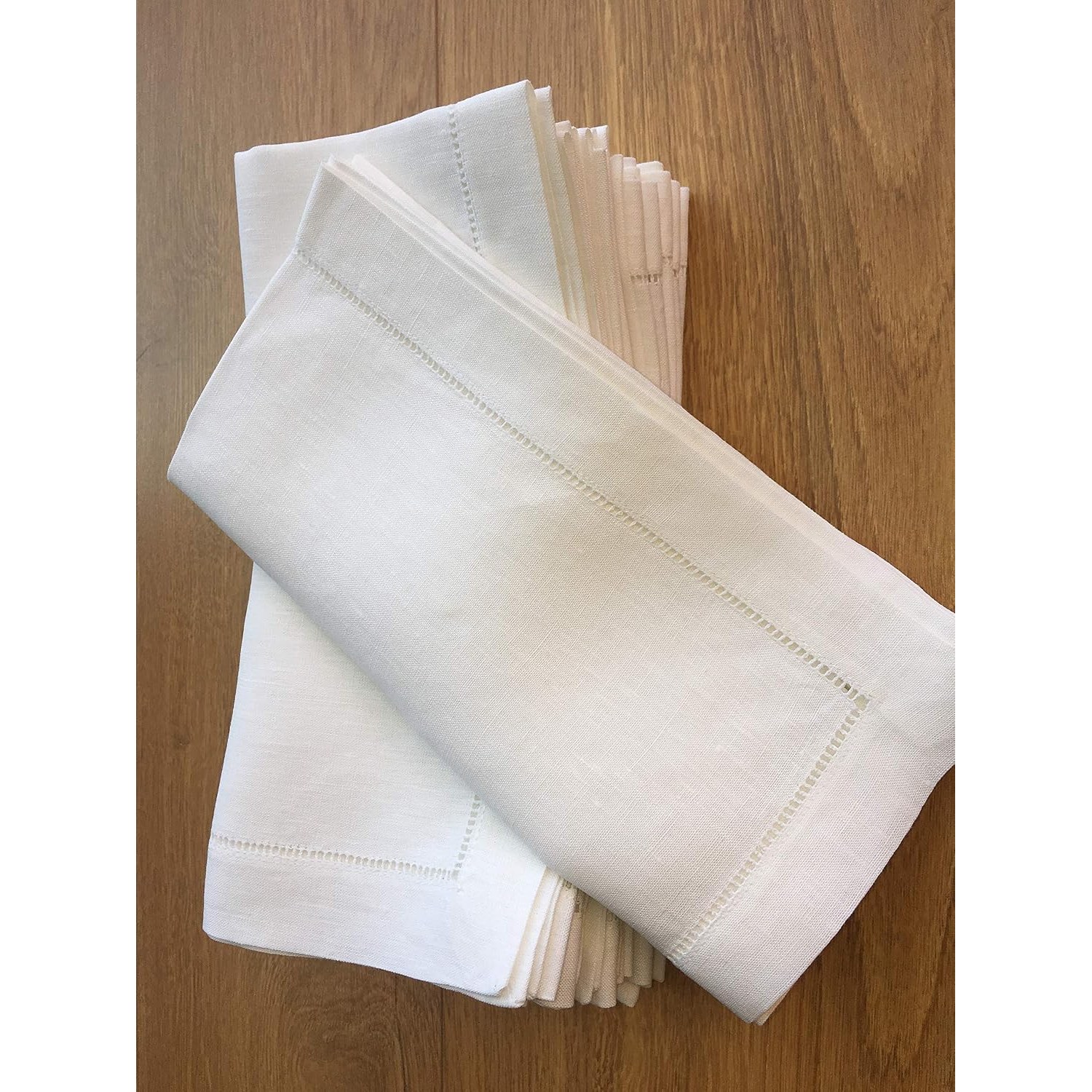
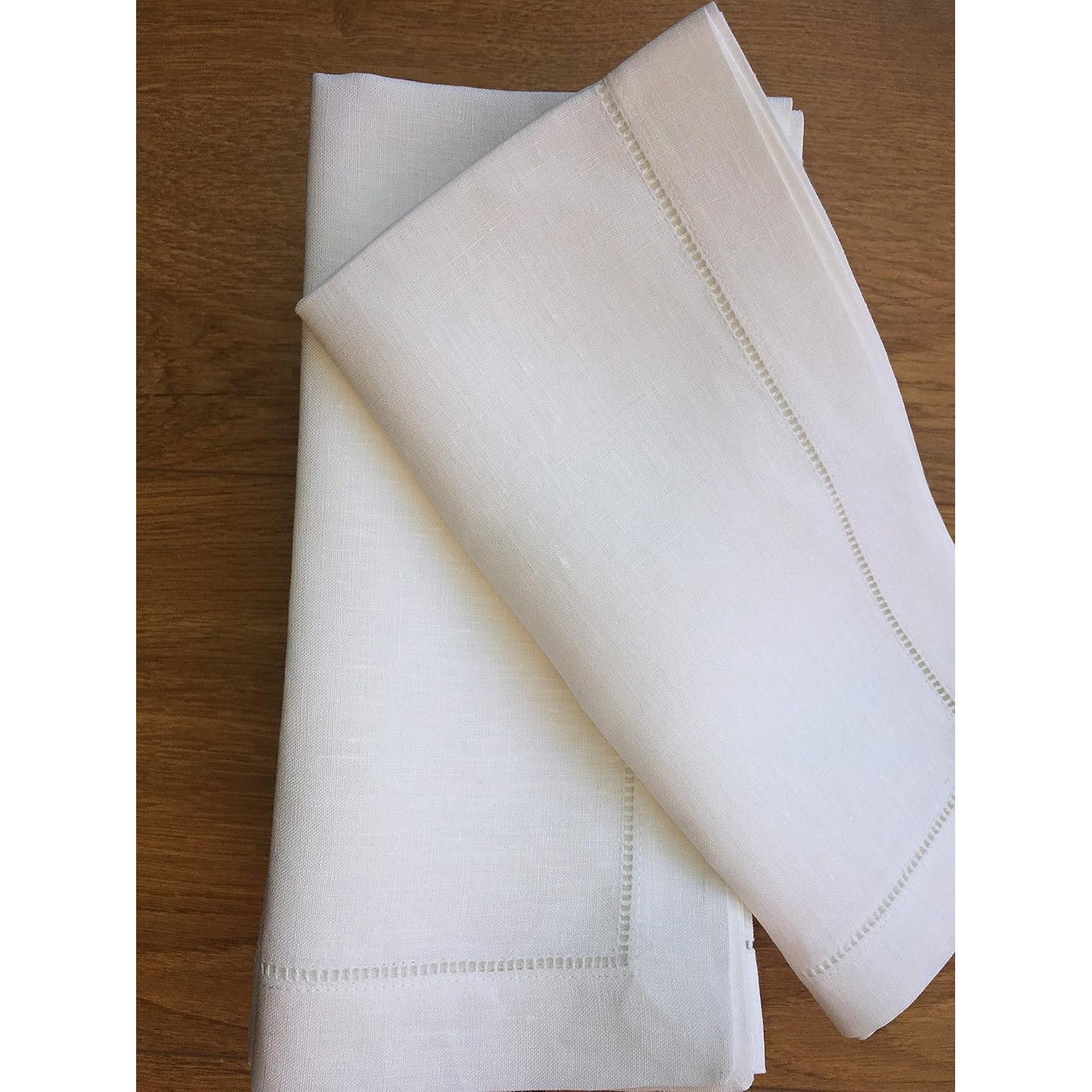
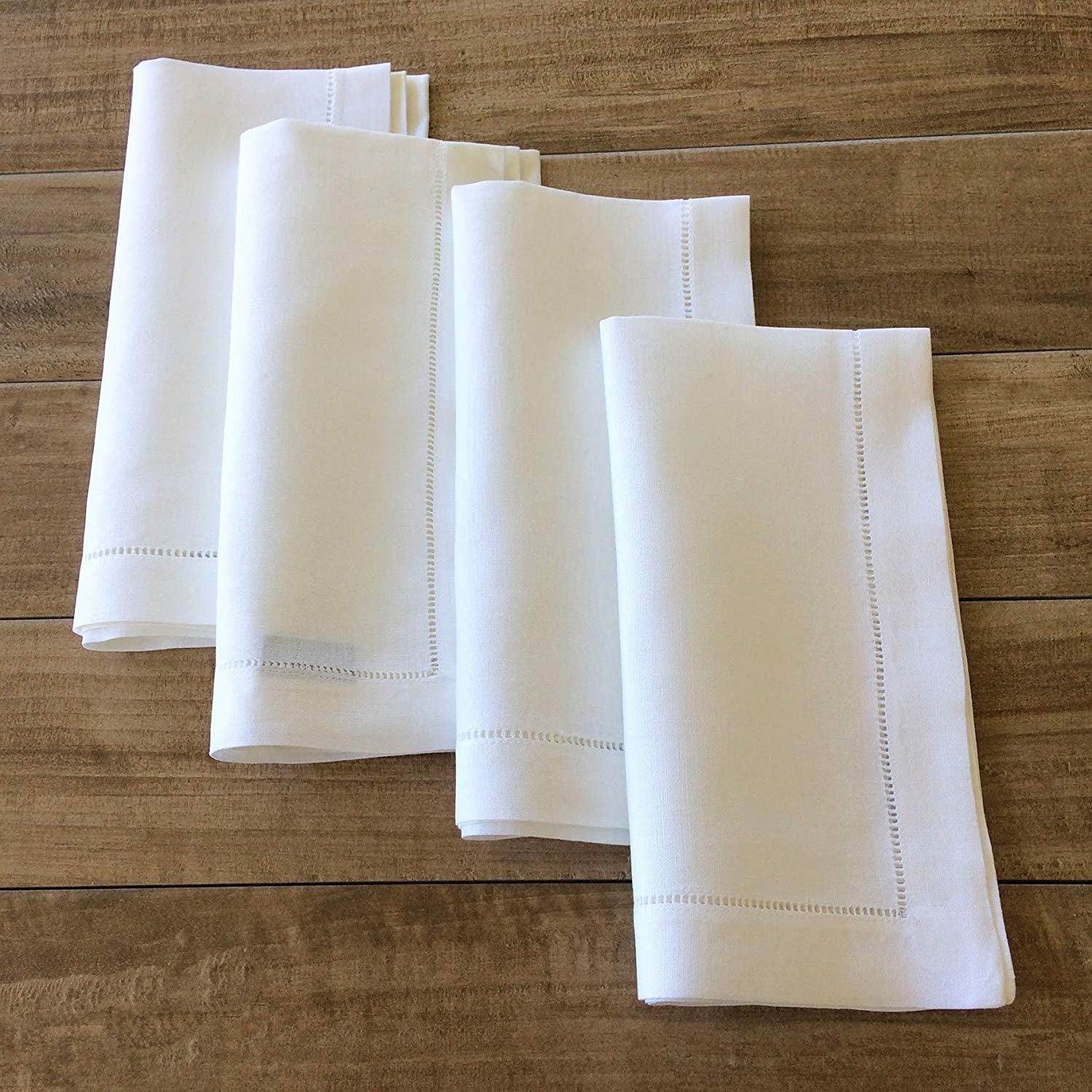
A hemstitch is made by pulling a few threads out of the fabric near the hem, then bundling the remaining threads together with stitching. What you are left with is a row of small open gaps, like the rungs of a ladder, running just inside the edge of the cloth. On this set it is described as a ladder hemstitch, which is the classic, evenly spaced version you find on traditional table linen.
It is a functional detail as much as a decorative one. The stitching locks the hem in place, so the edge does not unravel the way a plain cut or a loose overlock can. The corners are mitered, meaning the hem is folded on a diagonal so both sides meet cleanly at the point rather than stacking up into a bulky square.
You see the benefit two ways. First, the napkin lies flat. A folded square with mitered corners sits properly on a plate instead of lifting at the edges. Second, it lasts. Corners and hems take the most strain in the wash, and a napkin finished this way holds together far longer than one with a quick machine hem.
Why linen, and what to expect from it
Linen comes from flax. It is one of the oldest textile fibres in use, and its reputation for table linen is not nostalgia, it is physics.
Linen is more absorbent than cotton, which is the single most useful property in a napkin. It picks up moisture quickly and does not just push it around. It is also lint-free, so it does not leave fluff on glassware or dark clothing. And the fibre is strong, particularly when wet, which is why linen tolerates repeated hot washing better than many natural fabrics.
The trade-off is creasing. Linen wrinkles, and no amount of careful folding changes that. Some people treat this as a flaw. Others, including most restaurants that use linen, treat it as part of the look. If crisp is what you want, iron while the fabric is still slightly damp and the napkin will press into a sharp fold that holds all evening. If relaxed is what you want, fold them from the dryer and let them be.
The other thing worth knowing is that linen improves. A brand new linen napkin feels firm, almost papery. After ten or fifteen washes it softens noticeably, and after a year of use it has a drape that new fabric cannot fake. You are not buying something that is at its best in the box. You are buying something that gets better.
Size matters more than people think
Each napkin here is 20 x 20 inches. That is worth dwelling on, because napkin sizing is where a lot of sets quietly disappoint.
Cocktail napkins run around 10 inches. Luncheon napkins sit in the 14 to 16 inch range. Dinner napkins are typically 18 to 22 inches, and 20 inches is squarely in the middle of that band. It is the size you get handed in a decent restaurant.
Why does it matter? A 16 inch napkin folded in half across a lap covers almost nothing. It slides off when you stand. A 20 inch napkin folded into a rectangle actually stays put and actually catches what it is meant to catch. It also folds better. Decorative folds need fabric to work with, and small napkins collapse into something apologetic.
If you have been searching for large cloth napkins and finding sets that arrive smaller than expected, the 20 inch measurement is the number to check against.
Who this set suits
People who entertain. Twelve napkins covers a long table of ten with two spare, or two rounds of six. That is the awkward number most households are missing.
People hosting a wedding or event. White is the default for formal service because it does not fight with flowers, glassware, menus or whatever colour scheme has been chosen. Multiple sets stack up cleanly for bigger guest counts.
People trying to stop buying paper. This is a slower return but a real one. A household that gets through a packet of paper napkins a fortnight spends a surprising amount over five years. Washable cloth removes that line item entirely.
People who want to give something that lasts. Monogrammed table linen is one of the few gifts that genuinely gets passed on. The plain white ground here is easy for an embroidery shop to work with.
How to choose between napkin sets
A few things separate a set worth owning from one you regret.
Look at the fibre first. Pure linen behaves differently to a linen-look polyester blend, which repels water instead of absorbing it and tends to feel slick. This set is 100% linen.
Then look at the edge. A plain turned hem is fine but plain. An overlocked edge is a cost saving and looks it. A hemstitch with mitered corners is the sign that someone spent time on the finishing, and it is the part of the napkin most likely to fail first.
Then check the size against what you actually do. If your dinners are long and involved, do not buy luncheon-sized napkins to save a little money.
Finally, count. Buying six because six is cheaper is a false economy if you regularly seat eight. Sets of twelve exist because twelve is the number that stops you thinking about it.
Keeping them good
Care is simpler than linen's reputation suggests.
Wash cold on a delicate cycle with similar colours. Skip the bleach, which weakens the fibre over repeated use, and reach for an oxygen laundry booster instead if whites need lifting. Tumble dry on low or hang them out. Iron if you want the crisp look, and iron while slightly damp for the best result.
For stains, speed matters far more than the product you use. Blot, flush with cold water from the back of the fabric, treat, then wash. The one rule worth remembering is to never put a stained napkin through a hot dryer, because heat sets the mark permanently.
Store them folded in a drawer or cupboard where air can move. Plastic boxes trap moisture and natural fibres do not love that over long stretches.
The short version
Twelve white napkins, pure linen, 20 x 20 inches each, finished with a ladder hemstitch and mitered corners. Machine washable in cold water, iron if you feel like it. Plain enough to monogram, formal enough for a wedding, and there are enough of them that you will actually use them on a normal night.
That last point is the one that matters. Good table linen that sits in a cupboard waiting for a special occasion is not doing its job. A set of twelve means you stop saving them.