
The complete guide
Buying A Merino Wool Check Blanket - What To Look For
The cold-room problem
Most homes have one chair, one end of the sofa, or one side of the bed that is always a bit colder than everywhere else. Turning the heating up for that one spot is expensive and does not really fix it. What fixes it is a layer you can put exactly where the cold is.
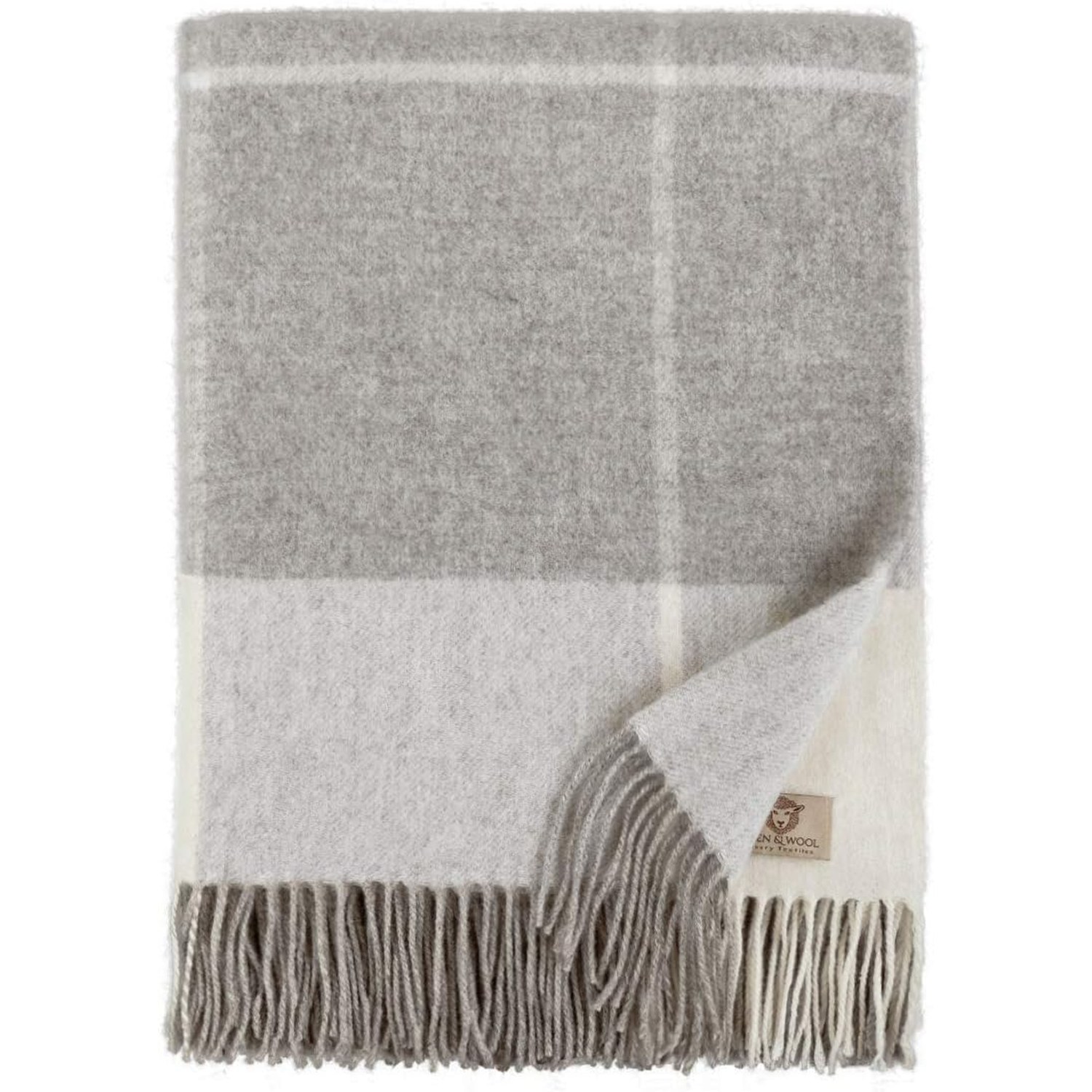
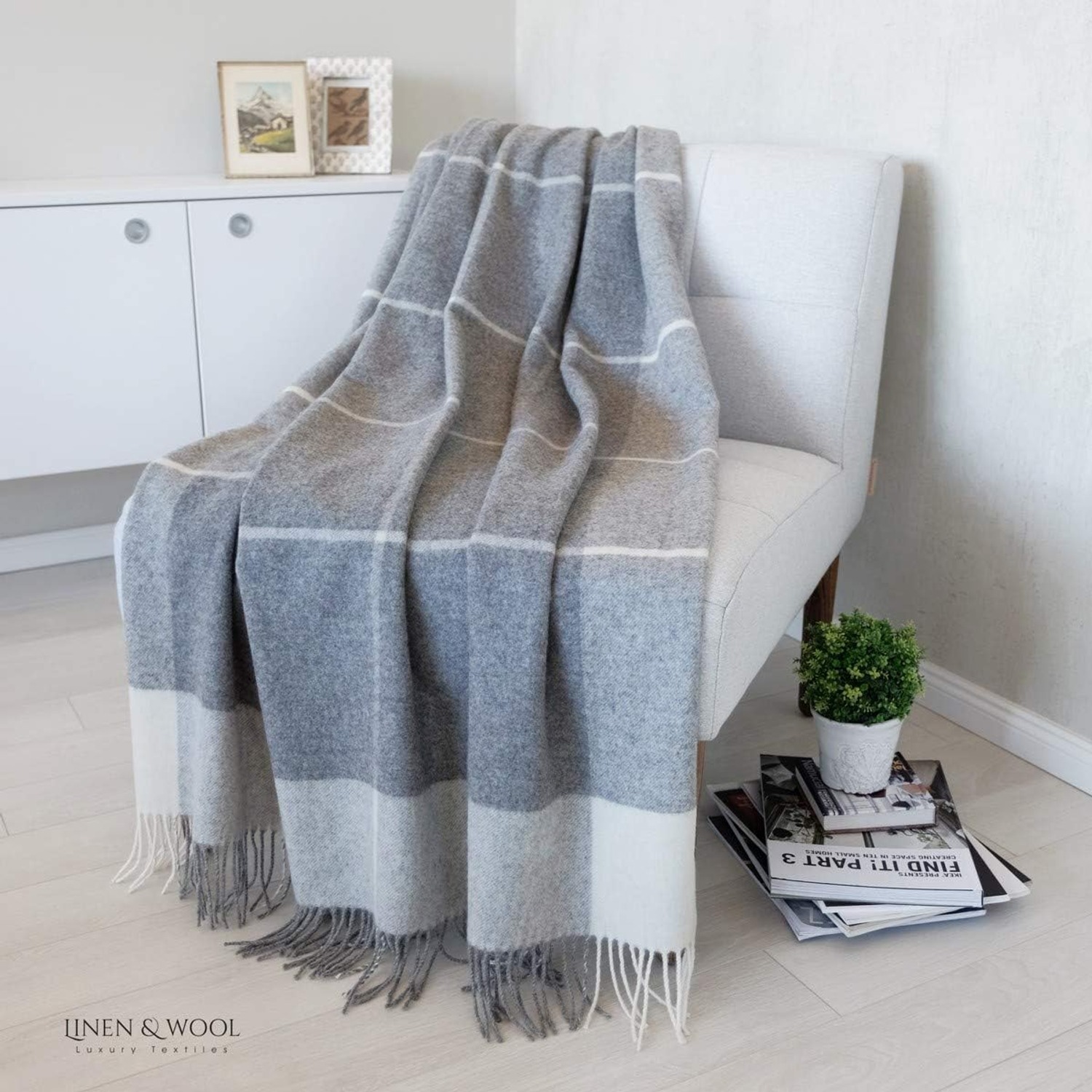
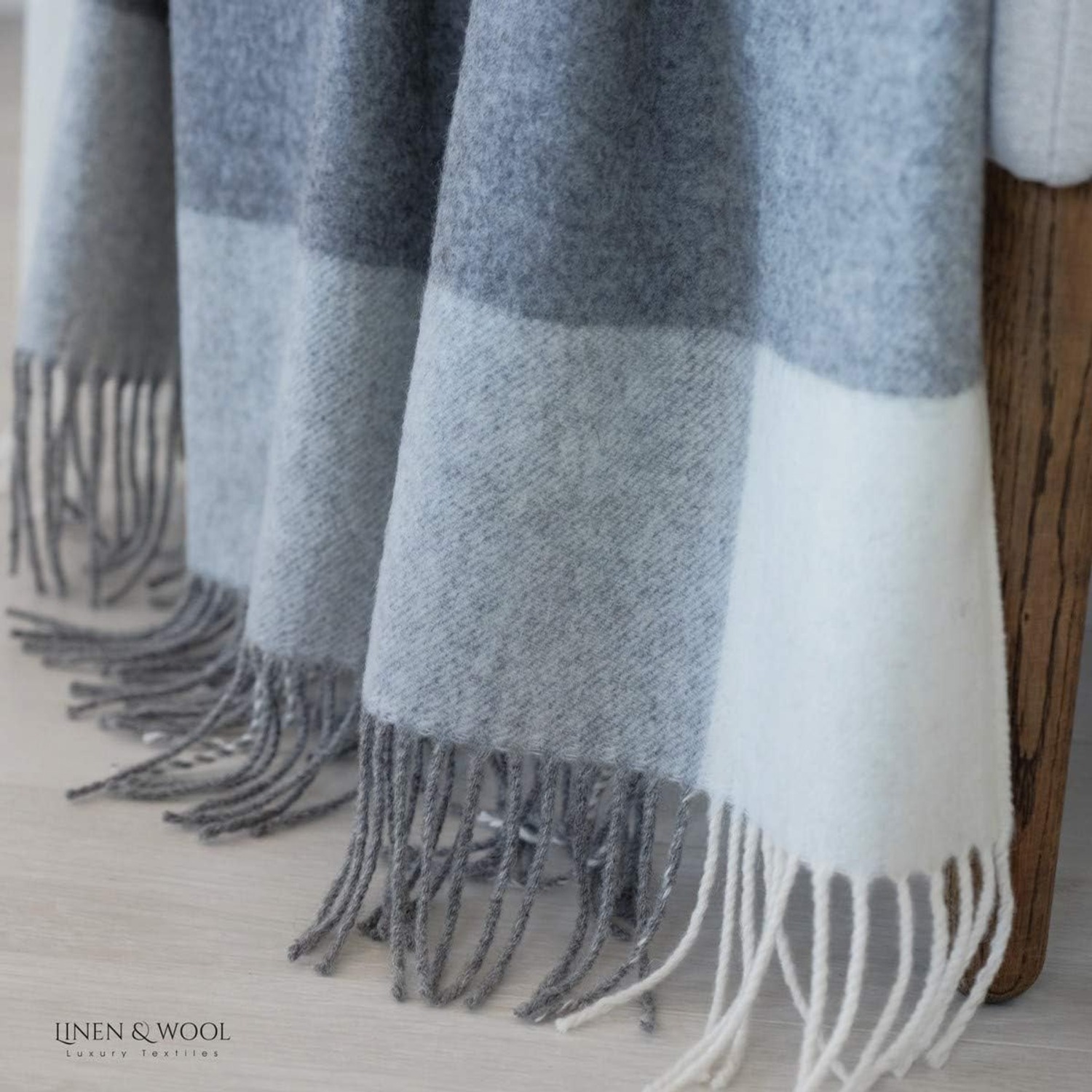
That is the job this blanket does. It is 100% soft merino wool, 140 x 200 cm with fringes, and it is long enough to be useful rather than ornamental. You can put it over your knees in the evening, across the end of the bed before you get in, or around your shoulders when you are working in a cool room. One throw, several problems solved.
People often reach for a fleece first because it is cheap and feels warm the moment you touch it. The catch comes an hour later, when the air trapped under the synthetic fibres has nowhere to go and you start to feel damp. Wool does not behave that way, and understanding why makes the price difference easier to accept.
How wool actually keeps you warm
Wool fibres are crimped. Under a microscope they look like a tight spring rather than a straight hair. That crimp means the fibres cannot pack tightly together, so a woven wool blanket is full of tiny air pockets.
Air is a poor conductor of heat. Trapping it close to your body is the whole trick behind every warm thing you own, from a down jacket to a double-glazed window. Wool happens to be very good at it, which is why a relatively thin wool blanket can out-perform a thicker synthetic one.
The second half of the story is moisture. Your skin releases water vapour constantly, even when you are not sweating. Wool fibres can absorb a surprising amount of that vapour into their core while the surface still feels dry. The moisture then moves outward and evaporates. That is why you can sit under a merino throw for three hours and not feel sticky, and it is the main reason people looking for the best breathable wool blanket end up with merino rather than a blend.
Why merino specifically
Not all wool feels the same. The thing that makes wool itchy is fibre diameter. Thick fibres are stiff, so when they press against your skin they do not bend, and the ends poke at nerve endings. That is the scratchy school-blanket memory a lot of people carry around.
Merino sheep grow much finer wool. The fibres bend when they meet your skin instead of standing up against it. The result is a fabric that feels soft on bare arms and shoulders, which matters enormously for a blanket you actually hold against yourself.
This throw is listed as 100% soft merino wool with no synthetic blending. That matters for performance, because even a modest percentage of polyester reduces the breathability that makes wool worth buying. If you are shopping for a pure wool bed throw rather than a wool-look one, the fibre content line is the first thing to read on any listing.
Getting the size right
The stated size is 140 x 200 cm, and the fringes are included in that number. Here is what that means in practice.
On a standard single bed, laid lengthways, it covers the mattress from top to bottom with a little drape at each side. That makes it a proper blanket, not just a decorative strip.
On a double, queen or king, it will not reach side to side. Used across the foot of the bed, though, it is the classic bed-end throw. It adds warmth over the feet, which is where most people feel the cold first, and it gives the bed a finished look.
On a sofa, 200 cm reaches across most two and three-seat designs. Draped over the back it covers the seat cushions. Spread out, two adults can share it comfortably.
If you want a blanket that covers a double bed fully, this is not the right size and you should look for something closer to 200 x 220 cm. Measure your mattress width before ordering, since bed naming varies between countries and a queen in one place is a different width somewhere else.
Who it suits
It suits people who run cold in the evening and do not want to heat the whole house for one room. It suits anyone who wakes up warm and throws the covers off, because wool adjusts rather than simply piling on heat. It suits households with older children who want their own blanket on the sofa.
It also suits anyone building a bed in layers. A wool throw over a lighter duvet gives you something you can add and remove through the night without changing the whole bed. People searching for the best lightweight wool blanket are usually trying to solve this exact problem.
Where it suits less well is babies and cots, where loose blankets are not recommended at all, and homes where everything goes through a hot machine wash without a second thought. Wool asks for a gentle approach.
Looking after it
The recommended care is dry cleaning. That is the safest route and it keeps the weave and the fringes in good order.
If you would rather wash it at home, it can be hand washed or put through a dedicated wool programme at a low temperature. Use a detergent made for wool, because ordinary laundry powders often contain enzymes that break down protein fibres. Do not use hot water, and do not let the drum thrash it about on a standard cycle.
Never tumble dry a wool blanket. Heat combined with mechanical action causes the fibres to lock together permanently, and a felted blanket is both smaller and stiffer, with no way back. Press the water out gently without wringing, lay the blanket flat, reshape it while damp, and let it dry away from radiators and direct sunlight.
Between cleans, airing does most of the work. Hang the blanket outside on a dry day with a bit of breeze and it will smell fresh again within a couple of hours. Wool resists odours naturally, which is why a wool throw needs far less washing than a cotton one.
For storage, clean it first. Moths are not interested in clean wool fibre, they are drawn to skin oils, food traces and perspiration. Store it in a cotton bag rather than sealed plastic so moisture does not build up, and add cedar or lavender if your cupboard has had moth problems before.
A few honest notes
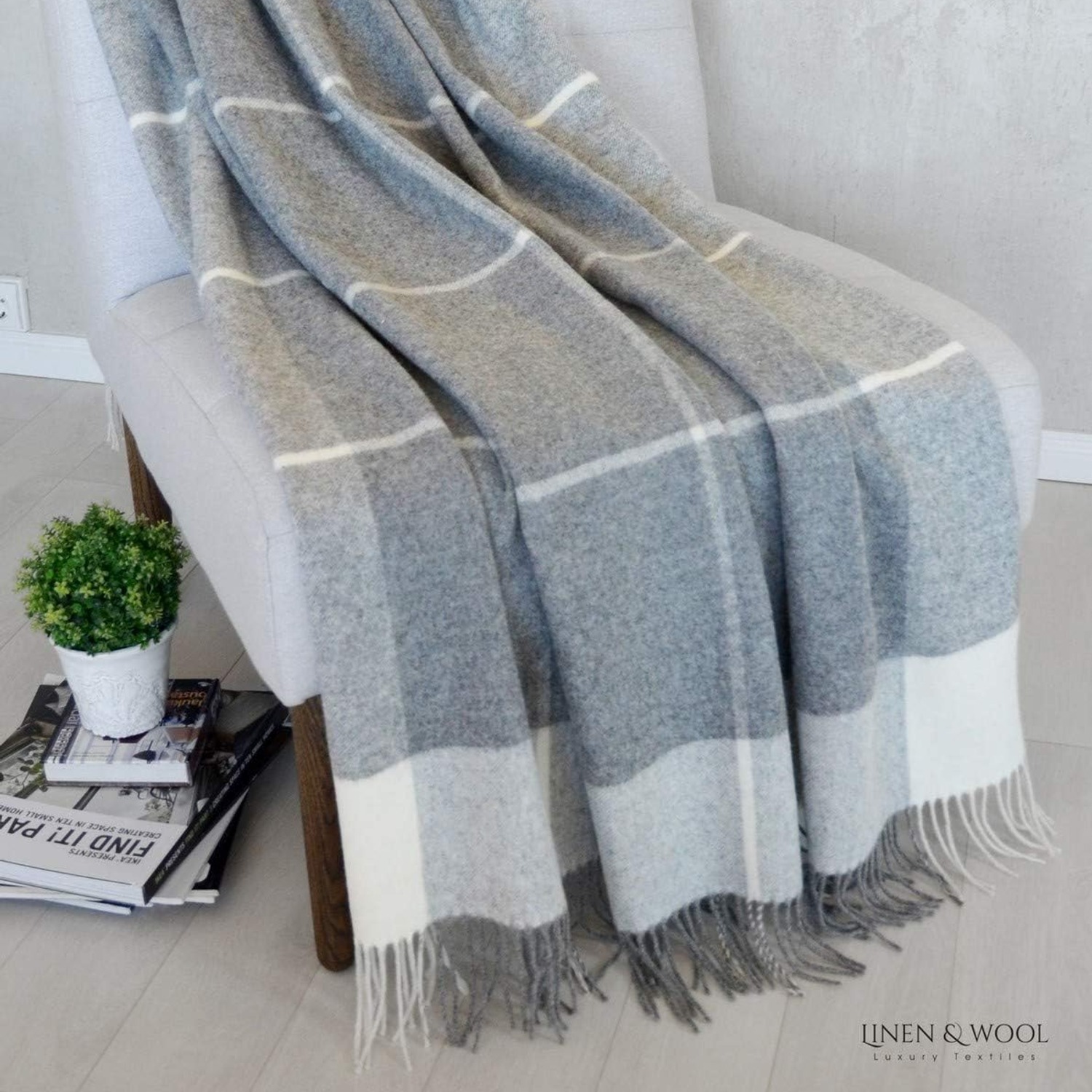
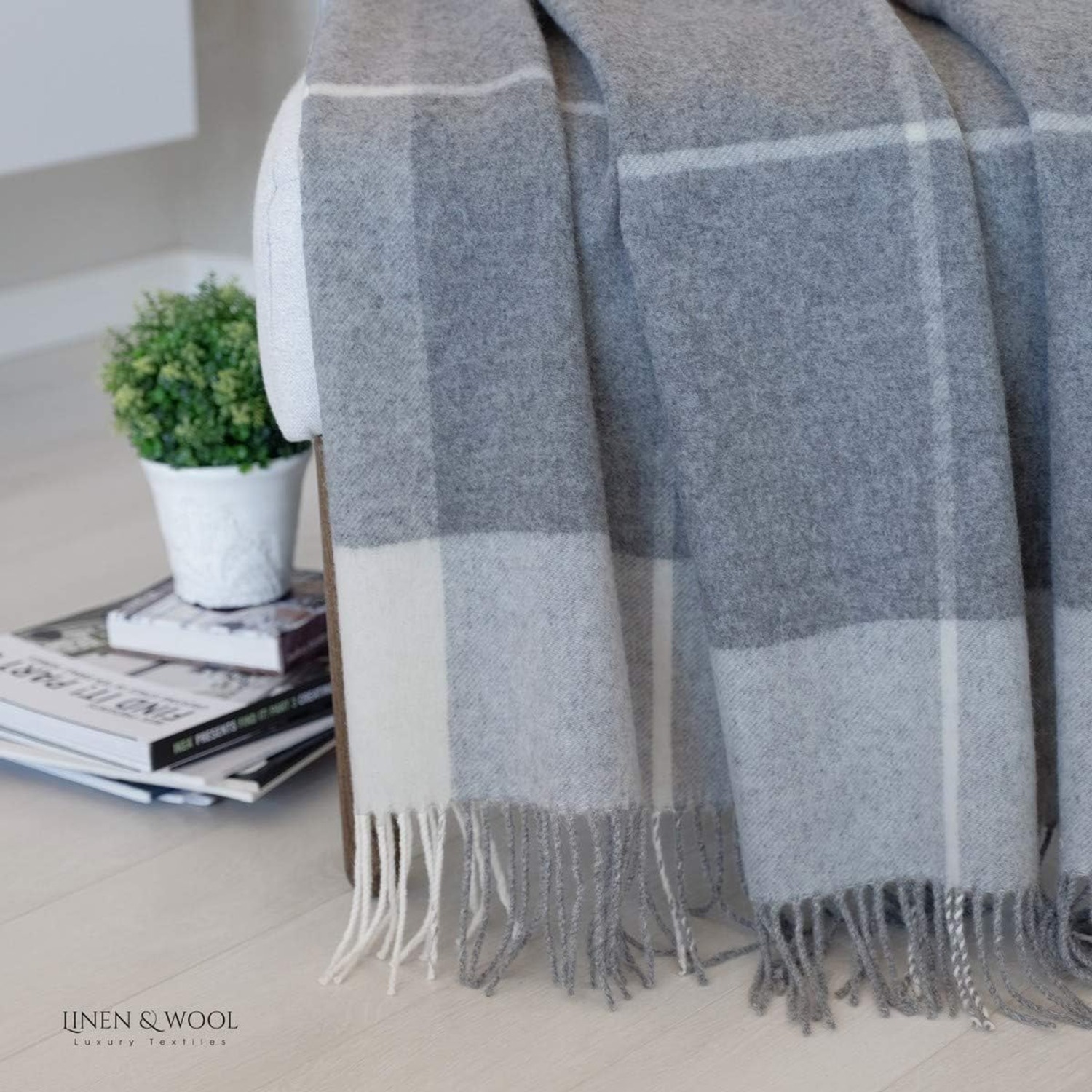
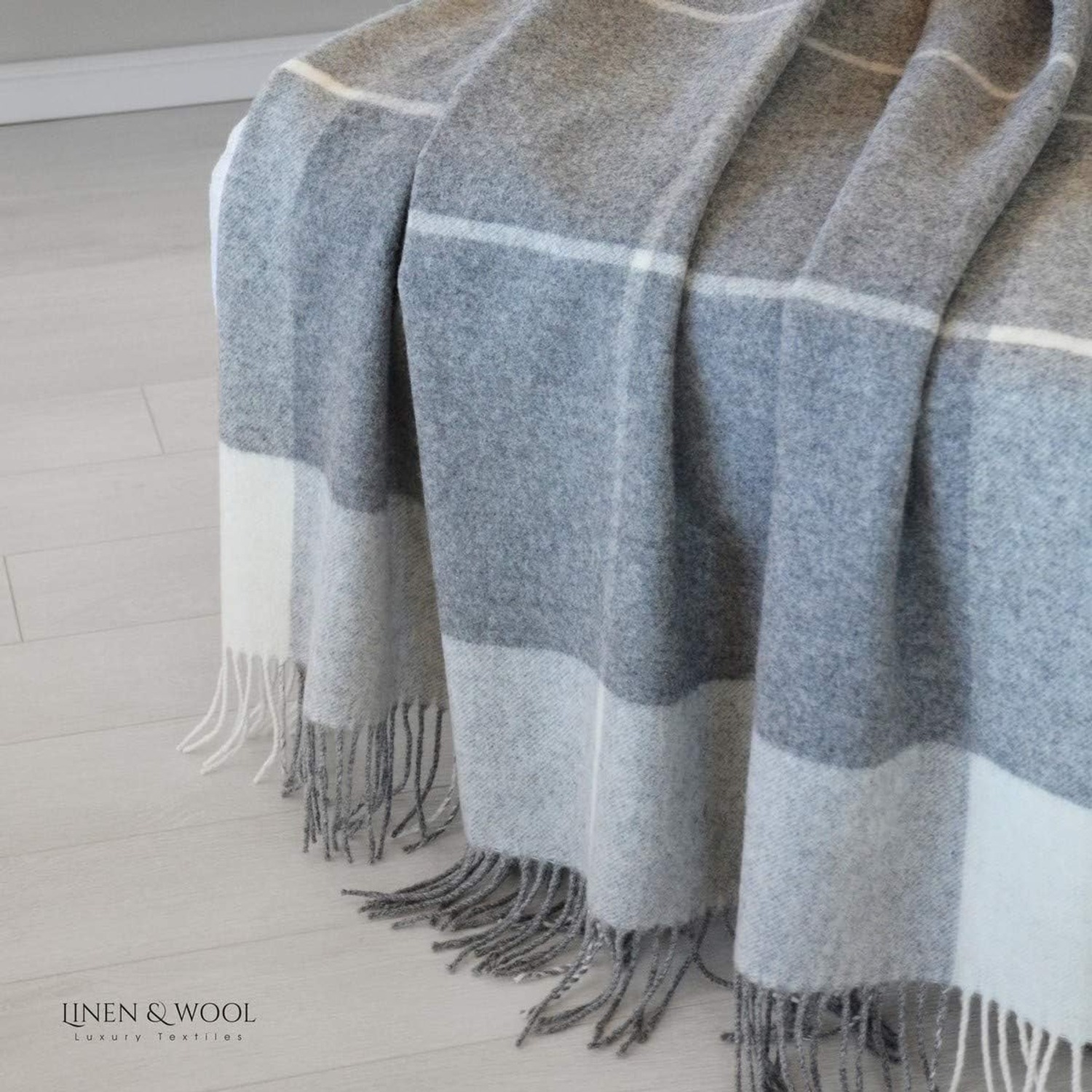
Some details are not listed in this product record, and we would rather say so than guess. The colour is not stated, so go by the images. The weight is not stated either. The country within the EU is not named, only that it is made in the EU by Linen & Cotton.
Expect a small amount of loose fibre in the first few weeks. That is normal for new woven wool and it settles. A fabric shaver or a gentle comb takes care of any small pills that form on high-contact areas.
The short version
This is a 140 x 200 cm throw in 100% soft merino wool, with a check pattern and fringed ends, made in the EU. Merino gives you warmth without the scratch and breathability that synthetics cannot match. The size covers a single bed, sits across the foot of a larger bed, or spreads over a sofa.
Care is straightforward if you respect the fibre. Dry clean it, or wash it cool and gentle, and never tumble dry. Do that and a wool blanket like this one outlasts most of the furniture it sits on.